Floridian Development

Foundation Permits Filed for Channelside’s Largest Hotel at 111 N. Meridian Avenue

Foundation Permits Filed for Channelside’s Largest Hotel at 111 N. Meridian Avenue

Channelside’s largest hotel project is moving closer to construction in Tampa, following the recent submission of foundation permits to the city. Led by McKibbon Hospitality, the development is planned as a dual-flag hotel featuring both AC Hotel and Moxy, brands operated under the Marriott International umbrella. Planned for 111 N. Meridian Avenue, the 13-story hotel would add a modern presence to the Channelside district. Designed by Atlanta-based LPB & Associates, the project has advanced quickly, with the recent permitting activity marking the latest step in a months-long process that included rezoning approval from Tampa City Council just a few months ago. McKibbon Hospitality acquired the 0.74-acre site for approximately $9.3 million in early 2025. The property was previously slated for a self-storage facility by UDR, though those plans were abandoned after only the residential component of the masterplan was completed. Once delivered, the hotel will become the second in the immediate area, following the opening of a nearby dual-flag hotel at N. Meridian Avenue and Kennedy Boulevard in 2019. The site is currently cleared following earlier site preparation and demolition work completed under the property’s previous developer, UDR. The newly submitted permit is limited in scope, covering drilled piers and concrete footings for the tower’s foundation, with designs helped by recent surveying and geotechnical work. Given the scale of the project, measuring roughly 280,000 Gross SF, the development is subject to additional structural and safety reviews to meet code requirements. A construction contractor has not yet been identified yet. However, multiple firms are listed on the application, including Bohler, which is serving as the project’s civil engineer. Plans filed with the city indicate the hotel will include 310 guest rooms, When first reported by the Tampa Bay Business Journal, the room count was broken down into 175 rooms under the AC Hotel brand and 135 rooms under Moxy, a configuration that appears unchanged in the latest filings. Parking plans have also evolved since early reporting. Initial concepts called for just 57 spaces, but updated civil plans now show a significantly increased parking program. The project is currently proposed to include 202 parking spaces, a figure more realistic considering the size of the parking podium and the number of hotel rooms listed previously. At street level, the hotel will include an AC Lounge, a retail space, and a main reception area. Overall, the project is planned to deliver approximately 25,000 SF of commercial space, consisting of roughly 14,000 SF of retail and 11,000 SF dedicated to restaurant uses, according to the latest plans. A designated drop-off area for valet and parking will be located along East Washington Street. The hotel will feature a facade composed of light and dark blue tones, accented by white and gray finishes across stucco surfaces and impact-resistant glass. A distinctive crown, defined by a sloped roofline, will cap the structure. According to the developer, the building is expected to rise approximately 179 FT to its tallest point. The foundation permit is still pending approval and represents the only construction permit applied for the site thus far. McKibbon Hospitality had previously targeted a February 1, 2026 groundbreaking; however, with the permit submitted on January 26, meeting that timeline appears unlikely unless the event is ceremonial. However, a 2026 start for vertical construction remains very much on the table and continues to look probable.

Construction Permit Filed for Robles Park Lot D, Marking First Phase of Redevelopment

Construction Permit Filed for Robles Park Lot D, Marking First Phase of Redevelopment

Plans for the long-anticipated Robles Park redevelopment in Tampa are moving closer to construction, as permits for the project’s first phase have now been submitted to the city. Known as Lot D, the parcel will deliver the first new residential building within the 35-acre redevelopment area, representing a major step forward following the demolition of the public housing complex. The effort is being led by PMG Affordable in collaboration with the Tampa Housing Authority, building on a master plan that received city approval in 2024 after an extensive planning and public review process. Demolition of the original Robles Park complex began in late 2025, clearing a site that once included 67 low-rise buildings constructed in the 1950s as part of a national urban renewal era. The redevelopment will replace one of Tampa’s oldest public housing communities with a modern, mixed-income neighborhood intended to increase residential density while preserving long-term affordability. The full Robles Park redevelopment is estimated to carry a price tag of approximately $800 million and will be delivered in multiple phases over several years. Construction is currently targeted to begin in April 2026, following the completion of demolition work. The recent submission of permits for Lot D aligns with that timeline, with permits likely being expedited prior to groundbreaking. Submitted on January 21st, 2026, the application represents a full building permit for new construction, covering structural work and core building systems such as plumbing and electrical. With this permit in place, the project can move forward without needing multiple smaller permits to begin construction. Construction will be led by Ducon, LLC as the general contractor, with Urban Atelier Group serving as construction manager. The proposed building will deliver 233 affordable housing units serving households earning between 30 percent and 80 percent of the area median income. Residents displaced by the original demolition of Robles Park will have a right of return and will not face rent increases should they choose to move back into the redevelopment. Unit layouts will include one-, two-, three-, and four-bedroom residences, with sizes ranging from 571 SF at the low end to about 1,439 SF for the largest units. Two-bedroom units will make up the largest share of the overall unit mix. According to a project description given by the developer, the building will include a plethora of residential amenities, including a pool deck on the second level. In addition to the pool, the development will feature approximately 10,000 SF of interior amenity space, along with a nearly 2,000 SF leasing office for residents. A 32,486 SF community center is also planned for the second floor, intended to serve the new community. To accommodate parking needs for both residents and the on-site community center, the development will provide 210 parking spaces. This total is made possible through an approved parking reduction waiver. All parking will be located at ground level as a surface lot. The building is designed by Orlando-based Baker Barrios Architects, the firm behind the broader Robles Park master plan. Architectural elevations show the structure rising seven stories, or approximately 83 FT to its highest point. The exterior employs a contemporary palette of gray and white tones, combining stucco and metal finishes in a style consistent with other recent Baker Barrios projects. Before demolition, the original Robles Park community consisted of 432 residential units and a 3,036 SF daycare facility. The approved redevelopment envisions a far larger and more comprehensive development, ultimately delivering 1,098 affordable housing units, 160 affordable senior residences, 550 multifamily units, and 42 single-family homes. In addition, the plan includes approximately 41,000 SF of retail space, a 32,486 SF community center, and a new 30,000 SF supermarket, significantly expanding both housing capacity and neighborhood-serving amenities.

FAA Reissuance Clears Path for 540-Foot Tower at 601 N Ashley Drive in Downtown Tampa

FAA Reissuance Clears Path for 540-Foot Tower at 601 N Ashley Drive in Downtown Tampa

Tampa’s next major skyscraper is inching toward reality as permitting and regulatory groundwork begin to take shape at 601 N Ashley Drive, a prominent downtown parcel now under redevelopment. Naples-based Stock Development recently filed for the reissuance of a FAA height application amid ongoing demolition of the existing office building and surface parking lot, which will eventually clear the around 1-acre site. The property was acquired by Stock Development in 2025 for $40 million, marking one of the most significant property transactions in Tampa history. The sale ended a multi-year development effort initiated by TLR Group, which first assembled the site in 2021 and spent several years advancing plans for the high-rise project. Under TLR Group’s ownership, the site underwent multiple design iterations, including an FAA height application submitted in 2022 for a 540-foot tower. The final proposal, which advanced prior to the sale, envisioned a 48-story tower rising 540 FT, featuring 600 residential units, 68,000 SF of office space, and 12,000 SF of retail. A large podium was also planned, providing parking for up to 985 vehicles. On January 8th, 2026, Bill Fleck of Stock Development refiled FAA height approvals for a 540 FT tower, or 558 FT above mean sea level. The application received an immediate determination of no hazard to air navigation. The same-day approval is a result of the FAA’s prior completion of a full study for the project under its previous ownership. Because the refiling did not introduce any changes to the tower’s height, location, or aviation impacts (and was required solely due to the change in sponsor) the FAA treated the submission as a reaffirmation of its ‘No Hazard’ designation. While the FAA filing represents an important regulatory step, and signals Stock Development’s continued intent to advance the project, it also caps the tower’s maximum allowable height. With approval set at 540 FT, any proposal exceeding that limit would require a new FAA filing, suggesting that the tower is unlikely to surpass earlier iterations. Although it remains unknown whether Stock Development will follow a design similar to prior proposals, TLR Group previously noted that the site attracted higher purchase offers once development plans had received city approvals. Stock Development has indicated an interest in changing the project towards a condominium tower, potentially as a branded residential development, which could change both the interior and exterior design. Permitting records and recent on-site activity indicate that demolition is already underway, with a commercial demolition permit filed on December 1st of last year. D.H. Griffin Wrecking Company is handling the demolition, which includes the removal of the existing structure, basement, and foundation, with the site planned to be restored as a grass lot. This story is still developing, and Floridian Development will continue to provide new articles as the project advances through permitting and as further details on the design emerge.

FAA Filing Submitted for 282-Foot The Gaspar Condominium Tower in Downtown Tampa

FAA Filing Submitted for 282-Foot The Gaspar Condominium Tower in Downtown Tampa

A recently-planned development proposed for a triangular parcel at the entrance of Downtown Tampa is moving closer to realization. Known as The Gaspar, the project has recently filed for an application with the Federal Aviation Administration seeking height approval for its proposed condominium tower, signaling progress toward construction. Planned for 1307 N Jefferson Street, the 0.33-acre site is being developed by Berts Real Estate in partnership with consultant Flamingo Homes. The property is currently owned by 1307 N Jefferson Tampa LLC, an entity affiliated with Berts Real Estate. Floridian Development previously reported on the proposal during its analysis by Tampa’s Design District Review board, a process which is still underway. According to the application filed by Bruce Strebinger, co-founder and CEO of Berts Real Estate, the proposed 23-story tower would rise 282 FT from ground level, or 302 FT above mean sea level. The application was submitted on January 5th and remains under review, though approval is widely expected given the project’s relatively modest height and limited impact on nearby airports. The proposed height aligns with earlier submissions, which called for the tower to rise 281 FT to its highest point. Designed by MGBA Architecture, the tower features a contemporary design composed of frosted glass, a gray-and-white color palette, and expansive balconies. The development is planned to include 188 residential units, comprising a mix of studio, one-, two-, three-, and four-bedroom residences. The podium and ground floor would incorporate 2,424 SF of commercial space, 5,327 SF of office space, along with 91 vehicular parking spaces and 72 bicycle parking spaces. While review by Tampa’s Design District Review Board remains ongoing, the developer has not yet filed for construction permits. An FAA application related to cranes on the site has also not been submitted, multiple steps still needed before the project can break ground. Development activity in Downtown Tampa has remained strong in recent years. Nearby, Hotel Ora + Private Residences has reported solid sales momentum and is preparing to move towards groundbreaking, while developments like The Pendry or One Tampa are already underway.

740-Foot Elliott Towers Proposed for Downtown Tampa, FAA Filing Reveals Early Vision

740-Foot Elliott Towers Proposed for Downtown Tampa, FAA Filing Reveals Early Vision

Tampa may be on track to welcome its tallest tower yet, according to a recent FAA filing. On November 25th, Colton Elliott, founder of Elliott International, submitted an application for a 740 FT structure planned for the former Kress Block in Downtown Tampa. The proposal would replace the entire block with a skyscraper rising more than 70 stories, set to include office, dining, and residential space. The project, spanning 801, 805, 807, 811, and 815 North Franklin Street, is slated to be known as Elliott Towers. While the firm has filed an FAA application, the tower remains in the early stages of land acquisition and entitlement approvals. The entire block is currently owned by CW Kress LLC, tied to Carolyn Wilson who acquired the properties in 2017. Early social media posts suggest the tower concept was launched only recently, with AI-generated imagery used to showcase potential designs for the site. Elliott International has emphasized that these rendering are conceptual and do not represent finalized plans. According to a description in the FAA filing, Elliott Towers will begin with two levels of retail and lobby space, followed by 8-10 floors of office uses and another 10-15 floors of condo-hotel units. Above that, the tower will transition into about 39 stories of private residences, capped by two mechanical levels. The project has an anticipated groundbreaking in early 2028, and all figures remain subject to refinement. According to the development’s website, the proposed tower is projected for completion in early 2032. The plan calls for 118 ultra‑luxury condominiums (starting at $1.05 M), two penthouses, condo‑hotel units, 500,000 SF of Class‑A office space, flagship retail brands, and a Michelin‑star restaurant on the ground floor. Residents would have access to 24/7 concierge and valet service, a wellness‑focused fitness center, private lounges, a large ballroom, a rooftop infinity pool, and much more. Parking is set to total 1,200 spaces for both residents and patrons. As per the developer’s recent Instagram post, there is claims of “$40 million in funding”, with new investment along the way. If the tower is set on moving forward, the development will likely apply for permits and building plan approvals very soon. Because plans are still flexible, it’s unknown if the development will incorporate the historic designs of the current site or do a demolition, although current city designations of the land restrict an all-out demolition. While the FAA filing is an important early step, it does not guarantee the project will move forward. The proposal still hinges on securing the land, gathering financing, and navigating a lengthy entitlement process. Elliott International, the firm behind the tower, has not delivered a high-rise or a project of this magnitude, adding uncertainty to the tower’s prospects. For now, the plan remains highly speculative. Still, if the development advances, the structure would become the tallest building in Tampa and a symbolic addition to a downtown that continues to grow at a record pace.

University of Tampa’s New Science Building Moves Forward, With Permits Filed and Approvals Granted

University of Tampa's New Science Building Moves Forward, With Permits Filed and Approvals Granted

The University of Tampa’s campus is preparing for another major transformation as its next academic building moves steadily toward a groundbreaking. With key building plans approved and new construction permit filings underway, the university is laying the foundation for Project Beta, a six-story facility planned along the Hillsborough River. The project will replace a cluster of aging low-rise structures at 505 UT McNeel Ct with a modern, six-story building designed to support a range of science uses. The new academic building comes at a time when student enrollment at the University of Tampa is at an all-time high, prompting the need for revitalized and expanded academic space. Just last year, the university celebrated the opening of the Grand Center Residence Hall (Project Alpha), a mixed-use complex that introduced new academic areas, student housing, structured parking, and additional campus amenities. Plans for the new science building, known as Project Beta, call for roughly 200,000 gross SF of space, including research labs, collaborative areas, teaching facilities, faculty offices, and other academic functions. The building is being designed to achieve LEED Silver certification, incorporating strategies to promote waste reduction, improved indoor air quality, and enhanced energy efficiency. Because the campus already has sufficient parking, no additional parking is proposed as part of the project. According to elevations provided by Omaha-based HDR Architects, the building will feature a blend of the past and present, with red bricks on the west portion of the side in-line with campus material themes, and glass on the east side. The building will rise 120 FT. According to recently filed permits, Barr & Barr will serve as the project’s general contractor. Multiple permits have been submitted, including a general construction permit covering on-site demolition and new construction, as well as a separate permit for tree removal and pruning. As part of site preparation, several existing structures, including the Morsani Loading Dock, Cass Science Annex Building, McNeal Boathouse, and Communications Annex, will be demolished. Barr & Barr has extensive experience in STEM-related construction, having led numerous facilities nationwide. The new building’s research labs and specialized facilities fall well within the company’s proven expertise, making them qualified to manage the project. Construction of the new building is scheduled to take 18 months, according to Barr & Barr. There is no known groundbreaking date as of now. More images of the building can be found here.

The Fletcher District Gains Approval from the Florida Board of Governors, Set to Break Ground in Early 2026

The Fletcher District Gains Approval from the Florida Board of Governors, Set to Break Ground in Early 2026

The University of South Florida has reached a major milestone in advancing its long-anticipated “Fletcher District”, a mixed-use neighborhood set to replace the former golf course known as The Claw. On November 6th, the Florida Board of Governors, which oversees the state’s public universities, voted to approve the project’s first phase. The development will transform the defunct golf course, which closed in 2023 at the corner of Fletcher Avenue and North 46th Street, into a vibrant district featuring student housing, multifamily residences, a hotel, retail space, and public amenities. Plans have been steadily progressing, with the USF Board of Trustees granting its approval on September 9th and construction expected to begin in spring 2026. Phase one will span 27 acres of the former Claw golf course’s 138-acre site. The plan includes 150 cottages, 350,000 SF of research space, 5,000 SF of conference space, a 150-room hotel, 60,000 SF of retail, 700 student beds, and 150 market-rate housing units. The development will also include over 1,000 parking spaces to support both academic and leisure uses within the district. For students seeking housing close to campus, 400 of the 700 planned beds will consist of one-, two-, and four-bedroom units, each featuring a one-to-one bedroom-to-bathroom ratio, addressing strong demand for more private student housing at USF. The 150 multifamily units will also serve university employees, faculty, graduate students, alumni, and community members, with a portion also available to the general public. According to the USF Oracle, the university is expected to generate over $509 million in profit from rent over the 40-year lease term, both from multi-family and student housing. You can find financing documents, the project’s summary, and more from yesterday’s meeting archive here. The Fletcher District will be developed through a public-private partnership between the University of South Florida and ACE Fletcher, LLC, whose members include Capstone Development Partners, Capstone Communities, Aureate Development, and Ellison Development. Under this agreement, USF will create separate ground subleases for each parcel, lasting between 40 and 99 years. The development team will design, build, finance, operate, and maintain their respective parts of the project, retain ownership during the lease, and fund their share of infrastructure and maintenance expenses. After the lease term ends, ownership of all facilities will revert to USF as required by Florida law. This means the first phase of the project, estimated at $268 million, will be funded mostly by the development team through private financing. USF’s direct financial role will be limited to constructing its own academic building and contributing to parts of the shared district infrastructure. When plans were first discussed to redevelop the golf course known as The Claw at USF, initial proposals had included parcels within the adjacent USF Forest Preserve. This sparked controversy among students and faculty, ranging from Indigenous heritage sites to critical habitat for native wildlife. After protests and study, the university clarified its intention. In a recently published FAQ the University of South Florida stated: “No. The Fletcher District is being developed entirely within the footprint of the former golf course, which was previously developed.” Instead, the adjacent USF Forest Preserve will continue to serve as a site for research, fieldwork, and educational use. The university has confirmed that there are no plans in the foreseeable future to alter or develop the preserve.

Pendry Tampa Lands Record-Breaking $520 Million Construction Deal

Pendry Tampa Lands Record-Breaking $520 Million Construction Deal

Pendry Tampa, a luxury hotel and condominium tower planned by Two Roads Development, has just secured $520 million in construction financing. The deal, announced Monday, includes funding from Sculptor Real Estate and Nuveen Green Capital. Construction, led by Florida-based general contractor Coastal Construction, has been at the topic of discussion in the region for weeks. The project has recently overseen slowed on-site activity; now, with financing achieved, the project is back on-track. While the financing is historic for its size, another aspect of the deal is equally noteworthy. Of the $520 million granted, $290 million came from the largest C-PACE transaction in the nation’s history. C-PACE transactions provide developers with long-term financing for energy-efficient and resiliency-focused building improvements, such as water and energy conservation measures, storm infrastructure, and more. In the case of Pendry Tampa, this financing likely supports the tower’s mechanical systems, sustainable energy features, and resiliency upgrades, helping Two Roads Development finance construction costs. According to Hotel Investment Today, Nuveen Green Capital highlighted the significance of the deal, with Ryan Doyle, senior director of originations, saying, “We are thrilled to have closed the largest C-PACE transaction in history, partnering with Two Roads Development and Sculptor Capital on this transformative luxury property that will redefine Tampa’s skyline. This historic milestone showcases the growing sophistication and scale of C-PACE financing and its capacity to support major developments.” The news is both exciting and reassuring for many local real estate enthusiasts, especially given the lot’s history. Over the years, multiple projects on the site have fallen through, including the cancelled Trump Tower Tampa. Pendry Tampa broke ground and began foundation work in late 2023, but construction only reached a few floors above ground before slowing. With financing now in place, the project is set to return to its regular pace. According to Floridian Development’s database, the historic project will rise 38 stories, reaching 444 FT, making it one of Tampa’s tallest developments. Plans call for 200 condominium units, 220 hotel rooms, 656 parking spaces, extensive commercial space, and amenities.

Developers Submit High-Rise Plans for ‘The Gaspar’ in Downtown Tampa
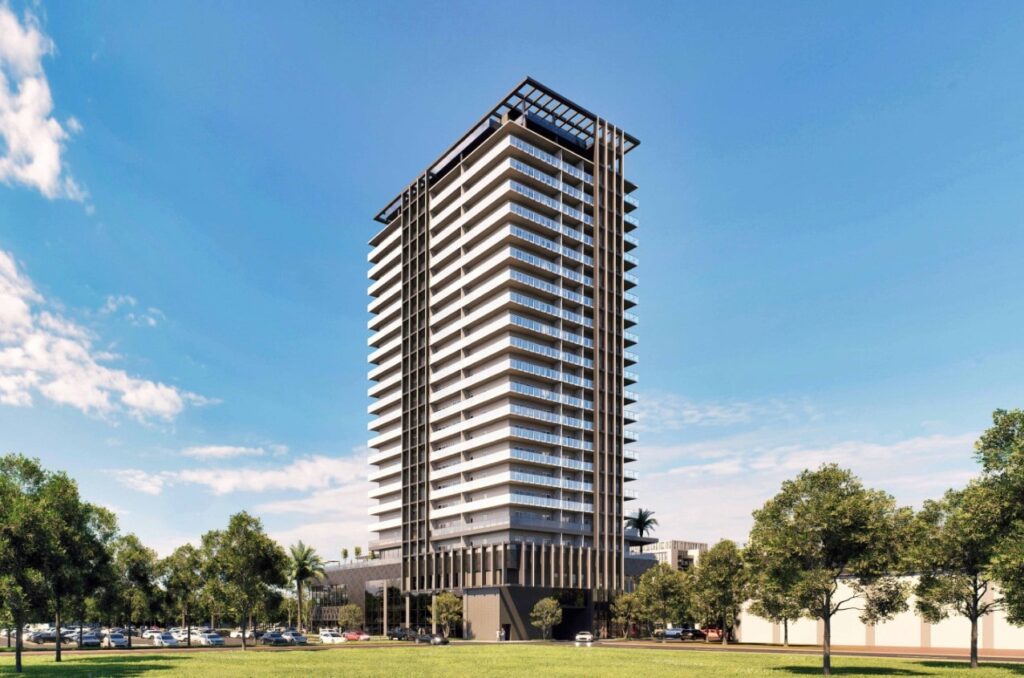
Developers Submit High-Rise Plans for 'The Gaspar' in Downtown Tampa

One of Downtown Tampa’s most distinctive residential developments is on the way: The Gaspar. Led by developer Berts Real Estate in partnership with consultant Flamingo Homes, the 23-story tower is planned for one of the city’s most size-constrained lots. Located at 1307 N. Jefferson Street, the 0.33-acre site will feature 188 residential units, along with commercial space, office space, and one of the most innovative parking systems on Florida’s West Coast. The project, scheduled for administrative review by Tampa’s Design District Review, may signal the start of a broader trend toward compact developments as developers seek new land opportunities in the city, a shift already visible in South Florida. According to plans released yesterday, the 188-unit building will offer a mix of studio, one-, two-, three-, and four-bedroom residences. Studios and one-bedrooms will make up the majority of units, followed by two-bedrooms. Studio layouts will range from approximately 400 to 600 SF, while the largest residence will be a 4,885 SF penthouse. Despite the limited footprint of the site, residents will have access to a full suite of amenities, including a pool, gym, lounge, and amenity deck. One of the most notable features of the development is its podium, which will include the residential lobby, 2,424 SF of commercial space, 5,327 SF of office space, and a structured mechanical parking system. The system will provide 88 automated parking stall spaces, three accessible spaces, and 72 bicycle parking spaces, equivalent to 18 additional parking spots under Tampa code, bringing the total parking supply to 109. By utilizing automation, the podium design is more efficient and compact, while also reducing risks typically associated with conventional garages, such as ‘tight ramps, dark stairwells, and vehicle theft or damage’ Designed by MGBA Architecture, the tower will rise 23 floors to a height of 281 FT, presenting a tall, slender structure in gray and white. Its facade incorporates fiber cement panels, frosted glass, perforated screening, and other modern design elements. According to the architect, ‘The tower’s massing is artfully broken into distinct volumes unified by a sculptural black steel feature that performs multiple roles: it offers solar shading, structural expression, and vertical coherence. This multipurpose architectural gesture ties together disparate programmatic elements and introduces a kinetic, tactile identity to the building.’ Due to the lot’s constraints, the development team is requesting several variances. One relates to parking: while zoning regulations require 114 spaces, the project is proposing the equivalent of 109. Because the City of Tampa’s code encourages reduced parking ratios and development near transit, the team is confident this variance aligns with the city’s goals. Among other requested variances is a concern for street wall transparency. Although traditional regulations require parking to be concealed, the design instead showcases the mechanical parking behind glass curtain walls at the podium level, creating an intentional visual for pedestrians. According to Anchor Real Estate, the project’s head of sales, prices start at $399,000. While the current sales status is unclear, reservations were reported to be strong when they opened on September 12th of last year.

McKibbon Hospitality to Bring Dual-Branded AC Hotel and Moxy to 111 N Meridian Ave, Channelside
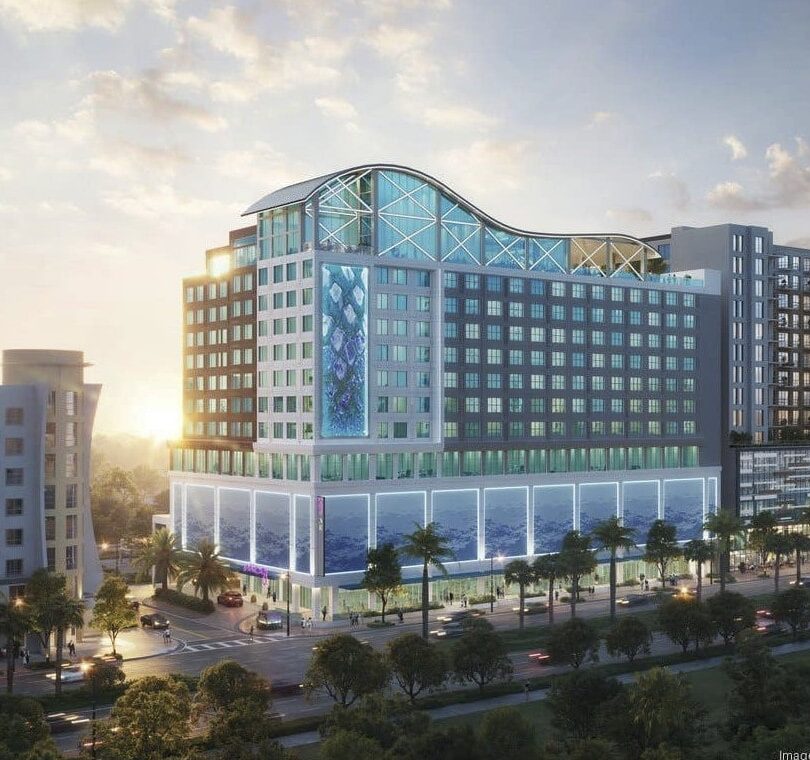
McKibbon Hospitality to Bring Dual-Branded AC Hotel and Moxy to 111 N Meridian Ave, Channelside

A new hotel is set to rise in Tampa’s Channelside district, becoming the largest by both height and room count. Developed by McKibbon Hospitality, a veteran hotel operator and developer, the project will introduce a dual-branded AC Hotel and Moxy by Marriott. The site at 111 N. Meridian Avenue was once planned for a storage facility by UDR, but McKibbon acquired the property for $9 million earlier this year and shifted the plan toward hospitality. With plans coming to fruition, the development will be the second dual-branded hotel in Channelside. Approved by City Council, the development will include 175 hotel rooms under the AC Hotel flag and 135 rooms under Moxy by Marriott. Plans also feature ground-floor retail, a large lobby, and guest amenities such as a pool, bar, and meeting and event space. According to a planning document provided last month, the current proposal provides 57 parking spaces, though that number could change as the design advances. The building, which will rise 13 floors or 170 FT, was lauded as a great addition architecturally for the area. Councilman Charlie Miranda called it “a nice addition and a beautiful design” in which it “fits the area”. Renderings and elevations provided by the architect show a unique roofline, blue and white accents, and a masked podium intended to improve the streetscape along Meridian Avenue. According to the Tampa Bay Business Journal, the project is still in the design phase, with permitting and financing to follow. McKibbon is aiming for a February 1, 2026 groundbreaking. “We have really great hospitality lender relationships, and we have a few earmarked for this deal that have already expressed interest,” said J.B. McKibbon, president of McKibbon Equities. Speaking before City Council, he added, “We have been trying very hard to build a new product in downtown for quite some time.” The rezoning received unanimous approval from City Council, with a second hearing scheduled for September 18. Because UDR demolished the site prior to this proposal, McKibbon has to do little site preparation before moving forward with foundation work and vertical construction.

FAA Filings Advance The Bluffs in Clearwater Toward 2026 Groundbreaking
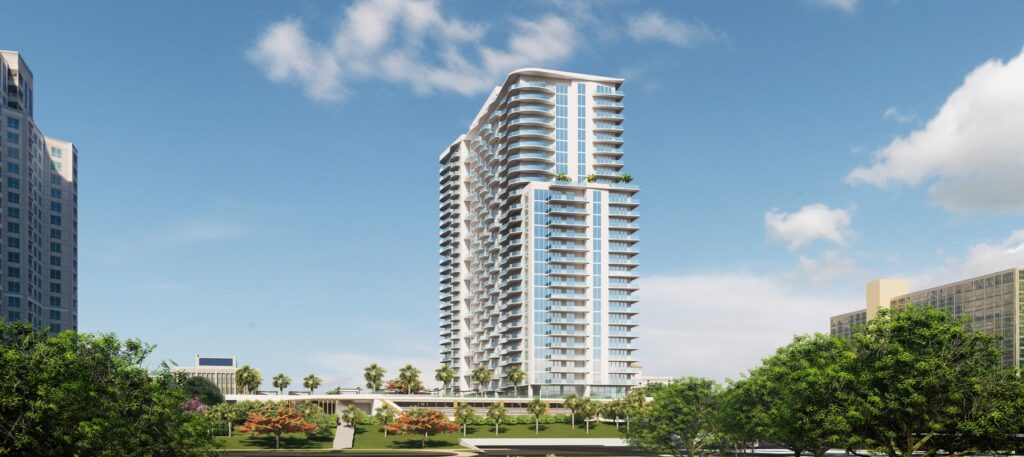
FAA Filings Advance The Bluffs in Clearwater Toward 2026 Groundbreaking

The Bluffs in Downtown Clearwater is taking another step forward towards construction. Developers Gotham Organization and the DeNunzio Group recently submitted FAA filings for crane use and building height evaluation, key early steps toward their targeted January 2026 groundbreaking. The move follows land acquisition and City Council approvals earlier this year, and will be an early measure of whether the developers can deliver on their promise to complete the apartments on schedule. The project is aiming to erect one 400 FT crane for the project. According to the general contractor, Moss Construction, the crane will initially stand at 250 FT before climbing to its full height as the project nears topping out. FAA evaluation of the crane filing is still underway. For a brief period, from June 1, 2026, to December 23, 2027, it will be the tallest structure in Clearwater. Also filed was a building height evaluation. As per the filing, the structure will rise to 302 FT to its tallest point, or about 337 FT when factoring in the site’s 35-foot elevation. The filing notes that the height comes from a two-floor podium topped by a 28-story residential tower. Touted as the largest investment in Downtown Clearwater to date, the project will span 620,000 SF and include 400 rental units, more than 10,000 SF of retail space, and 440 parking spaces, about half of which will be underground. The Bluffs in Clearwater did not reach this point without challenges. Last year, the developers scaled the project back from two towers to one and revised several agreements. In fall 2022, voters approved plans for roughly 600 apartments, but the developers later cited rising interest rates and other external factors as reasons to reduce the scope to 400 units in a single tower. Additionally, the original $15.4 million sale price for the lot was reduced to $3.45 million following negotiations. While the City of Clearwater lost out on certain benefits from the deal, the developer’s steadfast commitment to moving forward on the project, indicated by these recent FAA filings, will hopefully push this investment further to reality. According to TBN Weekly, former council member Mark Bunker was optimistic for the project despite setbacks: “I’m excited that we’re actually getting this done,” “I think it’s an important next step to taking back the downtown”.

Integral Development Secures $9.7M for 100% Affordable Ashley East Tampa Project
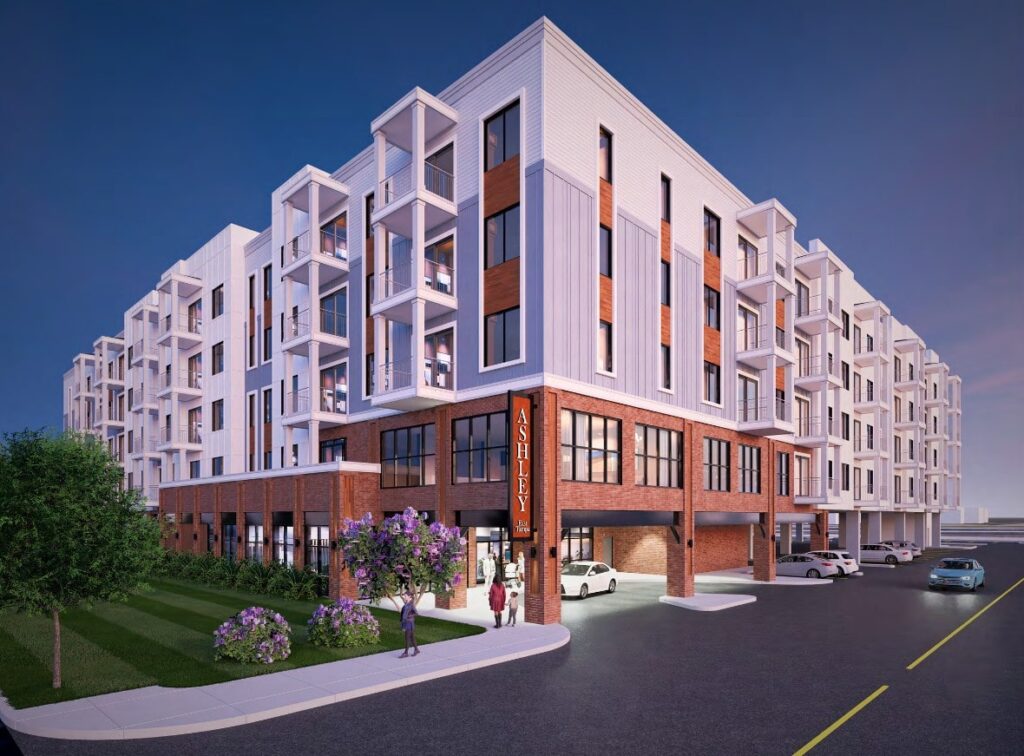
Integral Development Secures $9.7M for 100% Affordable Ashley East Tampa Project

The East Tampa Live-Learn development, a transformative project combining job training with 100% affordable housing, has just cleared a major milestone. On July 24th, Tampa’s Community Redevelopment Agency Board approved $10 million in funding to support the development of the housing component: bringing the long-envisioned community center one step closer to breaking ground. Developed by Atlanta-based Integral Development, the project, coined Ashley East Tampa, will feature 118 affordable units atop city-owned land at 3105 E. Columbus Drive. All units will be restricted for incomes earning at or below 80% of the Area Median Income. More specifically, there will be 23 units placed for those at 30% AMI, 15 at 50% AMI, 43 at 60% AMI, and 37 at 80% AMI. With a mix of studio, one-bedroom, and two-bedroom floor plans, the development is designed to feature both individuals and families: ensuring every unit meets the definition of true affordability. The ground floor of Ashley East Tampa will include over 200 parking spaces, serving both residents and visitors to the nearby future job training facility. Along East Columbus Drive, a landscaped linear park will also buffer the building from the street. While the development itself includes no retail or commercial space, a separate commercial facility, developed by the Tampa Bay Economic Development Council, will rise to the west. This neighboring space will house areas for local businesses, provide vocational training opportunities, and serve as a hub for workforce development. The $9.7 million in CRA funding approved for Ashley East Tampa will support soft costs, site acquisition/parking infrastructure costs, and construction costs. This funding represents approximately 22% of the project’s total development cost. While the project was largely well received by board members, a few concerns were raised around the parking supply and the distribution of affordable units. For instance, Lynn Hurtak, an advocate for reduced parking minimums in Tampa, questioned the need for the parking count. In response, development representatives noted that the parking amount was carefully designed to meet resident demand without creating overflow onto nearby streets. In a city like Tampa, where driving is often the only practical mode of transportation due to the lack of mass transit options, parking remains a controversial issue. Though higher parking requirements drive up the cost of construction, developers are often left with no choice. While Ashley East Tampa secured CRA funding, the project still awaits rezoning approval from Tampa’s planning department. As per a timeline shared during the meeting, construction is expected to begin in May 2026. Kareem Brantley, representing the Integral Group, noted the importance of moving forward with the project: ‘Time is of the essence’, ‘if you don’t move projects forward, the only thing that’s going to happen is the cost is going to go up’.

Water Street Proposes a Mixed-Use Garage as the District Looks for More Parking
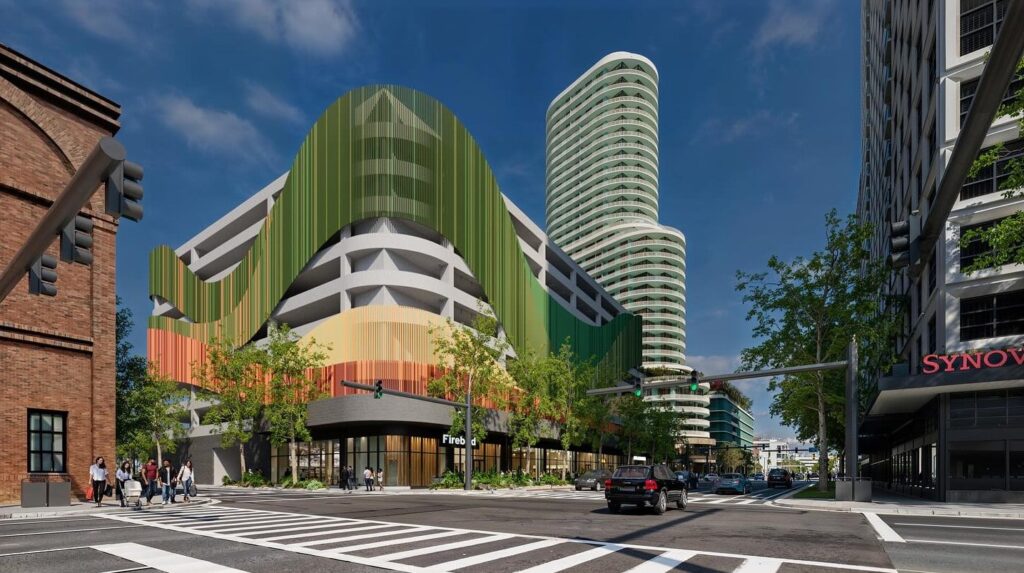
Rendering of the proposed mixed-use parking garage via Water Street Tampa's Instagram. Designed by Gensler.

Water Street’s latest addition in its second phase has just been revealed, signaling a major departure from earlier plans. Announced last Friday, the newly unveiled project is a mixed-use parking garage that will take the place of a previously proposed office tower. Originally, the site was intended to host a Class A office building with thousands of square feet of build-to-suit workspaces. Instead, it will now feature a garage offering 675 parking spaces, retail space, and a rooftop area. In a design review board application submitted amidst the press release, the project plans for “the construction of a 10-story mixed parking garage with +/- 19,000 SF of retail and +/- 5,000 SF of restaurant on the first floor and roof deck with +/- 8,500 SF of restaurant totaling +/- 317,885 gross square feet of developed area.” The team behind Water Street Tampa has further clarified these numbers, indicating the building will have 38,000 SF of retail in total and stand 124 FT tall. Alongside the announcement were plans for a one-acre park designed to serve as a hub for concerts, community events, and retail markets. Although the exact location hasn’t been confirmed, it’s likely to be located at Water Street’s 400 Channelside lot, as earlier statements had suggested the area would feature an entertainment venue and community gathering space. Other possible locations include parcels north of E Cumberland Avenue. Although the announcement may come as a surprise, discussions about addressing parking demand have been ongoing for several months. The Tampa Bay Business Journal previously reported that Brad Cooke, executive vice president of development, admitted that SPP “rose-colored glasses on parking” during phase one’s development. Initial hopes for the district imagined a future centered around walkability, with a range of accessible transit options reducing the need for cars and making parking garages like the Cumberland garage unnecessary. However, with transit funding in Tampa now depleted, that vision has dimmed, and the team behind SPP has shifted to a more pragmatic approach. Both the parking garage at 302 S Nebraska Ave and the community park have an anticipated completion in 2027. The design review board submission filed with the City of Tampa on Friday marks the first step toward making that vision a reality.

4th Avenue Apartments Moves Forward, Set to Replace the Historic Tamborello Bros. Service Station in Ybor City, Tampa
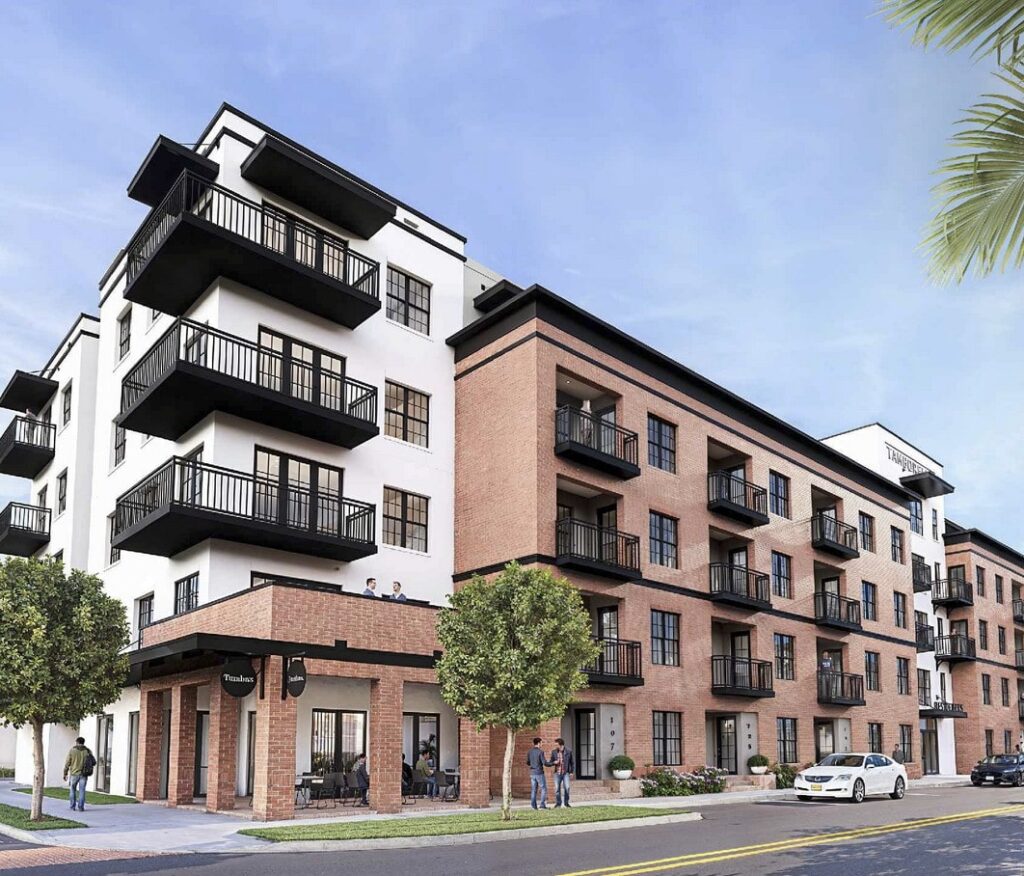
4th Avenue Apartments Moves Forward, Set to Replace the Historic Tamborello Bros. Service Station in Ybor City, Tampa

After nearly three years of working through Tampa’s Barrio Latino Commission, the development team behind ‘4th Avenue Apartments’ is advancing with a revised proposal for their five-story residential project in Ybor City, with eventual construction in the near future. The development, spearheaded by James Hettinger, LLC and Clendenon Properties, LLC, features an updated design by GROH Architecture with significant adjustments to the building’s height and layout. While original plans approved in March 2024 included a 56-FT facade along 4th Avenue, the revised version lowers that to only 44 FT. This visual setback introduces a private balcony for residences but also creates a visual improvement of the facade along 4th Avenue. Because the setback removed a large portion of interior space, the building will be pushed further back on the site to preserve the original unit count of 93 apartments, maintain the total parking count, and retain the corner bodega. This shift allows for larger floor plates and the integration of a mechanical lift parking system. The update eliminates the need for off-site parking leases originally planned for in the old proposal, as 97 spaces will now be accommodated on-site. Additionally, the corner bodega will be slightly expanded from 803 to 883 SF. While the overall unit count remains steady, the updated design adjusts the apartment mix slightly, increasing the number of studio and two-bedroom units while reducing one-bedroom units. The project also retains its commitment to high-quality materials, featuring red brick facades, metal railings, mosaic flooring, and Cuban tiles at the bodega entrance, elements encouraged in Ybor City. Poised to occupy nearly half of the block between E 4th Avenue and N 17th Street, the new development will involve the demolition of the former Tamborello Bros. service station: a significant part of Ybor’s history that operated from 1946 to 2016. Although the building’s official name has yet to be finalized, renderings feature the word “Tamborello” displayed at the top, suggesting both a tribute to the site’s past and a possible name for the future residence. The development has already been in a public hearing, with another taking place on July 31st at 10:30 AM. No construction permits, including foundation work or demolition, have been filed for the property at 1715 E 4th Ave.

Floridian Development Introduces ‘Floridian Advanced’, a Free Service Providing Comprehensive Development Info Across Florida
Floridian Development Introduces 'Floridian Advanced', a Free Service Providing Comprehensive Development Info Across Florida

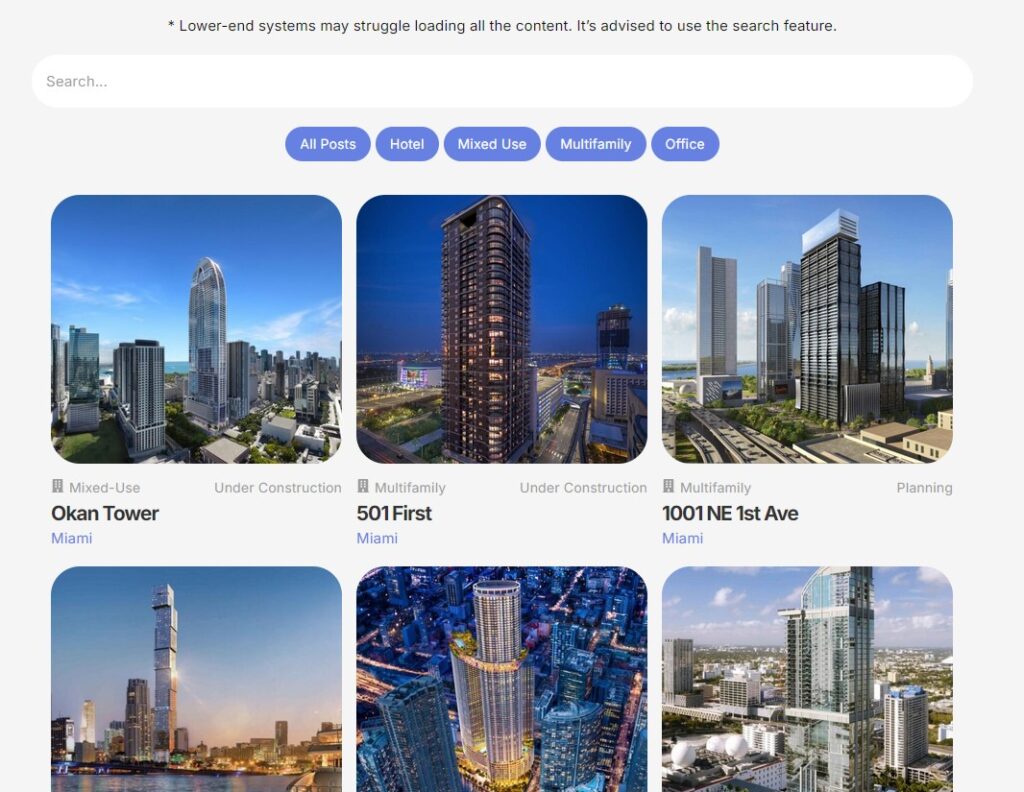
Floridian Development is proud to introduce Floridian Advanced, a free, easy-to-use tool designed to help anyone stay informed about the major developments shaping Florida’s future. From towers rising in downtown Miami to mixed-use communities planned in Tampa or Fort Lauderdale, Floridian Advanced brings all the details together in one centralized platform, no paywalls, no sign-ups, no stress. Florida’s real estate landscape is constantly evolving, with hundreds of new developments proposed, approved, or breaking ground every year. For many, keeping track of these projects means sifting through complicated planning documents or relying on hidden, outdated reports. Floridian Advanced changes that. It offers a clear, well-organized view of the latest projects with data pulled directly from official sources and presented in a clean, simple format. But this isn’t just a site about unit counts. Each listing on Floridian Advanced is thoroughly researched to provide enhanced context, including details like total square footage, floor count, proposed height, number of parking spaces, retail/commercial components, and more. Most entries also include site plans, elevations, or architectural renderings when available, offering visual insight without needing to go through city PDFs or planning agendas. Getting started is simple. Just click the Floridian Advanced tab in the header. You’ll be greeted by a home screen that explains how the system works and how to navigate it. From there, select the city you’re most interested in, and explore away. Each project is categorized by status or type, from multifamily to office or planning to construction so you can filter based on what matters most to you. Who’s this for? Floridian Advanced was built for anyone with a stake or interest in Florida’s growth. Whether you’re a broker trying to understand the local pipeline, a journalist seeking accurate project data, or a resident curious about what’s being built down the block: this platform is for you. This release marks an exciting step forward in Floridian Development’s ongoing mission: to make Florida’s evolving real estate environment more understandable, transparent, and accessible to those who care about it most. Today’s update is just a start to an exciting evolution for the website. Stay tuned for updates including a development map, added cities, and cosmetic/technical updates designed to make your life easier.

Alexander Goshen Proposes Five-Story Apartment at 5802 N Florida Ave in Seminole Heights, Tampa
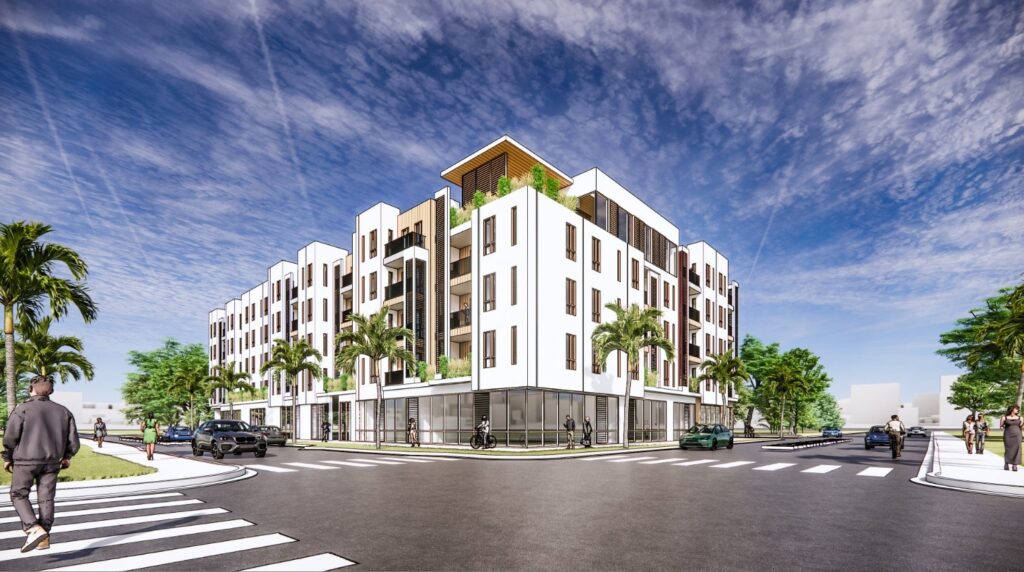
Alexander Goshen Proposes Five-Story Apartment at 5802 N Florida Ave in Seminole Heights, Tampa

Fort Lauderdale–based Alexander Goshen is the latest developer to zero in on Seminole Heights. The firm recently filed a rezoning request for 5802 N. Florida Ave that would clear the way for a five-story building at the corner of Florida and Henry Avenue. The move adds momentum to a neighborhood already reshaped by new capital and infrastructure upgrades, from updated streetscapes to the introduction of mid-rises such as Notch, Hite and Avenue Lofts. Details of the project remain preliminary, but early plans envision a promising development that would bring 67 homes, retail, and further pedestrian activation to one of Florida’s fastest-changing areas. At street level, the proposed development aims to further expand upon Florida Avenue’s commercial scene with 5,269 SF of ground-floor retail space. Behind the storefronts, plans call for 56 parking spaces to serve both residents and retail patrons alike, a figure that falls short of the 73 spaces typically required under city code. The building will also include 35 bicycle parking spots, although only 5 are required. Designed by Goode Van Slyke Architecture based in Atlanta, elevations showcase the 5-story apartment measuring 57 FT. The building’s facade is expected to include a blend of materials, including white stucco finishes, aluminum balcony railings, and vertical plank accents for added texture. Preliminary renderings also suggest a rooftop deck may be included at the corner of Henry and Florida, though detailed floor plans haven’t been released yet. Before Alexander Goshen entered the picture, the site had a proposal for a series of three-story townhomes by Middle Bay Homes. It’s unclear why those plans never moved forward, but all associated commercial construction permits were eventually withdrawn, leaving the property vacant and well-positioned for new development. With minimal site preparation required, aside from limited clearing of existing greenery, the property offers a relatively quick work schedule in the case that construction begins. Still, the proposed project must first receive site plan approval from Tampa planners before any work can officially begin.

Darryl Shaw’s Ybor Harbor Will Soon Call Home to a New Stadium for the Tampa Bay Sun FC
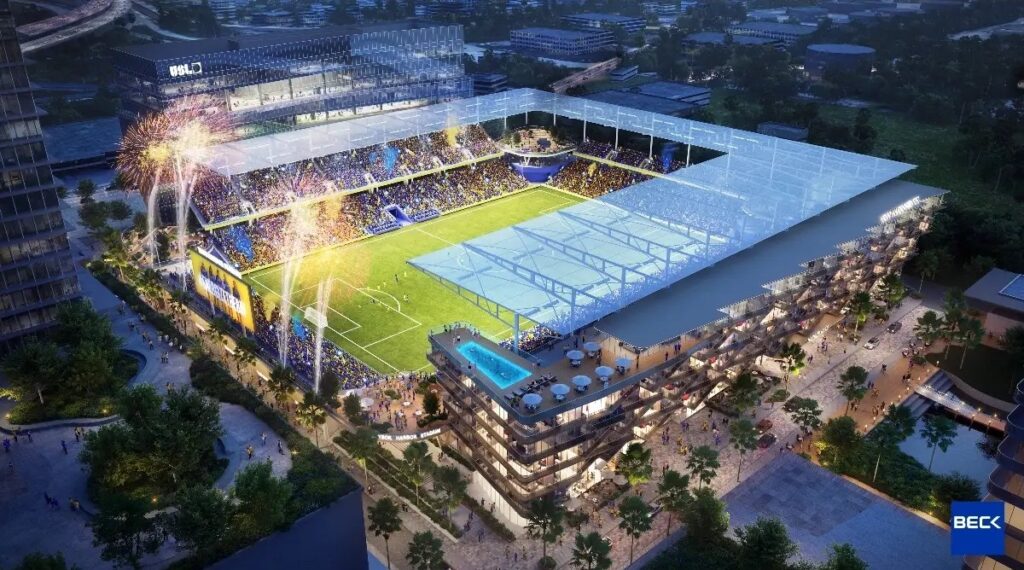
Darryl Shaw's Ybor Harbor Will Soon Call Home to a New Stadium for the Tampa Bay Sun FC

Set between Ybor City and the Port of Tampa, the Ybor Harbor development will soon call home to one of the only soccer stadiums in the U.S. built for a women’s professional soccer team. The 15,000-seat stadium, designed by The Beck Group and spearheaded by Darryl Shaw, is trying to ride the momentum wave of the Tampa Bay Sun’s impressive season, as the team just won the USL Super League’s championship. Women’s soccer in particular is gaining traction across the United States, and the USL along with Darryl Shaw want to be part of the movement. “By collaborating with Darryl Shaw and Tampa Bay Sun FC, we’re accelerating the growth of women’s soccer while creating lasting benefits for Tampa Bay” according to Alec Papadakis, USL Chief Executive Officer. “The growth of women’s soccer” is evident: just a few months ago, the CPKC Stadium in Kansas City became the first soccer stadium “purpose-built for a women’s professional sports team”. The USL, which is already based in Tampa, will soon gain a new state-of-the-art headquarters integrated into the stadium complex. Renderings reveal an office building with direct views overlooking both Ybor Harbor and the stadium itself. Plans also feature a boutique hotel positioned along the waterfront as part of the overall development. Although the stadium’s main purpose is to host women’s soccer, Darryl Shaw has emphasized that it will also serve as a venue for other sporting events, concerts, festivals, and community gatherings. Aside from Amalie Arena, inner-city Tampa lacks a flexible space of this kind, and the new stadium is expected to create a more active community. Ybor Harbor is planned to include over 100,000 SF of open space, and this development emphasizes that priority. Renderings/plans outline large sidewalks, potential retail venues, and greenery that compliment the stadium. Once completed, Ybor Harbor will include 800 hotel rooms, 150,000 SF of street-level retail space, 500,000 SF of office space, and 4,750 residential units with 10% put forth for affordable housing. Ybor Harbor is an ongoing initiative, and while a construction timeline has not been released, it will take some time before the first groundbreaking. What about the Tampa Bay Rays? Although a potential stadium for the team was envisioned in late 2022, documents for Ybor Harbor submitted to City Council in 2023 made no mention of a baseball venue. In fact, incorporating one would require slashing several planned high-rises due to the already tight footprint of the Ybor Harbor site. This update comes as Darryl Shaw recently stated that finding enough land within inner Ybor for a baseball stadium is no longer feasible. Meanwhile, foundation work for multifamily developments, historic restoration, and other construction efforts have been long ongoing in the region. Cost and a construction timeline have not been released, but according to the Tampa Bay Times, the goal may be to develop the Tampa Bay Sun’s stadium through a “public-private” partnership common with recent stadium construction.

First Work on Tampa’s New Green ARTery Begins

First Work on Tampa's New Green ARTery Begins

After being proposed in 2010 and undergoing planning for more than half a decade, Tampa’s Green ARTery is beginning its first two segments: Segment D & E. The pedestrian-orientated vision was jump-started in the spring, and involves the construction of an uninterrupted pedestrian-orientated trail where cyclists and pedestrians can enjoy Tampa’s urban landscape under the comfort of traffic calming methods, art, and tree canopies. According to the City of Tampa, residents will see “nearly 4,000 feet of new and widened sidewalks, fresh paving, lower speed limits, solar-powered flashing crosswalk beacons, improved roadway markings, signage, and more.” The first two phases of the initiative will cost around $1.7 million, with half of the funding deriving from FDOT grants and the remainder from multimodal impact fees. Segment E, with an estimated cost of $1,188,166, will link Lowry Park to River Tower Park. The segment will span approximately 1.3 miles and will include widening existing sidewalks, adding new sidewalks with grass buffers, and installing bicycle/pedestrian crossing signage at multiple intersections. According to meetings held during the planning process (which are subject to change), North Boulevard will feature shared lane markings, resurfaced pavement, and reduced speed limits of 25 MPH. Meanwhile, Kirby Street and River Shore Drive will be retrofitted with speed cushions, lower speed limits, a new 5 FT sidewalk with a buffer, and additional improvements. In the final section of segment E, along North Florida Avenue, existing sidewalks will be widened from 5 FT to 8 FT. More information is available at this link: https://www.tampa.gov/project/trans20032. The last segment that began construction is segment D. Despite being at a lower cost of $532,787, the project will actually span more mileage at around 1.4 miles. Like segment E, the project will include “Share the Road” markings, new 5-foot sidewalks, and more. Sidewalks will be provided on the east side of Van Dyke Place and from Hamilton Heath Drive to Hollywood St. Across the entire section includes bicycle boulevard markings and speed cushions on streets such as Park Drive, East Park Circle, and E Patterson St. More information ca be found here: https://www.tampa.gov/project/trans20031. Construction on both segments are estimated to be done by mid-August, while the entire ARTery will be entirely completed by 2030. Throughout the Green ARTery’s phasing, more than 20 neighborhood groups will be involved.

Preliminary Plans Revealed for a Hotel Building at 111 N Meridian Ave in Channelside, Tampa

111 N Meridian Avenue Elevation

A rezoning application was recently filed on January 20th, entailing a proposed hotel featuring extensive retail space along N Meridian Avenue and hotel amenities and rooms. An original rezoning plan was approved by the Tampa City Council in 2019, outlining a first phase that later constructed 330 units and a phase two featuring a mini warehouse facility with ample commercial space. As per a new rezoning application, phase two will instead create a close to 500,000 square feet building (495,132 SF) developed by McKibbon Equities. According to the property’s site data, the project will include 304 hotel rooms, 35 parking spaces, 13,000 SF of retail on the bottom floor, and a 4,800 SF ‘AC Cafe’ along East Washington Street and North Meridian Avenue. Likewise, a large sidewalk lining newly planned landscaping will compliment the project’s massing. The development will request no waivers, with close to zero setbacks along any portion of the development. Uniquely, the site plan hints at the hotel being an ‘AC Hotel’ with the projects name being ‘MHG Tampa DT ACH-MX, LLC’ and the site plan showing an ‘AC Cafe’, albeit it’s all speculative and naming isn’t confirmed. Elevations draw out a 13 floor tower measuring 164 FT to the building’s parapet or 148 FT to the roof. Because the project is preliminary, rendering unfortunately aren’t available. Current processing status indicates the project is in its earliest stage: application review and traffic analysis, with closure occurring in the distant past. The project is located at 111 N Meridian Avenue.

Gasworx’s First Phase Moves Forward With Permitting in Ybor City

Gasworx's First Phase Moves Forward With Permitting in Ybor City

Gasworx Tampa, a development aimed at historic restoration and revitalizing southern Ybor City with housing, retail, and office, is progressing with extensive permitting. Gasworx was touted in early 2020 as a “development that will reconnect a community with its rich cultural heritage and to restore Ybor City to its rightful place as one of America’s truly great neighborhoods.” Developers now have an opportunity to deliver on that promise. The project’s first phase began construction in early 2020 with La Union, a 317 unit apartment building, and later W2, a 390 unit apartment building that broke ground in early 2024. The remaining parcels in phase one are now moving forward with 516 units, 108,000 SF of office space, and 87,000 SF of retail space. Additionally, phase one will feature a new TECO Streetcar station next to a proposed park, all part of the development. The permitting covers three new blocks: E1, E2, and E3. All three blocks have respectively filed their demolition permits, utility permits, construction permits, and site work permits. Block E1, located at the northern end, will feature 140 residential units along with 18,000 square feet of retail space. This block is already prepared for construction following a demolition permit issued in 2020, which demolished a two-story building surrounded by vacant lots that were previously used for parking. Block E1 already has a filed utility permit to add four wastewater service connections and a site/foundation permit, both pending a client response to proceed. Additionally, a construction permit has been requested for a parking deck to provide parking spaces for both the retail and residential units. Block E2 is somewhat complicated, with parts of the existing warehouse being torn down to make way for an office building featuring 108,000 SF of office space and 12,000 SF of retail space. The Gasworx team is dedicated to honoring Ybor’s historic roots in their development, translating into the brick warehouse constructed in 1952 being repurposed to house unique retail spaces. Block E2 has a construction permit submitted for the office building, as well as a utility permit, a demolition permit, and a site/foundation work permit in process, all awaiting client response. Block E3, set to be the tallest building in phase one with 376 units and 29,000 SF of retail, is moving quickly. Crews have already demolished the existing structure on the site, thanks to a demolition permit obtained in 2023. The removed building was a three-story office constructed in the 90s. Lot E3 is the quickest moving parcel, with a complete construction permit, utility permit, and site/foundation permit already submitted. While the construction and utility permits are still under review, the site/foundation work permit has been granted. According to Businesswire, Suffolk Construction will break ground on the rest of phase one this summer.

Tampa’s Green Spine Cycle Track Continues Construction in Ybor

Tampa's Green Spine Cycle Track Continues Construction in Ybor

The City of Tampa is moving forward with the next stage of the Green Spine, a bike path that runs from North Hyde Park to V.M. Ybor. The Green Spine was first introduced in the early 2010s as part of the InVision Tampa Center City Plan, aiming to create “an appealing and safe cross-city multi-use trail that connects the eastern and western neighborhoods of Center City to the Riverwalk and to each other.” The entire Green Spine spans 3.4 miles, with the construction for phases 2a, 3a, and 1 already completed. The current phase, phase 3, includes segments 3B and 3C, with a total cost of $1,830,338 for capital improvements. The segment will feature two-lane bike paths with 3-foot concrete buffers, providing better protection for cyclists compared to existing bike lanes in Tampa that use cost-effective flex posts or paint. Construction began in August 2024 and is slated for completion by September of the following year. Recent site photos show that construction on segment 3B (Nuccio Parkway) is already under way, while construction for phase 3C has not yet started. Phase 3C along N 15th St will remove an estimated 42 parking spaces, with 52 remaining. It will develop a connection from Cuscaden Park to North Hyde Park, sparking significant improvements in the neighborhood/surrounding areas ranging from reduced gas consumption, increased tourism, improved water and air quality, and increase community connectivity. To contact the City of Tampa regarding concerns or suggestions, click here for Segment 3C and here for Segment 3B.

Tampa’s TECO Streetcar Has Been Free Since 2018: That May Soon End

Tampa's TECO Streetcar Has Been Free Since 2018: That May Soon End

Fare-free ridership on the TECO Streetcar Line is quietly coming to an end, ending close to 6 years of free service. The Florida Department of Transportation’s final grant to maintain fare-free service will last until January 5, 2025. The news comes as ridership reaches record highs. A report from July shows that ridership hit 112,999, contributing to around 1.43 million trips in 2024 so far. The Streetcar Line introduced fare-free riding in 2018 thanks to a $2.7 million grant from FDOT, funding the service until 2021. Afterward, an additional grant of $1.4 million was provided to continue the service from 2021 to 2023. Concerns about the end of fare-free ridership resurfaced in 2024. FDOT has committed to a $700,000 grant for this year, but no promises have been made for the future. The team behind Tampa’s TECO Streetcar is working to change that. A Public Hearing on potential fare adjustments is scheduled for November 7, 2024, from 5:30 PM to 7:00 PM, providing opportunities for public comments and survey feedback. The leaders are eager to hear from community members and potentially gather insight into reinstating fare-free ridership. Additionally, seven stations will host Q&A sessions for residents to voice their concerns directly. Fare-Free ridership has been vital for Tampa’s economy. Dense neighborhoods like Tampa’s Water Street District, Channelside, or Ybor, have relied on the streetcar both for tourists and local passenger travel. If fare-free ridership ends, community investment is feared to dwindle. If you’re concerned about fares ending and can’t attend in-person sessions, there’s also an available online survey: TECO Streetcar Survey.

1st Affordable Building Revealed for Rome Yards in Tampa

1st Affordable Building Revealed for Rome Yards in Tampa

On September 6th, Related Group and The Tampa Housing Authority revealed plans for their first building at Rome Yards called Gallery at Rome Yards. The building is part of phase 3A. According to a recently filed PD-A Incremental Review Application, phase 3A will include a residential building measuring 11 floors tall and a 4 story parking garage. The 11 floor building will measure 150 FT. As per the site plan table, the multi-family building will include 234 units. The 234 units include 60 one-bedroom units, 152 two-bedroom units, and 22 three-bedroom units for families. Eighty percent of the units are for low-income individuals/families at or below 80% of the Area Median Income. The leftover 20 percent is reserved for workforce housing. According to The Tampa Bay Chamber, workforce housing is for individuals making between 80% and 120% of the Hillsborough Country Area Median Income. This includes individuals who are typically teachers, fire fighters, retail workers, construction workers, and more. To handle the excess demand from move-ins, a parking garage with 447 spaces will be built adjacent to the tower. 266 parking spaces are reserved for the first tower, while the others are for future buildings. On the bottom of the parking garage is a workforce training center and 5 live-work units. Rome Yards broke ground on May 21, 2024. Rome Yards will span 18-acres along the Hillsborough River and include 954 units designated to affordable and workforce needs. The current site has no existing buildings beyond surface parking and construction equipment for nearby projects. Zyscovich is the main architect. The first building is located at 2609 N Rome Ave.

455 Foot Crane Submitted For the “Harrison” in Tampa’s Encore District

455 Foot Crane Submitted For the "Harrison" in Tampa's Encore District

Aureate Development’s “Harrison” tower in Encore is moving forward. The tower, currently under construction, had 2 crane submissions filed to the FAA in May and July. According to previous submissions, tower crane one will rise 360 feet while tower crane two will rise 290 feet. However, new plans released show the 2nd crane refiled at a staggering 455 FT. According to the work scheduled on the crane, construction will progress from September 1st, 2024 to January 30th, 2026. The tower will be the tallest in Tampa’s Encore District if built. At 237 FT or 20 Floors, the building will house a generous 294 units. Likewise, there will be 23,824 SF of retail (for potentially a grocer), 43,884 SF of office, and 467 parking spaces (although 430 are required under code). Aureate development is planning another tower next door called Muse at Tampa. Construction hasn’t begun for that tower. Baker Barrios is the main architect. The location is 1280 E. Harrison St.