Turnbridge Equities Proposes 20-Story ‘Reserve at One Sunset’ in Sunset Harbour Through the Live Local Act
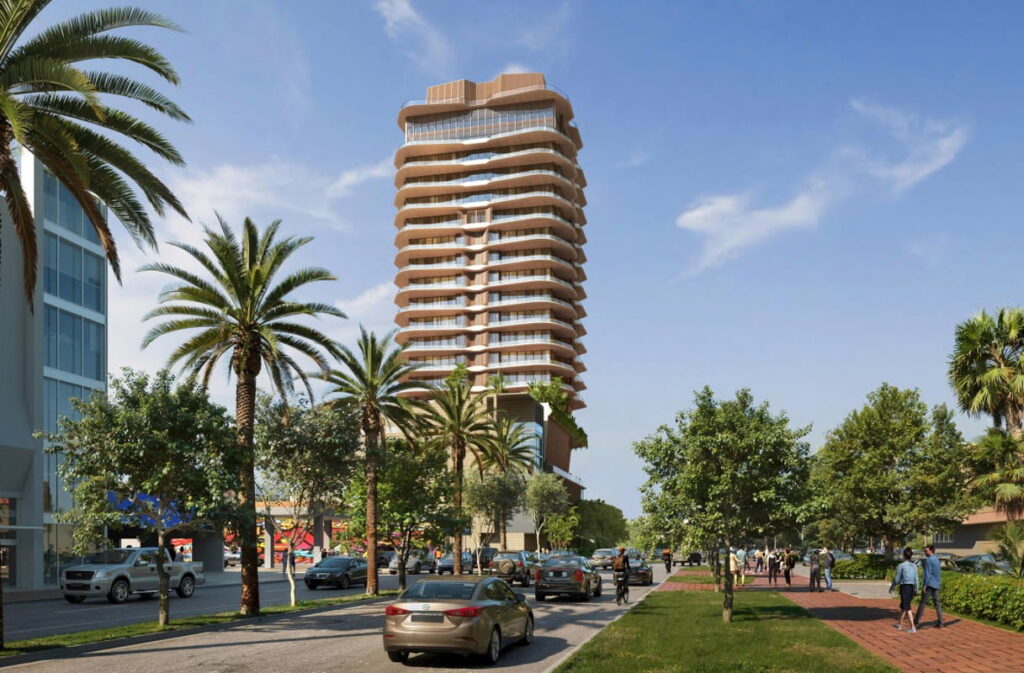
New York-based Turnbridge Equities is the latest developer chasing Miami Beach’s highrise boom, this time in Sunset Harbour. The firm’s new proposal, Reserve at One Sunset, calls for a 20-story residential tower at 1 Sunset Drive, and it won’t come without cost. Several existing buildings on-site would be demolished, including Pura Vida, which opened in the neighborhood just a few years ago. In their place, developers are planning 35 luxury units. The site has history. It was previously slated for a very different project: a 5-story mixed-use development from Boich Investment Group and partners, operating as Alton Office Holdings II LLC, with class A office space, retail, and residential units designed by Gensler. That plan dates back to late 2021, when Alton Office Holdings II LLC paid over $21 million for the assemblage. Now, Turnbridge is scrapping that vision for something taller and almost entirely residential. Reserve at One Sunset splits its 35 units two ways. Twenty-one will be luxury condos, a mix of 3- and 5-bedroom layouts plus a penthouse level, averaging a sprawling 4,288 square feet. The remaining 14 will be workforce rental units, studios and 1-bedrooms averaging just 512 square feet. Notably, the developer could have built more units but chose not to, sacrificing extra density for larger, higher-end floor plans. That workforce housing component isn’t by choice. It’s the mechanism unlocking the project’s height and density bonuses under the Live Local Act. To qualify, Turnbridge is pricing units at a minimum of 120% AMI, which works out to rent caps of $2,862 for studios and $3,066 for one-bedrooms. Whether those numbers are actually within reach for the firefighters, teachers, and medical staff the Live Local Act was designed to serve is a question housing advocates are asking. Unsurprisingly, the building’s amenities lean into its exclusivity: a padel court, a large pool, an outdoor hot tub, and lounge seating, with additional indoor amenities still to be announced. At street level, 4,343 square feet of ground-floor commercial space is reserved for food and beverage tenants. On the floors above the ground floor, the podium houses a more ambitious offering: 22,272 square feet split between five padel courts and a wellness club, alongside 53 parking spaces. Miami-based ODP Architecture is leading the design, with Brandon Haw Architecture consulting. Expect floor-to-ceiling glass curving around most of the facade, expansive glass-railed balconies, a mix of horizontal and vertical louver screening, and wood paneling for warmth against the more contemporary materials. The tower will reach 323 feet at its highest point (298 feet to the roof), and its 20 floors will average roughly 13 feet each, notably taller than the standard 10-foot floor height typical of residential towers. Miami Beach’s planning department has a track record of scrutinizing Live Local projects closely, so approval here is far from guaranteed. Even so, Reserve at One Sunset appears better positioned than most. Sunset Harbour has no architectural protections in place, meaning that despite a few structures on-site dating to the early 1960s, demolition faces no real obstacles. And because the surrounding neighborhood already includes highrises, the tower is less likely to draw the kind of contextual pushback facing other Live Local proposals elsewhere in the city.
Related Ross Buys BRiC, Eyes ‘Mini City’ for Boca’s Brutalist Icon
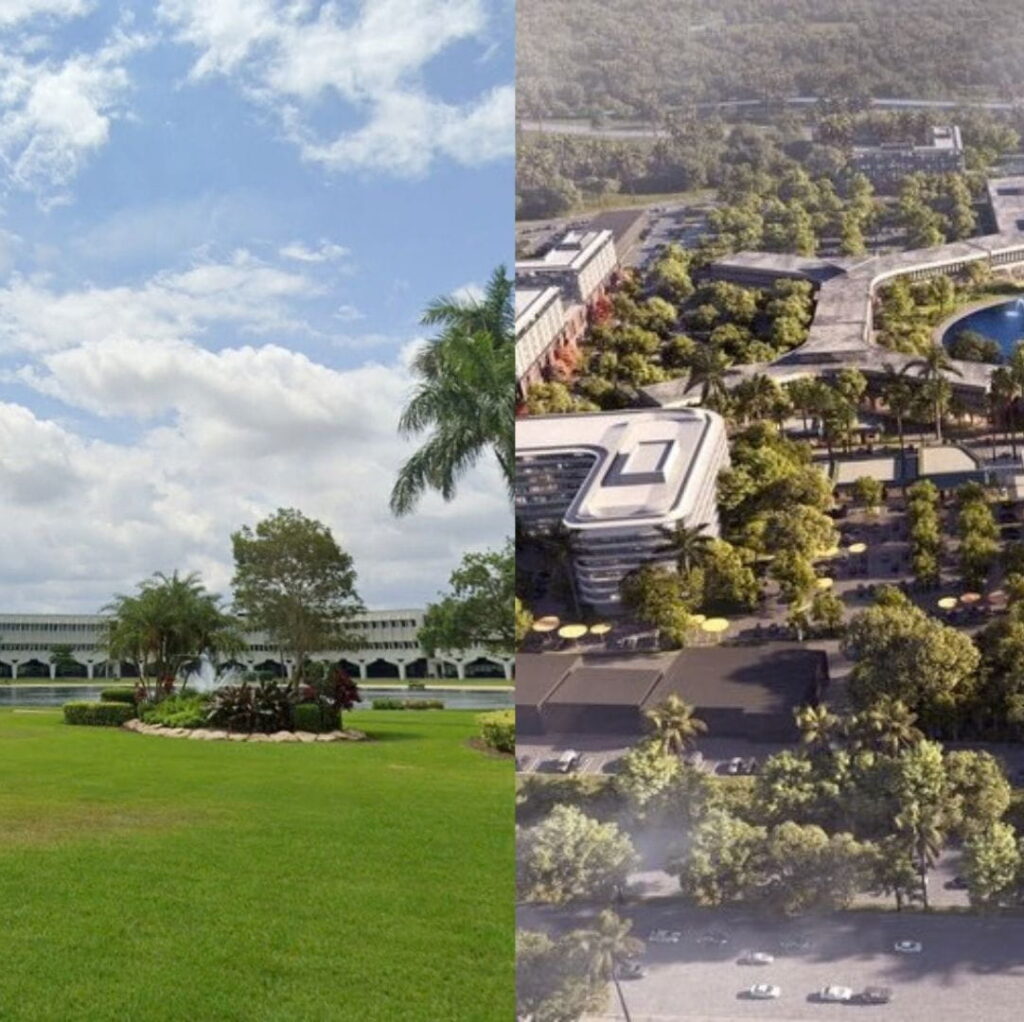
One of South Florida’s most prolific developers has set its sights on Boca Raton. Related Ross recently closed on the 120-plus-acre Boca Raton Innovation Campus, known locally as BRiC, for an undisclosed sum, with plans to transform the sprawling office park into a self-contained “mini city.” The deal marks the firm’s first successful foothold in the Boca market, following an earlier, unsuccessful bid to redevelop the city’s now-defunct city hall project. BRiC carries a notable history of its own. Built in 1970, the campus once served as IBM’s research and development hub, the site where the first personal computer for IBM was developed before the tech giant departed in the late 1990s. Today it stands as one of the region’s most recognizable examples of Brutalist architecture, a legacy now weighed against the developer’s redevelopment plans. What’s Planned Under the current proposal, the campus’s distinctive Y-shaped wing, wrapped around a circular reflecting pool, would be spared the wrecking ball, while large stretches of the property’s rectangular section would come down. The office portion is set to stay in use, a decision made easier by two recent tenants already signed on: D-Wave Quantum, which plans to relocate its headquarters from Palo Alto to the Boca campus by year’s end, and financial technology giant Fiserv, which is also planting its flag on the site. To fund the acquisition and redevelopment, Related Ross secured nearly $300 million in financing from Ares Real Estate, a global investment company. The property also came with entitlements already in place, thanks to groundwork laid by former owner CP Group (among other partners), which teamed up with Terra Group in 2025. Back in 2023, CP Group secured zoning approval for a hefty buildout: as many as 1,243 residential units, a 140-room hotel, 125,000 square feet of retail, 85,000 square feet of medical office space, and a 55,000-square-foot entertainment venue. Those entitlements, though, only cover half the map. They apply strictly to the parking lots ringing the site, not to the rectangular western stretch of the property where personal computers were once assembled. Related Ross wants to level large portions of that section too, but hasn’t yet cleared the approval hurdles needed to do it. The full build-out is expected to unfold over several years and multiple phases. But Related Ross is thinking long-term, drawing comparisons to West Palm Beach’s transformation into a quietly emerging financial powerhouse. The developer’s broader ambition is for Boca Raton to follow a similar trajectory, positioning the city as a tech hub in its own right. “BRiC changed the course of technology once before for the region, and it will play an important role in what comes next,” said Stephen Ross in a press release. Fears of Preservation Amid Development Not everyone is sold on the plan. Sharon Geltner, a guest columnist for the Palm Beach Post for instance, argues that saving the building alone misses the point, insisting that the land around it carries just as much weight as the structure itself: “destroying the historical setting destroys the place. The setting is as important as the buildings. You need both.” Boca Raton does have steps in place to shield its history. Any property with formal historic designation must clear a Certificate of Appropriateness before facing exterior changes or demolition. The trouble is that protection never activates until a property earns that designation in the first place, and despite being old enough to meet that threshold, BRiC has never been formally designated. That leaves it legally defenseless against demolition or wholesale redevelopment, in spite of architectural significance by famous architects Marcel Breuer and Robert Gatje. Boca isn’t the only one at the crossroads between preservation and development, however. Floridian Development has documented similar standoffs unfolding in Miami Beach, where a string of historic properties face the bulldozer as the city’s Art Deco identity butts heads with the state’s appetite for denser housing. Two pieces of legislation are pouring fuel on that fire: the Live Local Act and a 2024 law that loosens demolition rules for coastal buildings, both of which critics say could hand developers a shortcut around local historic review entirely. A public records request has been filed with the City of Boca Raton regarding specifics of the BRiC redevelopment plans. This article will be updated as more information becomes available.
El-Ad Properties Proposes North Bay Village’s Tallest Building Yet at 7931 East Drive
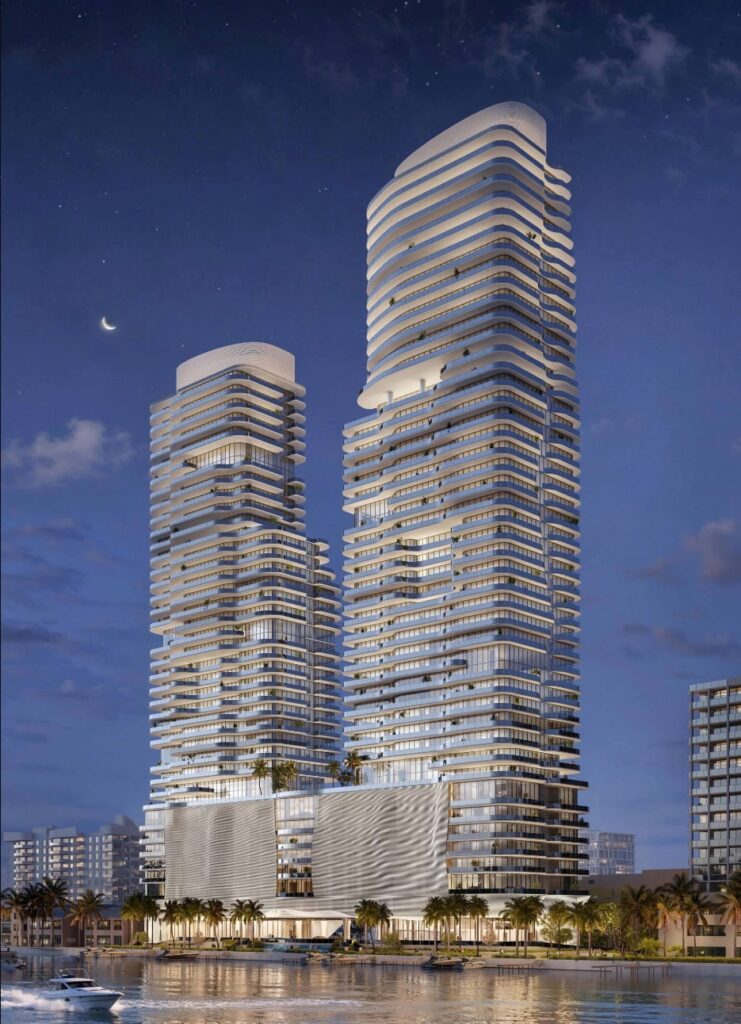
North Bay Village is being pushed to new heights, quite literally. Yesterday, El-Ad Properties, a subsidiary of the national real estate developer El-Ad Group, proposed plans for two towering condo towers along the city’s East Drive corridor: one rising 39 stories and the other 46 stories. Designed by ODP Architecture and Garcia Stromberg, the development would feature the tallest building ever constructed in the city if the plans materialize, a sign that developers have quickly begun to see the potential of this quaint island town. Located at 7922 East Drive and 7925-7931 East Drive, the development would span five properties, three of which are currently vacant grass lots while the other two are home to low-rise residential buildings. El-Ad Properties has already purchased the vacant properties, but the two residential buildings remain under different ownership. They are owned by Luis Navas, who originally sold the three grass lots to El-Ad last year for more than $19 million. Given that the two entities have already worked together before, the remaining lots will likely switch hands soon. According to plans submitted to Miami-Dade County, the development would feature 165 units, ranging from one-bedroom, two-bedroom, three-bedroom and four-bedroom residences. The units would be “family” oriented, with the smallest residence measuring 1,238 square feet. To achieve this density across the property, the development team utilized multiple mechanisms, among the most important being the purchase of 27 allowable units from the city to achieve the project’s final density. Residents would have access to a wide variety of amenities, including a private drop-off zone, a pool and various indoor amenity spaces. Across the street, a clubhouse would provide even more amenities, including a fitness center, spa, sunbathing areas, outdoor terrace space and other uses. Meanwhile, the ground floor would introduce a significant amount of public-facing space to the development. Plans call for 5,295 square feet of restaurant space facing the water, alongside a large, expansive island walk, also known as a baywalk. On the northern portion of the site, more than 10,000 square feet of landscaped park space would be provided, equipped with a yoga lawn, mini amphitheater and other event spaces. To handle demand from the residences, restaurant space and other uses, the development would include 427 parking spaces. Those familiar with zoning in North Bay Village would immediately flag the proposed height of the development as non-compliant. In fact, the towers would rise far beyond the maximum height currently allowed. Hence, the development team is proposing a SAP, or Special Area Plan, which would allow the project to achieve substantially greater height and density than otherwise permitted. Specifically, the shorter tower would rise 465 feet, while the tallest tower would reach 518 feet. Mechanical levels would bring the taller structure to roughly 540 feet. If constructed as proposed, it would become not only the tallest building in the city, but also the tallest building in Miami-Dade County outside of Miami and Miami Beach. Architecturally, both towers would feature floor-to-ceiling windows, facades largely composed of glass, glass balconies, curving forms and beige stucco. The podium would also incorporate a living green wall and ventilated aluminum screening, adding a different material treatment to the base of the otherwise glass-heavy towers. While a timeline for the development has not been revealed, that is likely because approvals will take some time. Before construction can begin, the developer will need approval for the development from both the county and city, as well as approval of the Special Area Plan being proposed to achieve the towers’ height. Once the project does break ground, however, construction would take place across three phases. The tallest structure would rise first, followed by the second tower, while the third and final phase would consist of the clubhouse across the street.
Edge House, Biscayne 18, and 1775 Biscayne Advance Through Foundation Work, Bringing 2,330 Units
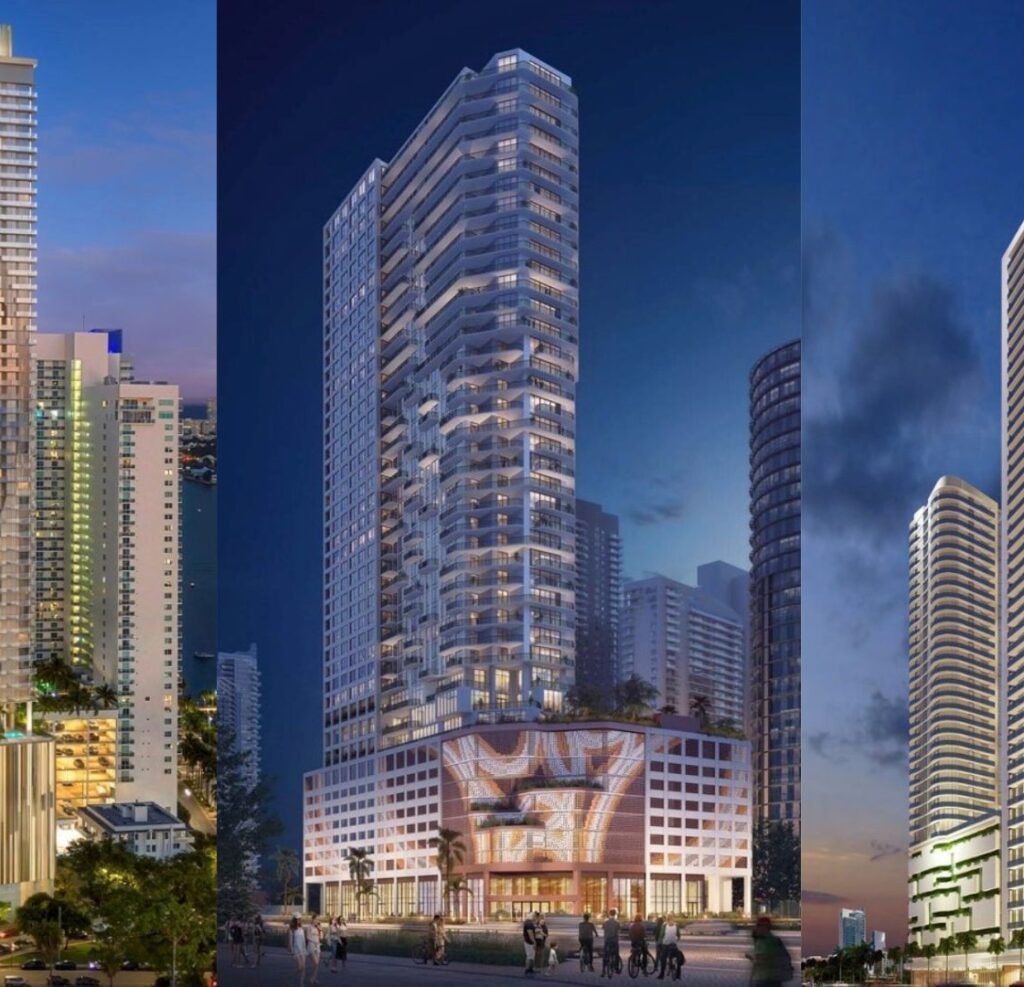
Three construction sites, all sitting across the street from one another, are quickly moving through foundation work to deliver three residential towers in one of the most concentrated pockets of development in the country. Located within walking distance of Margaret Pace Park along the Biscayne Boulevard corridor, Edge House, Biscayne 18, and 1775 Biscayne Boulevard will soon rise alongside each other, transforming a stretch of the neighborhood that has waited decades for this moment. The three towers are being developed by Grupo T&C, The Melo Group, and LCOR, respectively, and all three broke ground on foundation work around the same time, though Edge House, led by Grupo T&C, has pulled ahead, having started construction months before the other two. Once complete, the corridor will deliver 2,330 units combined across rental and condo product, a dramatic shift for lots that sat undeveloped for decades. The last single-family homes and miscellaneous structures on these parcels were demolished back in 2009, and it wasn’t until 2026 that construction on all three sites finally got underway, capping off nearly two decades of waiting. Edge House Edge House hit a major milestone in mid-July with the completion of its foundation pour. Led by general contractor Thornton Construction Company, the pour required more than 7,000 cubic yards of concrete, delivered by over 700 trucks across a 30-hour stretch. It marked the largest construction milestone on the project since it broke ground in the spring of 2025. Grupo T&C General Manager William Ticona called it “an incredibly proud moment for our entire team,” adding that the firm remains focused on growing its footprint in one of the world’s most active real estate markets. The project has since moved into the early stages of vertical construction, with rebar columns now rising to outline the first floor and the elevator shafts that will form the tower’s structural core, according to an Instagram post from the developer. When Floridian Development visited the site in mid-August, two cranes were already erected and operating, equipment that will remain in place until the tower tops out at 56 floors, or 630 feet, sometime next year. Once finished, Edge House will bring 608 units and 293 parking spaces to the corridor, along with a wide range of amenity spaces and unit types. Kobi Karp is serving as architect. View this post on Instagram A post shared by G&E Florida Contractors (@gefloridacontractors) 1775 Biscayne New York-based developer LCOR is also progressing through foundation work on its site. Permits filed with the City of Miami show the project has already secured both a foundation permit and a vertical construction permit, with only minor corrections pending on the master permit. That approval structure allows the project to move directly from foundation work into vertical construction without waiting on further permit sign-off. On site, crews led by general contractor Coastal Construction are currently installing rebar columns, laying the groundwork for an eventual foundation pour. At the current pace, a topping out toward the end of next year appears likely. While 1775 Biscayne won’t rank among the tallest towers in the area at 42 floors and 446 feet, its scale will still be enough to create a canyon-like effect along Biscayne Boulevard, a reminder of just how far Miami’s skyline has come when a 446-foot tower barely registers as tall by comparison. Upon completion, the project will include 544 rental units, 628 parking spaces, and 9,772 square feet of ground-floor retail. ODP is the architect. Biscayne 18 Melo Group’s next rental tower project is getting underway as the firm wraps up construction on Downtown 6th, also known as Central Tower. Recent photos posted by Ryan RC Rea on X show Biscayne 18 progressing through foundation and rebar installation in similar fashion to LCOR’s 1775 Biscayne, with rebar cages, heavy machinery, and other equipment visible on site. Permitting records show a site preparation permit for foundation work has already been issued, with construction handled by Melo Contractors Corp, the developer’s in-house contractor: a strategy the firm uses to keep costs down. The project is still awaiting approval on both a phased vertical permit and a master building permit, though given how quickly Melo Group has moved on past projects, those approvals are likely to come soon. Once complete, Biscayne 18 will deliver 1,178 rental units split evenly between its two towers, 589 units each, along with 37,010 square feet of commercial space, 17,670 square feet of office space, and 1,472 parking spaces. Each tower will rise 46 floors to a height of 465 feet. Given Melo Group’s track record of moving fast, a topping out next year seems all but guaranteed, with full completion expected sometime after. G3aec and Melo are responsible for the tower’s design.
Developers Plan 25-Story Live Tower at 1501 Collins Avenue, While Sparing the Historic Bancroft Hotel
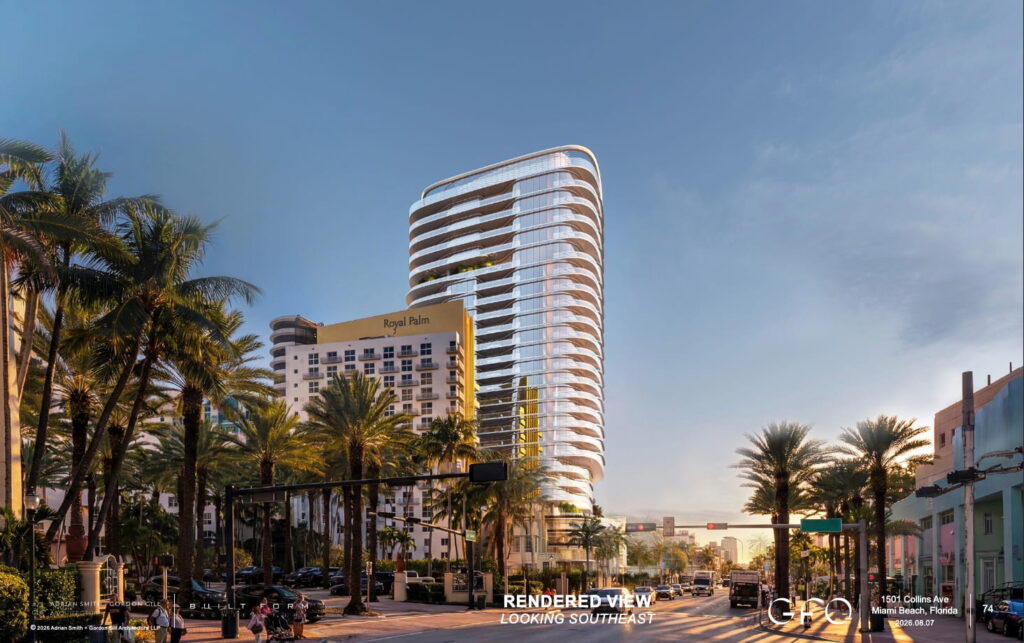
Yet another high-rise is headed for Miami Beach’s iconic Collins Avenue, and like many of the towers recently proposed across the city, it’s coming courtesy of the state’s controversial pro-housing law, the Live Local Act. The project, led by a joint venture between Pebb Capital, Maxwelle Real Estate Group, and GFO Investments, calls for the partial demolition and redevelopment of 1501 Collins Avenue, home to the historic art deco Bancroft Hotel. But unlike The Savoy, a recent Live Local Act proposal Floridian Development covered previously that would demolish a historic structure entirely to make way for something taller, this project takes a different approach: the historic portion of the site stays standing. Three distinct uses currently occupy the property. On the far west side sits the Bancroft Hotel, an art deco building dating back to 1939. In the middle is an associated dining space, and to the east stands a multi-story condo tower, both built in the late 1990s. The hotel and dining space have sat vacant for years now, having survived multiple failed redevelopment attempts before this one. Under the new proposal, the joint venture would fully restore and preserve the Bancroft Hotel while demolishing the adjacent dining space to make room for a 25-story mixed-use tower combining workforce housing, condos, and hotel rooms. Plans submitted less than a month ago outline 124 total units, split between 50 workforce rental units priced at or below 120 percent of the area median income and 74 for-sale luxury condos. The workforce units will occupy the two floors directly above ground level, with a small average footprint of 469 square feet per unit. Above those, the tower will house 42 hotel rooms, followed by the 74 luxury condos on the upper floors, offering some of the best views in the area. That workforce housing component isn’t a voluntary gesture on the developer’s part, it’s baked into the law itself. The Live Local Act only grants its height, density, and zoning boosts in exchange for a commitment: at least 40 percent of a project’s units must be priced at or below 120 percent of the area median income, and stay that way for a minimum of 30 years. Workforce and condo residents will share a set of amenities, including a large pool, outdoor seating, and indoor amenity space that has yet to be finalized. Hotel guests will have their own separate amenities, also centered around a pool and indoor space, plus a restaurant on the 21st floor with terrace views overlooking the water and city. While the tower’s occupied floors top out at 25, a 26th-floor terrace level will add pool access exclusively for the building’s penthouse units. Beyond residences and amenities, the development will also include 15,999 square feet of commercial space in total. Parking, meanwhile, will be split across two spaces: 88 spaces in the basement of the tower itself, plus an additional 97 spaces in the basement of the neighboring condo building, previously used likely for Bancroft Hotel and dining operations, to reach a combined total of 185 parking spaces. In total, the tower will rise 325 feet, making it one of the tallest structures in the area. The design comes from AS + GG, the firm behind the Burj Khalifa, the tallest building in the world, working alongside Built Form Architecture. The building will be wrapped almost entirely in floor-to-ceiling glass and glass balconies, with curving forms and other detailed material choices for the exterior. According to the architect, the design “emphasizes horizontality” as “a nod to its Art Deco context,” using terraces at various levels that align with neighboring buildings to create facade breaks integrated with landscaped common areas. Whether the project actually gets built, however, is still an open question. Earlier this year, the development hit a snag when the city’s planning staff reportedly refused to accept the joint venture’s Live Local Act application. According to a lawsuit later filed over the dispute, the city argued that the Bancroft and Ocean Steps parcels function as a single, unified development site, meaning the developer would need sign-off from the neighboring condo owners before moving forward. The joint venture disputes that requirement, maintaining that no such approval is necessary, and ultimately sued the city over the disagreement. It’s unclear whether that legal fight is still ongoing, but given that the developer has continued submitting multiple variants of the plan, the project appears likely to move forward regardless.
260-Unit Ohio Allapattah Submitted to Miami’s Urban Development Review Board

Miami’s Urban Development Review Board is set to weigh in on Ohio Allapattah, a mixed-income high-rise proposed for the city’s Allapattah neighborhood. Submitted by High-Waves Properties, an Aurora, Ohio-based developer, the project would be the first high-rise of its scale in the surrounding area, a feat made possible entirely by the Live Local Act. The Live Local Act has dominated headlines across South Florida in recent months, and for good reason. Its flexible zoning rules favor increased housing production, often clearing the way for high-rises in neighborhoods where they’ve never existed before, and Ohio Allapattah fits that pattern exactly. The site sits at 1368 NW 29th Street, on a parcel just over an acre zoned D1, or light industrial, a classification that would never permit a high-rise under normal circumstances, let alone one at this height and density. According to a development submission prepared by the project’s architect, Caymares Martin Architects, Ohio Allapattah will include 260 units, well below the 1,055 dwelling units the Live Local Act would technically allow on this site. Units will range from studios to one- and two-bedroom layouts, and 40 percent of them will be designated as workforce housing for at least 30 years. These units will be priced below 120 percent of the Area Median Income rather than simply at that threshold, a distinction the developer has pointed to as a meaningful commitment to affordability. Residents will also have access to coworking space, a spacious lobby with mail and package rooms, a pool deck, and additional indoor amenity space still being finalized. At street level, the project will add 3,135 square feet of ground-floor retail along with expanded sidewalks and new greenery aimed at improving the pedestrian experience along the block. The building’s multi-level podium will hold 258 parking spaces, a number that falls below the standard minimum requirement. That’s allowed under the Live Local Act, which permits developers to reduce on-site parking for projects located within a Transit Oriented Development district, and this parcel qualifies, sitting just a few blocks from a Metrorail station. Height is where the Live Local Act’s flexibility really shows up. The law allows developers to borrow the maximum height permitted on any parcel within a mile of the site, and because a nearby parcel allows for a 12-story building, Ohio Allapattah is entitled to the same. That translates to a 125-foot tower, or roughly 135 to 140 feet once the rooftop bulkhead is factored in. Caymares Martin Architects has drawn up a contemporary facade in black, gray, and white tones, featuring floor-to-ceiling windows, metal balconies, perforated artistic screening over the parking garage, faux stone accents, and other detailed finishes. While the project is currently before the Urban Development Review Board, the public has little say in the outcome. The board functions purely in an advisory capacity, reviewing design, and its recommendation doesn’t determine whether the project ultimately gets built. In practice, that makes approval and a green light for construction highly likely. As land costs continue climbing in neighborhoods like Brickell, Wynwood, Edgewater, and Downtown Miami, high-rises are increasingly spilling into the areas surrounding them. With construction costs also on the rise amid strong demand, projects like Ohio Allapattah may become less the exception and more the norm.
Crescent Heights Proposes One of Miami Beach’s Tallest Buildings at 1575 Alton Road

Miami Beach’s skyline could get its tallest addition in nearly three decades, after a developer submitted plans for a 43-story tower in the Flamingo/Lummus neighborhood, just east of West Avenue. The developer behind the proposal is Crescent Heights, the Miami-based firm led by Russel Galbut, which has become one of the most active players in Miami Beach’s emerging high-rise pipeline. The company has proposed nearly 10 high-rise developments across the city as it continues to pursue a significant vertical transformation of Miami Beach. The 163-unit tower would replace a Firestone tire repair center at 1575 Alton Road dating to 1935, which has since been converted into dining space. While the building is among the older structures in the surrounding neighborhood, it’s not protected by historic designation. The property sits just outside the boundaries of the area’s historic districts and is classified as non-contributing, meaning the existing structure does not contribute to the historic character of the district. How is it possible? Well, the proposal is being pursued under Florida’s Live Local Act, the state’s major pro-housing law intended to encourage new housing production. The legislation provides qualifying developments with significant zoning advantages, including the highest density permitted within the municipality and the ability to reach the highest height allowed within one mile of the property, alongside tax incentives and other benefits. In exchange, at least 40% of the project’s units must be designated as workforce housing. For this development, that translates to 62 workforce units, which will occupy the lower floors of the tower and be priced at 120% of Area Median Income; that corresponds to maximum rents range from $2,862 for studios to $3,066 for one-bedroom units, $3,678 for two-bedroom units, and $4,249 for three-bedroom units. It’s unclear if Crescent Heights will go this high, but it’s possible. The remaining residences will occupy the upper portion of the tower. A total of 91 larger units, likely intended as for-sale condominiums, are planned between levels 15 and 43. Across the building, residents will have access to a pool, private club spaces, outdoor seating and open areas, as well as approximately 4,107 square feet of indoor amenity space. The project will also include a parking deck with 149 vehicle spaces and 170 bicycle spaces. Beneath the parking structure, approximately 1,739 square feet of commercial space will front Alton Road, adding a small retail component to the development. At approximately 557 feet, the tower would come remarkably close to the height of Miami Beach’s two tallest buildings, the Blue and Green Diamond towers at 559 feet, which were completed in 2000. If built as proposed, the Crescent Heights project would become the city’s third-tallest structure and the tallest building constructed in Miami Beach in nearly three decades. Designed by RSP Architects, the tower will feature a palette of white and brown tones, floor-to-ceiling windows, and selectively placed balconies. A perforated decorative mesh screen will wrap portions of the parking garage, helping conceal the structure while adding another architectural element to the base of the tower. Unlike many major developments in Miami Beach, the project will not advance through the city’s traditional public board process because of its submission through the Live Local Act. Instead, its approval will largely depend on whether the proposal complies with applicable zoning, building, and safety requirements rather than proceeding through a series of public hearings and community reviews. That process has also kept much of the project’s evolution out of public view. Floridian Development first reported on the proposal when it called for an 18-story tower. Over the following months, the project continued to change, eventually growing into the 43-story, 557-foot tower now being submitted to the city. If approved and ultimately built as proposed, the project would not only add 163 residences to Miami Beach’s housing supply, but also introduce one of the city’s most significant new additions to its skyline in decades.
Miami Beach’s Savoy Hotel Could Face Demolition for a 38-Story Tower Under the Live Local Act
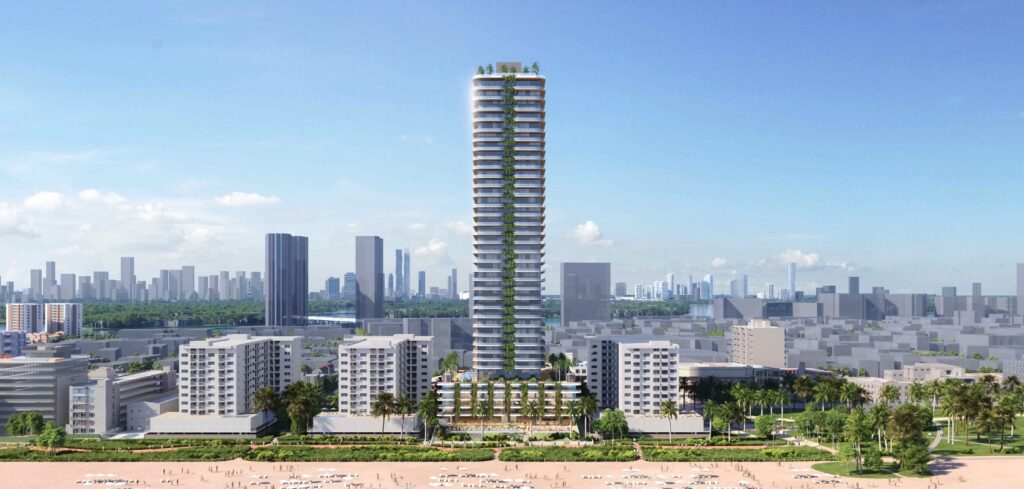
Miami Beach’s iconic Ocean Drive is quickly coming at a crossroads between preservation and growth. The iconic, postcard-worthy stretch of art deco architecture now faces the possibility of redevelopment, as developers quietly file plans for towering high-rises on sites occupied by some of the city’s most recognizable historic buildings. That shift is possible thanks to the state’s Live Local Act, widely regarded as one of the most influential and permissive pro-housing bills passed in the country. The latest example to reach Ocean Drive is The Savoy, a proposal submitted this past June that would redevelop the Savoy Hotel, a property made up of two historic structures, the Savoy and the Arlington, built in 1937 and 1941 respectively. According to never-seen-before planning documents obtained by Floridian Development, New York-based Allied Partners intends to demolish most of the historic site at 425 Ocean Drive, preserving only a portion of the Savoy as a nod to its past. It’s a large change that’s gone largely unnoticed for months, and that’s not an accident. The Live Local Act is built to move through administrative review, meaning projects skip public boards unless a hearing becomes unavoidable. The public, in other words, can get left out of the room. That setup has stirred plenty of controversy, but it’s not without its logic. The bill’s whole premise is to boost the supply of workforce and market-rate housing to bring costs down, and skipping public boards is part of the cost savings since those hearings have a habit of tying projects up for months, especially in a city like Miami Beach. The height and density perks don’t hurt either. Developers can borrow the tallest allowed height from any parcel within a mile, which means some parts of Ocean Drive is now fair game for a high-rise. They can also build to the highest density allowed anywhere in the municipality. It’s a serious set of zoning changes, and it shows. The Specifics: That freedom has produced a proposal that would rank among the tallest structures in the city if it gets built. Inside, there will be 150 units split between 90 condos and 60 workforce units. The workforce units will sit on the lower floors facing Ocean Drive, running from studios (the most common layout) up to one-bedroom and one-bedroom-plus-den units. The condos, by contrast, will be on the larger side, averaging around 2,000 square feet apiece. The workforce housing requirement is baked into the Live Local Act itself. Developers must price at least 40% of units at or below 120% of the Area Median Income, and keep them there for at least 30 years. Beyond residences, ‘The Savoy’ will also bring 76 hotel rooms. Hotel guests get a full suite of amenities on the tower’s seventh level: multiple pools, outdoor green space, seating areas, beach access, yoga space, a barbecue area, and more. Condo owners get their own rooftop pool and separate shared amenities. On the ground floor of The Savor, there will be 10,958 square feet of commercial space, purpose-built for a beach club. The project also adds 1,472 square feet of street-facing retail, a private drop-off for valet and residents, and 257 parking spaces tucked out of sight behind active uses. Without the planned demolition of the majority of the property, these lower floor uses will likely be impossible or significantly scaled back. Rising 38 floors, the tower will hit about 453 feet to the roof, or around 480 feet at its tallest point. The facade, designed by South Florida-based Arquitectonica, mixes white and gray stucco, wood paneling, floor-to-ceiling glass, and glass balconies. The main tower reads as a rectangle, wrapped in balconies across most of the facade, and built with zero setbacks, giving it a rather imposing massing. Can Demolition Actually Happen? Still, while zoning laws may permit the density, height, and scale of the site, there’s a separate question of whether the city retains any leverage over what happens to the historic structures themselves. The Savoy has long carried local historic designation as part of Miami Beach’s Ocean Beach Historic District, where both the Savoy and Arlington are considered contributing buildings. However, what actually stood between Miami Beach’s historic buildings and the wrecking ball was the city’s own Historic Preservation Board, which for decades could deny demolition permits outright or force developers to preserve and replicate a building’s original design. That power is exactly what the state significantly eliminated in 2024. The Resiliency and Safe Structures Act, signed by Gov. Ron DeSantis, strips Miami Beach’s preservation board of its authority to block demolition of buildings along the coast deemed unsafe or noncompliant with FEMA flood standards. The law does carve out exemptions, St. Augustine, Palm Beach, Key West, the famed postcard stretch of the Ocean Drive promenade, and individual landmarks like the Fontainebleau, but the Savoy, sitting further south in the South of Fifth neighborhood, falls outside that protected zone. It’s named directly among the South-of-Fifth buildings the law leaves exposed. Which means, as things currently stand, it can potentially be demolished through the same “unsafe structure” pathway that brought down the MiMo-era Deauville hotel in 2022, and without the public hearing that once would have given residents a chance to fight it. The developer isn’t hiding the mechanism. In an April 2026 letter of intent to the city, an attorney for the developer confirms the Arlington’s fate directly, writing that the building, “currently cordoned off by construction fencing and stabilized through shoring, has been closed to the public since it was badly damaged in Hurricane Irma,” and that “due to its current state, in accordance with the Resiliency and Safe Structures Act, and as allowed by the Live Local Act itself, the Arlington structure will not be preserved in the project.” Editor’s note: The legal and regulatory issues surrounding the proposed demolition of the historic structures are complex and remain subject to further verification. This article reflects the documents (developer’s application and letter of intent) and regulations available at the time of
7410 Collins Avenue, an 11-Story Live Local Act Project, Approved in Miami Beach
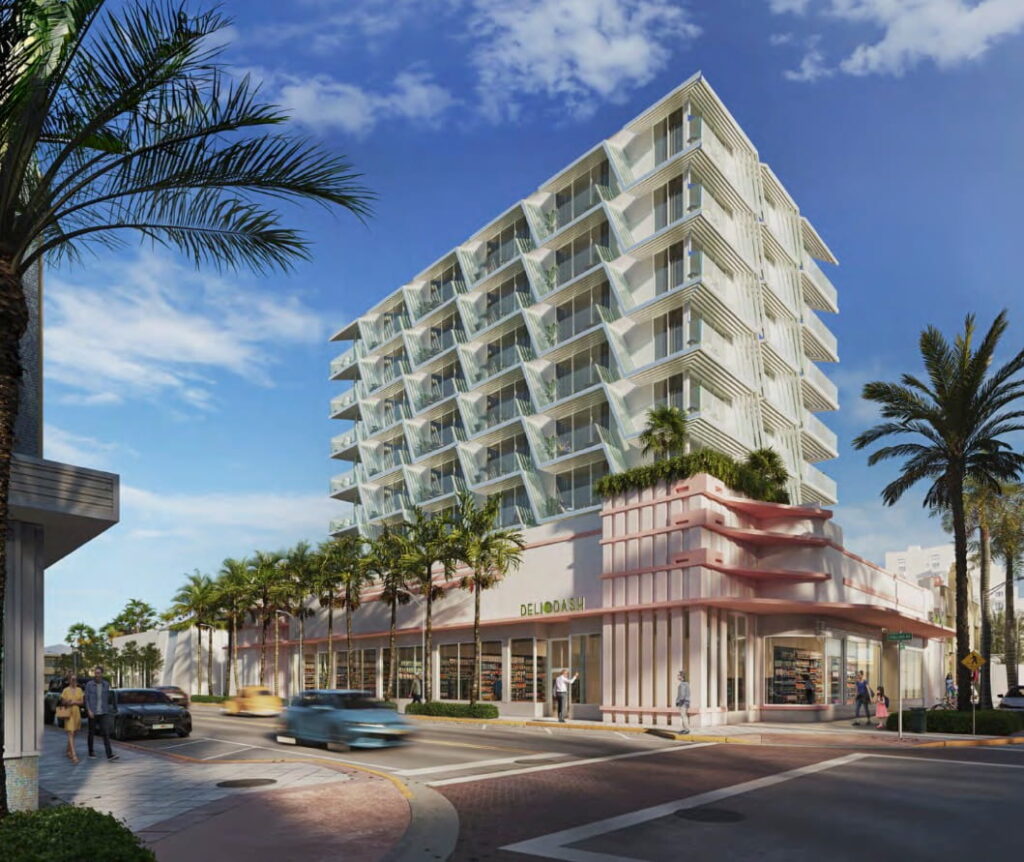
The Live Local Act is once again reshaping Miami Beach’s skyline, with the owners of a historic property at 7410 Collins Avenue securing approval for an 11-story high-rise. The approval places the project among a small handful of successes: just four developments have won approval under the act in the city, out of more than fourteen submitted, most of them high-rises. 7410 Collins Avenue is leaning on the state’s landmark housing law to unlock both greater density and additional height than existing zoning would normally allow, flexibility that has translated into a 50-unit building spanning a mix of income levels. It’s a dramatic jump from what zoning alone would permit, but this kind of Live Local Act-driven change is quickly becoming standard practice for new proposals in the city, much to the frustration of anti-high-rise advocates. Nowhere is that shift more visible than at this site. The project is rising on the footprint of a one-story commercial building constructed in 1950 as a supermarket and now home to a CVS. The road to this approval didn’t start this year, either. Developers originally submitted plans for a five-story structure on the property and won approval from city boards, including Miami Beach’s Historic Preservation Board. That earlier proposal called for 18 luxury units, 8,379 square feet of ground-floor retail, and 25 parking spaces. But as the Live Local Act gained traction across the city, a five-story building began to look like a missed opportunity. The developer went back with a new proposal, more than doubling both the density and height of the original plan. Inside the Proposal Approved in July, the development’s 50 units will split between 30 market-rate units and 20 workforce housing units priced at or below 120 percent of the area median income. That workforce housing component is a direct requirement of the Live Local Act, which grants zoning enhancements in exchange for setting aside at least 40 percent of units at or below that income threshold. Units will range from 664 to 900 square feet, each with its own balcony, and residents will have access to two stairwells and two elevators. On the 11th floor, the building will feature a rooftop pool alongside 876 square feet of additional amenity space, outdoor seating, and landscaping. Because the lot is tightly constrained, the project will include just 25 parking spaces on the second level. Additional parking will be available on-street and at a nearby parcel serving as overflow capacity during periods of higher demand. Designed by Urban Robot, the building will feature a bold, colorful palette spanning pink, light teal, and white tones, wrapped in stucco, concrete, floor-to-ceiling windows, and glass balconies. The ground floor will house 8,535 square feet of retail space and a 2,397-square-foot lobby, along with bike racks and a renovation of the historic facade, including repainting and both interior and exterior updates to the original structure. Moving Ahead 7410 Collins Avenue is the latest example of the Live Local Act’s core trade-off in action: greater density and height in exchange for zoning flexibility. But the law has also drawn significant pushback from cities across South Florida, largely because it allows qualifying projects to bypass public board review and move through the approval process administratively. That lack of public input has fueled a sharp and often heated divide between developers and residents. Critics also argue that the affordability promised under the law is often overstated. While Live Local Act projects are required to meet certain rent limits, those limits can still allow for substantial costs. According to rent limits published by Bilzin Sumberg, studio units under the law can be priced as high as $2,862 a month, a figure that’s arguably far from affordable by most standards. Whether those limits move the needle in the short term remains an open question. But pro-housing advocates maintain that increased supply, over time, tends to ease pricing pressure rather than worsen it.
The Triangle Breaks Ground in Miami’s Health District, Among the First Live Local Act Projects to Reach Construction
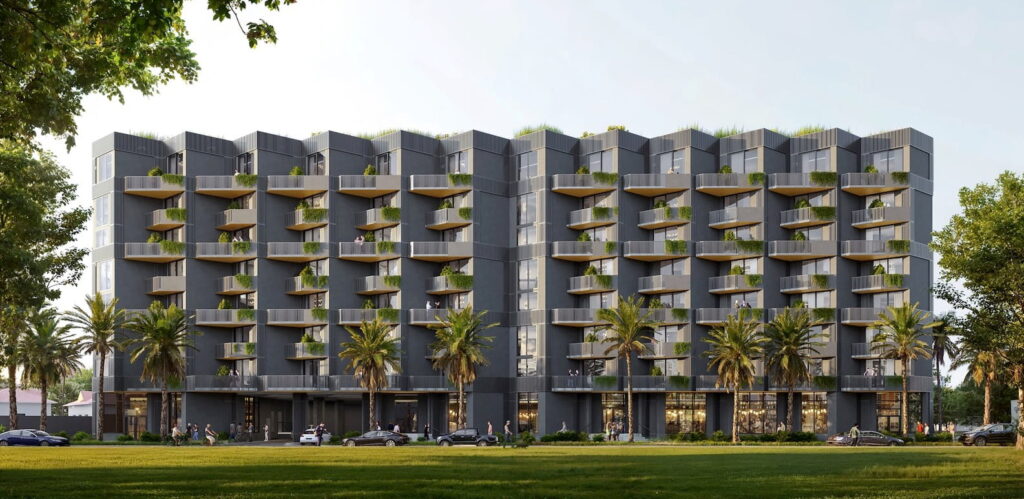
Ground has officially broken on The Triangle, a proposed workforce housing development in Miami’s Health District spearheaded by Miami-based developer DFRE. The project is being built under Florida’s Live Local Act, the state’s closely watched pro-housing law that grants zoning exceptions and faster approval timelines in exchange for setting aside at least 40 percent of units as workforce housing. With construction now underway, The Triangle stands as one of the first developments to bring the legislation from paper to pavement. The project takes its name, and its distinctive shape, from the land beneath it. Designed by ODP Architects, the building is molded around a quirky, just-under-0.7-acre triangular lot that DFRE purchased in 2019 for $1,675,000. The site had sat as an undeveloped grass lot for decades before the project’s approval finally gave it a path forward. Once complete, The Triangle will offer 112 rental units, all priced at income-restricted rates for households earning up to 120 percent of the Area Median Income. That goes well beyond what the Live Local Act requires: the law mandates that only 40 percent of a project’s units be priced at that income threshold, but DFRE opted to apply it across the building’s full inventory. Units will average around 450 square feet, each with a private balcony, and residents will have access to a 10,000-square-foot pool terrace on the fifth level, along with gathering spaces, grilling areas, and additional amenity space throughout the building. “Our responsibility extends far beyond developing real estate,” said Daniel Dias, principal at DFRE, in a statement. “With The Triangle, we’re turning a site in the heart of the Health District into attainable, well-designed housing for the people who serve this community. It’s about giving Miami’s workforce the opportunity to live closer to where they work while creating a place that strengthens the neighborhood for the long term.” At street level, the project is designed with pedestrian activity in mind, featuring expanded sidewalks and added greenery. The ground floor will also house a 3,500-square-foot fitness center along with several entrances leading into the building’s parking garage, which architecture firm ODP says will hold 72 spaces. In total, the development will span 121,636 square feet across eight floors, rising to roughly 80 feet. Its exterior will combine tall windows, stucco finishes, and metal balconies, set against a color palette of browns, grays, and blacks. The $35 million project is slated to top off in mid-2027 and reach completion in early 2028, positioning it to become one of the state’s first fully realized Live Local Act developments. That distinction carries weight in a county known more for proposals than completions. According to Floridian Development’s analysis, only around 100 projects taller than five stories are currently under construction countywide, a figure that underscores how significant this single groundbreaking could be. If The Triangle delivers as planned, it may signal the start of a broader wave of Live Local Act projects moving from concept to construction across South Florida.