4th Avenue Apartments Moves Forward, Set to Replace the Historic Tamborello Bros. Service Station in Ybor City, Tampa
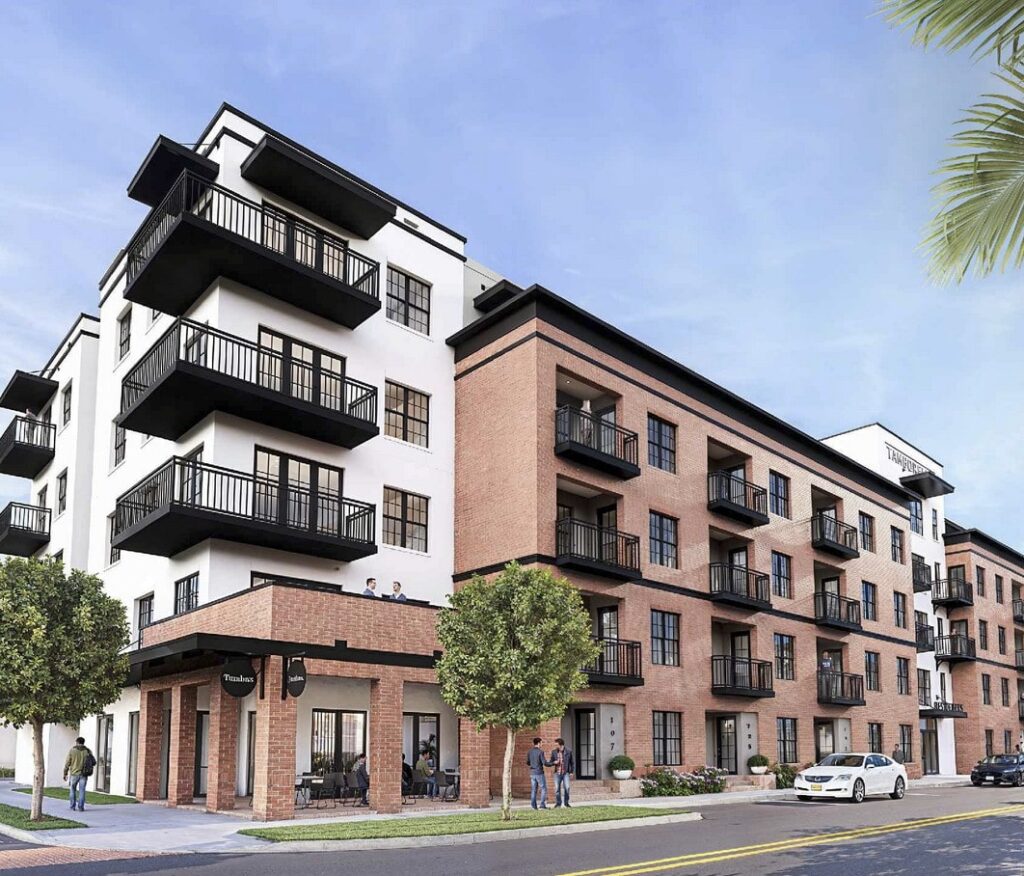
After nearly three years of working through Tampa’s Barrio Latino Commission, the development team behind ‘4th Avenue Apartments’ is advancing with a revised proposal for their five-story residential project in Ybor City, with eventual construction in the near future. The development, spearheaded by James Hettinger, LLC and Clendenon Properties, LLC, features an updated design by GROH Architecture with significant adjustments to the building’s height and layout. While original plans approved in March 2024 included a 56-FT facade along 4th Avenue, the revised version lowers that to only 44 FT. This visual setback introduces a private balcony for residences but also creates a visual improvement of the facade along 4th Avenue. Because the setback removed a large portion of interior space, the building will be pushed further back on the site to preserve the original unit count of 93 apartments, maintain the total parking count, and retain the corner bodega. This shift allows for larger floor plates and the integration of a mechanical lift parking system. The update eliminates the need for off-site parking leases originally planned for in the old proposal, as 97 spaces will now be accommodated on-site. Additionally, the corner bodega will be slightly expanded from 803 to 883 SF. While the overall unit count remains steady, the updated design adjusts the apartment mix slightly, increasing the number of studio and two-bedroom units while reducing one-bedroom units. The project also retains its commitment to high-quality materials, featuring red brick facades, metal railings, mosaic flooring, and Cuban tiles at the bodega entrance, elements encouraged in Ybor City. Poised to occupy nearly half of the block between E 4th Avenue and N 17th Street, the new development will involve the demolition of the former Tamborello Bros. service station: a significant part of Ybor’s history that operated from 1946 to 2016. Although the building’s official name has yet to be finalized, renderings feature the word “Tamborello” displayed at the top, suggesting both a tribute to the site’s past and a possible name for the future residence. The development has already been in a public hearing, with another taking place on July 31st at 10:30 AM. No construction permits, including foundation work or demolition, have been filed for the property at 1715 E 4th Ave.
Floridian Development Introduces ‘Floridian Advanced’, a Free Service Providing Comprehensive Development Info Across Florida
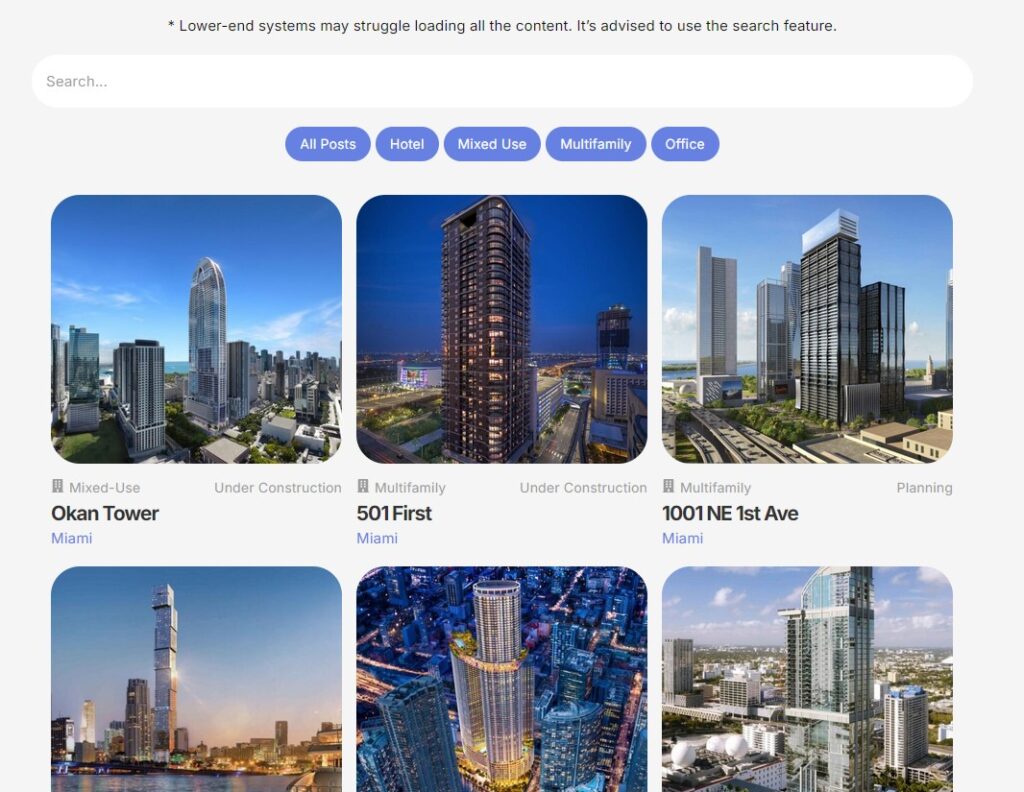
Floridian Development is proud to introduce Floridian Advanced, a free, easy-to-use tool designed to help anyone stay informed about the major developments shaping Florida’s future. From towers rising in downtown Miami to mixed-use communities planned in Tampa or Fort Lauderdale, Floridian Advanced brings all the details together in one centralized platform, no paywalls, no sign-ups, no stress. Florida’s real estate landscape is constantly evolving, with hundreds of new developments proposed, approved, or breaking ground every year. For many, keeping track of these projects means sifting through complicated planning documents or relying on hidden, outdated reports. Floridian Advanced changes that. It offers a clear, well-organized view of the latest projects with data pulled directly from official sources and presented in a clean, simple format. But this isn’t just a site about unit counts. Each listing on Floridian Advanced is thoroughly researched to provide enhanced context, including details like total square footage, floor count, proposed height, number of parking spaces, retail/commercial components, and more. Most entries also include site plans, elevations, or architectural renderings when available, offering visual insight without needing to go through city PDFs or planning agendas. Getting started is simple. Just click the Floridian Advanced tab in the header. You’ll be greeted by a home screen that explains how the system works and how to navigate it. From there, select the city you’re most interested in, and explore away. Each project is categorized by status or type, from multifamily to office or planning to construction so you can filter based on what matters most to you. Who’s this for? Floridian Advanced was built for anyone with a stake or interest in Florida’s growth. Whether you’re a broker trying to understand the local pipeline, a journalist seeking accurate project data, or a resident curious about what’s being built down the block: this platform is for you. This release marks an exciting step forward in Floridian Development’s ongoing mission: to make Florida’s evolving real estate environment more understandable, transparent, and accessible to those who care about it most. Today’s update is just a start to an exciting evolution for the website. Stay tuned for updates including a development map, added cities, and cosmetic/technical updates designed to make your life easier.
Sky-High Plans: Related Group and Macklowe Plan Two 43-Story Towers at 8000 East Drive, North Bay Village
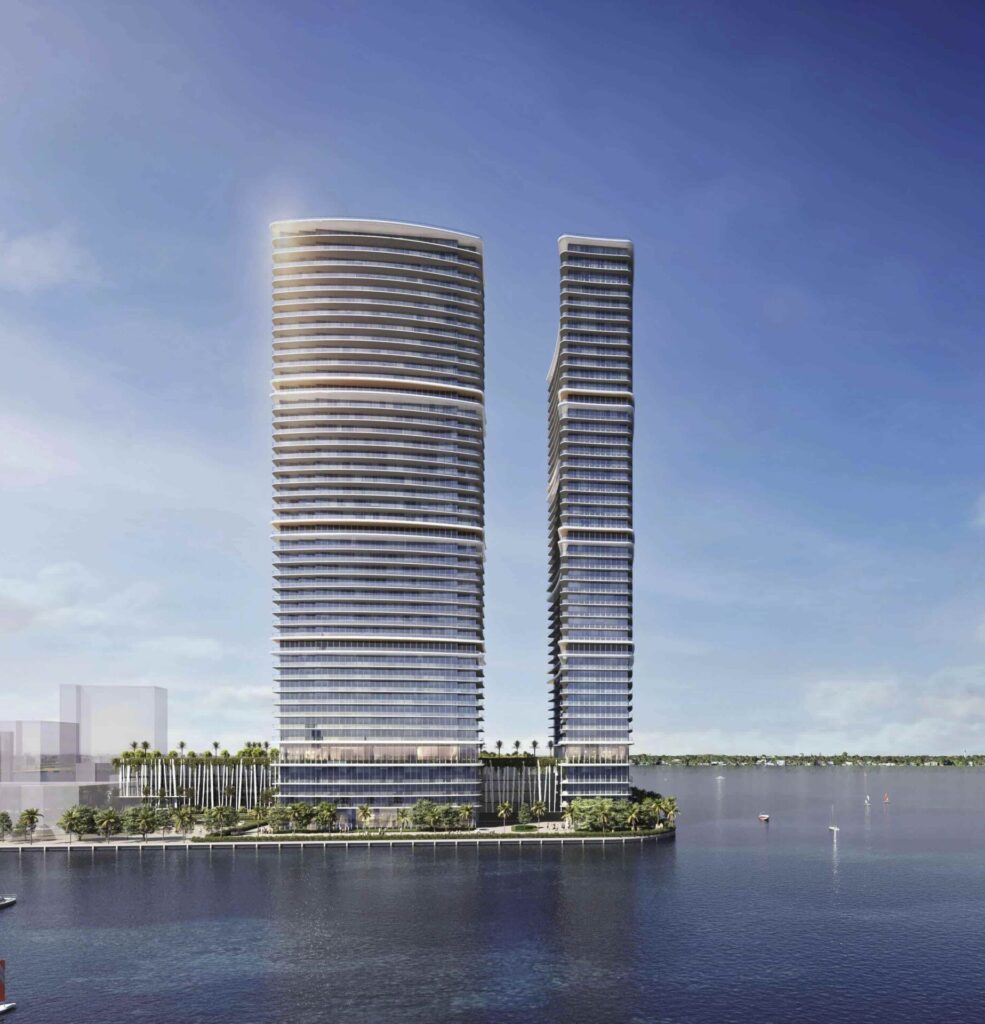
High-rise development in North Bay Village shows no signs of slowing down. The Related Group and Macklowe Properties have recently proposed plans for a pair of 43-story towers to North Bay Village’s planning board. Designed by Arquitectonica, the glass-clad towers are the latest in a growing trend of high-density proposals in the area. Like several recent projects, the development is seeking a Special Area Plan, which allows for a more unified site plan and can enable zoning exceptions that wouldn’t typically be allowed under existing zoning regulations. Although plans may evolve, the current proposal calls for 364 residential units, 201 in the northern tower and 163 in the eastern tower. Units will be offered in one, two, three, and four-bedroom layouts, with an average size of 2,138 SF. To accommodate residents, the developers have proposed 798 parking spaces. Although this is below the recommended count, the developers have assured planners that, based on their extensive experience, the proposed number is actually optimal for a project of this scale. Among other plans, the development also includes a 25-foot-wide Island Walk for the public, along with enhanced landscaping that contributes to a total of 9,000 SF of waterfront public park space. It’s worth noting that Island Walks are a required feature under North Bay Village development regulations, aimed at improving waterfront access and connectivity for island residents. On the other hand, the tower’s occupants have access to more than 100,000 Gross SF of amenities, spread between the development’s deck, ground floor, and level 5 of both towers. While the exact plans for the amenity space haven’t been released, the site will also have access to over 40 boat slips along the Biscayne Bay, complemented by a marina dockmaster. According to the project’s elevations the two towers will rise 497 FT to the 43rd floor. This height does not include the mechanical roof, which brings the total height to well over 500 FT. Such height would not be allowed under traditional zoning but is made possible through the Special Area Plan (SAP). Through massing studies, the development team found that by consolidating the project into two taller towers, rather than three shorter ones, view corridors and open space will be preserved. City staff agree with this assessment. Elevations also grant insight into the towers’ design: while the buildings appear nearly identical, the northern tower is the widest, followed by a slimmer eastern tower. Likewise, the facade will primarily consist of curtain glass wrapped in glass balconies, though this treatment will not extend across the entire structure. The rear of the towers will feature what appears to be stucco with artistic patterns, although the design isn’t finalized. City staff has recommended approval of the project, contingent on resolving a few minor issues. However, a staff recommendation does not guarantee approval. While the North Bay Village Commission considers staff recommendations during the final decision-making process, it ultimately isn’t the final say during the approval or denial process. If approved, the developers will have two years to obtain a master building permit as a general requirement, with a maximum of two one-year extensions possible. Failure to secure the permit within that timeframe will render the project’s approval null.
One of the Largest Live Local Act Projects in Miami-Dade, Park Residences, Unveils Renderings
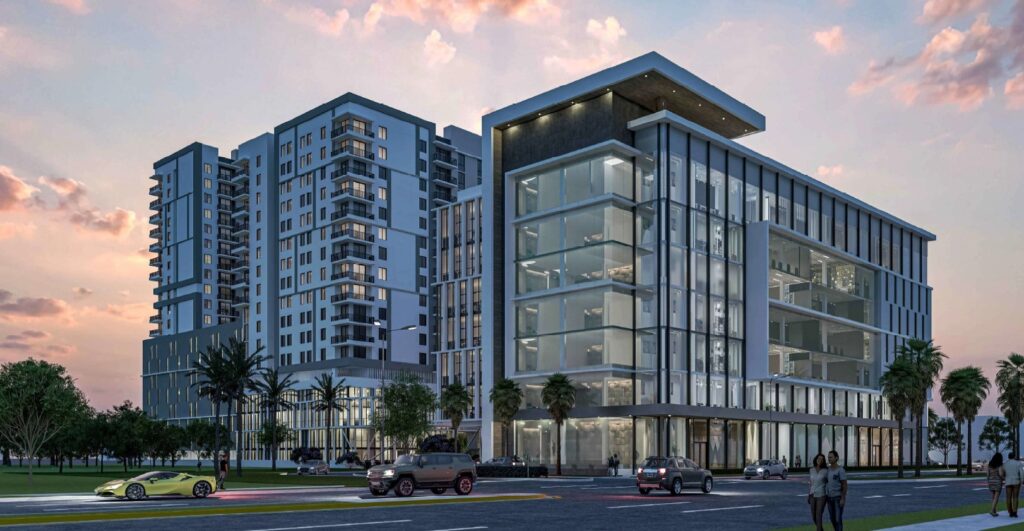
7350 Coral Way Prop. Co, led by Russel Galbut of GFO Investments and Dr. Jorge E. Perez of KIDZ Medical Services, has officially unveiled renderings for one of the biggest Live Local projects in Miami-Dade. The large development, coined Park Residences, was originally submitted to Miami-Dade staff in early 2025 and featured a mixed-use project containing retail, medical office space, and a residential tower. Since then, while plans have changed very little, renderings have been released showcasing more of the development’s design by the project’s architect: Anillo Toledo Lopez. Located at 7350 Coral Way, the mostly vacant property is planned to feature 410 residential units, about 90,000 SF of net leasable office space, 7,000 SF of retail, and 950 parking spaces: unchanged from last submission. Under the Live Local Act, which encourages higher density in return for providing workforce housing, 40% of the units will be set aside as workforce housing. This translates to 246 market rate units and 164 workforce units. Workforce housing units, as per the Live Local Act, are defined as units priced for households earning up to 120% of the Area Median Income. As noted by Bilzin Sumberg, Live Local projects in Miami-Dade County are permitted to price studio units at a maximum of $2,604 and one-bedroom units up to $2,788 as of 2025. The residential tower is planned to rise 19 stories, while the medical office building will reach 7 stories. New renderings reveal a pedestrian walkway connecting the tower’s podium to the standalone office structure. Likewise, earlier massing studies didn’t fully reflect the office building’s design, but the latest photos outline a sleek, mostly glass facade that will complement Coral Way. According to the project’s letter of intent, the medical office component will focus on pediatric care, aligning with Dr. Jorge E. Perez’s background with KIDZ Medical Services. Although construction permits and final approvals are yet to come about, the expertise behind 7350 Coral Way Prop. Co suggests the development is likely to proceed fairly smoothly.
Alexander Goshen Proposes Five-Story Apartment at 5802 N Florida Ave in Seminole Heights, Tampa
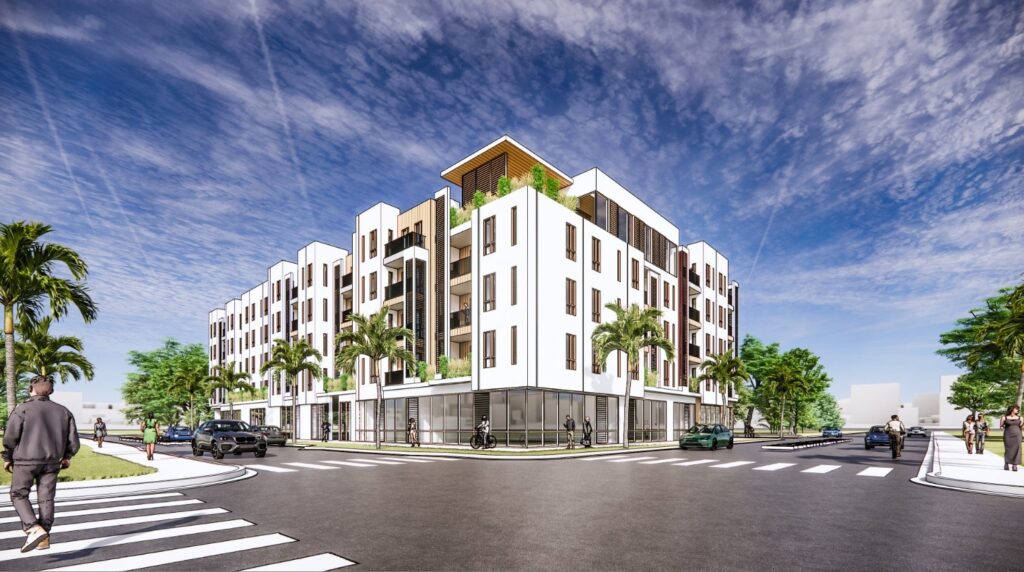
Fort Lauderdale–based Alexander Goshen is the latest developer to zero in on Seminole Heights. The firm recently filed a rezoning request for 5802 N. Florida Ave that would clear the way for a five-story building at the corner of Florida and Henry Avenue. The move adds momentum to a neighborhood already reshaped by new capital and infrastructure upgrades, from updated streetscapes to the introduction of mid-rises such as Notch, Hite and Avenue Lofts. Details of the project remain preliminary, but early plans envision a promising development that would bring 67 homes, retail, and further pedestrian activation to one of Florida’s fastest-changing areas. At street level, the proposed development aims to further expand upon Florida Avenue’s commercial scene with 5,269 SF of ground-floor retail space. Behind the storefronts, plans call for 56 parking spaces to serve both residents and retail patrons alike, a figure that falls short of the 73 spaces typically required under city code. The building will also include 35 bicycle parking spots, although only 5 are required. Designed by Goode Van Slyke Architecture based in Atlanta, elevations showcase the 5-story apartment measuring 57 FT. The building’s facade is expected to include a blend of materials, including white stucco finishes, aluminum balcony railings, and vertical plank accents for added texture. Preliminary renderings also suggest a rooftop deck may be included at the corner of Henry and Florida, though detailed floor plans haven’t been released yet. Before Alexander Goshen entered the picture, the site had a proposal for a series of three-story townhomes by Middle Bay Homes. It’s unclear why those plans never moved forward, but all associated commercial construction permits were eventually withdrawn, leaving the property vacant and well-positioned for new development. With minimal site preparation required, aside from limited clearing of existing greenery, the property offers a relatively quick work schedule in the case that construction begins. Still, the proposed project must first receive site plan approval from Tampa planners before any work can officially begin.
One North Birch Proposed in Fort Lauderdale Beach, Featuring 21 Residences
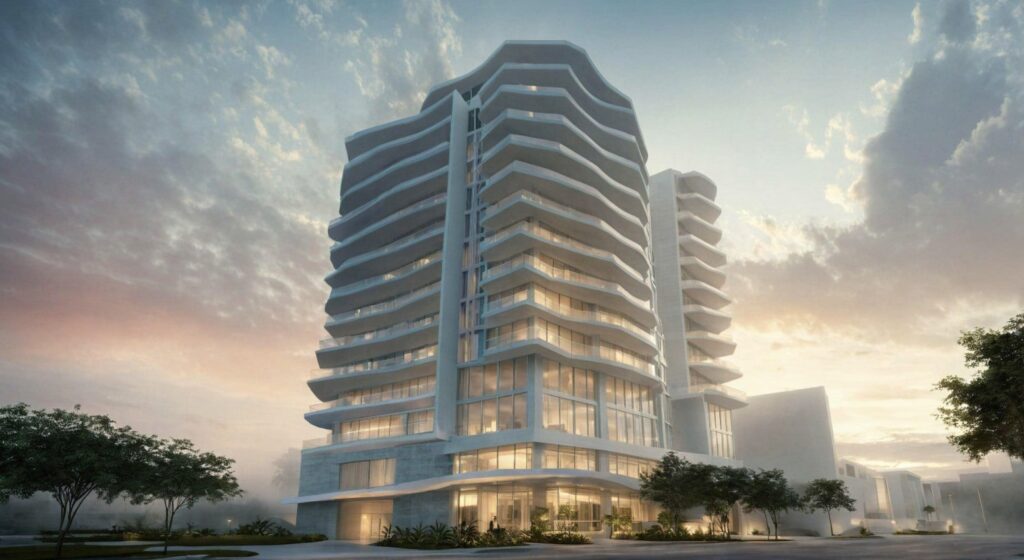
One of the last remaining undeveloped sites along Fort Lauderdale Beach’s Intracoastal Waterway is on track to become home to One North Birch, a multi-story condominium proposed by Las Olas Harbor Club, LLC. The firm, led by entrepreneur Sophia Mylona, is seeking review from Fort Lauderdale’s Development Review Committee to move forward with a 13-story residential project. Proposed with a collection of “boutique” residences, the tower will include 21 units, with around 2 units for every floor. Although the developer could provide higher density (specifically 75 units per acre) plans have instead opted for 45 units per acre in order to create more spacious units. In fact, units will be around 4000 SF each. Residents of One North Birch will have access to a range of planned amenities, though preliminary. Plans include a pool, fitness center, club room, and even a future dock. All homes will have access to parking on floors 1 and 2, made possible by parking lifts. This increasingly popular feature in South Florida developments allows for a more efficient use of space, enabling Las Olas Harbor Club, LLC to expand amenity offerings while maintaining a seamless building facade free of a visible parking podium. The ground floor of One North Birch will exclude retail space in favor of a spacious lobby. Pedestrians can also expect to see noticeable streetscape enhancements, including upgraded sidewalk infrastructure, added greenery, and other improvements. Current site conditions show several nuisances to walkability, such as utility poles, overgrown trees, and other physical barriers. The developer plans to replace this with a 7-foot-wide sidewalk, buffered by landscaped edges to create a more accessible and safe pedestrian environment. As per elevations, the tower’s 13 floors will measure 163 FT to the tallest point on the tower, making it among the tallest buildings in the area. Designed by Garcia Stromberg Architecture, the building’s facade will be almost entirely composed of curtain glass, wrapped with large glass balconies for residents. The development at 1 N Birch Road will be met with review by Development Review Committee staff on June 24th, 2025. According to a case comment report filed before the meeting, there appears to be little revision needed to the design before it can move forward.
The Growin Group Proposes Two Multifamily Buildings in Ojus Along NE 191st and NE 190th Street
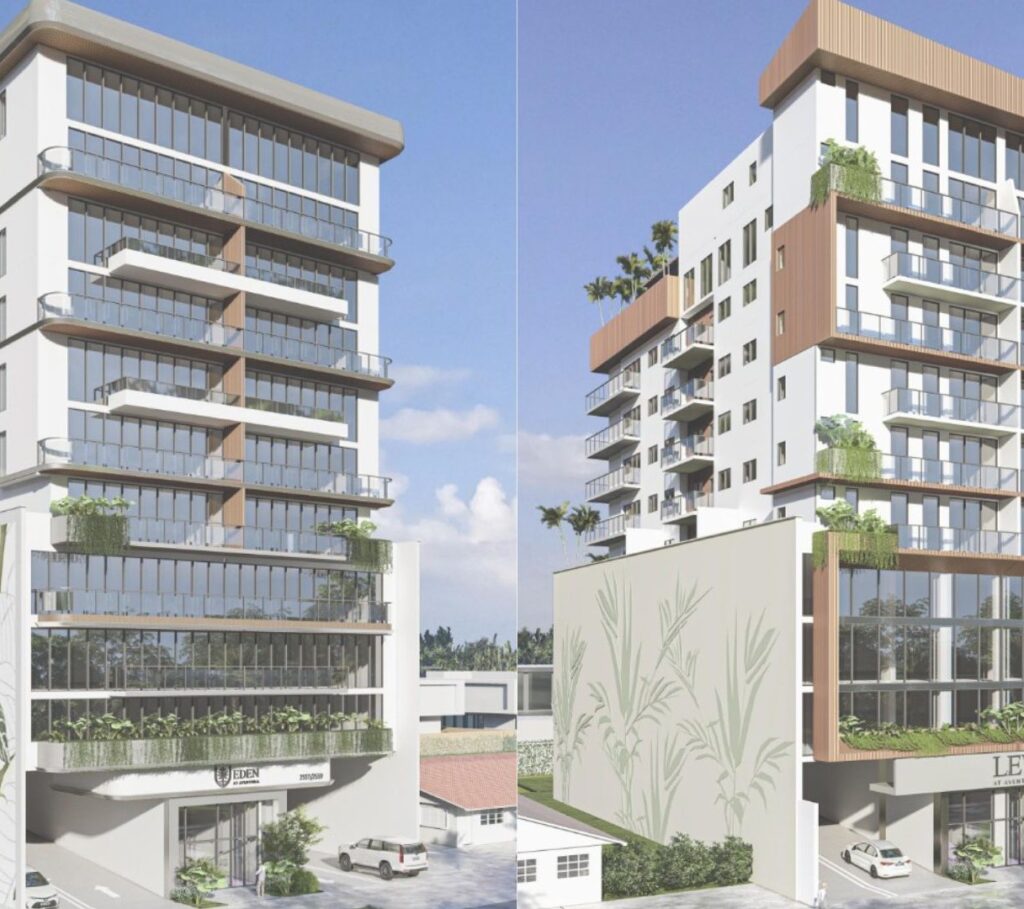
A South Florida-based real estate and investment firm, coined the Growin Group, is planning to join a plethora of developers investing in Ojus. Ojus has recently been caught in a whirlwind of development activity, sparked by the creation of the Ojus Urban Area District (OUAD) in 2006 and following amendments aimed at promoting mixed-use, pedestrian-friendly growth. Although the region didn’t see major developments until the completion of Beacon Tower in 2017, the area has been steadily developing office and multifamily development ever since. Building on this momentum, the Growin Group plans to develop two nearly identical highrises: Eden at Aventura and Lev at Aventura designed by Gaviria Architects. Both buildings will offer the public 32 residences to choose from, ranging from 1 bedroom + den, 2 bedroom, or 3 bedroom units. Units will be generously sized, with none measuring less than 790 FT and most homes being planned as 2 bedroom layouts. Residents will have access to a fitness center, sauna, and additional amenities such as a rooftop pool. The podium of each tower will also feature amenity spaces and storage areas designed to screen parked vehicles from public view. Each podium will accommodate parking for 60 cars, creating an approximate unit-to-parking ratio of 1:2 for both developments. Given the site’s extremely condensed footprint, zero retail space will be planned. Instead, the ground floor will be composed of a lobby, bike storage, entrances and exits for parking garage circulation, and more. Because plans appear to be preliminary, not much information is given regarding both buildings and their heights. While written statements call for both buildings to be 10 floors, this doesn’t factor in the ground floor which, in actuality, makes both buildings 11 stories tall. Given the standard in most developments is to provide ceiling heights of around 10 FT, it’s estimated the buildings will be at or more than 110 FT each. Lev at Aventura will be located at 2520 NE 191 St while Eden at Aventura will be located at 2557 NE 190 St.
Newly Released Renderings Showcase ‘Isle of Dreams,’ the First Phase of Sunbeam Property’s Vision for North Bay Village
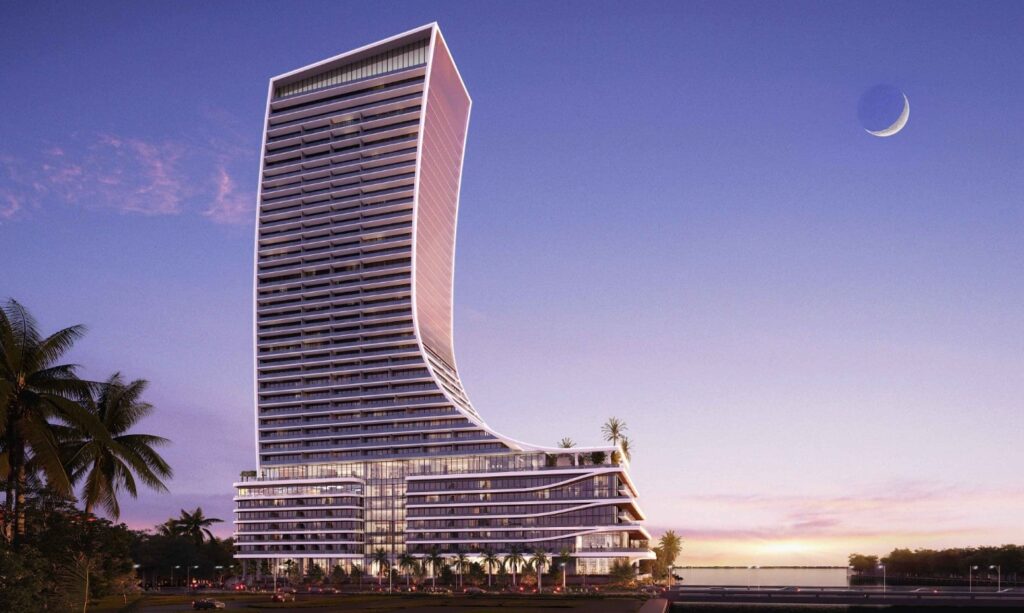
Sunbeam Properties has unveiled new renderings for the first phase of its massive North Bay Village development, a tower coined Isle of Dreams. When Floridian Development initially reported on the project, details were still in the early stages. At the time, there were no official renderings; in fact, only elevation drawings were available that offered a basic outline of the tower’s form. Now, as Sunbeam Properties seeks approval from Miami-Dade planners for several special exceptions, setback deviations, and other changes, the developer is preparing to move forward with construction. Andy Ansin, the owner of both Sunbeam Properties and WSVN Channel 7, has previously expressed that financing will not be an issue. Built-up cash from years of operation has led the company to develop the property no matter the market condition. According to the new application, there have been no major updates to the tower’s design, including its unit count, commercial space, or other key components. As a recap, Isle of Dreams is set to include 246 residential units, 23,043 SF of commercial space, and seven levels of parking. The tower will stand 39 stories tall, reaching 460 FT to the roof and approximately 490 FT to its highest architectural point. Arquitectonica, the project’s architect, designed the tower as a landmark development that intentionally pulls the building mass away from the waterfront to prevent the “walled off” appearance often seen in similar projects, according to a letter of intent. A standard and required feature of all new developments in North Bay Village is the inclusion of an Island Walk, and in this project, it will span over 200 FT in length and 15 FT in width. Lined with greenery, the walkway will offer direct access to waterfront retail and provide seating areas where residents are given unobstructed views of the water. While Isle of Dreams and its accompanying Island Walk are the first glimpse into the development, there will be an additional 7 to 9 more towers. In total, the Sunbeam mega-development is aiming to construct 1936 units, close to 5000 parking spots, 300 hotel rooms, 670,000 SF of commercial space, and around 200,000 SF of office space. Towers, like this one, will rise between 240 to 650 FT, marking them as the tallest buildings in Miami-Dade outside of Miami and Sunny Isles Beach. Before work on the Isle of Dreams can start, the developer must tear down an existing 4-story building on the property. In addition to launching the first phase, the developer has already demolished two radio towers on an adjacent parcel to make way for phase 2.
Three 1,300 Foot Cranes Filed for Citadel’s Soaring Supertall HQ at 1201 Brickell Bay Drive
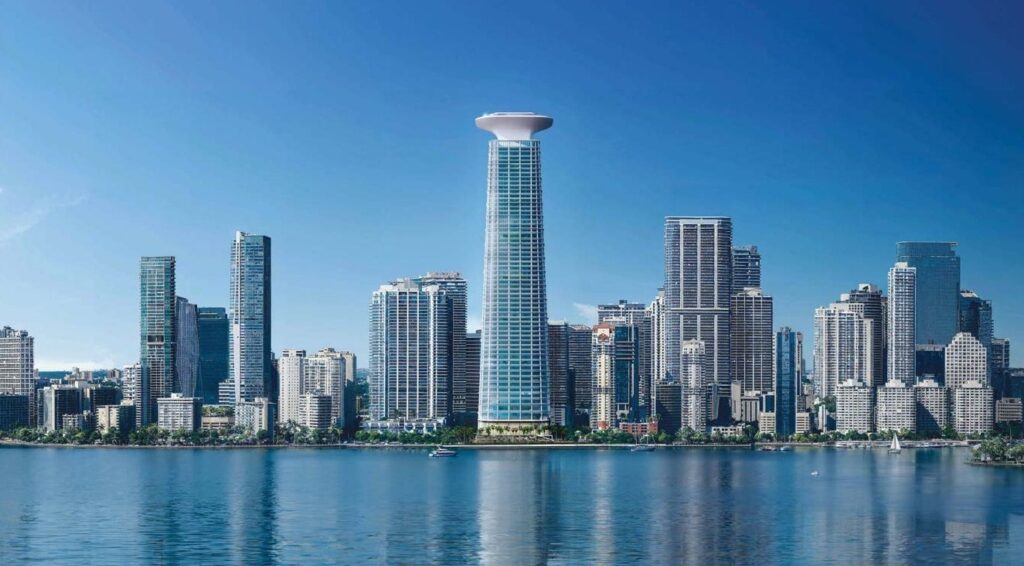
Citadel’s long-anticipated supertall headquarters in Brickell is taking a major step forward. This week the firm submitted plans for three towering construction cranes each soaring close to 1,300 FT, signaling significant momentum ahead of the project’s targeted Q3 2025 groundbreaking. This news comes as Citadel recently submitted new designs for its planned supertall, featuring a wider and more prominent crown. As the company led by Ken Griffin finalizes the design stages and acquires necessary FAA approval, the site only needs appropriate construction permits before work can begin. Per FAA filings, the three cranes will climb to 1,298 FT, 1,298 FT, and 1,297 FT respectively. They’re all slated to rise from 1201 Brickell Bay Drive, where the ground level sits just three FT above sea level. While the FAA application was submitted recently, meaning it’s still being studied for adverse aviation impacts, they will be the tallest cranes submitted in Miami’s history. In fact, they will surpass the height of the impressive tower cranes rising at the Waldorf Astoria construction site. Below is a map outlining the cranes locations. Both 1298 FT cranes will rise on the east and west portions of the property, while the 1,297 FT crane will rise on the south portion. According to the FAA, the tower cranes will be working from October 17th, 2025, all the way to April 17th, 2027. While this number is usually a rough estimate, it aligns with the Q3 2025 groundbreaking date. If Citadel’s headquarters breaks ground this year, it will rise alongside the Waldorf Astoria Residences in Miami, making Miami the second U.S. city to have two or more supertalls simultaneously under construction. No other city in the country other than New York holds that title.
Darryl Shaw’s Ybor Harbor Will Soon Call Home to a New Stadium for the Tampa Bay Sun FC
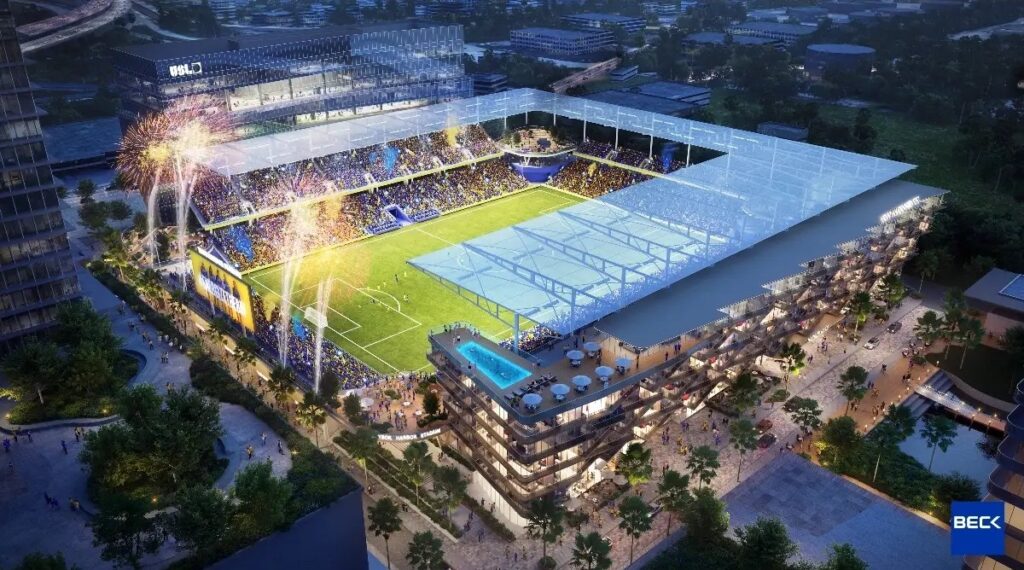
Set between Ybor City and the Port of Tampa, the Ybor Harbor development will soon call home to one of the only soccer stadiums in the U.S. built for a women’s professional soccer team. The 15,000-seat stadium, designed by The Beck Group and spearheaded by Darryl Shaw, is trying to ride the momentum wave of the Tampa Bay Sun’s impressive season, as the team just won the USL Super League’s championship. Women’s soccer in particular is gaining traction across the United States, and the USL along with Darryl Shaw want to be part of the movement. “By collaborating with Darryl Shaw and Tampa Bay Sun FC, we’re accelerating the growth of women’s soccer while creating lasting benefits for Tampa Bay” according to Alec Papadakis, USL Chief Executive Officer. “The growth of women’s soccer” is evident: just a few months ago, the CPKC Stadium in Kansas City became the first soccer stadium “purpose-built for a women’s professional sports team”. The USL, which is already based in Tampa, will soon gain a new state-of-the-art headquarters integrated into the stadium complex. Renderings reveal an office building with direct views overlooking both Ybor Harbor and the stadium itself. Plans also feature a boutique hotel positioned along the waterfront as part of the overall development. Although the stadium’s main purpose is to host women’s soccer, Darryl Shaw has emphasized that it will also serve as a venue for other sporting events, concerts, festivals, and community gatherings. Aside from Amalie Arena, inner-city Tampa lacks a flexible space of this kind, and the new stadium is expected to create a more active community. Ybor Harbor is planned to include over 100,000 SF of open space, and this development emphasizes that priority. Renderings/plans outline large sidewalks, potential retail venues, and greenery that compliment the stadium. Once completed, Ybor Harbor will include 800 hotel rooms, 150,000 SF of street-level retail space, 500,000 SF of office space, and 4,750 residential units with 10% put forth for affordable housing. Ybor Harbor is an ongoing initiative, and while a construction timeline has not been released, it will take some time before the first groundbreaking. What about the Tampa Bay Rays? Although a potential stadium for the team was envisioned in late 2022, documents for Ybor Harbor submitted to City Council in 2023 made no mention of a baseball venue. In fact, incorporating one would require slashing several planned high-rises due to the already tight footprint of the Ybor Harbor site. This update comes as Darryl Shaw recently stated that finding enough land within inner Ybor for a baseball stadium is no longer feasible. Meanwhile, foundation work for multifamily developments, historic restoration, and other construction efforts have been long ongoing in the region. Cost and a construction timeline have not been released, but according to the Tampa Bay Times, the goal may be to develop the Tampa Bay Sun’s stadium through a “public-private” partnership common with recent stadium construction.