Jeff Greene Proposes Florida’s Tallest Mass Timber Tower at 120 South Dixie Highway in West Palm Beach
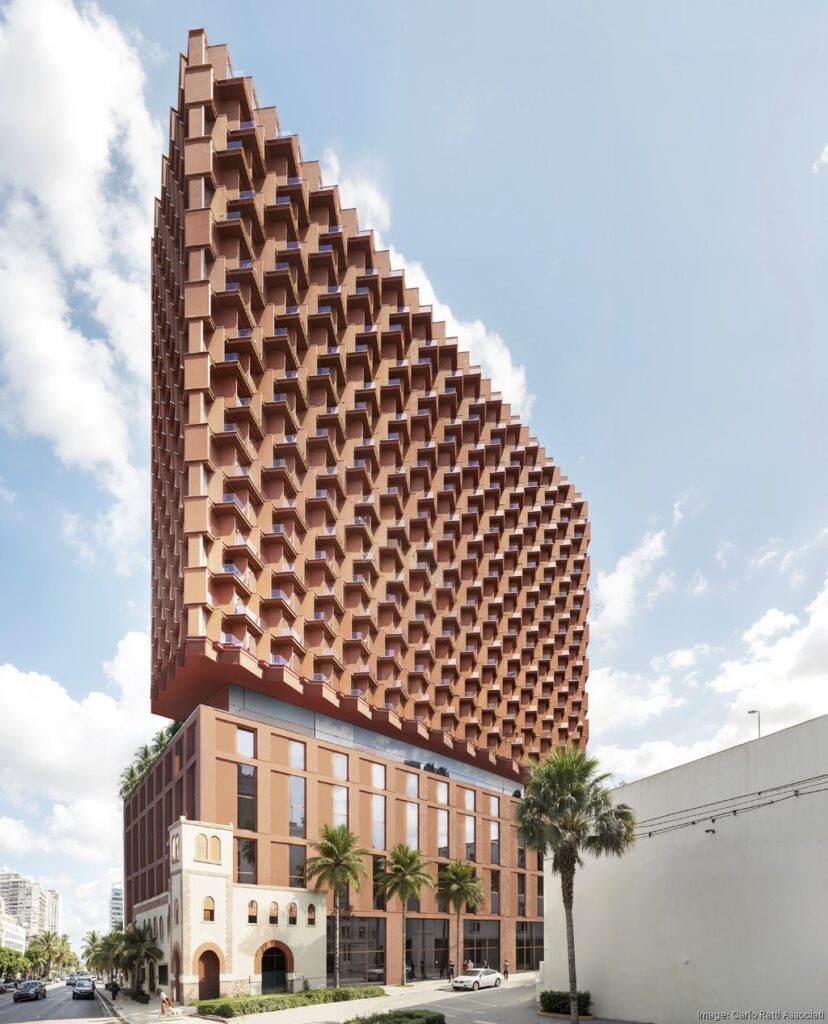
A record-setting mass timber tower has just been proposed in West Palm Beach, marking what would become the tallest building of its kind in Florida. Proposed by billionaire developer Jeff Greene, the project calls for a 25-story residential tower at 120 South Dixie Highway, built above a preserved historic fire station. The development is designed by Carlo Ratti Associati and would introduce a modern mass timber high-rise to downtown West Palm Beach. The proposal combines an emerging construction method with one of Florida’s fastest-growing development mechanisms: mass timber construction and the state’s Live Local Act. Together, the two approaches are intended to reduce costs and accelerate project timelines. The Live Local Act has become a common mechanism for developers seeking to bypass zoning restrictions and lengthy entitlement processes. Projects utilizing the law proceed administratively, avoiding public hearings that often delay or derail proposals, particularly in West Palm Beach. Just last week, members of the city’s Planning Board rejected a proposed 30-story waterfront condominium tower, citing concerns over height and bulk. The project’s construction method could also reduce costs and timelines. Unlike conventional concrete towers, mass timber buildings rely on prefabricated structural components manufactured off-site and assembled in place. The specialized construction effort will be led by Nexus Systems alongside Carlo Ratti Associati. The proposal marks the second major redevelopment plan for the site. An earlier concept advanced by Greene envisioned a shorter multifamily tower designed by Kobi Karp. That proposal also preserved the historic fire station but instead called for a 12-story building containing 159 residential units. The latest version substantially increases density. Plans call for 366 residential units, according to reporting from The Real Deal. Because the development is utilizing the Live Local Act, at least 40% of units must qualify as workforce housing for households earning up to 120% of area median income. Under current plans, the tower would include 148 workforce units. The unit mix is planned to include 75 studios, 199 one-bedroom apartments, 72 two-bedroom units, and 20 three-bedroom residences. Greene said workforce housing units would be distributed across multiple housing types rather than concentrated in smaller apartments, an approach that has become increasingly common among some recent Live Local Act projects. “They will all use one lobby, one entrance,” Greene said. At street level, plans call for approximately 7,550 square feet of retail space. Above that, the project would include a parking podium containing 236 spaces, representing a parking ratio below one space per residential unit. West Palm Beach’s Plans and Plats Review Committee reviewed the proposal on May 14, requesting revisions. Greene said the meeting was generally positive and said no major obstacles emerged during the review process. Although the proposal would become Florida’s tallest mass timber building, it would not be the state’s first. In Fort Lauderdale’s FAT Village district, developers Hines and Urban Street Development are nearing completion on the city’s first mass timber office building, a six-story, 180,000-square-foot project currently under construction.
Proposed Live Nation Venue Faces Pushback Over Grand Oak in Ybor’s GasWorx District
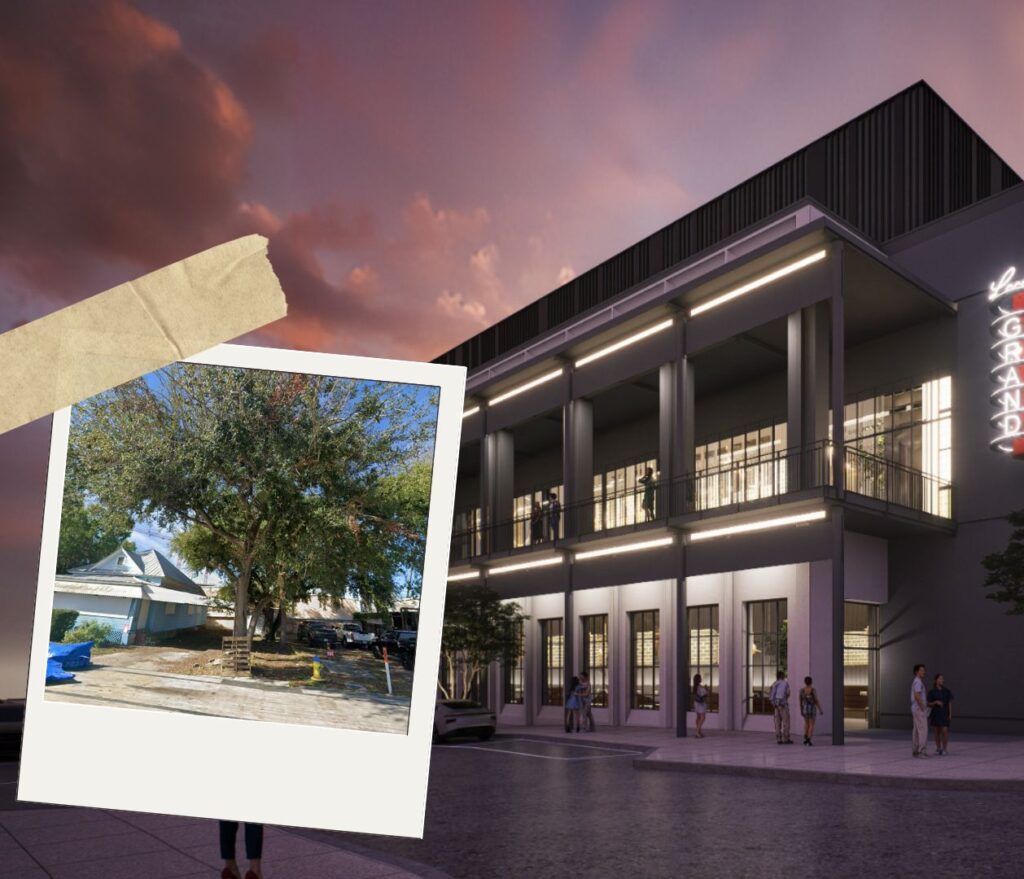
A planned Live Nation-backed music venue in Ybor City’s GasWorx district has encountered its first hurdle, as a dispute over the removal of a grand oak tree delayed approvals for the project this week. Led by Kettler and Darryl Shaw, the proposed venue is planned for 1419 E 4th Avenue and 1402 N 15th Street within the rapidly rising GasWorx neighborhood, where construction activity has accelerated in recent months. The project would replace a warehouse, a single-family home, and several trees currently occupying the site. At the center of the dispute is a grand oak slated for removal. This week, the Barrio Latino Commission reviewed both the proposed venue and a related variance seeking permission to remove the protected tree. According to the applicant, the development team has exhausted all reasonable preservation and redesign options, citing physical site constraints and Ybor City’s zero-foot setback requirements. “The test is not whether a theoretical design can be drawn,” the applicant stated in project materials. “The issue is whether preserving Tree #398 still allows a code-compliant, functional venue within the approved PD/A urban form.” Commissioners, however, challenged that assessment, saying the applicant had not sufficiently demonstrated that preservation alternatives had been fully explored. The discussion means the possibility of additional redesign work, expanded justification for tree removal, or potential code variances. These can include height increases to offset seating losses associated with preserving the oak, beyond the 65 feet allowed. The venue, first proposed last month, is planned as a roughly 4,300-seat entertainment destination operated by national concert promoter Live Nation. According to a press release, the development is projected to generate approximately $80 million in economic impact and create more than 400 jobs. Plans call for a three-story building featuring balconies, lobby space, seating areas, ticket windows, and other venue components. The design incorporates brick facades, metal balconies inspired by Ybor City’s architectural character, exposed lighting elements, and additional details intended to reflect the neighborhood’s historic identity. “Our goal is to create a venue that carries that legacy forward by adding a new destination for residents, visitors, and artists,” said James Nozar, Kettler’s president of development. “It will bring a distinct atmosphere to the neighborhood and give people another reason to experience Ybor and stay longer.” Despite the delay surrounding the tree variance, other aspects of the project have continued moving forward. The Barrio Latino Commission has already approved demolition plans for a warehouse on the site, while a single-family home located on the property is set to be relocated. A follow-up meeting on the proposal is scheduled for July 28.
University of Tampa Nears Groundbreaking on Largest Residence Hall in School History at 110 South Boulevard
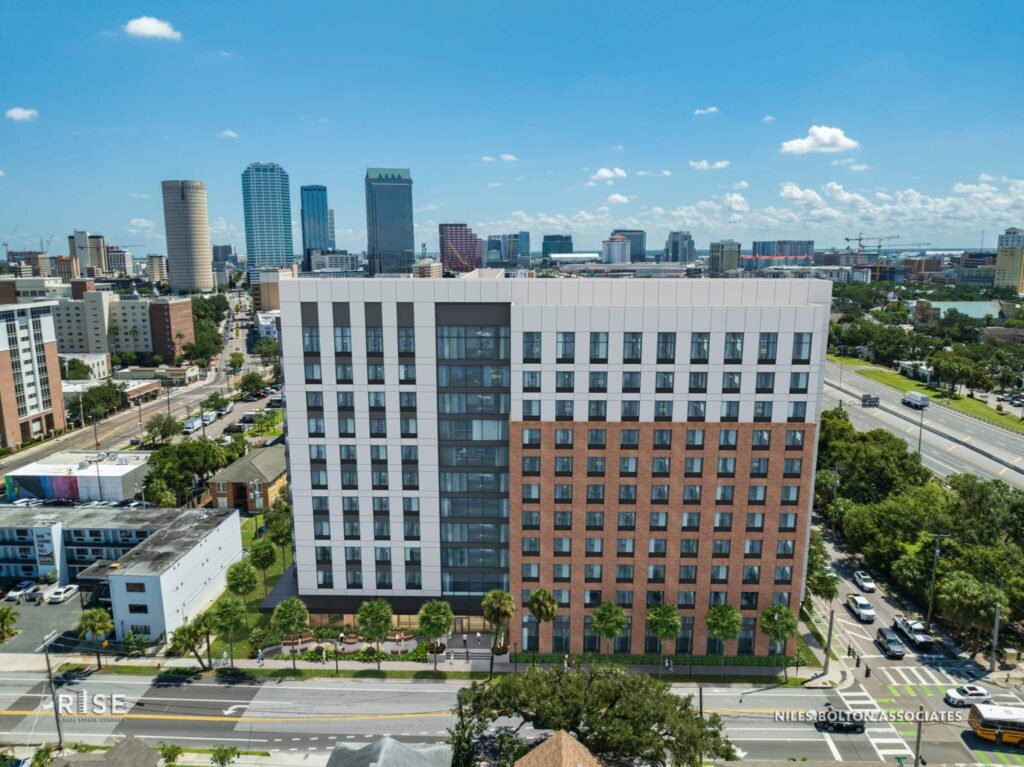
The University of Tampa is nearing groundbreaking on its next major student housing project, an 11-story residence hall planned just south of its campus at 110 South Boulevard. The large-scale development, which has been moving quietly and quickly through permitting, is expected to open ahead of the Fall 2028 semester. Once complete, the building will deliver more than 800 beds across approximately 210,000 square feet, making it the largest residence hall in the university’s history. The project is being developed through a public-private partnership between the University of Tampa and RISE Real Estate. Juneau Construction is serving as general contractor, while Niles Bolton Associates is leading architecture and FBR Design is handling interior design. The proposal marks the second major development planned for the site. An earlier concept for the parcel called for a 22-story, 250-foot mixed-use tower containing 182 residential units and roughly 2,835 square feet of retail space. That proposal ultimately fell through, and the property was later acquired by the University of Tampa for approximately $10.25 million in early 2025. The new development is intended to address rising student enrollment and growing demand for university-led housing rather than off-campus housing by private developers. Inside the Project Targeted toward first and second-year students, the residence hall will contain 238 units totaling 833 beds, according to plans submitted roughly two weeks ago. Units will range from one-bedroom to two-bedroom layouts. According to the university, the building is being designed around the student experience: “The residence hall will provide a modern, intentionally designed living environment that supports academic success, community connection and student well-being. The building will include suite-style units with shared living space, along with study lounges, two common rooms, dining facilities, bicycle storage, and surface parking.” At ground level, plans call for approximately 2,040 square feet dedicated to dining facilities, alongside a lobby and other uses. The project will also include 46 parking spaces. This relatively low parking count reflects university policy. First-year students at the University of Tampa are not permitted to have vehicles on campus. Architecturally, the building will rise 153 feet to its highest architectural point, or approximately 141 feet to the roofline. Exterior materials will include brick masonry, red brick facades, stucco, and glass. According to the university, the design is intended to “complement the existing UTampa campus while respecting the character of the surrounding neighborhood.” Progress/Permitting: The development has already entered multiple phases of permitting. Applications tied to utilities, right-of-way work, and a general construction permit for the structure itself are currently awaiting approval. Notably, the city lists the project’s general construction filing under an Affordable Housing Accelerated Plan Review designation, potentially providing permitting advantages compared to more traditional developments. The residence hall is also being designed to meet LEED standards through the U.S. Green Building Council. The project will represent the university’s latest student housing expansion following completion of Grand Center Residence Hall, which accommodates nearly 700 first-year students.
Citadel’s Miami HQ Loses Supertall Status in Shift to Nearly All Office Space
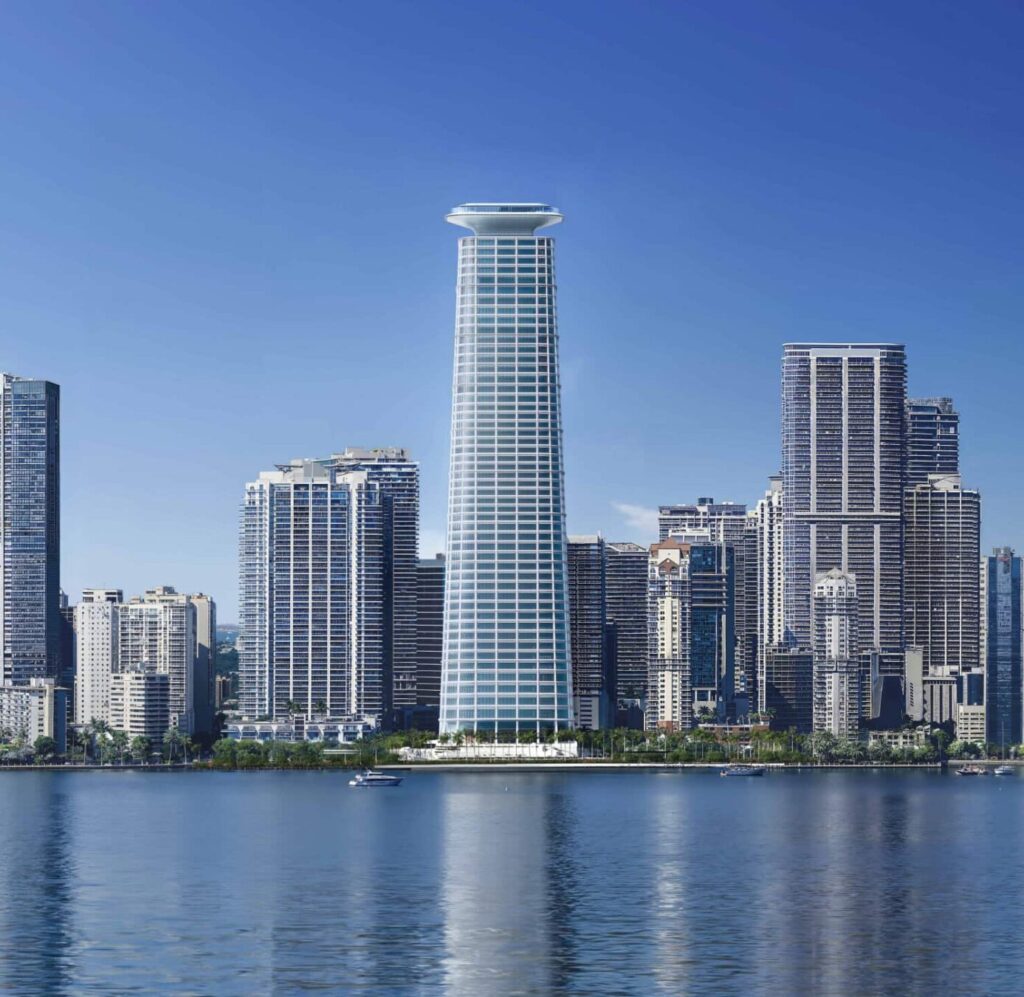
Plans for Citadel’s new global headquarters in Brickell have undergone sweeping changes, according to newly submitted filings with Miami-Dade County, reshaping what had once been expected to become one of the tallest towers in the United States. The project, planned for 1201 Brickell Bay Drive, was originally envisioned as a mixed-use supertall combining office space, hotel rooms, retail, and waterfront public space. New filings, however, show the development pivoting almost entirely toward office use, eliminating the previously proposed hotel component while also falling just short of the global height threshold required for supertall status. Under standards established by the Council on Tall Buildings and Urban Habitat, a supertall tower must rise at least 984 feet. Earlier versions of Citadel’s headquarters exceeded that benchmark. Updated elevations instead place the tower at approximately 954 feet to its highest architectural point, about 30 feet below the supertall cutoff and nearly 100 feet shorter than the previously proposed 1,043-foot design. The redesign arrives as billionaire hedge fund manager Ken Griffin continues expanding Citadel’s long-term footprint in Miami, repeatedly signaling plans to “double down” on the city by increasing office capacity and shifting more operations south. It also comes amid growing political and financial tensions in New York City, where mayor Zohran Mamdani recently proposed a 5% pied-à-terre tax while standing outside Griffin’s $238 million penthouse, purchased in 2019. Following the proposal and the media attention surrounding it, Citadel COO Gerald Beeson criticized coverage of the event as “shameful” for singling out Griffin. At the same time, speculation has continued surrounding Griffin’s future involvement in 350 Park Avenue, the office tower project he is partnering on in Manhattan. In Miami, the latest filings point to a dramatic shift in priorities for the Brickell headquarters itself. Original plans called for a 63-story mixed-use tower containing 212 hotel rooms, approximately 1.485 million square feet of office space, 50 parking spaces, and ground-floor retail. Newly submitted plans instead propose a near fully office-focused tower totaling roughly 1.642 million square feet of office space, an increase of approximately 150,000 square feet compared to the prior proposal. In exchange for the additional office area, the project has been scaled back vertically. The tower’s height has been reduced and its floor count lowered from 63 stories to 52, significantly altering the proportions of what was once expected to join the country’s growing class of supertall skyscrapers. The application also outlines approximately 40,167 square feet of open space integrated throughout the property, 69,951 square feet retail space, and 40 parking spaces, down from the 50 originally proposed. At ground level, plans call for a baywalk segment featuring widened sidewalks, landscaping, public art, and expanded pedestrian connectivity along the waterfront. Near the top of the tower, filings showcase a rooftop pavilion space for a potential restaurant, observation deck, or other use, though its eventual use has not yet been disclosed. Also, despite the increase in office space, the project’s overall size has been reduced. Previous plans called for approximately 2.12 million square feet of total development, while the latest proposal lowers that figure to roughly 1.71 million square feet. Despite the redesign, activity at the site has continued accelerating. Earlier this year, crews began deep soil mixing operations on the waterfront property, marking the first visible phase of construction. The process, commonly referred to as DSM, is used to strengthen unstable ground conditions by blending cement with existing soil to create reinforced underground columns, a technique frequently required for major high-rise construction projects across South Florida. The work was initially tied to an approximately $11 million soil improvement permit issued by Miami-Dade County. More recently, however, developers filed a roughly $25 million foundation permit, signaling that foundation operations are now formally moving into place as the project advances toward full vertical construction. Visible equipment now staged on-site includes DSM rigs, cement silos, and additional heavy machinery associated with ongoing foundation preparation work. A similar soil stabilization process was also utilized at Waldorf Astoria Residences Miami, currently the only supertall tower under construction in the city. The headquarters is being developed by Related Companies, with Foster + Partners leading design responsibilities. Field Operations is serving as landscape architect, Kimley-Horn as civil engineer, and Adamson Associates Architects as architect of record. Citadel purchased the waterfront site for approximately $363 million in 2022, during a period when Miami’s financial sector was rapidly expanding amid an influx of hedge funds, private equity firms, and technology companies relocating operations to South Florida. Since then, projected costs for the headquarters have surged from roughly $1 billion to approximately $2.5 billion, driven largely by rising labor and construction costs (which may explain the reduction in overall height and square feet). Even so, momentum surrounding the project appears to be strengthening rather than slowing. While no formal completion timeline has been announced, the scale and complexity of the development suggest construction could extend well into the early 2030s once vertical work officially begins.
Long-Awaited Citadelle Village Breaks Ground in Little River, Set to Deliver 96 Affordable Units
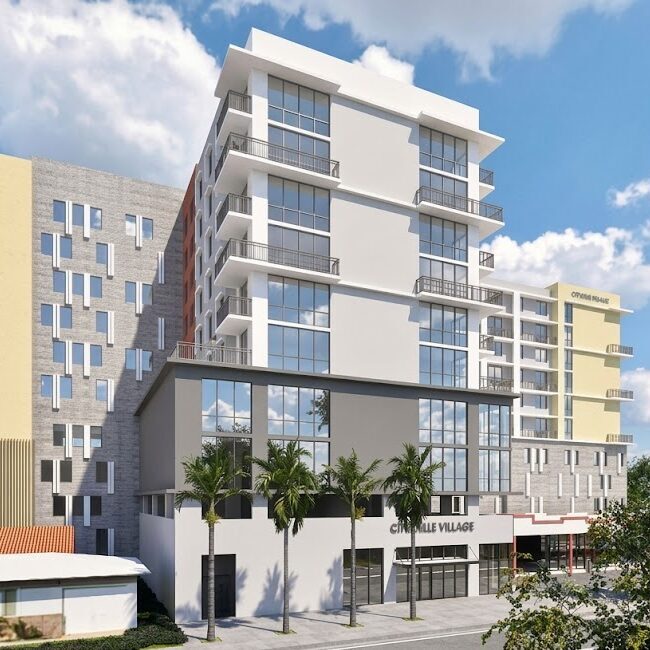
A long-planned affordable housing development in Little River officially broke ground this week, marking a major milestone for a project that has spent nearly a decade moving through planning and financing. Known as Citadelle Village, the development is being led by the Haitian American Community Development Corporation in partnership with local organizations and the City of Miami. The project aims to deliver nearly 100 affordable housing units in a neighborhood facing growing housing pressure and rising costs. Citadelle Village is planned for 181 NE 82nd Street, the former site of the developer’s offices before demolition activity began roughly a year ago. Since then, the property has been cleared and a formal groundbreaking ceremony has now been held on-site. Total construction costs are estimated at roughly $52 million, with the City of Miami contributing approximately $5.5 million toward the project. According to plans submitted in 2023, the development will contain 96 residential units consisting of studio, one-bedroom, and two-bedroom layouts, with studios making up the largest share of the unit mix. Residences will range from approximately 628 square feet to 1,182 square feet. The project is primarily targeted toward residents earning up to 80% of Area Median Income, though the developer has stated that a portion of the units will be reserved at deeper affordability levels for households earning as little as 30% AMI. Residents will have access to a range of community-oriented amenities, including a club room, teenager game room, computer lounge, children’s play room, and multiple seating and gathering areas throughout the building. At street level, the development will include 1,177 square feet of commercial space fronting NE 82nd Street, alongside roughly 4,000 square feet on the third level dedicated to the future offices of the Haitian American Community Development Corporation. According to elevations prepared by Anillo Toledo Lopez Architecture, the 10-story structure will rise approximately 117 feet. Renderings depict a facade composed of smooth stucco finishes, metal balconies, and mesh screening covering the parking podium (which is set to include 102 parking spaces). Victor Turner, director of Miami’s Department of Housing and Community Development, said the project represents another opportunity to expand housing options for nearby residents, stating, “We’re very excited about providing another opportunity to assist our low to moderate income residents to Miami”. Completion is currently estimated between late 2028 and early 2029. Once finished, the development will join a growing list of affordable housing projects reshaping Little River, including Little River Plaza by AHF, a recently started 12-story project planned to deliver 250 affordable housing units nearby.
Tampa Approves $35 Million for Ybor Harbor Infrastructure Upgrades Ahead of Groundbreaking
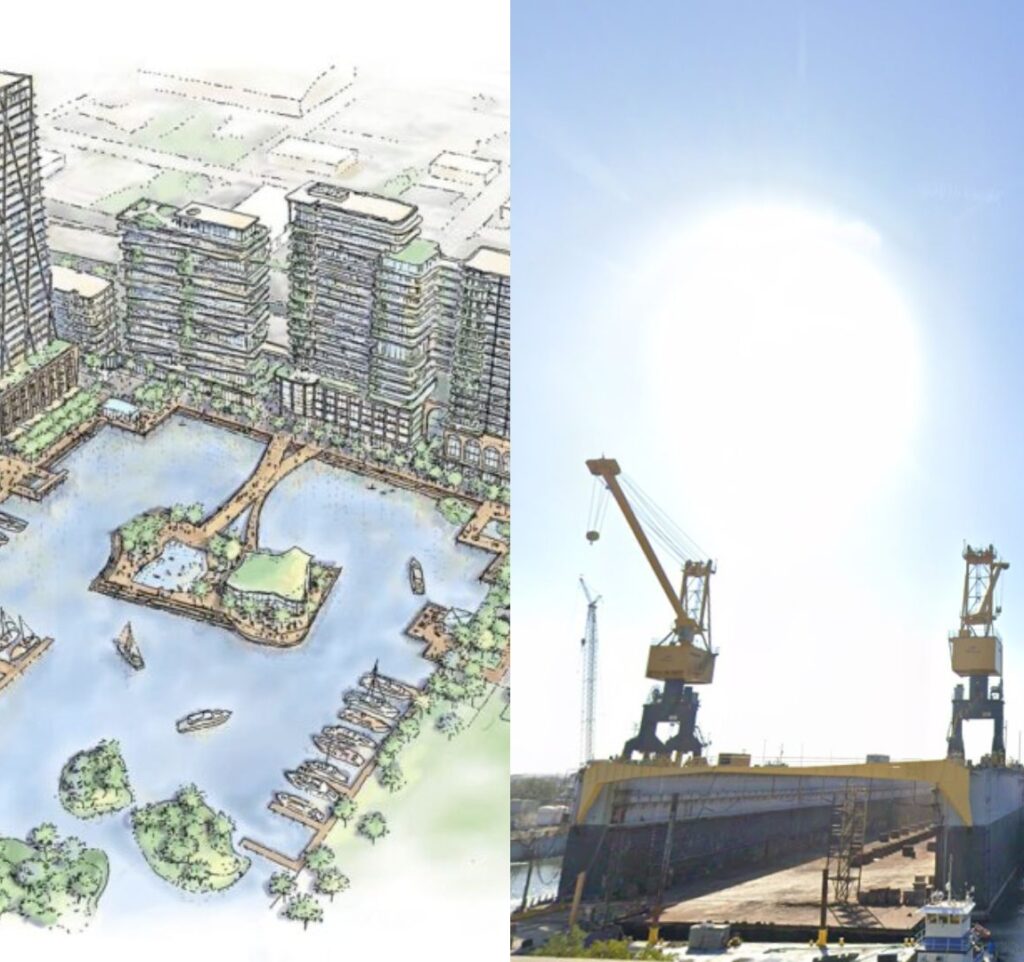
Key financing has now been secured for infrastructure upgrades tied to Ybor Harbor, a massive mixed-use development planned to replace an aging shipyard in Tampa’s Channelside district. On May 14, the Tampa City Council unanimously approved $35 million in funding for the improvements, marking another major milestone for the long-anticipated waterfront project led by local developer Darryl Shaw. The project represents Shaw’s next large-scale redevelopment effort in the urban core. Just north of the site, Shaw is already leading construction on Gasworx, a similarly ambitious mixed-use development transforming former industrial land into a dense, walkable district. The approved funding will cover only a portion of the infrastructure work ultimately required at Ybor Harbor. Total infrastructure costs are currently expected to exceed $200 million. Shaw’s team initially requested $50 million from the CRA, though staff later recommended reducing that figure to $35 million, which ultimately became the amount approved by City Council. Funding will be distributed incrementally, with $7 million allocated annually between 2029 and 2033. The financing will come through the CRA, which is intended to address blight and support redevelopment within the surrounding district. Planned improvements include upgrades to sewer and water infrastructure, sidewalks, seawalls, and other public facilities needed to support the project’s large-scale buildout. According to Tampa Monitor, the infrastructure package also includes approximately 1,100 linear feet of new public waterfront access and roughly 2,500 feet of overall outdoor public space integrated throughout the site plan. Momentum around the project accelerated last summer after plans were unveiled for a new 15,000-seat soccer stadium anchored by Tampa Bay Sun FC, the metro’s professional women’s soccer team. In addition to hosting matches, the stadium is expected to function as an entertainment venue capable of accommodating concerts, festivals, sporting events, and other large gatherings. At full buildout, Ybor Harbor is planned to include approximately 800 hotel rooms, 150,000 square feet of street-level retail space, 500,000 square feet of office space, and 4,750 residential units. Plans also call for 10% of rental units to carry rent restrictions. According to Avi Friedman Shaw, vice president of development at Darryl Shaw’s firm, the current annual tax revenue generated by the 32-acre site totals roughly $400,000 today, though projections estimate that figure could eventually exceed $47 million annually once the development is fully built out. While finalized plans for individual blocks have not yet been submitted to the city, the broader master development is continuing to advance toward construction. Groundbreaking is currently targeted for next year.
300 Malaga Proposed in Coral Gables, Bringing 25 Luxury Residences
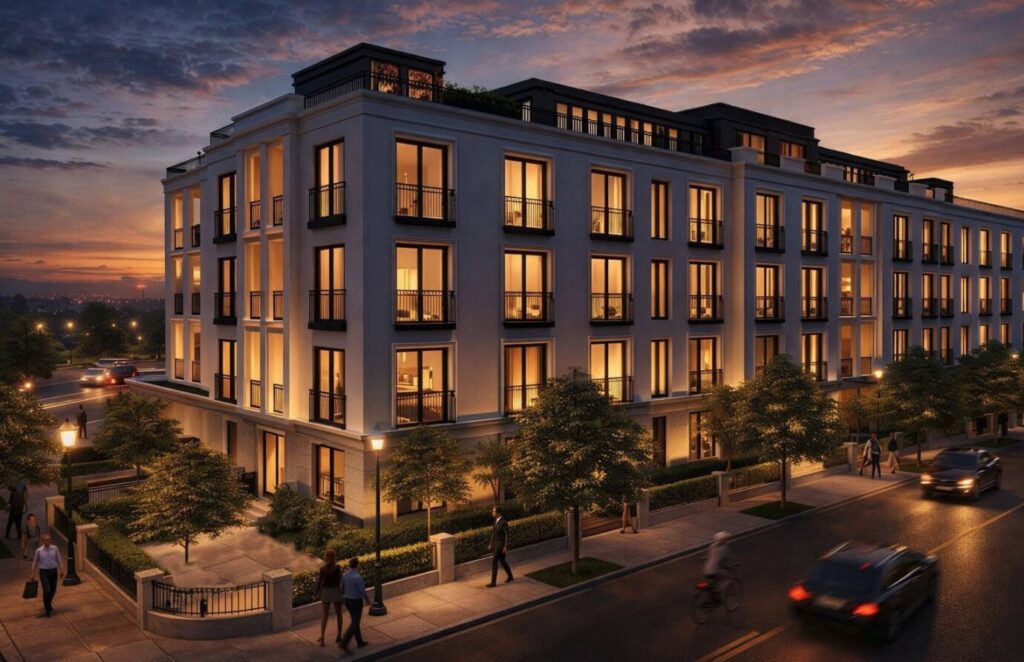
A new luxury multifamily development is headed to the Coral Gables Development Review Committee, as developers seek approvals for a four-story residential building known as 300 Malaga. Recently submitted by Roger Development Group and designed by Nichols Architects, the project is scheduled to appear before the committee on May 29, 2026. Planned for 300, 310, and 318 Malaga Avenue in Coral Gables, the development would replace three existing single-family homes assembled by the developer in late 2025 for roughly $2.4 million. Zoning documents tied to the proposal reveal that the entire block recently underwent a series of land-use and zoning modifications, with the Future Land Use designation updated to allow a range of residential zones, including Single-Family High Density, Multifamily Duplex Density, and Residential Multifamily Medium Density. The changes were made through a petition process backed by a majority of residents living on the block. Alongside the land-use amendments, the area also received updated height regulations and other zoning revisions intended to accommodate future redevelopment. The changes represent yet another single-family block in the southern portion of Coral Gables for potential redevelopment, as pressure for new housing continues pushing outward from the city’s increasingly constrained core. With large redevelopment sites becoming more difficult to find, smaller residential assemblages like this are beginning to emerge more frequently as viable multifamily investments. According to plans submitted to the city, 300 Malaga will contain 25 residential units consisting of one-bedroom, two-bedroom, and three-bedroom layouts. Units are expected to be notably large, with three-bedroom residences making up the majority of the project. Amenities will be on the rooftop level, where plans call for a pool, cabanas, bathrooms, barbecue areas, fitness space, and additional leisure-oriented amenities overlooking the surrounding neighborhood. Parking will be housed below grade, with 55 spaces planned within a basement garage. At street level, the project incorporates widened sidewalks, added landscaping, and a small residential lobby. According to submitted elevations, the building will rise 56 feet and contain four occupiable floors, plus a rooftop amenity level that gives the structure the appearance of a fifth story. Architecturally, the project leans heavily into the traditional design language favored by Coral Gables, featuring a highly articulated facade composed of precast stone finishes, smooth stucco, and cornice detailing. Describing the inspiration behind the project, Nichols Architects stated that 300 Malaga “pays tribute to the assemblage of rich Architectural styles in Coral Gables. The inspiration for our residential project is French style architecture and several historic French-themed villages around the city.” Approval of the project is widely expected given both its scale and architectural approach. While updated zoning on the block now permits buildings up to five stories, the proposal remains below the maximum allowable height.
Updated Plans for Keystone Midway Submitted in Miami-Dade, Set to Add 489 Units
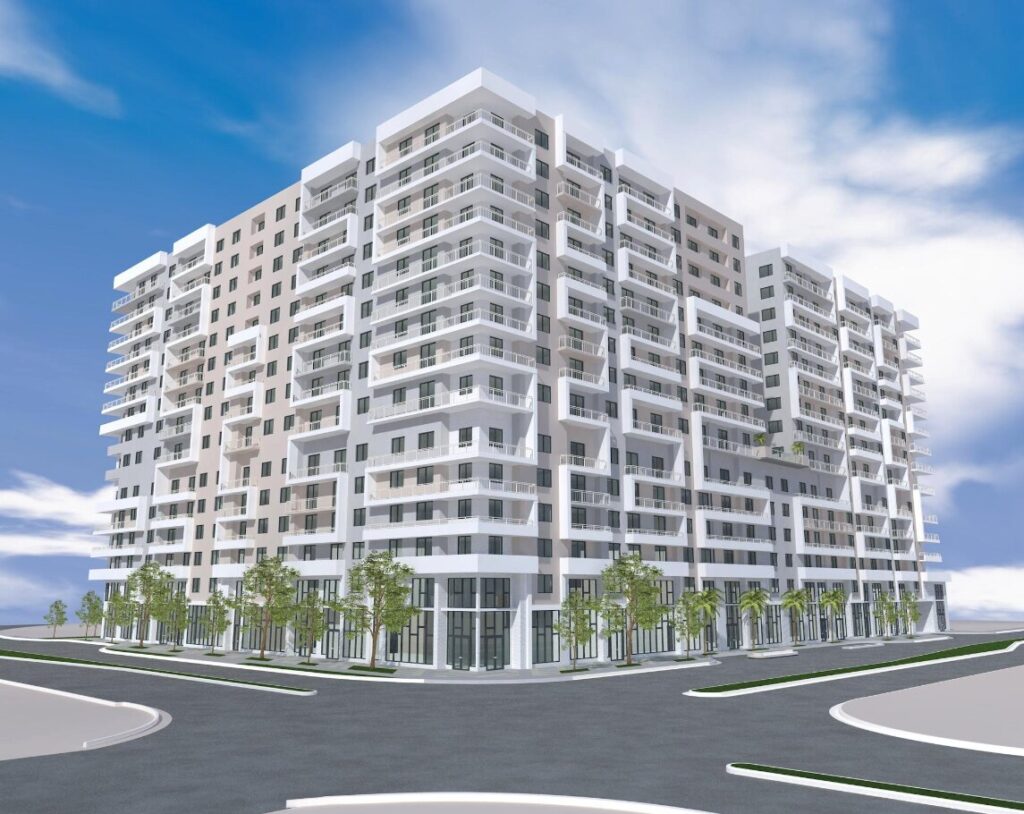
Fontainebleau could soon receive its first major development filed under Florida’s Live Local Act, as developers have submitted updated plans for a 15-story mixed-use project known as Keystone Midway. Proposed by Keystone Holdings, the project would replace an existing church property with nearly 500 residential units, marking the second iteration of the proposal after an earlier version was filed months ago. Planned for 190 NW 79th Street, the development would redevelop a 2.4-acre site currently occupied by a church building constructed in 1977 alongside a large surface parking lot. The property was acquired in early 2025 by Keystone Midway LLC for $10.2 million from Cathedral Connection Ministry Inc. Recently submitted plans call for a total of 489 residential units, an increase from the 477 units proposed in the project’s original filing. Under Florida’s Live Local Act, developers can access additional development incentives in exchange for reserving at least 40% of a project’s units as workforce housing. In this case, 40% of Keystone Midway’s units would be designated for residents earning up to 120% of Area Median Income. The development’s unit mix will include one-bedroom, one-bedroom plus den, two-bedroom, two-bedroom plus den, and three-bedroom layouts. One-bedroom units are expected to make up the majority of the project, followed by two-bedroom residences. Like many Live Local developments still moving through early approvals, portions of the amenity package remain subject to change. Still, plans already outline a substantial amenity deck located on the seventh floor, featuring a pool, kiddie pool, spa, pickleball court, family lounge, fitness center, business center, and game room. At street level, the project aims to improve pedestrian activity along the corridor through added landscaping, widened sidewalks, and 6,301 square feet of retail space. That figure represents a reduction from the 8,624 square feet of retail included in the original proposal. To support both residents and commercial activity, the development will include 773 parking spaces, slightly below the 779 spaces otherwise required under existing code. According to submitted elevations, Keystone Midway will consist of two tower structures rising above a 6-story podium. Both structures are planned to reach approximately 161 feet at their tallest architectural point. Renderings depict an exterior composed primarily of stucco finishes, metal balconies, and a pastel-toned color palette. Windows are not planned to be floor-to-ceiling, although balconies will line the facade. The project’s proposed height is made possible through the Live Local Act’s zoning regulations, which allow qualifying developments to match the tallest permitted height within a 1-mile radius. In this instance, the development uses zoning tied to a recently proposed 600-unit project by LF Development located roughly 0.64 miles away, where 15 stories are permitted. That mechanism could ultimately create a ripple effect for nearby properties that are seeking similar increases in density and height. The application is currently undergoing administrative review by Miami-Dade County, though approval is expected.
278-Unit Greenzone Development Proposed at The Big Easy Casino in Hallandale Beach
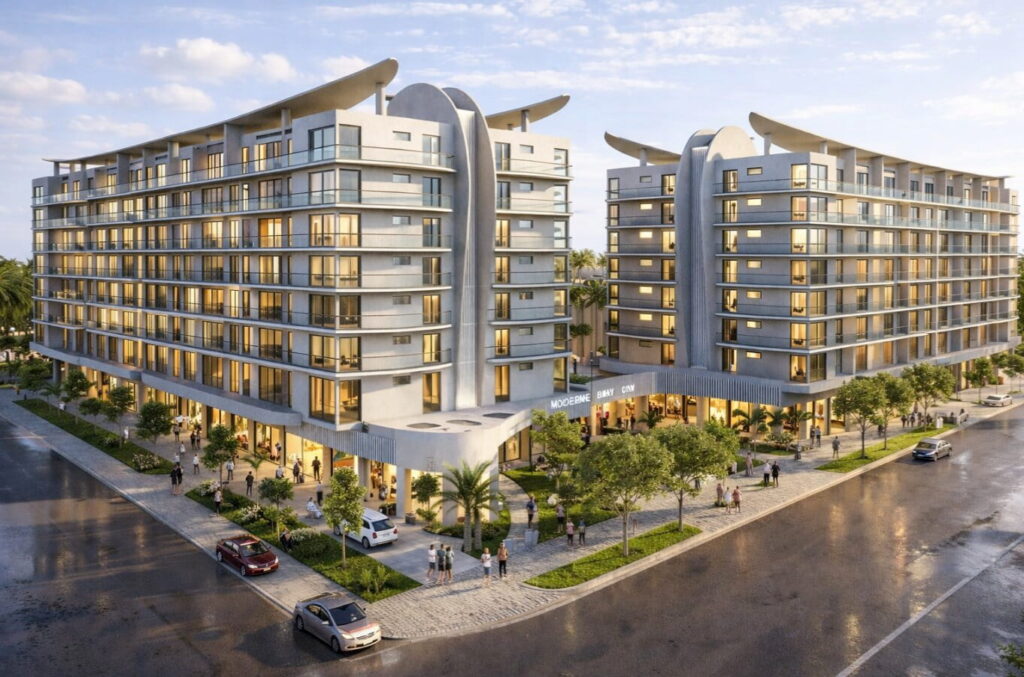
A chunk of Big Easy Casino in Hallandale Beach could soon be redeveloped into apartments, after developers submitted plans for two 8-story residential buildings to the city. Proposed at 501 NE 7th Street, the project will be dubbed Greenzone. Plans call for the redevelopment of an existing surface parking lot into a mixed-use development featuring apartments and retail, adding to an area that has rapidly become a hotspot for new construction activity. The property, originally home to a greyhound racing track before later being rebranded as Big Easy Casino, has seen portions of the larger site gradually sold off for redevelopment over the years. A 12.3-acre parcel was previously sold to JAI Legacy Holdings LLC, which later transferred the 3.09-acre development site to Greenzone Property Hallandale 770 LLC for $12 million. Current plans submitted to the city call for 278 residential units split between 54 efficiency units, 168 one-bedroom units, and 56 two-bedroom units. Efficiency units are planned at 499 square feet, while one-bedroom layouts will average 740 square feet and two-bedroom units approximately 1,050 square feet. Planning documents estimate the project could house around 560 residents at full occupancy. Units are expected to feature floor-to-ceiling windows, private balconies, and access to a broad amenity package centered around a rooftop deck above the parking structure. Proposed amenities include a pool, spa, clubhouse, playground, gym, landscaped open space, and two pickleball courts. At ground level, the development is designed to activate much of the site with 17,745 square feet of retail space lining the south, west, and north portions of the property. The surrounding streetscape is also set to receive pedestrian-focused upgrades, including widened sidewalks, added greenery, and other public realm improvements. To accommodate both residents and retail demand, the development will include 391 parking spaces. The project is being designed by SKLARchitecture, with the two 8-story structures planned to rise approximately 96 feet to the roofline, or roughly 100 feet to their tallest architectural feature. Renderings depict a contemporary facade complemented by white and gray tones, with the parking podium wrapped by active uses and architectural screening intended to minimize its visual impact. Describing the project’s design in a letter submitted to the city, SKLARchitecture wrote, “The architectural design emphasizes a contemporary and cohesive aesthetic, with clean lines, articulated façades, and curved balcony elements that create visual interest while also functioning as shading devices to enhance energy efficiency and occupant comfort. The massing is carefully modulated to maintain a strong street presence while providing appropriate transitions within the site and to surrounding uses.” The development is expected to move through the approval process with relative ease. Unlike many large redevelopment proposals in South Florida, the project requires little demolition, as the site currently functions as surface parking. In addition, the zoning and land-use framework already established for the former greyhound track property anticipates large-scale redevelopment, positioning Greenzone to move forward without major entitlement hurdles.
Miramar Cove Begins Site Work in Miramar, Advancing Massive 125-Acre Mixed-Use Project
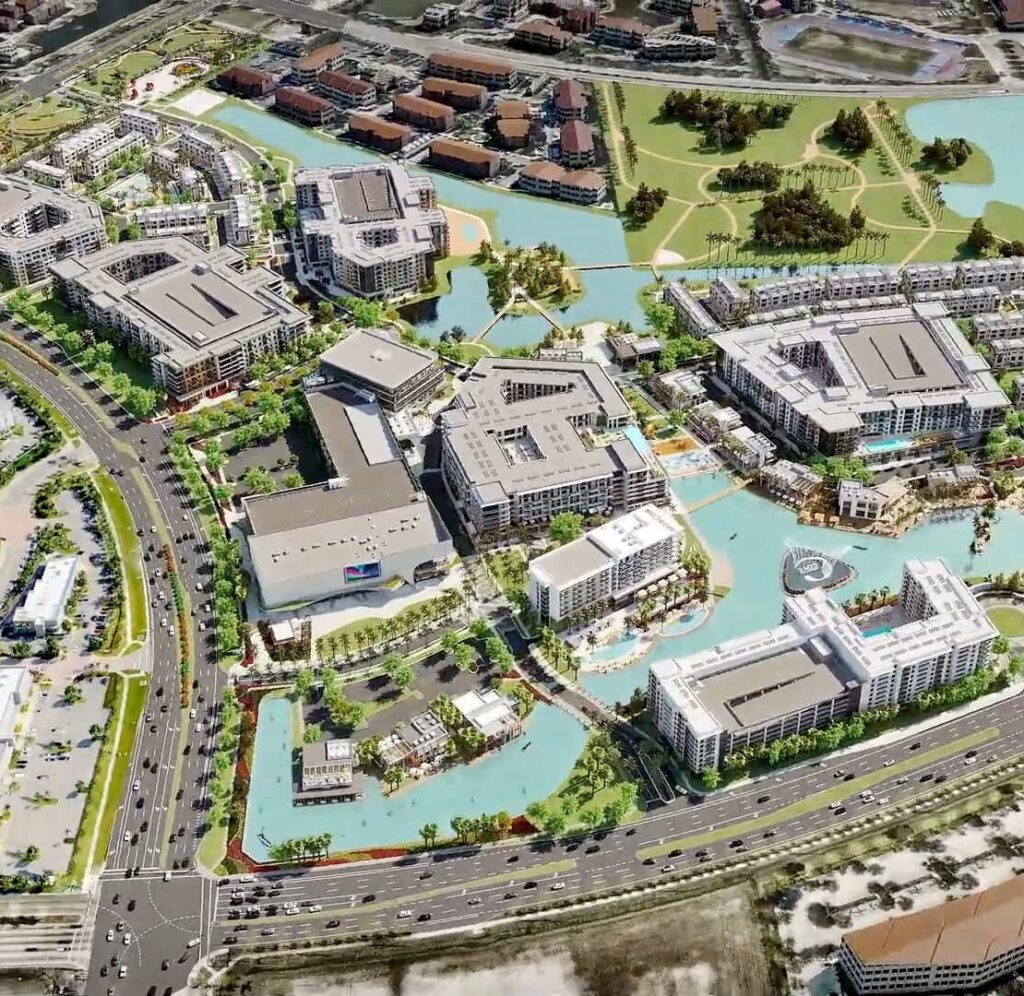
A new master-planned community is taking shape in Miramar, where one of South Florida’s last large-scale greenfield sites is now moving into the site preparation phase. Coined Miramar Cove, the 125-acre project is being led by Sunbeam Properties and is envisioned as a “15-minute city,” blending residential, retail, office, and recreational uses into a single, walkable environment. According to the developer who recently announced the beginning of work, site clearing is already underway, with full buildout currently targeted for the first quarter of 2028. The project is planned in two phases, beginning with the southern portion of the site. Sunbeam secured approvals for the master development in 2024, after assembling the land years ago, positioning the firm to move quickly once entitlements were in place. This won’t be the firm’s first large-scale undertaking by the company however. In North Bay Village, Sunbeam has also proposed a multi-tower waterfront development that’s among the more ambitious projects in Miami-Dade County, and has already cleared key approvals as well. What’s Planned? According to project materials, Miramar Cove is set to deliver 2,874 residential units, of which roughly 200 are townhomes, alongside a mix of commercial and hospitality components. Plans call for: Retail leasing is being handled by Katz & Associates. In total, the development is expected to support a population of around 8,000 residents at full buildout, with marketing materials shared by Miramar News indicating a target demographic of renters aged 25 to 45 earning approximately $150,000 annually. Public realm improvements are also a major component. The project will reshape portions of Red Road and Miramar Parkway with new access points, expanded sidewalks, and additional landscaping. Roughly 40 acres of green space is planned across the site, including parks, trails, and a series of waterfront features. Among the more notable elements: The Location Miramar Cove’s location sits within a rapidly evolving region of South Florida. The site sits just north-west of Hard Rock Stadium, where Miami’s Metrorail is set to expand to. As developable land becomes increasingly scarce across South Florida, projects of this scale are becoming rarer.