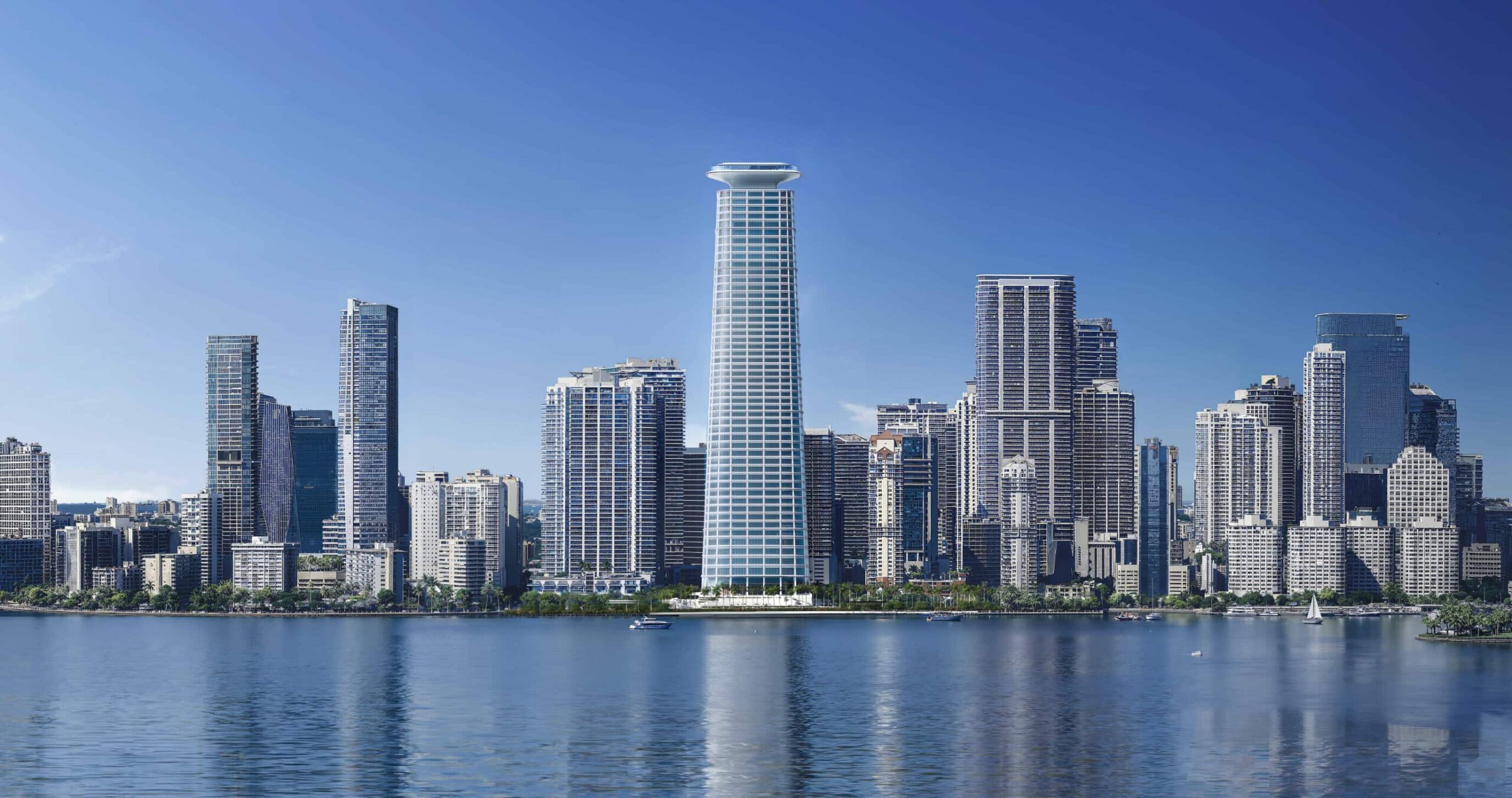
Plans for Citadel’s new global headquarters in Brickell have undergone sweeping changes, according to newly submitted filings with Miami-Dade County, reshaping what had once been expected to become one of the tallest towers in the United States.
The project, planned for 1201 Brickell Bay Drive, was originally envisioned as a mixed-use supertall combining office space, hotel rooms, retail, and waterfront public space. New filings, however, show the development pivoting almost entirely toward office use, eliminating the previously proposed hotel component while also falling just short of the global height threshold required for supertall status.
Under standards established by the Council on Tall Buildings and Urban Habitat, a supertall tower must rise at least 984 feet. Earlier versions of Citadel’s headquarters exceeded that benchmark. Updated elevations instead place the tower at approximately 954 feet to its highest architectural point, about 30 feet below the supertall cutoff and nearly 100 feet shorter than the previously proposed 1,043-foot design.
The redesign arrives as billionaire hedge fund manager Ken Griffin continues expanding Citadel’s long-term footprint in Miami, repeatedly signaling plans to “double down” on the city by increasing office capacity and shifting more operations south. It also comes amid growing political and financial tensions in New York City, where mayor Zohran Mamdani recently proposed a 5% pied-à-terre tax while standing outside Griffin’s $238 million penthouse, purchased in 2019.
Following the proposal and the media attention surrounding it, Citadel COO Gerald Beeson criticized coverage of the event as “shameful” for singling out Griffin. At the same time, speculation has continued surrounding Griffin’s future involvement in 350 Park Avenue, the office tower project he is partnering on in Manhattan.
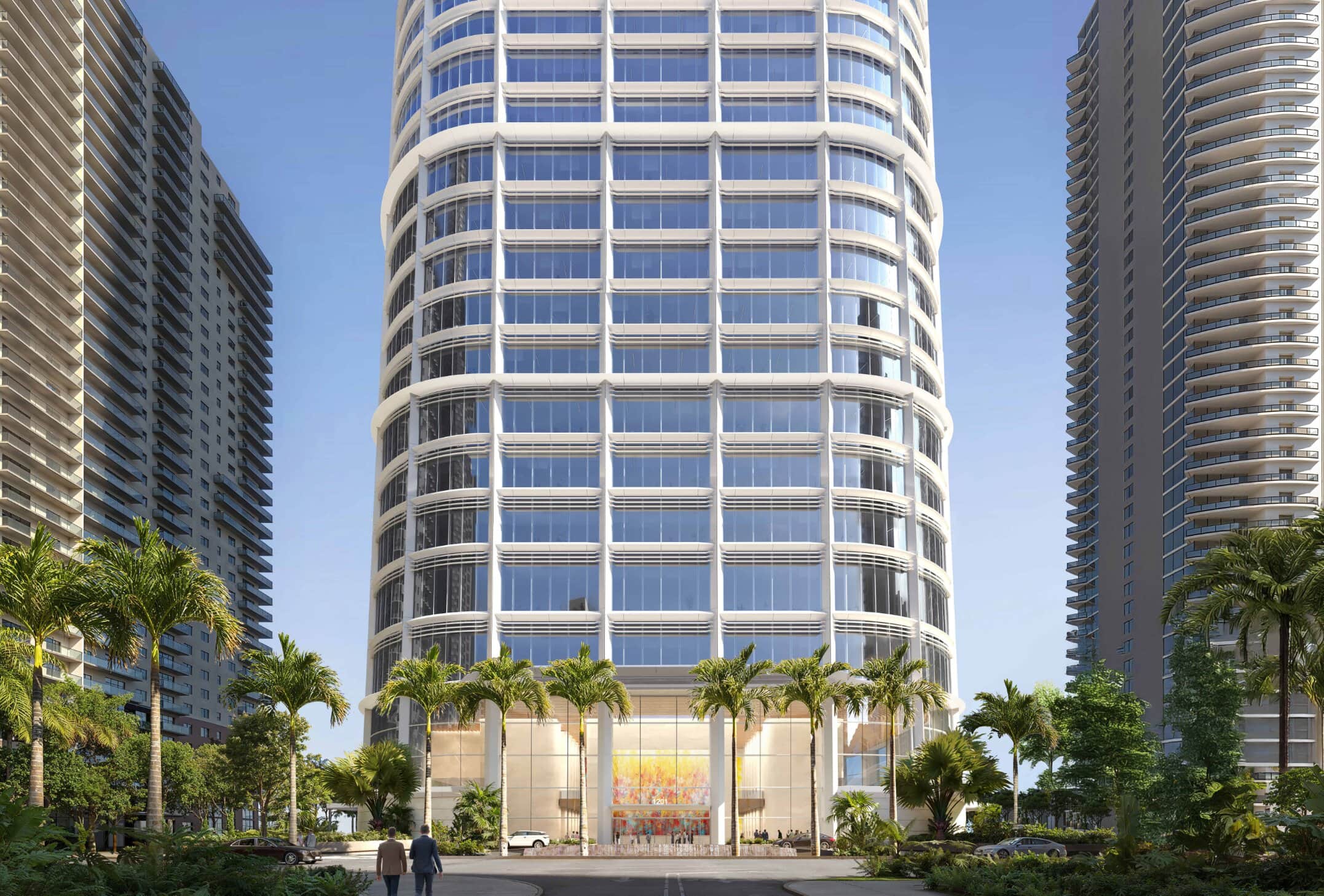
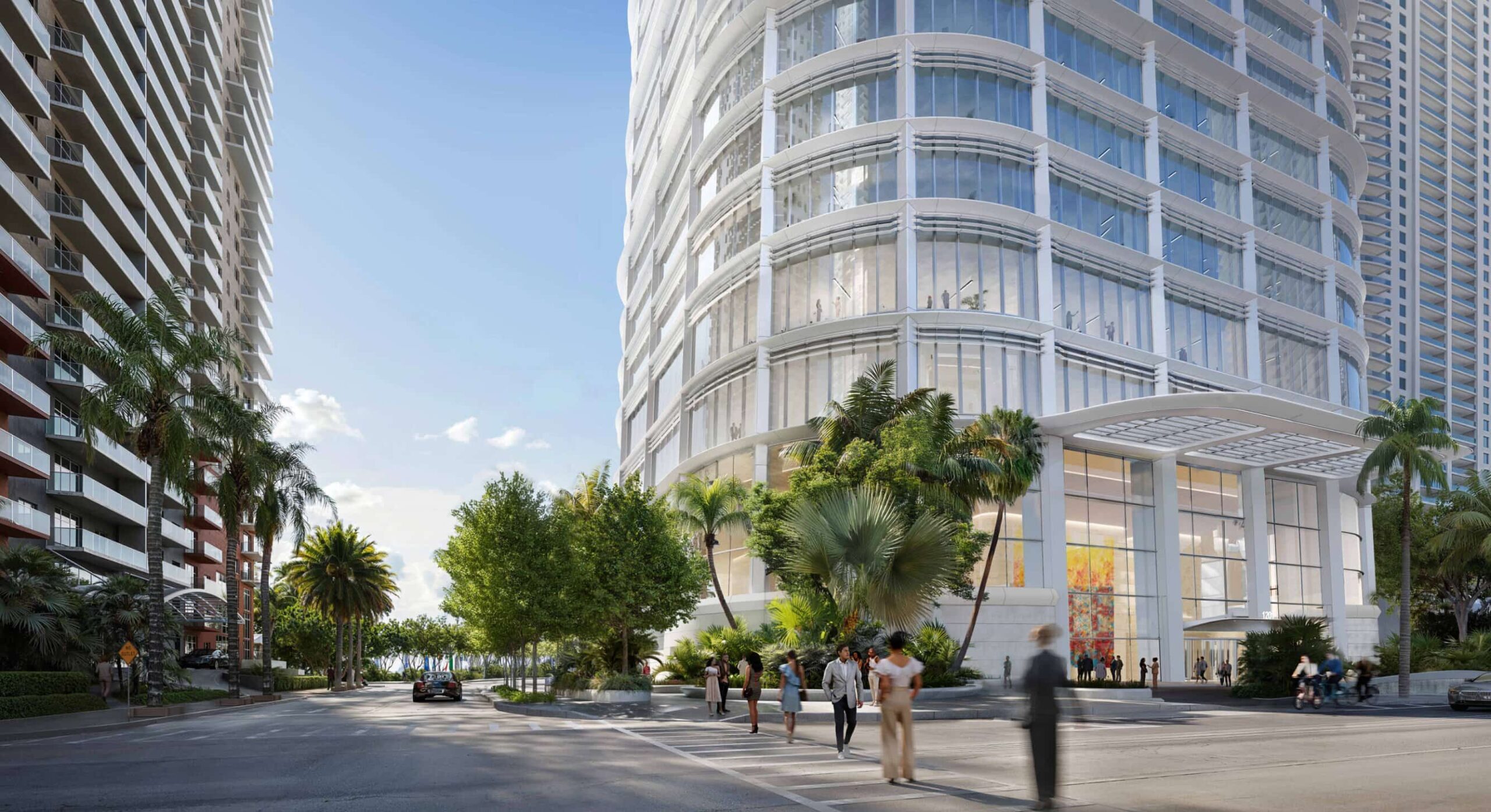
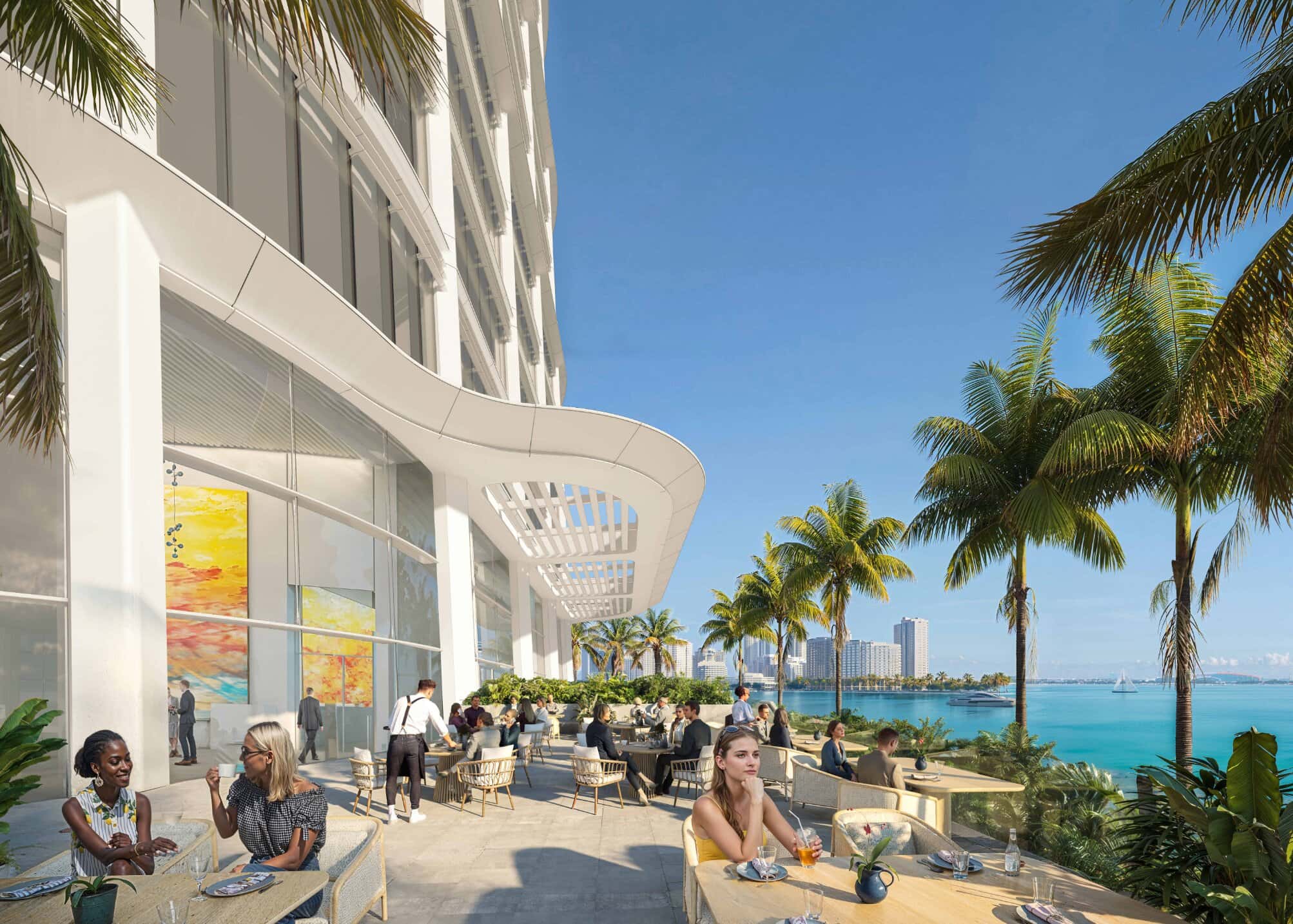
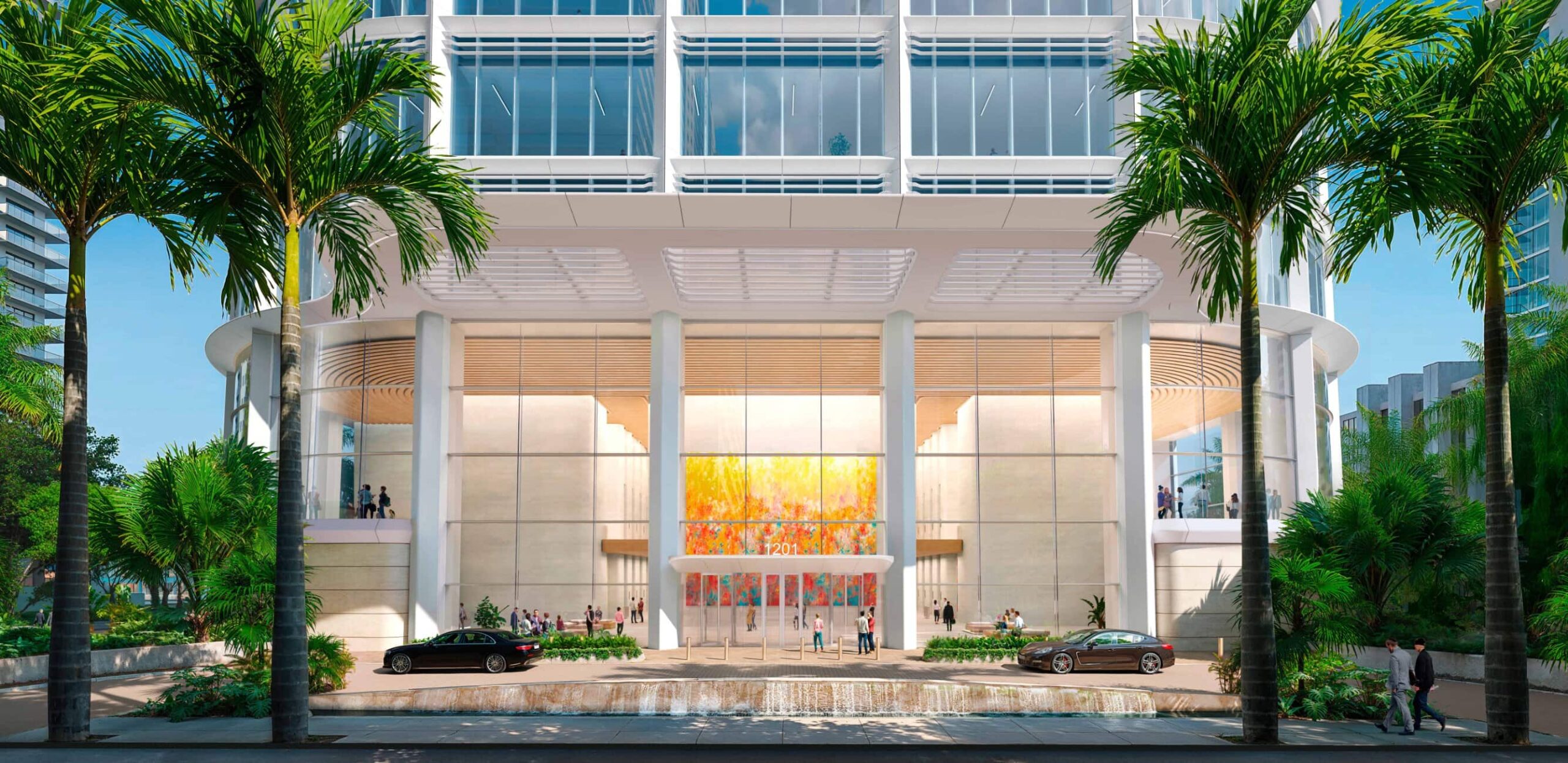
In Miami, the latest filings point to a dramatic shift in priorities for the Brickell headquarters itself.
Original plans called for a 63-story mixed-use tower containing 212 hotel rooms, approximately 1.485 million square feet of office space, 50 parking spaces, and ground-floor retail. Newly submitted plans instead propose a near fully office-focused tower totaling roughly 1.642 million square feet of office space, an increase of approximately 150,000 square feet compared to the prior proposal.
In exchange for the additional office area, the project has been scaled back vertically. The tower’s height has been reduced and its floor count lowered from 63 stories to 52, significantly altering the proportions of what was once expected to join the country’s growing class of supertall skyscrapers.
The application also outlines approximately 40,167 square feet of open space integrated throughout the property, 69,951 square feet retail space, and 40 parking spaces, down from the 50 originally proposed. At ground level, plans call for a baywalk segment featuring widened sidewalks, landscaping, public art, and expanded pedestrian connectivity along the waterfront. Near the top of the tower, filings showcase a rooftop pavilion space for a potential restaurant, observation deck, or other use, though its eventual use has not yet been disclosed.
Also, despite the increase in office space, the project’s overall size has been reduced. Previous plans called for approximately 2.12 million square feet of total development, while the latest proposal lowers that figure to roughly 1.71 million square feet.
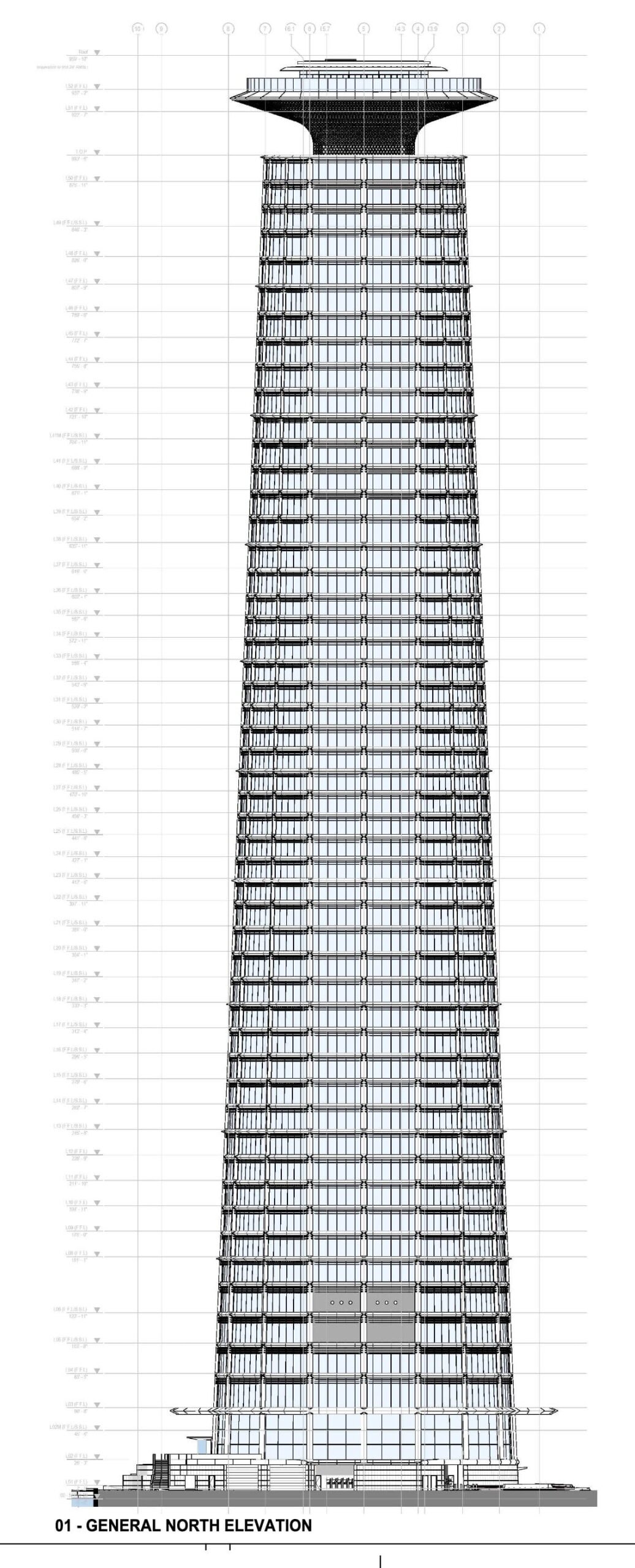
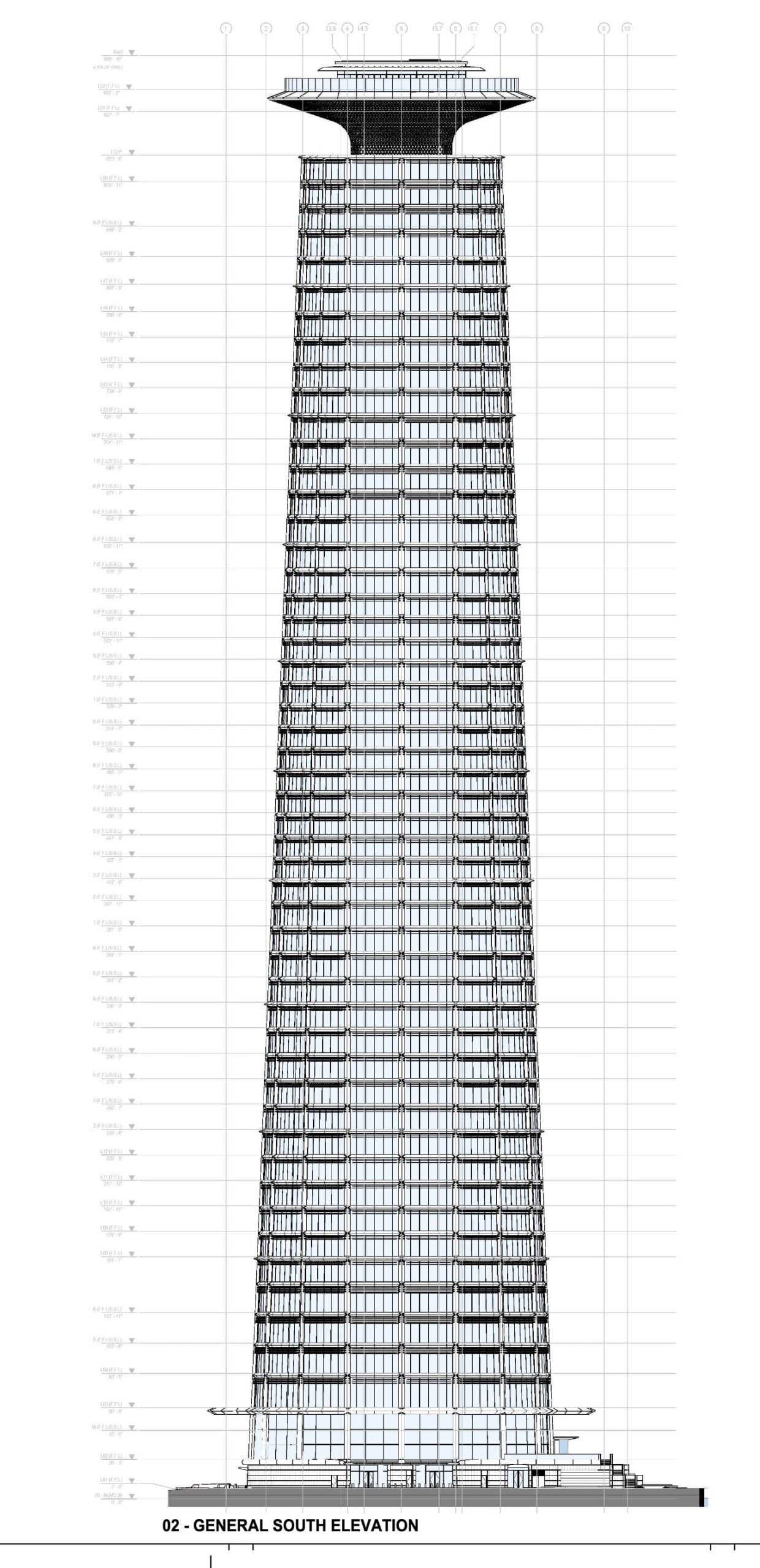
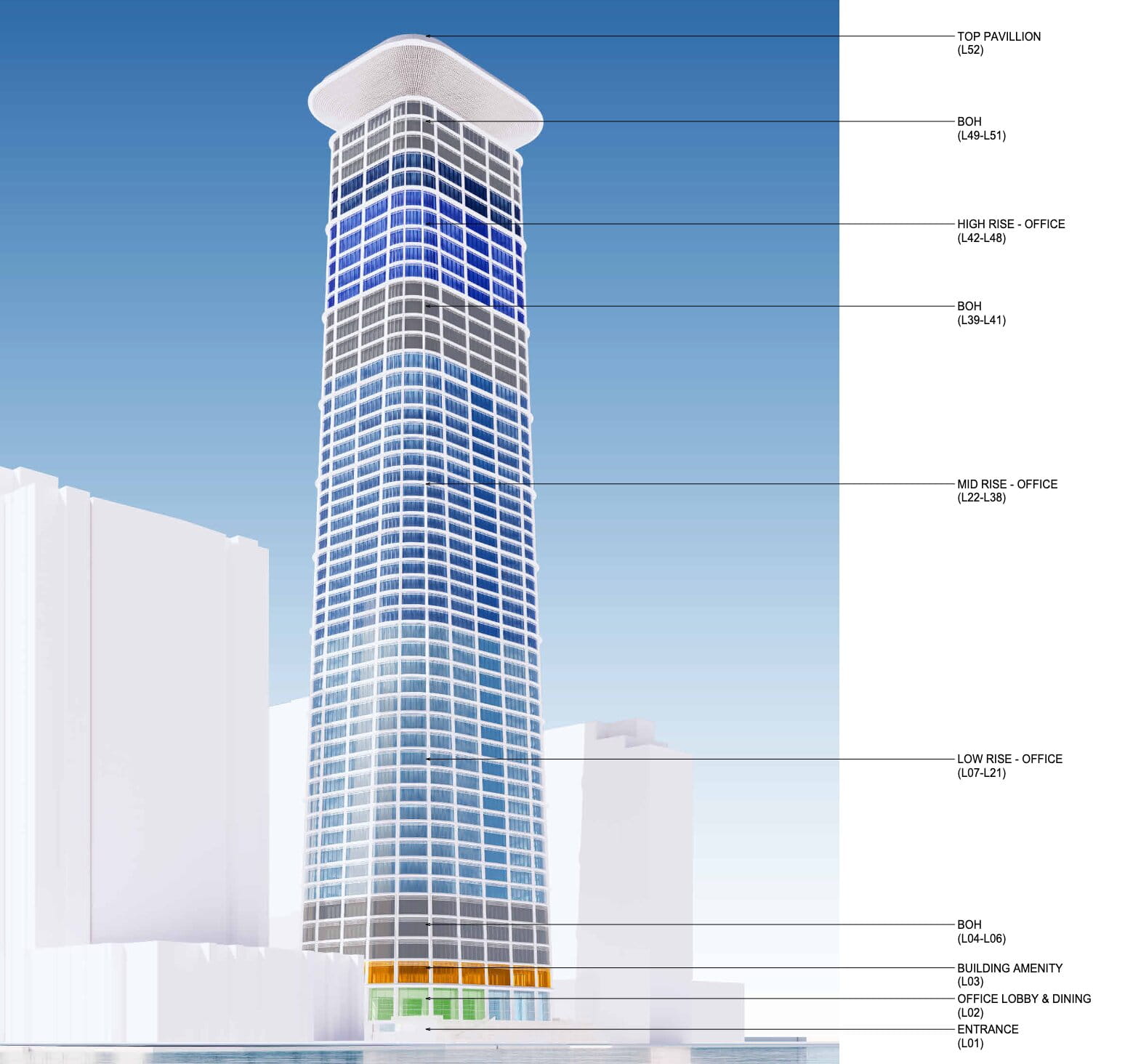
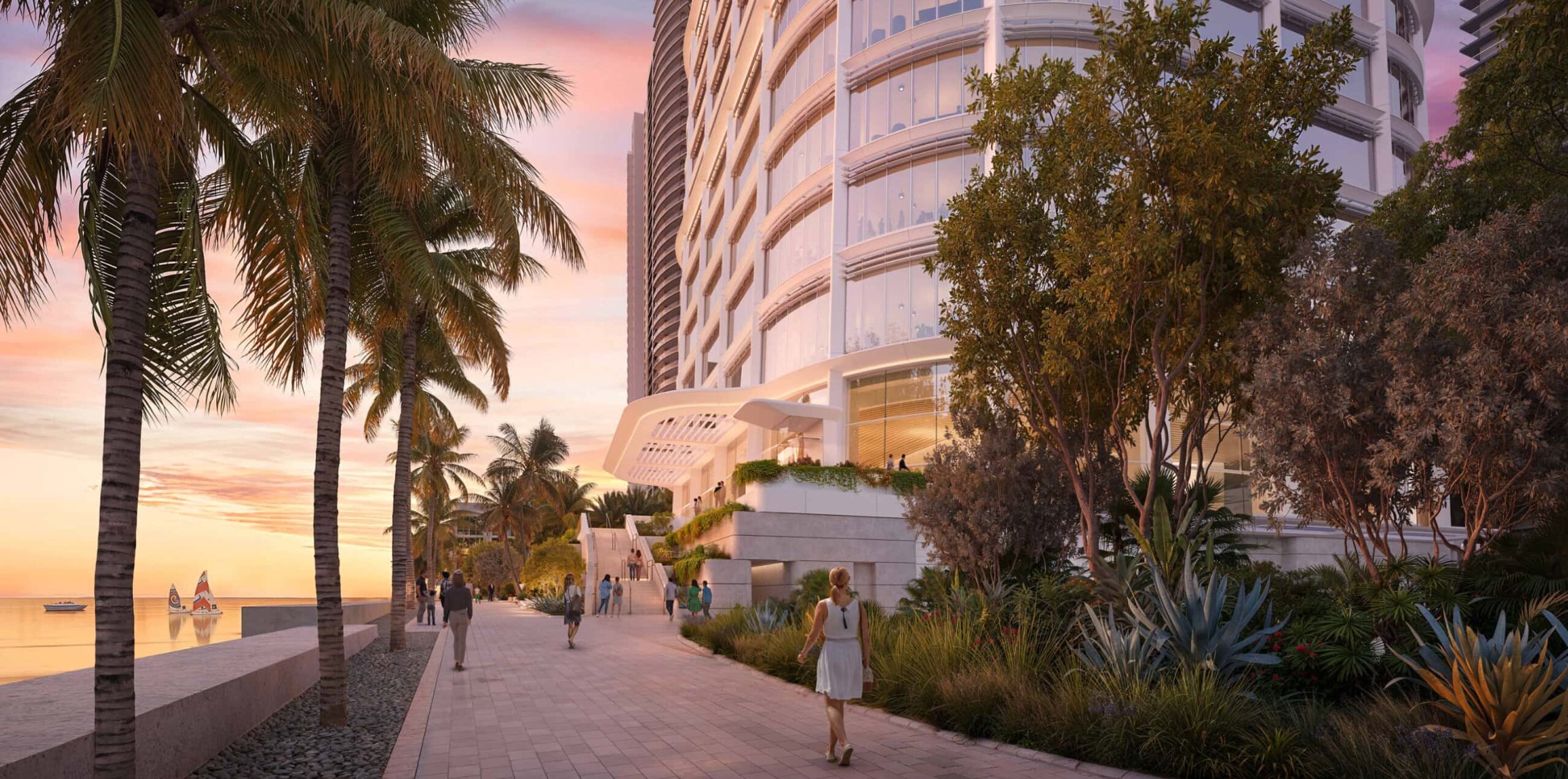
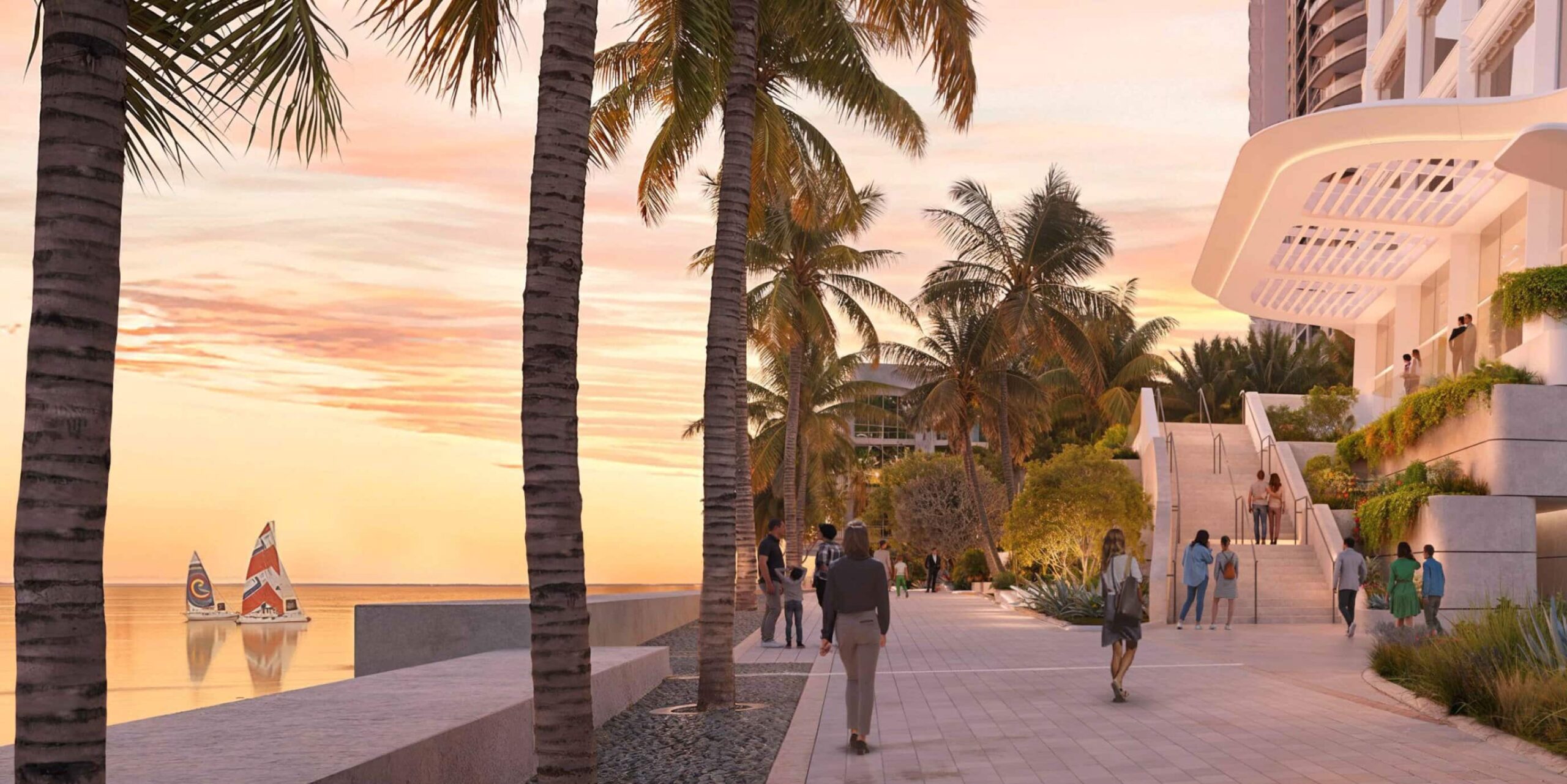
Despite the redesign, activity at the site has continued accelerating.
Earlier this year, crews began deep soil mixing operations on the waterfront property, marking the first visible phase of construction. The process, commonly referred to as DSM, is used to strengthen unstable ground conditions by blending cement with existing soil to create reinforced underground columns, a technique frequently required for major high-rise construction projects across South Florida.
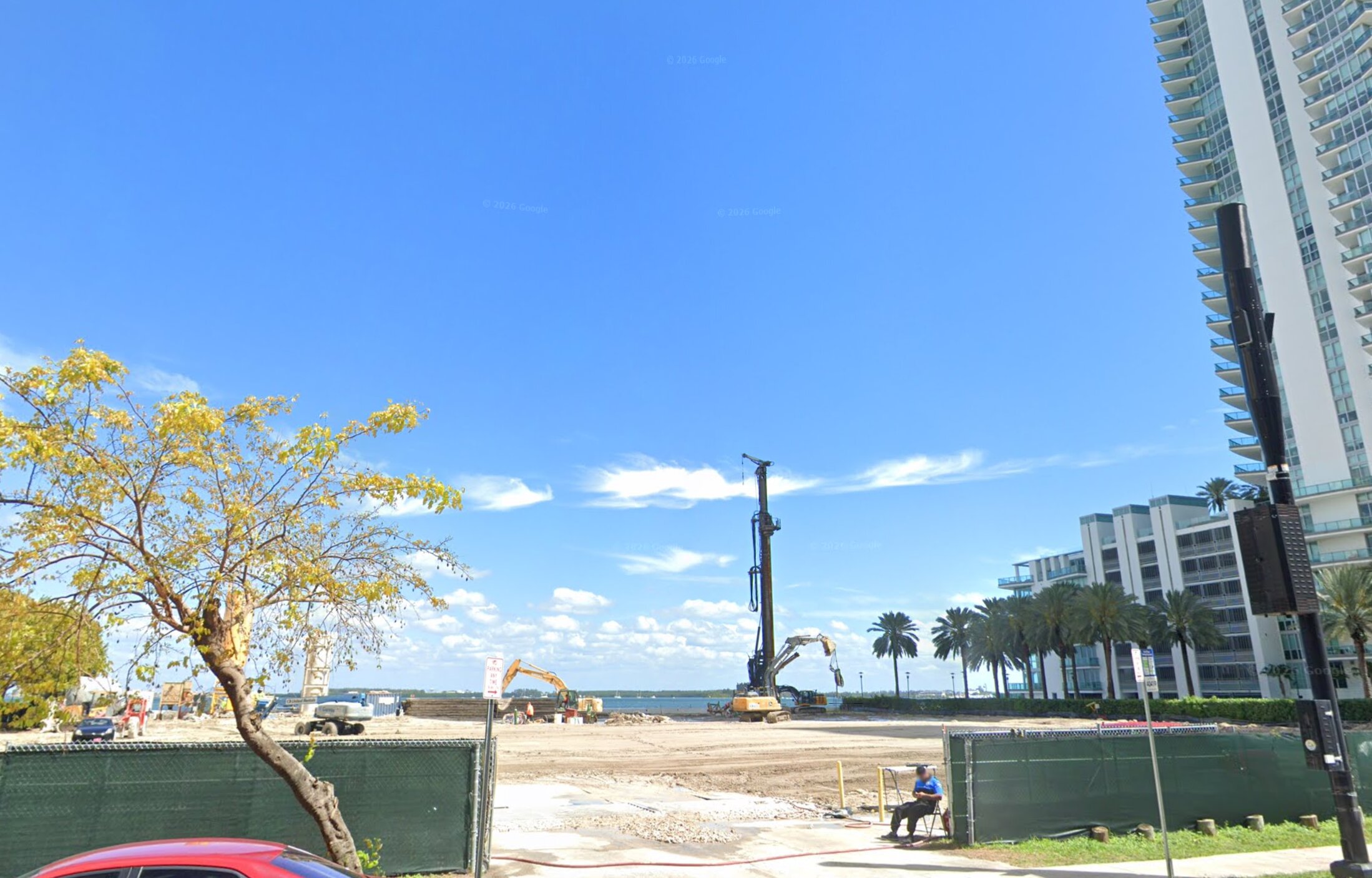
The work was initially tied to an approximately $11 million soil improvement permit issued by Miami-Dade County. More recently, however, developers filed a roughly $25 million foundation permit, signaling that foundation operations are now formally moving into place as the project advances toward full vertical construction.
Visible equipment now staged on-site includes DSM rigs, cement silos, and additional heavy machinery associated with ongoing foundation preparation work. A similar soil stabilization process was also utilized at Waldorf Astoria Residences Miami, currently the only supertall tower under construction in the city.
The headquarters is being developed by Related Companies, with Foster + Partners leading design responsibilities. Field Operations is serving as landscape architect, Kimley-Horn as civil engineer, and Adamson Associates Architects as architect of record.
Citadel purchased the waterfront site for approximately $363 million in 2022, during a period when Miami’s financial sector was rapidly expanding amid an influx of hedge funds, private equity firms, and technology companies relocating operations to South Florida. Since then, projected costs for the headquarters have surged from roughly $1 billion to approximately $2.5 billion, driven largely by rising labor and construction costs (which may explain the reduction in overall height and square feet).
Even so, momentum surrounding the project appears to be strengthening rather than slowing. While no formal completion timeline has been announced, the scale and complexity of the development suggest construction could extend well into the early 2030s once vertical work officially begins.