Construction Advances at Three Major Development Sites in Downtown Tampa
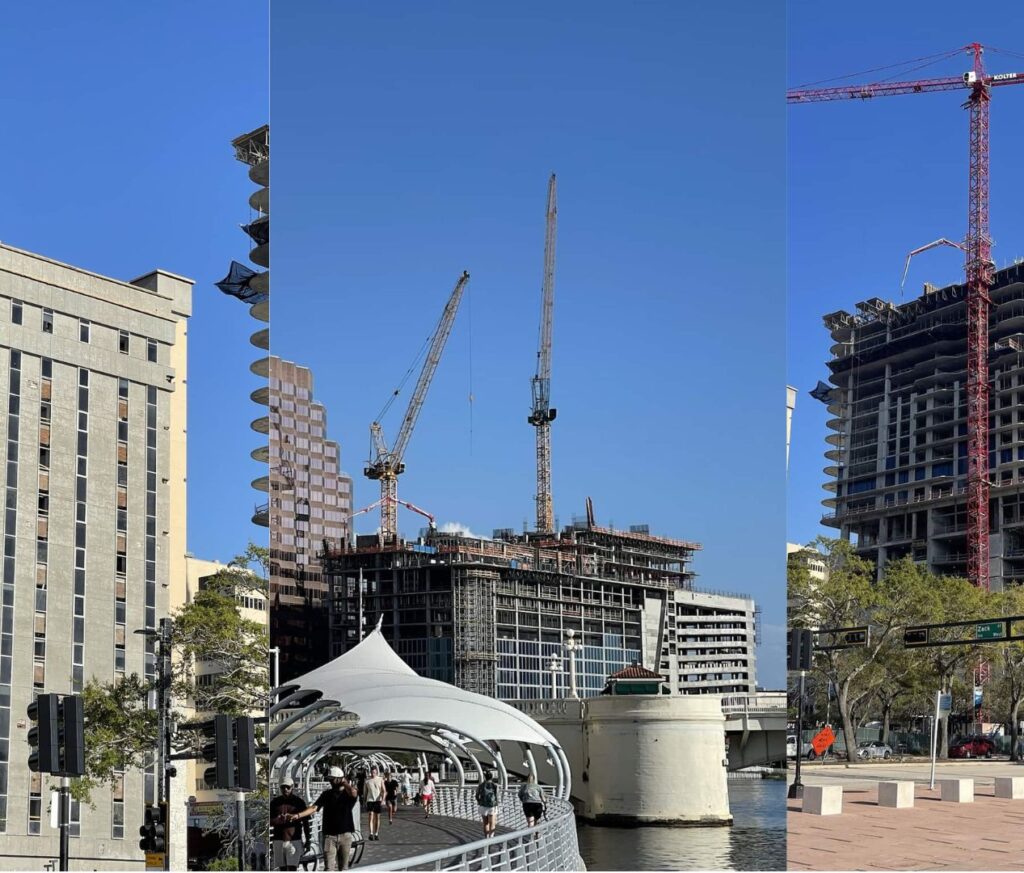
Downtown Tampa is experiencing one of the most significant development waves in its modern history. The skyline is currently dotted with a high concentration of cranes for high-rise projects, an intensity of construction not seen since the late-2000s cycle. Among the most prominent projects reshaping the urban core are One Tampa, Pendry Residences Tampa, and a future tower planned by Stock Development. Together, the announced developments are expected to add roughly 425 condominium units and 220 hotel rooms to downtown, not including details from Stock Development’s still-unreleased project. These three towers occupy closely aligned sites along North Ashley Drive near the Hillsborough River. Pendry Residences Tampa is rising at 111 South Ashley Drive, while One Tampa is under construction at 507 North Ashley Drive. Just north of both sites, Stock Development controls 601 North Ashley Drive, where demolition is currently underway following the company’s $40 million acquisition of the property. The site was previously owned by TLR Group, which had proposed a roughly 540 FT tower that went through several design iterations before ultimately being shelved. As Tampa’s skyline continues to evolve, new photos highlight the rapid progress of several major projects now reshaping the downtown core. One Tampa According to photos taken by Floridian Development, One Tampa has reached its 24th floor, with the structure rising at a pace of roughly one new floor per week. The pace has accelerated since the project’s foundation and the large parking podium, spanning approximately 10 floors, were completed. Window installation is now underway on the lower residential floors, while exterior treatments for the podium will be installed at a later stage of construction. One Tampa’s podium will feature a distinctive mesh screening incorporating artistic patterns designed to provide both visual interest and ventilation for the parking levels. The podium will also incorporate a reconstructed historic facade as part of an agreement with the City of Tampa. The original structure at 520 North Tampa Street was built in the 1920s and later demolished to make way for the tower. As part of the development agreement, Kolter Urban committed to reconstructing an interpretive version of the building’s facade along N Tampa St and E Twiggs St. Work on that reconstruction is currently underway. The portion of the podium where the historic facade will appear is currently covered with a concrete backing, which will later be clad with brick detailing and window elements designed to replicate the appearance of the original building. One Tampa is set to include 225 residential units, along with 464 parking spaces and 5,000 SF of ground-floor retail. The tower will ultimately rise 44 stories, reaching a height of about 494 FT. The project is being developed by Kolter Urban, Adache Group Architects is serving as the architect, and Moss Construction is the general contractor. Pendry Residences Tampa Pendry Residences Tampa has recently begun vertical construction on its first residential floors following completion of the tower’s 11-story podium and two amenity levels on floors 12 and 13. Crews are now working on the 14th and 15th floors, marking the start of the residential portion of the building. Similar to One Tampa, construction has accelerated after an extensive foundation phase, which included some of the deepest piles installed in Florida, and the completion of a podium spanning the full length of the site. With that work finished, the tower is now rising at a pace of roughly one floor per week. Pendry Residences Tampa is taking shape as a prominent tower along the Hillsborough River, with a footprint that will make it the widest skyscraper in the city. The waterfront hotel portion of the podium, anchored by the Pendry brand and planned to include 220 hotel rooms, is currently being enclosed in glass. Meanwhile, the garage section of the podium is slated to be finished with vertical metal louvers. This design reflects a modification by the developer: earlier plans incorporated greenery between the louvers, but the revised design removes that element in favor of a simpler black-and-white finish. Pendry Residences Tampa will introduce 200 luxury condos, 220 hotel rooms, and approximately 5,000 SF of retail space to the heart of Tampa. The 38-story, 444-FT-tall development will also feature a podium with 656 parking spaces. Arquitectonica is serving as the project’s architect, while Two Roads Development is the developer and Coastal Construction Group is acting as the site’s general contractor. 601 North Ashley While full development plans have not yet been announced for 601 North Ashley Drive, Stock Development is continuing demolition work on the existing structure occupying the site. The property was previously home to the 12-story GTE Tower. The office building has origins dating back to the 1920s but was later heavily modified, including the addition of a stucco exterior that concealed much of the original brick facade. The building most recently housed a branch of GTE Financial, which has since vacated the premises. Demolition crews are now stripping away the building’s modern exterior, leaving behind a gray structural shell where sections of the original brick occasionally emerge beneath the removed cladding. Windows are also being removed throughout the structure. Much of the facade along the west, south, and north sides has already been cleared, while the eastern elevation remains partially covered by scaffolding as work continues. According to permitting records, demolition is being carried out by D.H. Griffin Wrecking Company and includes the removal of the existing structure, basement, and foundation. Reporting from roughly two months ago indicated that Stock Development may consider utilizing development plans previously submitted by the TLR Group under its former ownership of the site. Those earlier plans called for a 540 FT tower containing approximately 600 residential units, along with 68,000 SF of office space and 12,000 SF of retail. The proposal also included a large parking podium featuring circular cutouts and capacity for up to 985 vehicles.
Massive 4,032-Unit HueHub Workforce Housing Development Moves Toward Construction
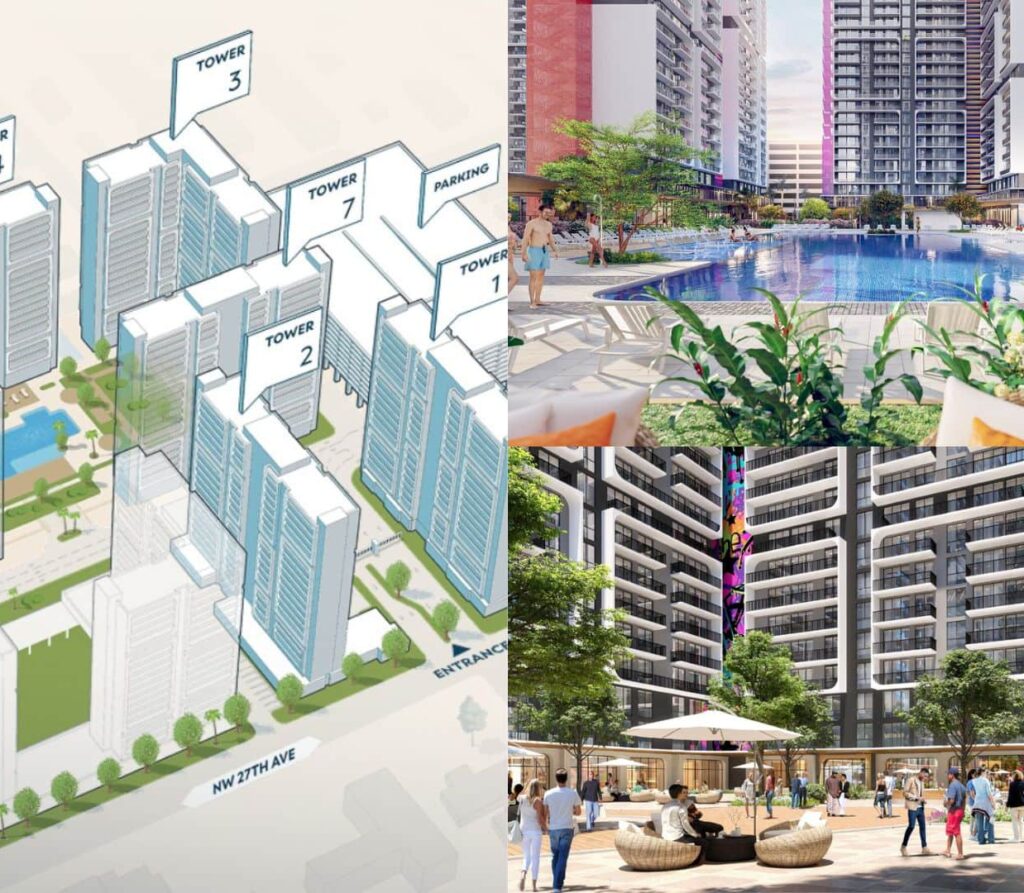
Plans are advancing for what could become the largest housing development proposed under Florida’s Live Local Act. The project, known as HueHub, is moving forward as demolition begins on the aging buildings currently occupying the site. Clearing the existing structures marks a key step toward making way for the planned $880 million mixed-use development, which aims to significantly expand the area’s housing supply with an entirely workforce-focused residential community. The development is being led by Pablo Castro through his firm HollandPark EcoreResidences LLC. Once completed, the project is expected to include 4,032 residential units spread across seven 35-story towers, along with retail space, medical offices, and extensive residential amenities. Designed by Arquitectonica, HueHub will encompass roughly 2 million SF of residential space, with a groundbreaking targeted later this year. View this post on Instagram A post shared by The HueHub Living Spaces (@thehuehubliving) The project site, located at 8400 NW 25th Avenue, was acquired by Castro in 2023 for $29.3 million. The roughly 12-acre property currently contains 141 apartments built between 1950 and 1960. According to the development team, demolition is expected to take two to three months, after which the site will be prepared for vertical construction. If financing and permitting timelines hold, the project could begin construction later this year, marking a major step forward for one of the most ambitious housing initiatives currently planned in Miami-Dade. Proposed in early 2024, the HueHub marked a shift in projects under Florida’s Live Local Act, demonstrating the law’s potential for large-scale developments rather than the smaller projects initially associated with it. This development is an early adopter of the act, which has been amended several times since its passage in 2023. Under the Live Local, municipalities must administratively approve (no public hearing required) qualifying multifamily or mixed-use residential developments on land zoned for commercial, industrial, or mixed-use purposes. If at least 40% of the units are designated as workforce housing affordable to households earning up to 120% of the area median income (AMI) for a minimum of 30 years, developers are granted significant regulatory preemptions. These include the ability to build at the highest residential density allowed anywhere in the jurisdiction and at the maximum building height permitted within one mile of the site, along with other incentives such as tax exemptions and certain parking reductions. The Plans According to final plans submitted to the county earlier this year, the development’s 4,032 residential units will consist of studio, one-bedroom, and two-bedroom layouts. Studio apartments will begin at approximately $1,302 per month and measure around 300 SF. One-bedroom units, averaging about 420 SF, are expected to start at roughly $1,598 per month, while two-bedroom residences of about 640 SF will start near $1,903 per month. These rent limits put the entire development well within workforce housing income limits. Housing will primarily be geared toward essential workers, with 3,000 units reserved for police officers, firefighters, county employees, hospitality workers, teachers, healthcare professionals, and other critical members of the workforce. Future residents will have access to a wide range of amenities designed to support both work and recreation. Planned features include podcasting studios, co-working spaces, coffee bars, outdoor lounges, social gathering areas, a juice bar, pool and sundeck, pickleball court, dog park, fitness center, art gallery, and additional shared spaces throughout the development. The project will feature 36,220 SF of ground-floor retail, including storefronts along NW 27th Ave and on-site amenities such as a juice bar and coffee bar. Two floors of medical office space, each spanning 5,740 SF, will bring the total retail and office space to roughly 47,700 SF. Medical space may be expanded if there’s increased demand. In addition to commercial uses, the project will include a police station and two community centers. The design also emphasizes pedestrian-friendly streetscapes, with widened sidewalks and added greenery surrounding the entire site. To support these uses, the project will include 5,037 parking spaces and 322 bicycle spaces. Design and Cost-Cutting Measures The seven towers will each rise 320 FT, with an additional elevator overrun of roughly 30 FT, bringing the total height of each tower to around 350 FT: well above any existing structures in the surrounding area. The Arquitectonica-led design incorporates metal balconies, floor-to-ceiling windows, and colorful murals adorning each building, drawing inspiration from graffiti art. The towers will not feature podium bases; instead, parking will be accommodated within on-site garages, a significant cost-cutting measure. The buildings will also utilize tunnel-form construction, a cost-efficient method that employs reusable steel molds to rapidly cast concrete walls and slabs. This approach allows for faster construction timelines but often results in repetitive floorplates, contributing to the towers’ monotonous design. Each unit will also include prefabricated modular kitchens and bathrooms to further streamline construction. Hallways between units will be naturally ventilated rather than air-conditioned, an approach commonly used in parts of Europe that the development plans to adopt. Many of these decisions prioritize cost efficiency over architectural variation. Construction and Future Plans Once demolition on the property concludes, a formal groundbreaking is expected to follow within the coming months. Construction of the initial seven towers is planned to begin simultaneously rather than in phases, as staging the buildings piece-by-piece would slow overall delivery and potentially increase construction costs. However, the seven towers will not mark the full extent of HueHub. Plans also call for four additional high-rise buildings in a later phase. Three are expected to rise to 35 floors, matching the height of the initial towers, while a fourth will rise to a shorter height. The expansion phase will also include a school designed to accommodate up to 1,000 students, centered around a courtyard playground. In addition, a shelter is planned for the southern portion of the site.
9-Story Modern Apartment Building Proposed at 14501 W Dixie Highway in Miami-Dade
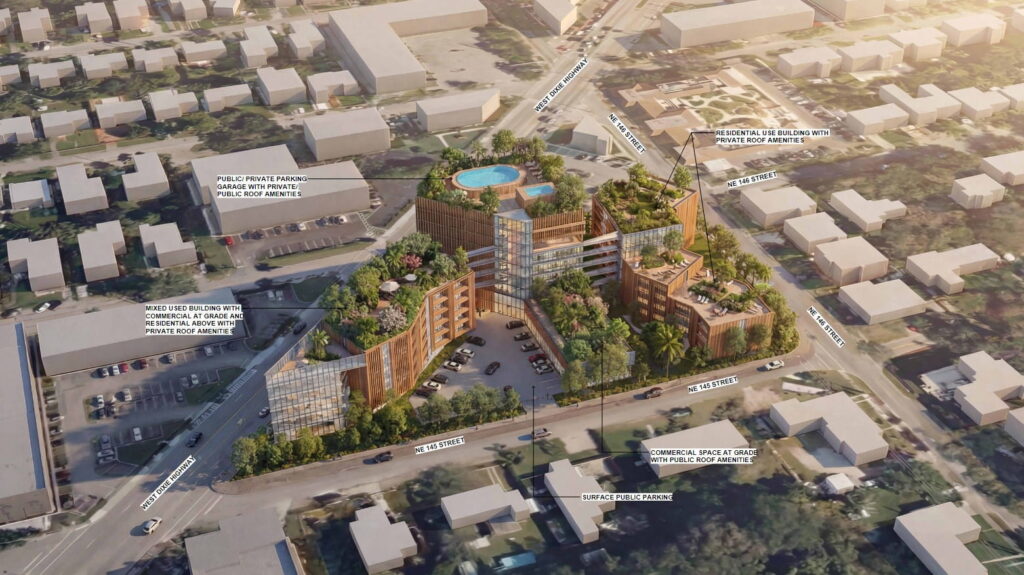
A largely vacant lot along Harriet Tubman Highway in Biscayne Gardens, an unincorporated area of Miami-Dade County just north of the City of Miami, may soon see redevelopment. On March 4th, a mixed-use proposal designed by the Gado Group and developed by RG Realty Investments was submitted to the county as a pre-application. The project envisions a modern residential building with dozens of units above ground-floor retail, introducing new housing density and activating the busy corridor with additional street-level activity. The project will rise on a 2.66-acre site spanning 14501 W Dixie Highway (Harriet Tubman Highway) and 1595 NE 145th Street, an assemblage acquired for more than $2 million. Much of the property has already been cleared following demolitions that occurred several years ago, though a small corner structure remains slated for removal. The pre-application marks the first formal step in the county’s review process, with additional filings and reviews expected before construction can begin. While plans remain in the early stages, the development is expected to include 110 apartments ranging from one- to three-bedroom layouts. One-bedroom units, measuring approximately 700 SF, will be the most common, followed by two-bedroom units at around 900 SF, and larger three-bedroom residences spanning roughly 1,400 SF. The proposed unit count slightly exceeds the site’s base density allowance of about 95 units under current zoning guidelines, meaning the developer would likely need to seek an exception as part of the approval process. Residents would have access to a variety of amenities, including rooftop lounge/seating areas, a rooftop pool and jacuzzi, and multiple rooftop garden and green space areas offering views of the surrounding cityscape. Residences are planned with 12-FT ceilings, featuring balconies and floor-to-ceiling windows. As part of the mixed-use development, the project would also include approximately 25,250 SF of retail space, primarily located along the ground floor frontage. A total of 282 parking spaces are planned to accommodate both residents and commercial visitors, both in a 9-story garage and surface parking on the south side of the site. Rising 9 stories, the development will consist of unique, interlocking structures connected by sky bridges to form a cohesive whole. The overall building height, including the parking garage, will reach 108 FT, while the residential portion itself will span up to 72 FT. The facade will showcase a palette of light blue, transparent glass, complemented by metal accents and brown vertical screenings, which will be applied to both the building exterior and the parking podium for a contemporary look. Unlike many recent South Florida projects using the Live Local Act, this development will follow the standard zoning process. A recent letter from Miami-Dade’s County Planning Division allows the property’s “Business and Office” land use category to apply across the entire site, clearing the way for the mixed-use project. Under county rules, the site could support up to 36 residential units per acre and a building intensity of up to 2.0 FAR. The developer plans to pursue a zoning change from its current business designations to formally allow retail along the corridor with housing integrated above, while including buffering to protect nearby homes (among other changes). According to Miami-Dade permitting records, no demolition permits have been issued for the remaining on-site parcel, and no permits for site work or tree removal have been filed. As this represents the first iteration of the project, the planned development, spanning over 230,000 SF, is expected to evolve over time.
Sweetwater Moves Forward With Flagler Center District Redevelopment at Former Li’l Abner Site
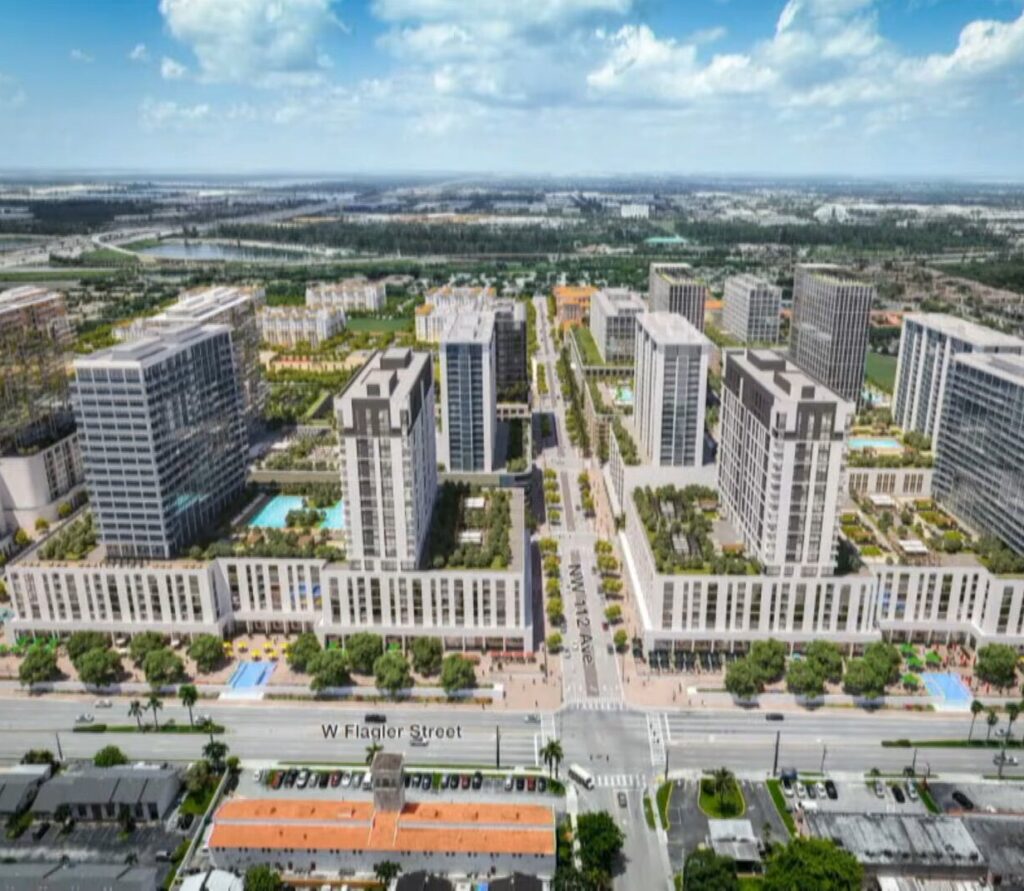
Plans to redevelop the former Li’l Abner Mobile Home Park are beginning to solidify, marking a key moment for one of the largest redevelopment sites in western Miami-Dade. The more than 90-acre property, once home to thousands of residents and now cleared, is set to transform into a dense mixed-use neighborhood known as the Flagler Center District. Plans call for residential towers, retail, medical space, community amenities, and more. Led by CREI Holdings, plans submitted to Sweetwater outline a walkable, mixed-income district poised to become the city’s largest development to date. The project has already cleared several early procedural milestones, including an initial commission reading and key land-use approvals, though additional reviews remain before the multi-phased development can begin with its first phase. With an estimated build-out cost of roughly $4.5 billion, early site plans illustrate the sheer scale and range envisioned for the community. Housing will dominate the site, with approximately 6,000 residential units proposed. Overall density is planned to be capped at about 105 units per gross acre, a figure that means potentially larger unit formats in portions of the project. The development team has also committed to delivering at least 1,000 units designated for affordable or workforce housing, with space for senior citizens. Beyond the residential component, the proposal calls for a minimum of 100,000 SF of non-residential space, though conceptual plans far exceed that limit. Potential uses include a hospital, with backup scenarios that could pivot to medical office space (or other uses) should a hospital operator not materialize. Additional program elements under consideration include hotel space, a new school, self-storage, and a significant retail presence expected to span hundreds of individual storefronts. Open space will also play a role in shaping the district’s public realm. According to the applicant, more than four acres are planned for parks and community gathering areas, fit with seating, shading, and more. As with any large master-planned project at this stage, architectural details remain in motion. Building heights have not been finalized, though preliminary plans suggest some towers could rise beyond 30 stories. Final heights will ultimately be influenced not only by local zoning but also by Federal Aviation Administration constraints tied to the site’s closeness to Miami International Airport, which could limit certain heights. On the first meeting, held on February 9th, Sweetwater commissioners approved several foundational steps that establish the framework for the project. The most significant was the creation of a new Comprehensive Plan land-use category called the Flagler Center District, which will guide how the site is planned, including how much density can be built and how the neighborhood will function overall. Officials also supported a request to update the city’s Future Land Use Map. The property, previously designated for mobile home and medium-density residential uses, would be re-designated under the new Flagler Center District category to allow the broader mixed-use vision. In tandem, the developer, CREI Holdings, is seeking zoning changes across roughly 104 acres to establish the specific development rules for the site, such as building heights, parking standards, and open-space requirements. While the former mobile home park itself spans about 95 acres, the larger boundary reflects additional land, including a nearby affordable housing property that will be incorporated into the master plan. Finally, commissioners advanced a rezoning that would replace the site’s existing designations, Trailer Park District, Interim Use, and High-Density Multifamily, with the new Flagler Center District zoning, aligning the property’s regulations with the long-term redevelopment plan. At a second meeting held on February 13, commissioners unanimously approved the first reading of an ordinance authorizing a master development agreement for the project. The agreement outlines plans for both on-site and off-site improvements, including infrastructure upgrades and roadway enhancements tied to the development. A master development agreement serves as a legally binding contract between the municipality and the developer, establishing timelines, performance standards, and other rules to ensure long-term consistency as the development proceeds. Controversy and Fears of Gentrification As redevelopment opportunities grow scarcer across South Florida, aging mobile home parks have increasingly become targets for large-scale communities. These properties almost always occupy large tracts of land at relatively low densities, making them attractive from a planning and financial standpoint. The former Li’l Abner Mobile Home Park was no exception. Spanning roughly 94.5 acres near Florida International University, the site was the target of redevelopment talks for some time. The path to redevelopment, however, has been marked by significant controversy. Residents were notified that they would need to vacate within six months, with relocation payments of about $14,000 offered to those who left early. A plethora of residents argued the compensation fell well below the value of their homes, especially for households that had invested heavily in renovations. Because mobile home residents often own their structures but lease the land, their power to influence redevelopment is limited, a problem that intensified tensions as plans moved forward. Reporting from WLRN South Florida detailed additional disputes during the site’s transition period, including allegations that demolition activity began shortly after notices were issued and before all necessary permits were secured. The property owner was also cited in connection with demolition practices involving trailers that contained asbestos, raising environmental and public health concerns at the time. Supporters of the project argue that the redevelopment represents a long-term investment in Sweetwater’s growth. The proposed district would dramatically increase density, replacing a community of roughly 900 households, estimated at 2,000 to 3,000 residents, with about 6,000 new housing units that could accommodate approximately 12,000 people. Proponents say the plan would enhance walkability, expand the local tax base, and introduce services not currently available in the area. City leaders have emphasized both the scale of the opportunity and the need for oversight as plans progress. Mayor Jose Pepe Diaz has described the redevelopment as one of the most consequential projects in the city’s history while stressing the importance of transparency and community engagement throughout the process.
After Weeks of Uncertainty, Fort Lauderdale’s City Hall Project Regains Momentum
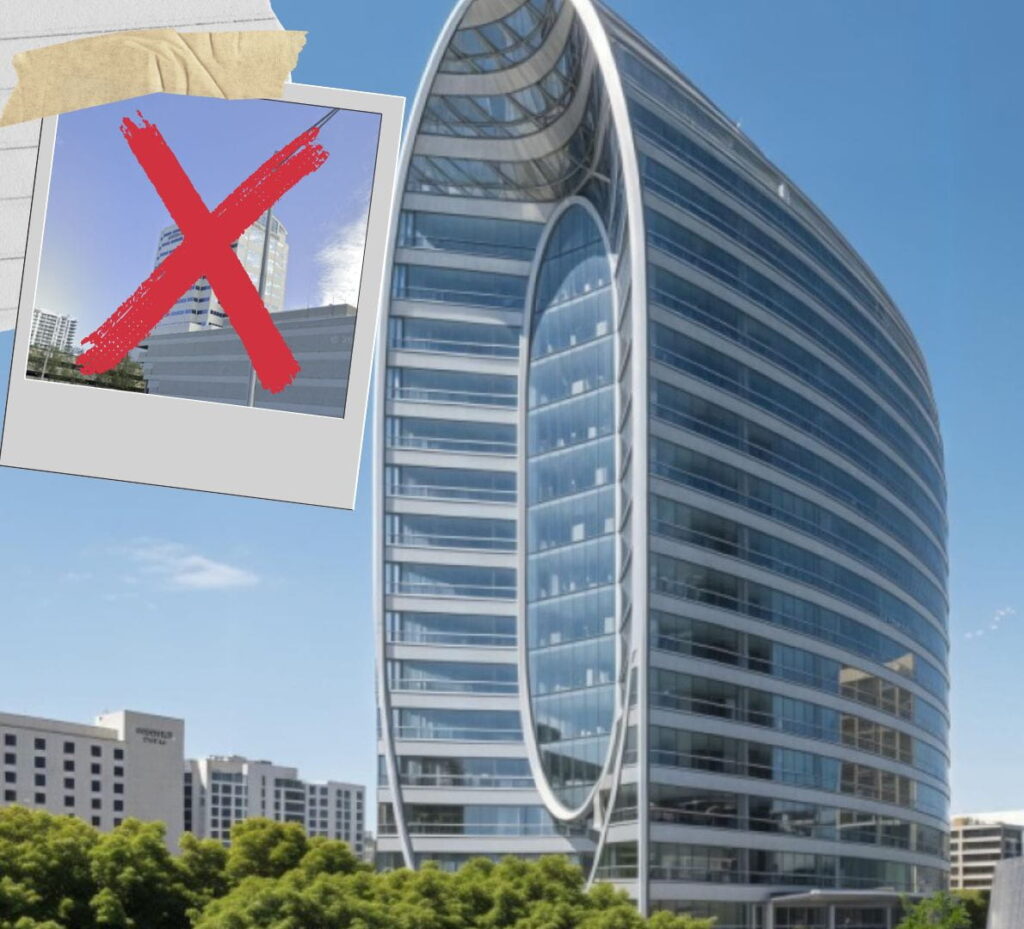
Plans to build a new state of the art City Hall in Fort Lauderdale appear to be back on course after a brief but dramatic detour that threatened to upend negotiations with a development team in favor of buying and retrofitting a nearby office tower. The shift began at the end of a January 20th commission meeting, when Commissioner Ben Sorensen raised an internal email regarding a potential sale of Tower 101, a downtown building where city operations are temporarily housed. The message, sent days earlier, relayed an unsolicited proposal from the property’s ownership. By the close of the late night meeting, Sorensen, Vice Mayor John Herbst, and Commissioner Pamela Beasley-Pittman all signaled interest in exploring the idea, placing the city’s ongoing development negotiations in question. The tower option introduced an immediate policy dilemma. Only weeks earlier, commissioners had ranked proposals and selected FTL City Hall Partners, a team led by CORE Construction, Stiles Corp., and PALMA, as the top candidate to deliver a new purpose built civic complex. Their vision called for a contemporary glass tower designed to consolidate municipal operations into a single facility. While Fort Lauderdale still has the right to revisit the process, alternatives would risk delaying negotiations and potentially undermine the competitive process. Moreover, walking away from the deal would not be inexpensive, as the city would need to cover the developer’s out-of-pocket costs in addition to a development fee, likely totaling more than $1 million. Through February, however, support for the tower began to soften. Beasley Pittman clarified that her initial interest was exploratory and later cited concerns about the cost of even analyzing the purchase. A formal evaluation of Tower 101 alone, including appraisals, surveys, and title work, was estimated at roughly $120,000 dollars. Beyond that, commissioners acknowledged the likely expense of bringing the building up to modern standards, from impact resistant glazing and mechanical upgrades to redesigned public meeting space. Mayor Dean Trantalis and Commissioner Steve Glassman opposed the pivot throughout, framing it as a distraction from a process already well underway. Trantalis warned publicly that entertaining purchase offers could open the door to additional unsolicited proposals, a prediction that quickly materialized when the owners of 1 East Broward floated their own potential sale at roughly $122.5 million dollars. As reported by the Sun Sentinel, which has tracked the issue throughout, Mayor Dean Trantalis said “Every building on the block is going to come to us now and say, ‘Buy me, buy me.’ I thought we made a commitment. I thought we had a vision. I thought we were looking to the future. Has that changed?” Despite the cooling enthusiasm, lobbyists for Tower 101 continued pressing their case. During a February meeting, a representative urged commissioners to keep the conversation alive, prompting a sharp rebuke from Glassman, who argued the city should remain committed to its chosen path rather than revisit alternatives. Underlying the debate was a fundamental disagreement over cost. Herbst and Sorensen maintained that acquiring an existing tower could ultimately save tens of millions compared to new construction. Skeptics countered that renovation costs would likely erode much of that advantage, particularly given the specialized needs of a civic building for a city the size of Fort Lauderdale. The urgency surrounding the decision originates from the city’s current circumstances. Fort Lauderdale has been without a permanent City Hall since April 2023, when a historic rain event flooded the basement of the former building, destroying critical infrastructure (servers, electricity, etc) and forcing its eventual demolition. The cleared site has since been earmarked for redevelopment. With the commission now refocusing on negotiations with FTL City Hall Partners, the project is expected to proceed in stages, including an interim agreement followed by a comprehensive development deal. Still, a degree of uncertainty remains. Officials continue to monitor a potential statewide ballot measure that could reduce property tax revenues for homestead properties, a change that might require further cost adjustments or value engineering before final approval. For now, after weeks of political talk and competing ideas, the city’s direction appears steadier. The emphasis has returned to delivering a new civic headquarters, even as financial and design details continue to evolve.
2900 Terrace Continues Vertical Ascent in Miami’s Edgewater Neighborhood
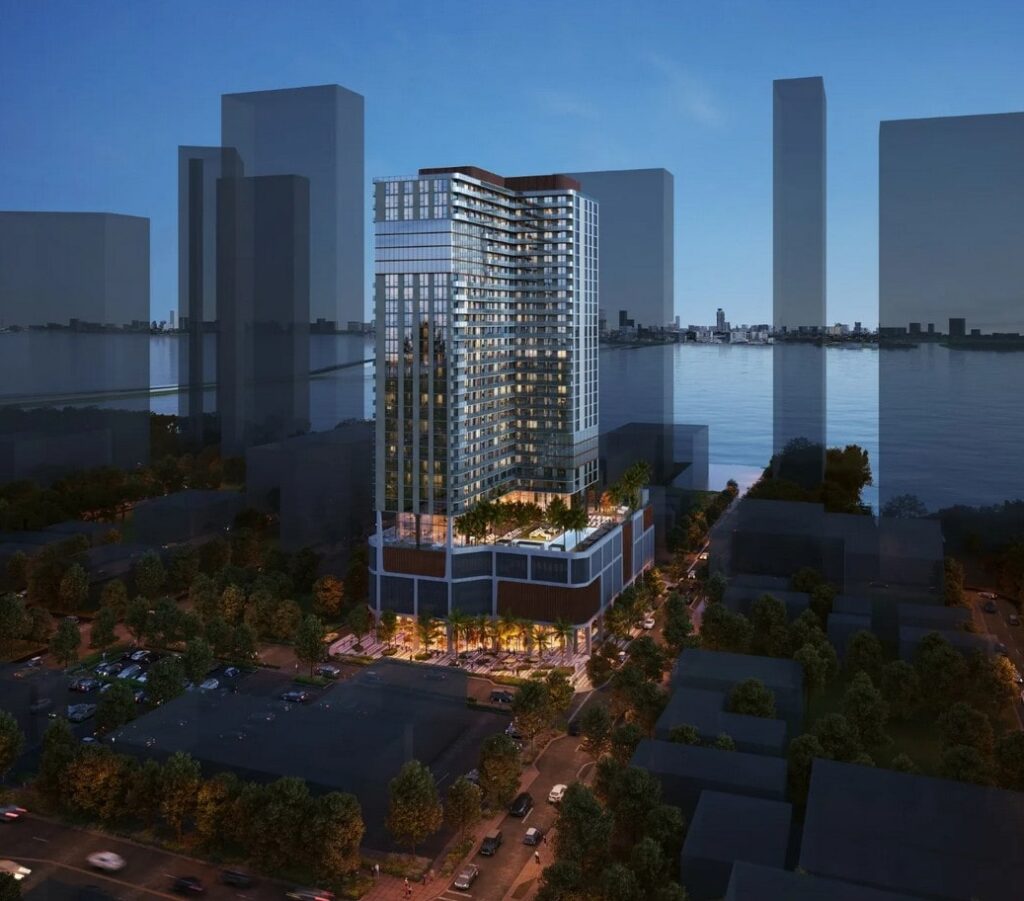
Construction at 2900 Terrace is advancing at a rapid pace in Miami’s Edgewater neighborhood, with the tower now rising through its fourth floor. Developers Oak Row Equities and LNDMRK Properties are targeting a fourth-quarter 2027 completion, as a seasoned project team, including Coastal Construction as general contractor, L&R Structural as shell contractor, and Arquitectonica as architect, maintains a vertical pace of roughly one floor every week and a half. The 32-story building will ultimately deliver 324 rental units and is expected to top out within the next few months. Vertical work accelerated following a $210.5 million construction financing package led by Bank OZK and Canyon Partners Real Estate. Although foundation activity and crane installation were already underway prior to the ceremonial groundbreaking, progress has notably intensified since financing closed. View this post on Instagram A post shared by L&R Structural Corp. (@lrstructural) At completion, residences will span one- to three-bedroom layouts, featuring 10-FT ceilings, floor-to-ceiling glazing, and expansive wrap-around balconies. Planned amenities include content creation studios, a yoga and fitness center, sauna, and a resort-style pool deck with outdoor lounge areas, among other uses: creating a diverse lifestyle package geared toward luxury renters. Permitting records with the City of Miami show the project has secured its master construction permit alongside several miscellaneous permits, including shoring and life-safety systems, clearing the path for vertical construction. The master permit also reflects 15,536 SF of ground-floor retail, a modest reduction from the more than 16,000 SF planned in earlier site plans. Retail will be complemented by a large residential lobby, an open-air plaza, and access to a 504-space structured garage. Rising to approximately 360 FT, the tower will not rank among the tallest in Edgewater, but will stand out for its almost full-block footprint, according to construction imagery released by L&R and site plans. In fact, the total site at 401 NE 29th St will span 1.5 acres. The project’s momentum comes as Oak Row expands its South Florida presence. The firm recently partnered with OKO Group and Mariposa Real Estate on the $520 million acquisition of a 4.25-acre waterfront assemblage in Brickell, emphasizing the developer’s growing pipeline across Miami.
1414 Brickell Moves Forward as Revised Plans Introduce Design Tweaks
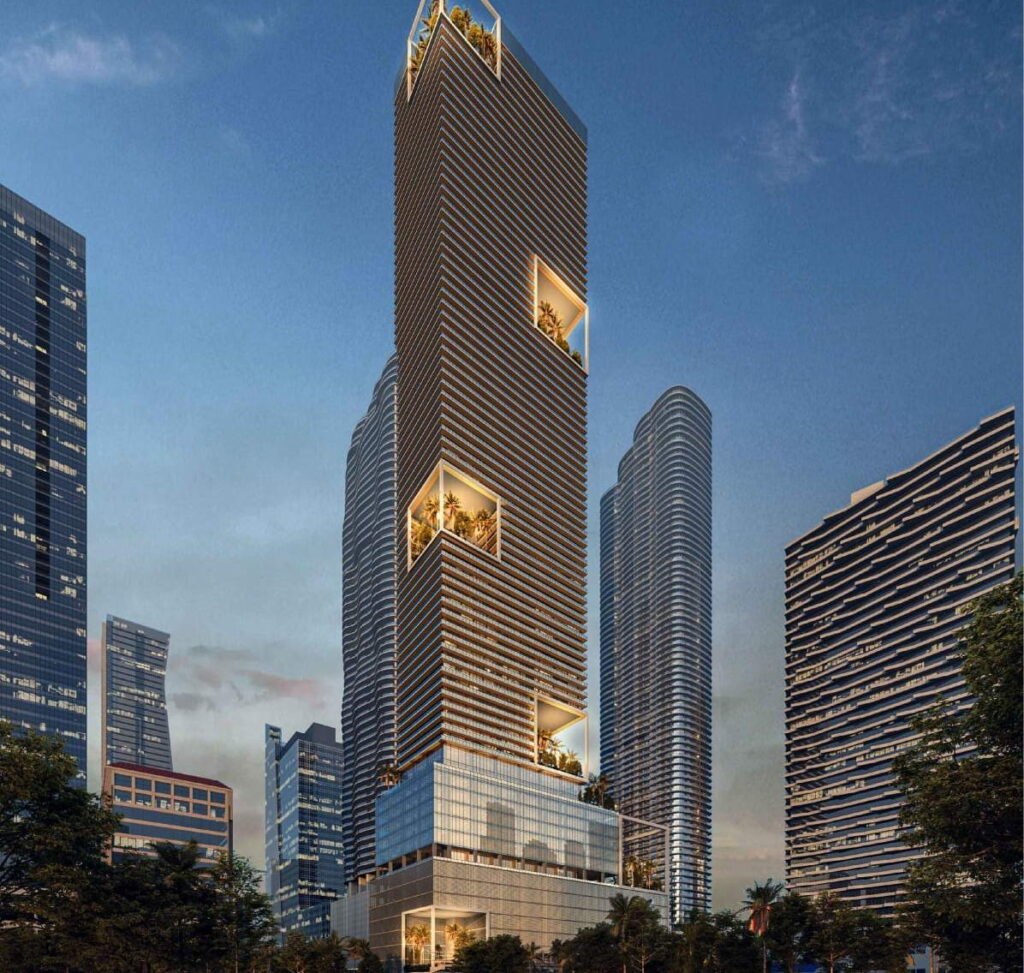
Plans for 1414 Brickell continue to take shape as revisions move through the review process with Miami-Dade County. The proposed supertall, designed by Arquitectonica and developed by Fortune International Group, would rise 81 floors and, if built, become the first supertall tower in Brickell. The newest plans, released within the past few days, represent the latest adjustment in a sequence of filings since the project first surfaced in late 2024, with updated renderings following in early 2025. The project spans an assemblage at 1421 S Miami Avenue and 1414 Brickell Avenue, combining three parcels that are now under Fortune’s control. Records show the primary parcels were assembled in the early 2000s, reflecting a lengthy hold period prior to the emergence of a development proposal. Development capacity at the site is enabled through a Rapid Transit Zone (RTZ) subzone designation approved on February 21st, 2024. RTZ zoning, a Miami-Dade framework applied along major transit corridors, permits increased height and density compared with existing zoning, and has become a commonly used entitlement path for large-scale projects in the Brickell area. The latest plans showcase 560 residential units alongside 84 hotel keys, unchanged from the last iteration. While unit mixes remain preliminary and subject to refinement, the residential component is expected to include studios as well as one-, two-, and three-bedroom layouts. Hotel accommodations would range from approximately 315 SF to 1,024 SF, depending on configuration. Amenity offerings are centered on a rooftop pool at the uppermost level and a dedicated 2-story sky amenity deck totaling 10,629 SF of indoor space. Additional residential features have not yet been fully detailed. The hotel component is planned to include a fitness center and spa, lobby bar, lap pool, poolside grill, and outdoor lounge seating. At street level, plans call for 6,141 SF of retail space, activating the frontage with neighborhood-serving uses along with a drop-off zone and gallery. The podium will accommodate 1,156 parking spaces, while the levels above feature 117,310 SF of office space (or 145,950 SF gross). These figures highlight several refinements from previous submissions. Office SF remains consistent, but retail SF has been modestly increased by roughly 100 SF. Parking, meanwhile, has been reduced from 1,226 to 1,156 spaces, representing a cut of nearly 100 stalls as the program continues to be optimized. One of the most notable revisions involves changes to the tower’s exterior. Earlier elevations depicted a more cohesive podium, with continuous glazing wrapping the office levels and concealing the garage below, creating the appearance of a seamless base rather than a distinct parking podium. Updated renderings, however, show the podium clad in a metal mesh screen, a clear value-engineering shift from the prior design. Despite the material changes, the tower’s height remains intact, with plans for it to rise 81 floors (or approximately 1,010 FT): placing it just above the internationally recognized supertall threshold of 984 FT (300 M). Although the project has been advancing through multiple iterations, the current submission is not expected to be final. According to a project representative, the ultimate development package will be processed under a separate Administrative Site Plan Review (ASPR) filing, which has not been submitted. As per both Miami-Dade permitting and the City of Miami, no demolition permits or foundation work permits have been applied yet.
32 Hundred Proposed in Downtown Coral Springs, Set to Feature 300 Units
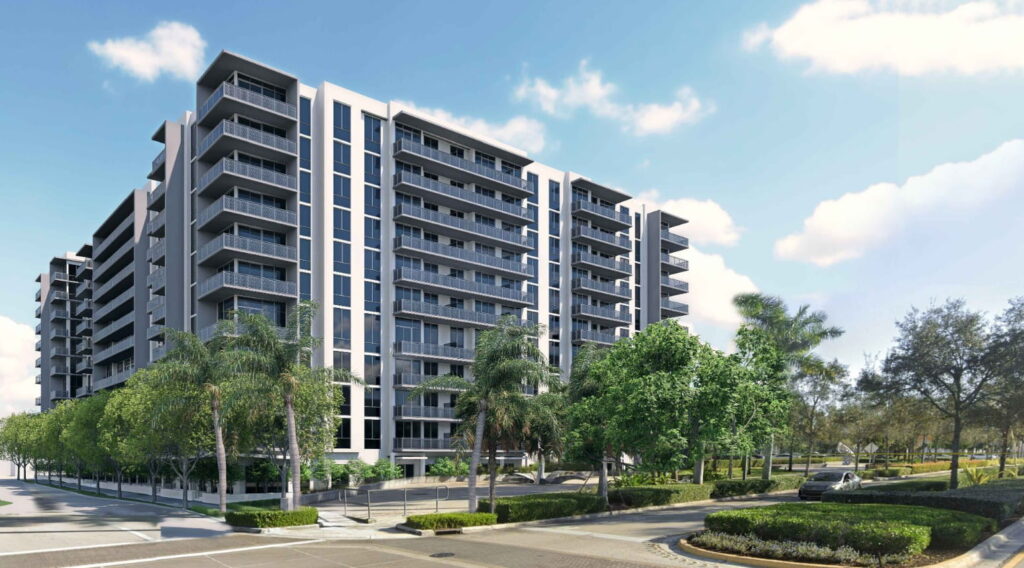
In Coral Springs, a quiet Broward County suburb nestled between Pompano Beach and Fort Lauderdale, a developer has submitted plans for the city’s tallest development. Called 32 Hundred, the project will rise 11 stories atop Downtown Coral Springs’ Bank of America Building. Developer Cade Capital Partners is planning 300 units on the west side of the property, alongside a replacement structure for Bank of America on the left. Facing University Drive, 32 Hundred will be among the many mixed-use developments planned for Downtown Coral Springs. Located at 3200 N University Drive, the 3.06-acre lot sits directly adjacent to Modera Coral Springs, part of the Cornerstone development in Downtown Coral Springs: a broader effort to revitalize the area. Cade Capital Partners currently owns the property, having initially purchased it for $2.125 million in late 2012. According to plans submitted to Coral Springs’ Architectural Review Committee, 32 Hundred’s 300 units will be divided into studio, one-bedroom, two-bedroom, and three-bedroom configurations, with one-bedroom units being the most common, ranging from 650 SF to 815 SF. Most units will feature 10-foot ceilings, large floor-to-ceiling windows, and wrap-around balconies. Other units will have even taller ceiling heights, some at 12 FT to 13 FT. As is typical with early-stage developments, the full amenity package remains subject to change. What is known is a large pool and deck with outdoor seating, alongside more than 8,000 SF of indoor amenity space encompassing co-working space, a mail room, and additional uses. The ground floor will dedicate 17,020 net SF to commercial uses, of which 5,350 SF will be solely reserved for a bank, likely the replacement Bank of America. The ground floor will also feature a four-lane bank drive-through, expanded sidewalks finished with pavers, and abundant greenery. The multifamily structure on the west side will be wrapped by units on all frontages, with lobby space and units extending to the ground floor as well. To accommodate the influx of retail, banking, and residents, the development will include a total of 439 parking spaces spread across the parking garage and ground floor. Designed by Behar Font Architects, 32 Hundred will rise 11 stories to 127 FT at its tallest point. According to TAPinto Coral Springs, which first reported on the project, the Architectural Review Committee raised several concerns during its initial review weeks ago, including parking podium visibility, balcony railing materials, and potential vertical breaks in the facade given the building’s height. Next up is Coral Springs’ City Commission, which will analyze the finalized project for denial or approval, though it was not on the most recent agenda.
PMG Proposes Delano Residences, Miami’s Second Supertall Skyscraper at Nearly 1,000 Feet

Miami has seen an influx of supertall proposals since the turn of the century, but few developers have advanced beyond renderings to actual construction. PMG stands alone as the developer behind Miami’s first supertall, Waldorf Astoria Residences, which is currently under construction. The company has now released plans for Delano Residences, a 90-story condominium tower rising 985 FT on Biscayne Boulevard. The project marks a partnership between PMG and Ennismore, owner of the internationally acclaimed Delano hotel brand, and will deliver 421 residential units. The new development will be located at 400 Biscayne Boulevard, directly adjacent to the Waldorf Astoria Residences. The 0.4-acre site was acquired by PMG in early 2018 for $55 million from the First United Methodist Church of Miami. Though the developer listed the property for sale in 2024, plans have since shifted toward developing the site themselves. With sales now launching, the developer anticipates achieving pre-sales milestones to support a groundbreaking in 2027. Residences will start at approximately $800,000, with interior design by Meyer Davis. The exterior design, characterized by a distinctive curved form, is being handled by Carlos Ott Architecture and Cube 3. The development will include studio, one-bedroom, two-bedroom, and three-bedroom residences. Units feature custom kitchen cabinetry, custom bathrooms, and modern finishes. Residents will have access to a comprehensive amenity package including a resort-style pool, lounge areas, a sky pool, fitness center, spa, and additional Delano-branded resort amenities. The tower does not include a traditional parking podium. While detailed site plans and elevations have not yet been released, the development is expected to utilize off-site parking through the adjacent Waldorf Astoria and X Miami (now named Alea) developments. Residents benefit from 24-hour doorman and reception services, valet parking, and concierge offerings. The tower’s upper levels will feature Miami’s tallest observation deck, complete with a cantilevered glass platform offering views of Edgewater, the Atlantic Ocean, and surrounding Miami landscapes. The development will also include food and beverage venues such as Cafe Delano, the Rose Bar, and a sky-level restaurant. The construction timeline for Delano Residences is expected to be substantially shorter than that of Waldorf Astoria. According to PMG, groundbreaking is anticipated in 2027, with construction projected to take approximately four years. The accelerated timeline reflects lessons learned during Waldorf Astoria’s development, particularly regarding foundation work and engineering solutions for Florida’s climate conditions. Ryan Shear, managing partner at PMG, told CoStar, “We feel incredibly equipped. We’ve done it before,” emphasizing the company’s confidence in executing the project successfully and on-time.
NOMI 7|90 Planned Near North Miami Through Florida’s Live Local Act
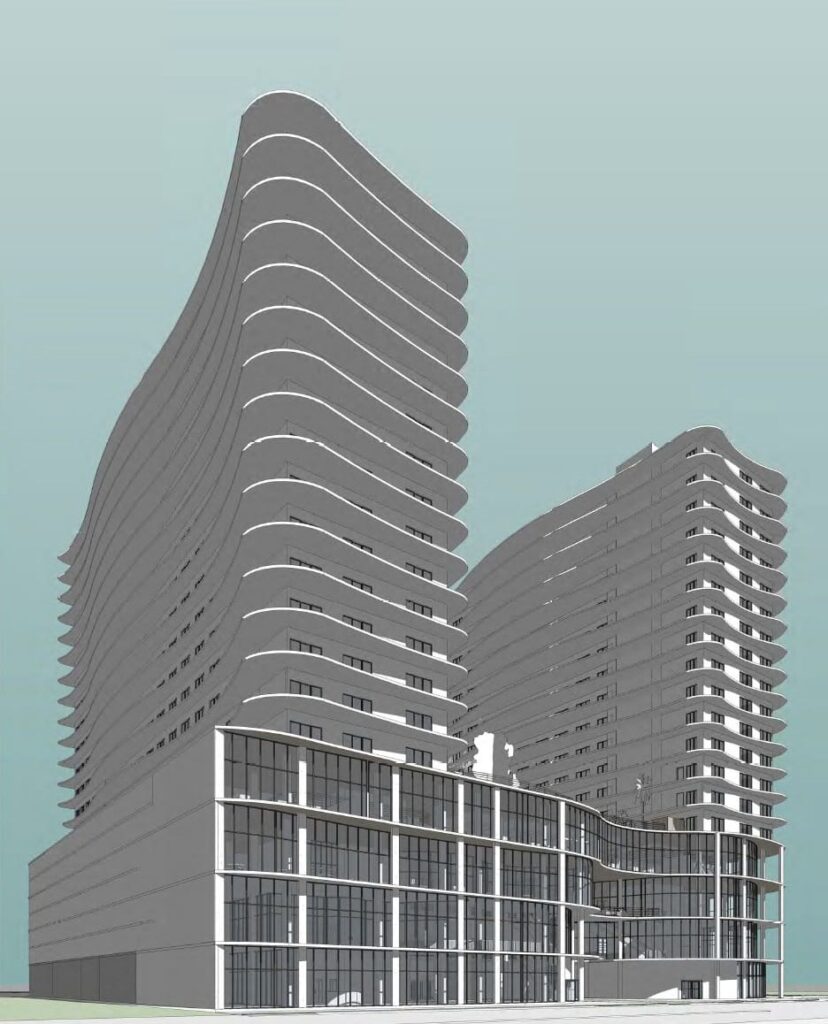
Florida’s Live Local Act continues to reshape South Florida’s development landscape, with yet another project emerging in a relatively underdeveloped corridor. 306 WW LLC and The Mimosa Group, operating under the Cobas Family, have filed plans for NOMI 7|90, a 19-story multifamily development along NW 7th Avenue in Miami-Dade. The project is pursuing height and density bonuses through the Live Local Act and Miami-Dade County’s Workforce Housing Development program, mechanisms that allow the development to substantially exceed what conventional zoning would permit on the site. The development site is located at 9001 NW 7th Avenue and 663 NW 90th Street, consisting of a 2.9-acre assemblage across two parcels. The Cobas Family acquired the first parcel in 2015 for $650,000 and the second in 2021 for $2.02 million. The site has remained largely undeveloped until now, with the land assembly representing a six-year accumulation strategy by the developers. The widespread adoption of Live Local projects across Florida demonstrates the program’s growing effectiveness as a tool for developers targeting corridors that have historically lacked high-density construction. Designed by Red Octopus Architecture, NOMI 7|90 will represent the first completed highrise in the area, despite The Emblem Tower’s earlier attempt at a similar 139-unit development that appears stalled for now. Plans submitted to the county outline a mixed-income 480-unit community. The project includes 192 units priced at 120% of the Area Median Income, 60 units through Miami-Dade’s Workforce Housing Development program priced at 140% AMI, and 228 market-rate units. The income-restricted allocations reflect requirements tied to two separate programs. The State’s Live Local Act mandates that at least 40% of units be priced at or below 120% AMI, while Miami-Dade’s Workforce Housing Development program offers incentives for developments that include units priced at 140% AMI or below. By satisfying both program thresholds, NOMI 7|90 can stack both the height and density bonuses each provides. While still preliminary, the unit mix includes studios, one-bedroom, and two-bedroom apartments. Amenity spaces are distributed throughout the building, with a fifth-floor deck featuring a pool, outdoor seating, landscaping, and terrace areas, while a lower level includes a business center, fitness center, playroom, and meditation room. The development will provide 553 parking spaces in the podium, equating to at least one space per unit. However, the project qualifies for substantial parking reductions under both the Live Local Act, which permits a 100% reduction, and Miami-Dade’s Workforce Housing program, which allows a 25% reduction. These incentives effectively reduce the parking requirement well below what would otherwise be mandated. In addition, retail space extends across three levels of the podium, with the ground floor encompassing 12,158 SF alone. The development also incorporates expanded landscaping throughout the site and widened sidewalks finished with pavers. The tower will rise 19 stories to approximately 223 FT at its highest point. Under conventional zoning, the site would be limited to 12 stories; however, the Live Local Act permits 13 stories within a one-mile radius, and Miami-Dade’s Workforce Housing program provides an additional six-story bonus, bringing the total to 19 stories. Designed by Red Octopus Architecture, the building features an active ground floor wrapped in glass with curved forms, while the upper volumes maintain a more rectangular profile complemented by curved balconies. According to recent site photography, the parcels remain undeveloped with existing structures still standing. Should the developer proceed with construction rather than pursue alternative strategies such as selling the development rights, both on-site buildings will require demolition. Given that neither structure exceeds one story, removal will be relatively straightforward.