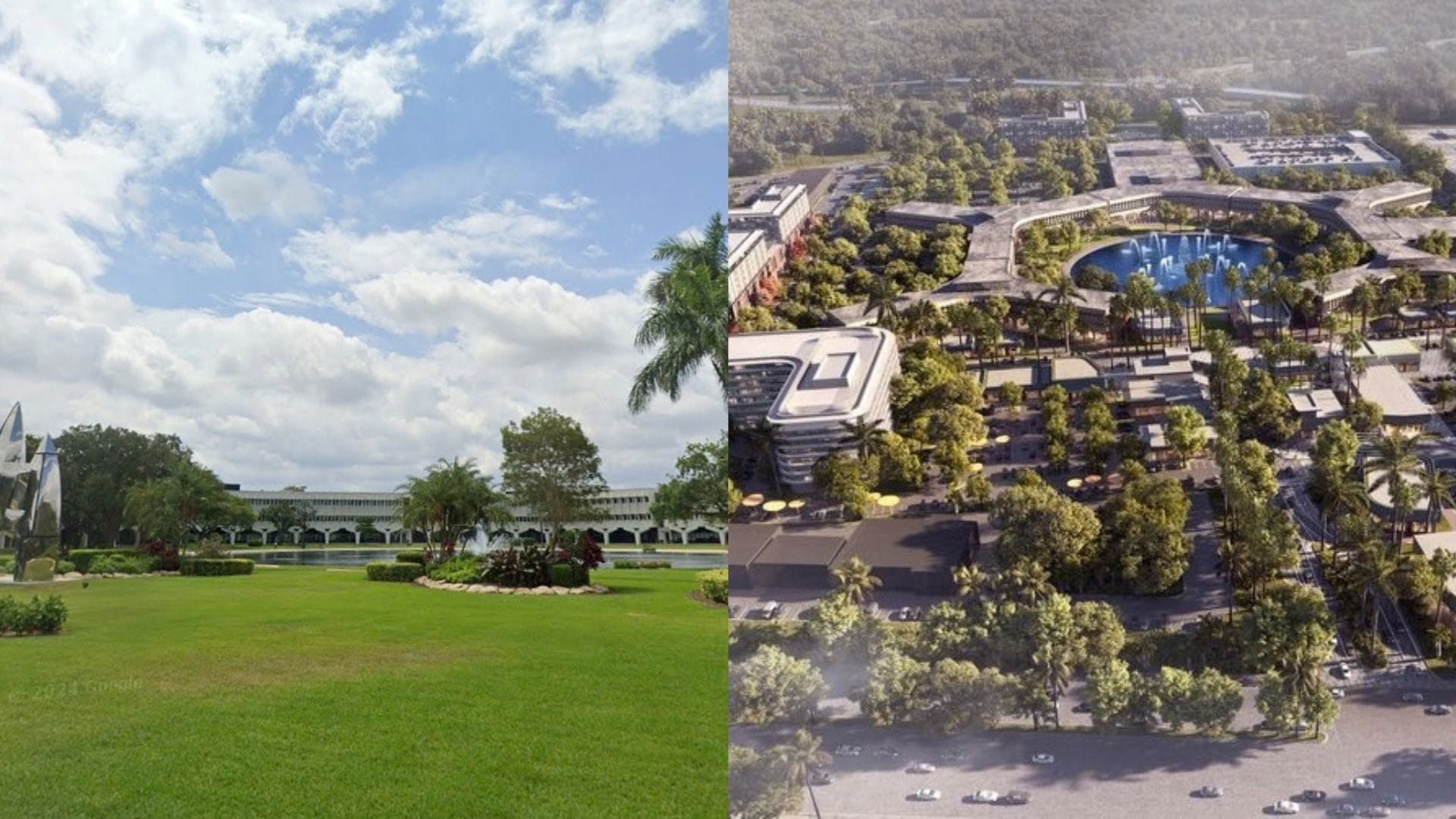
One of South Florida’s most prolific developers has set its sights on Boca Raton. Related Ross recently closed on the 120-plus-acre Boca Raton Innovation Campus, known locally as BRiC, for an undisclosed sum, with plans to transform the sprawling office park into a self-contained “mini city.” The deal marks the firm’s first successful foothold in the Boca market, following an earlier, unsuccessful bid to redevelop the city’s now-defunct city hall project.
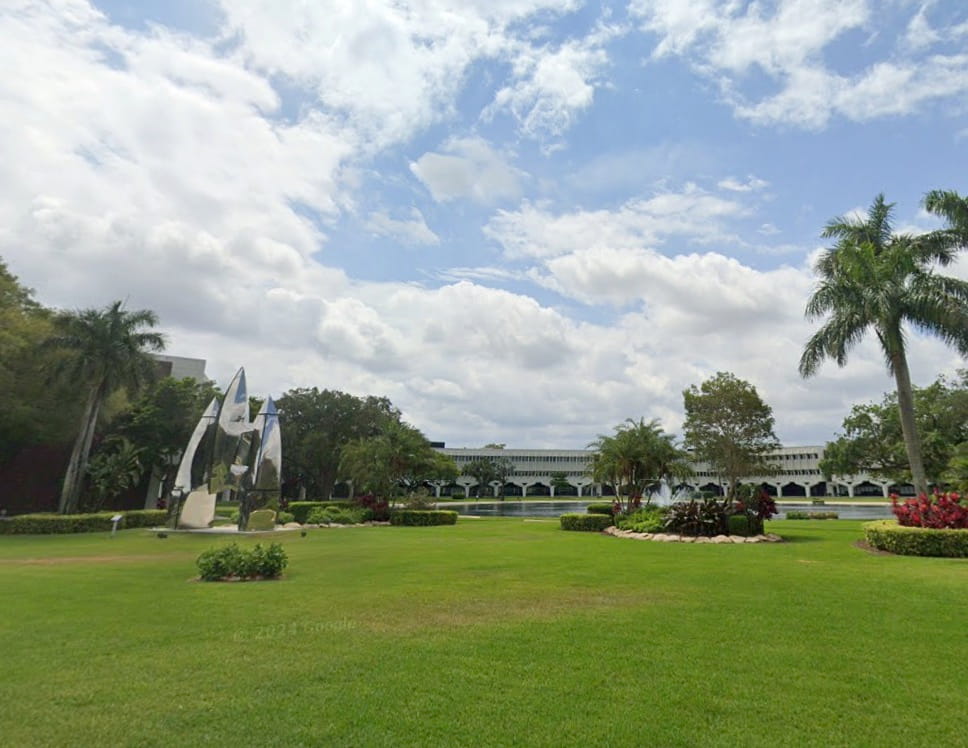
BRiC carries a notable history of its own. Built in 1970, the campus once served as IBM’s research and development hub, the site where the first personal computer for IBM was developed before the tech giant departed in the late 1990s. Today it stands as one of the region’s most recognizable examples of Brutalist architecture, a legacy now weighed against the developer’s redevelopment plans.
What’s Planned
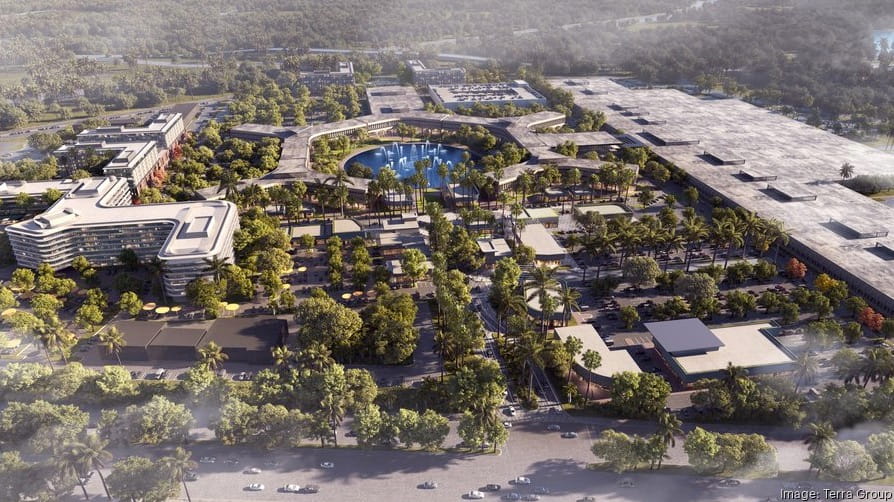
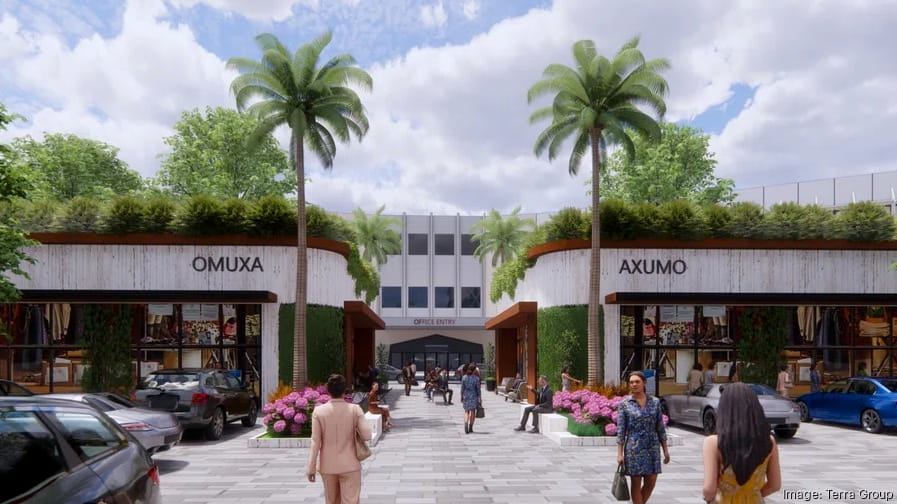
Under the current proposal, the campus’s distinctive Y-shaped wing, wrapped around a circular reflecting pool, would be spared the wrecking ball, while large stretches of the property’s rectangular section would come down. The office portion is set to stay in use, a decision made easier by two recent tenants already signed on: D-Wave Quantum, which plans to relocate its headquarters from Palo Alto to the Boca campus by year’s end, and financial technology giant Fiserv, which is also planting its flag on the site.
To fund the acquisition and redevelopment, Related Ross secured nearly $300 million in financing from Ares Real Estate, a global investment company.
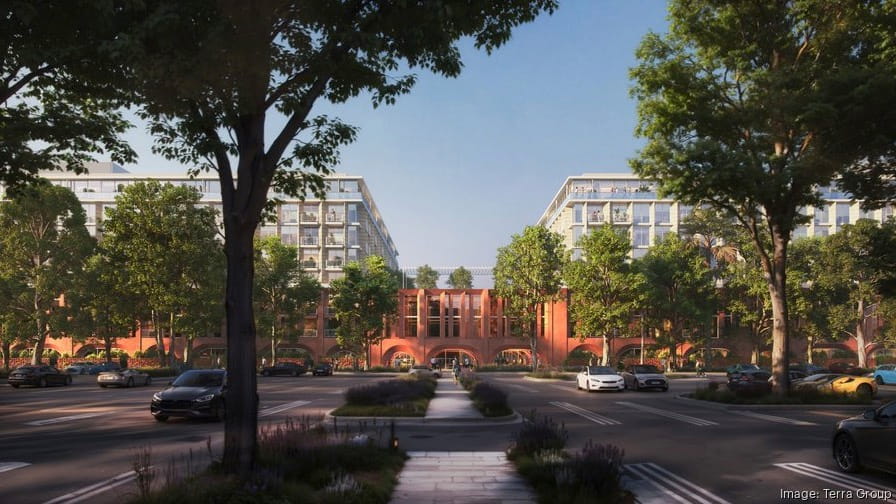
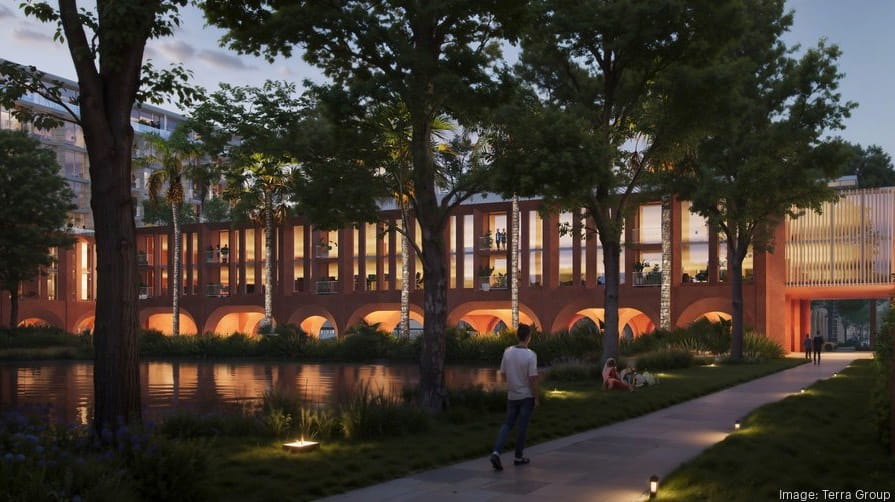
The property also came with entitlements already in place, thanks to groundwork laid by former owner CP Group (among other partners), which teamed up with Terra Group in 2025. Back in 2023, CP Group secured zoning approval for a hefty buildout: as many as 1,243 residential units, a 140-room hotel, 125,000 square feet of retail, 85,000 square feet of medical office space, and a 55,000-square-foot entertainment venue.
Those entitlements, though, only cover half the map. They apply strictly to the parking lots ringing the site, not to the rectangular western stretch of the property where personal computers were once assembled. Related Ross wants to level large portions of that section too, but hasn’t yet cleared the approval hurdles needed to do it.
The full build-out is expected to unfold over several years and multiple phases. But Related Ross is thinking long-term, drawing comparisons to West Palm Beach’s transformation into a quietly emerging financial powerhouse. The developer’s broader ambition is for Boca Raton to follow a similar trajectory, positioning the city as a tech hub in its own right. “BRiC changed the course of technology once before for the region, and it will play an important role in what comes next,” said Stephen Ross in a press release.
Fears of Preservation Amid Development
Not everyone is sold on the plan. Sharon Geltner, a guest columnist for the Palm Beach Post for instance, argues that saving the building alone misses the point, insisting that the land around it carries just as much weight as the structure itself: “destroying the historical setting destroys the place. The setting is as important as the buildings. You need both.”
Boca Raton does have steps in place to shield its history. Any property with formal historic designation must clear a Certificate of Appropriateness before facing exterior changes or demolition. The trouble is that protection never activates until a property earns that designation in the first place, and despite being old enough to meet that threshold, BRiC has never been formally designated. That leaves it legally defenseless against demolition or wholesale redevelopment, in spite of architectural significance by famous architects Marcel Breuer and Robert Gatje.
Boca isn’t the only one at the crossroads between preservation and development, however. Floridian Development has documented similar standoffs unfolding in Miami Beach, where a string of historic properties face the bulldozer as the city’s Art Deco identity butts heads with the state’s appetite for denser housing. Two pieces of legislation are pouring fuel on that fire: the Live Local Act and a 2024 law that loosens demolition rules for coastal buildings, both of which critics say could hand developers a shortcut around local historic review entirely.
A public records request has been filed with the City of Boca Raton regarding specifics of the BRiC redevelopment plans. This article will be updated as more information becomes available.