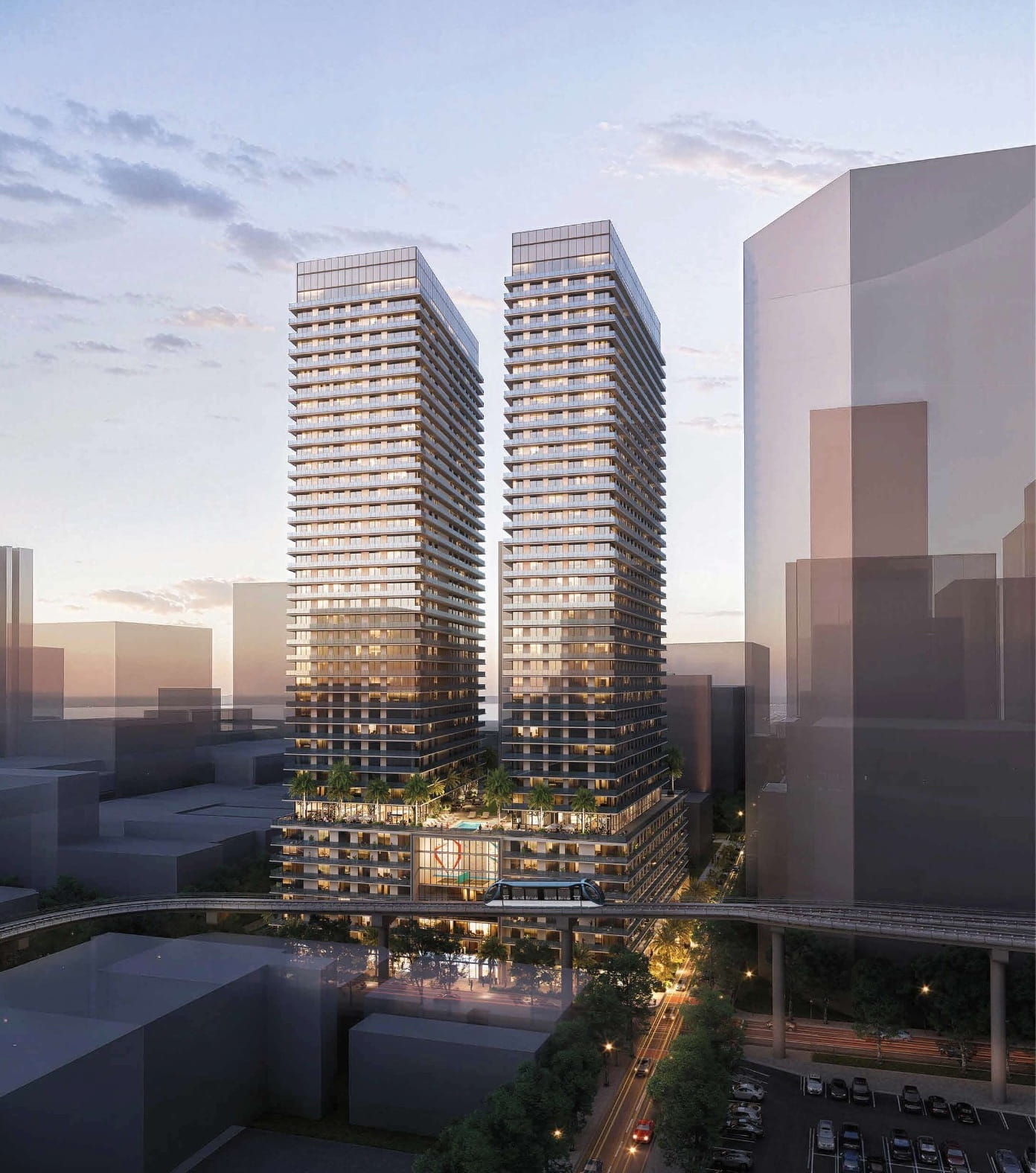
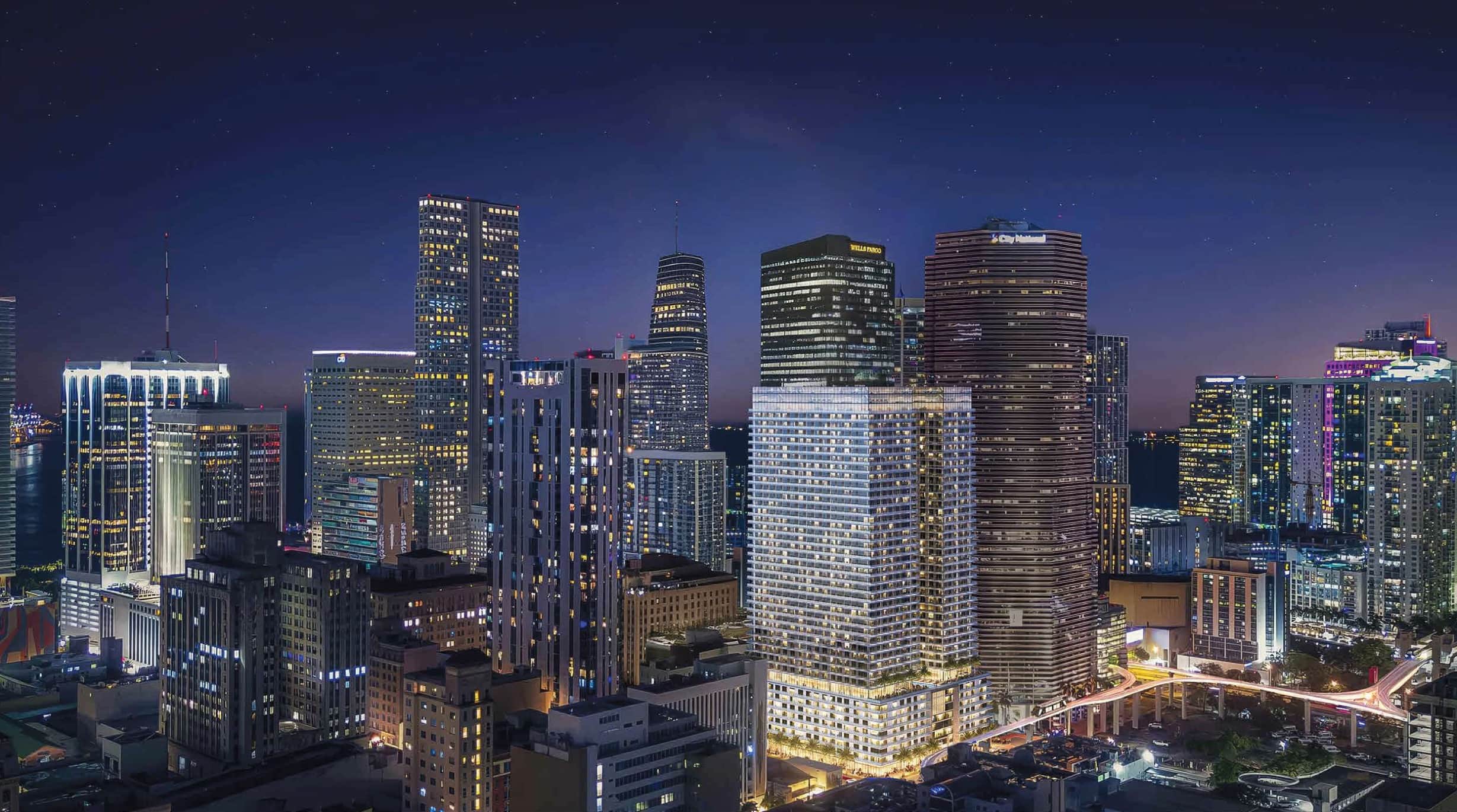
Namdar Group is proposing more than 1,000 homes on a single lot in Downtown Miami, a density would stand out even in one of the city’s most heavily built neighborhoods. The project, known as Namdar 101, would bring two 42-story towers to 101 SE 1st Avenue, delivered in two phases to a contemporary design by Behar Font & Partners. If built, it would rank among the densest developments in Miami. It would also be the developer’s fourth project, part of seven high-rises it has planned in Miami.
The site is a square lot of roughly 1.3 acres, currently occupied by a one-story mall (known as the Ultramont Mall) with multiple vacant storefronts. Namdar would demolish the entire block. The company does not yet own the property, though a sale is expected to be recorded soon.
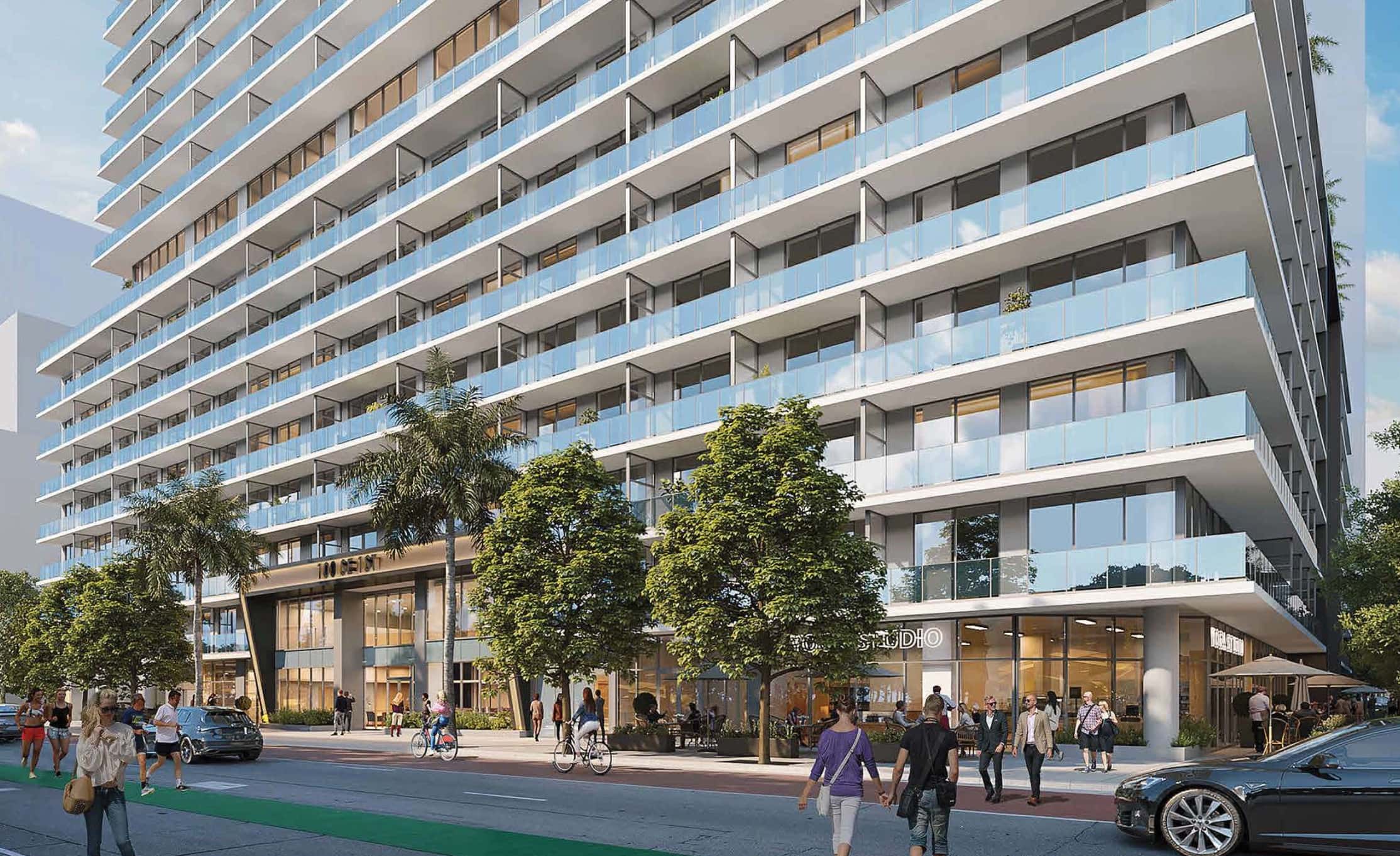
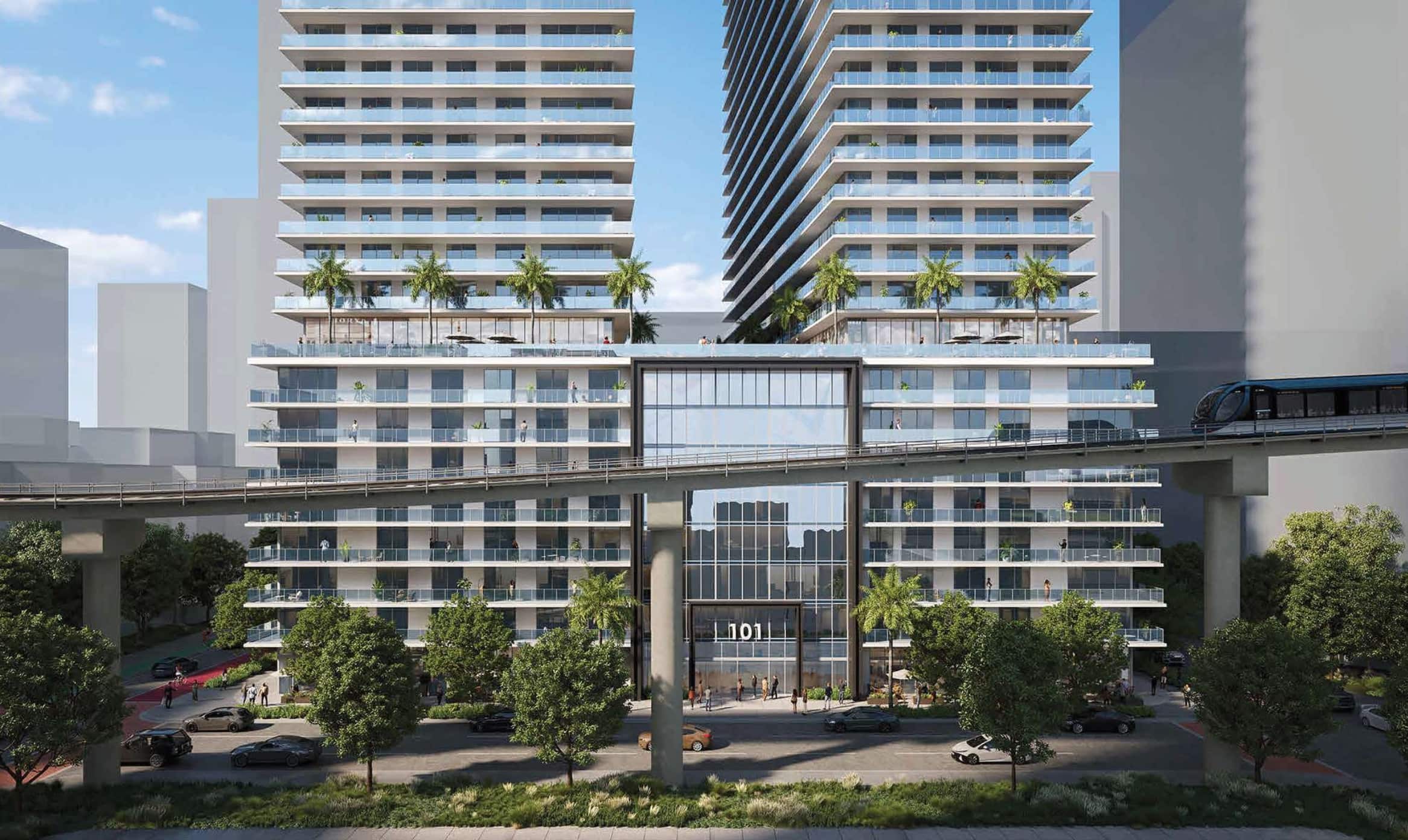
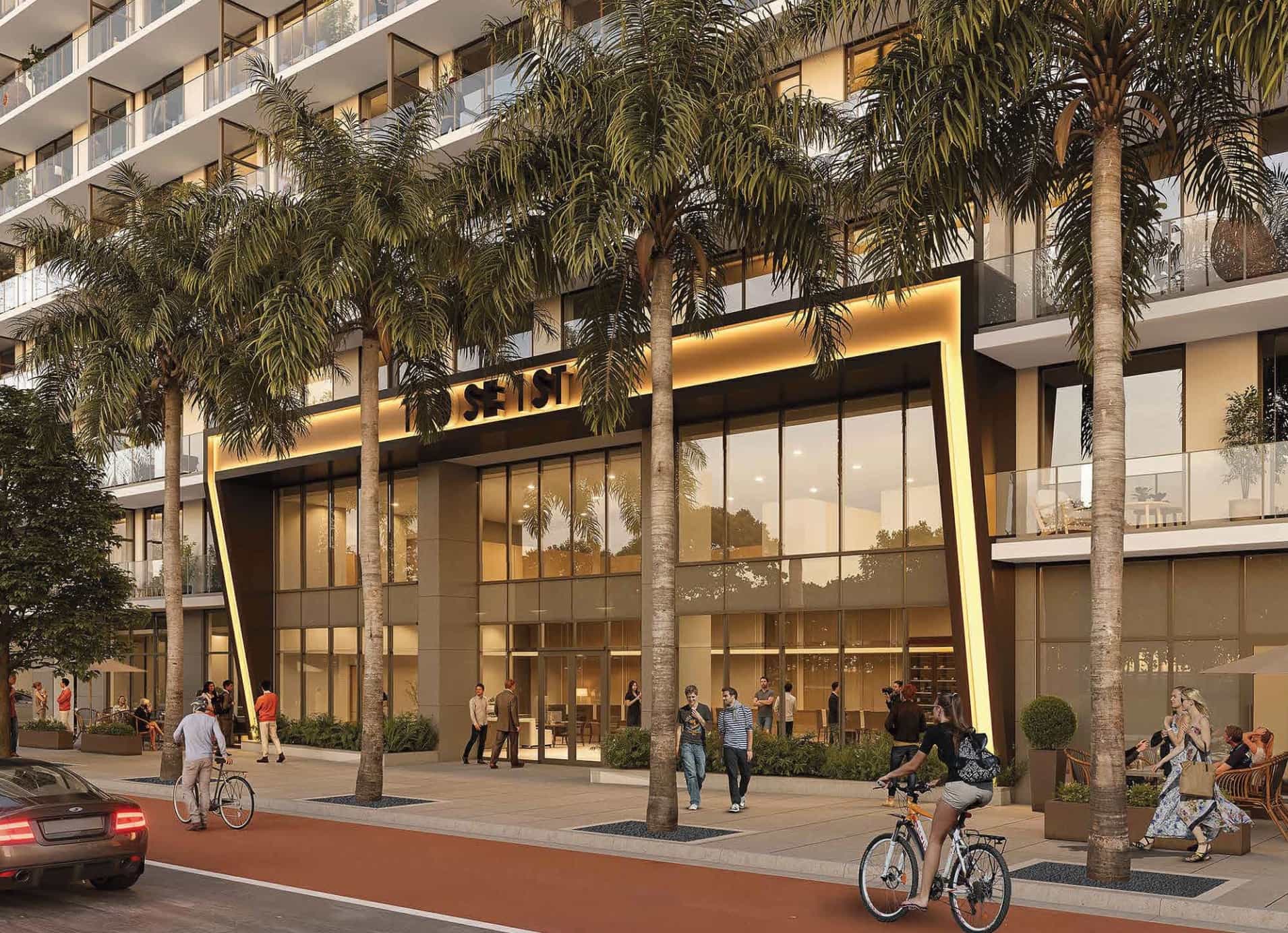
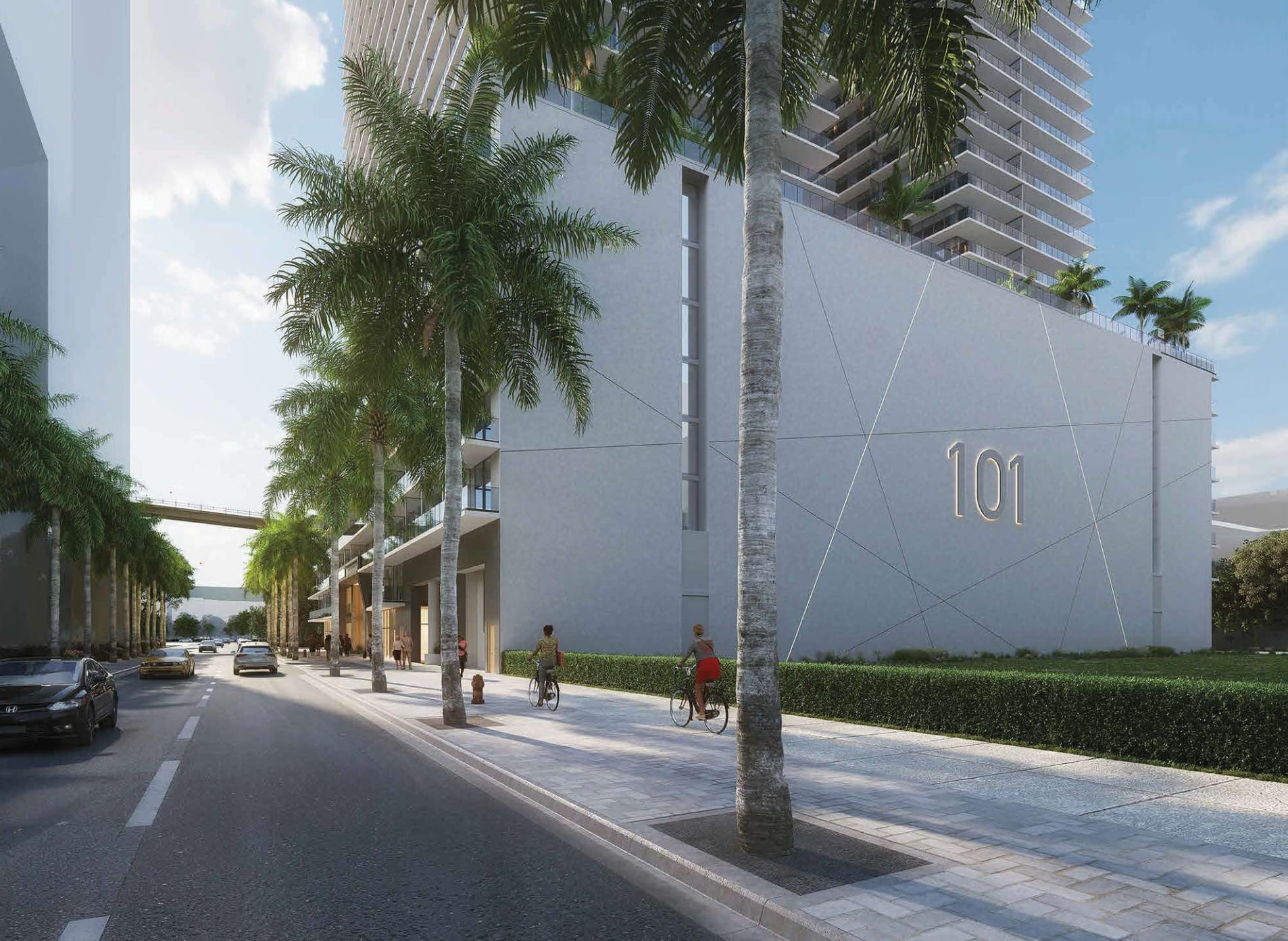
The unit count is what is most interesting about the project. Namdar is seeking 1,344 homes, made up of 398 studios, 802 one-bedrooms and 144 two-bedrooms. That works out to roughly 1,000 units per acre, the maximum the city allows, and it creates a gap with the existing zoning on the site, since the T6-80-O designation currently set for the site permits only 150 units per acre.
The source of the added density is not yet settled. Miami’s planning staff have noted that it likely comes from the Live Local Act, and the gap between the 150 units per acre the site’s zoning allows and the roughly 1,000 per acre Namdar is seeking points the same way. The developer, however, has stated plainly that “the project does not use the Live Local Act.” Until that discrepancy is cleared up, the question stays open, and it has real effects. A project that does rely on the law would have to set aside 40 percent of its units, or 538 homes, as workforce housing priced at 120 percent of Miami-Dade’s area median income.
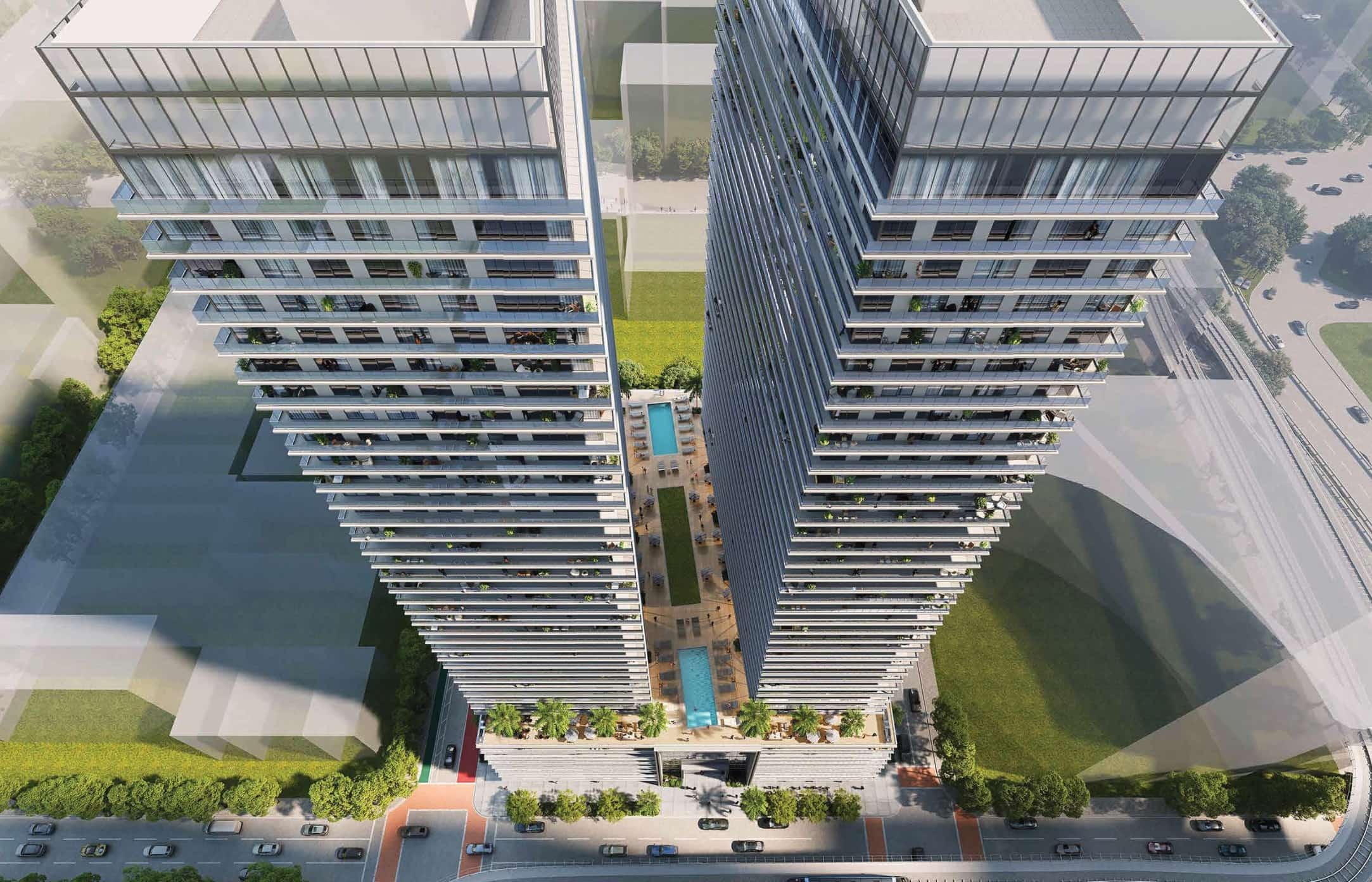
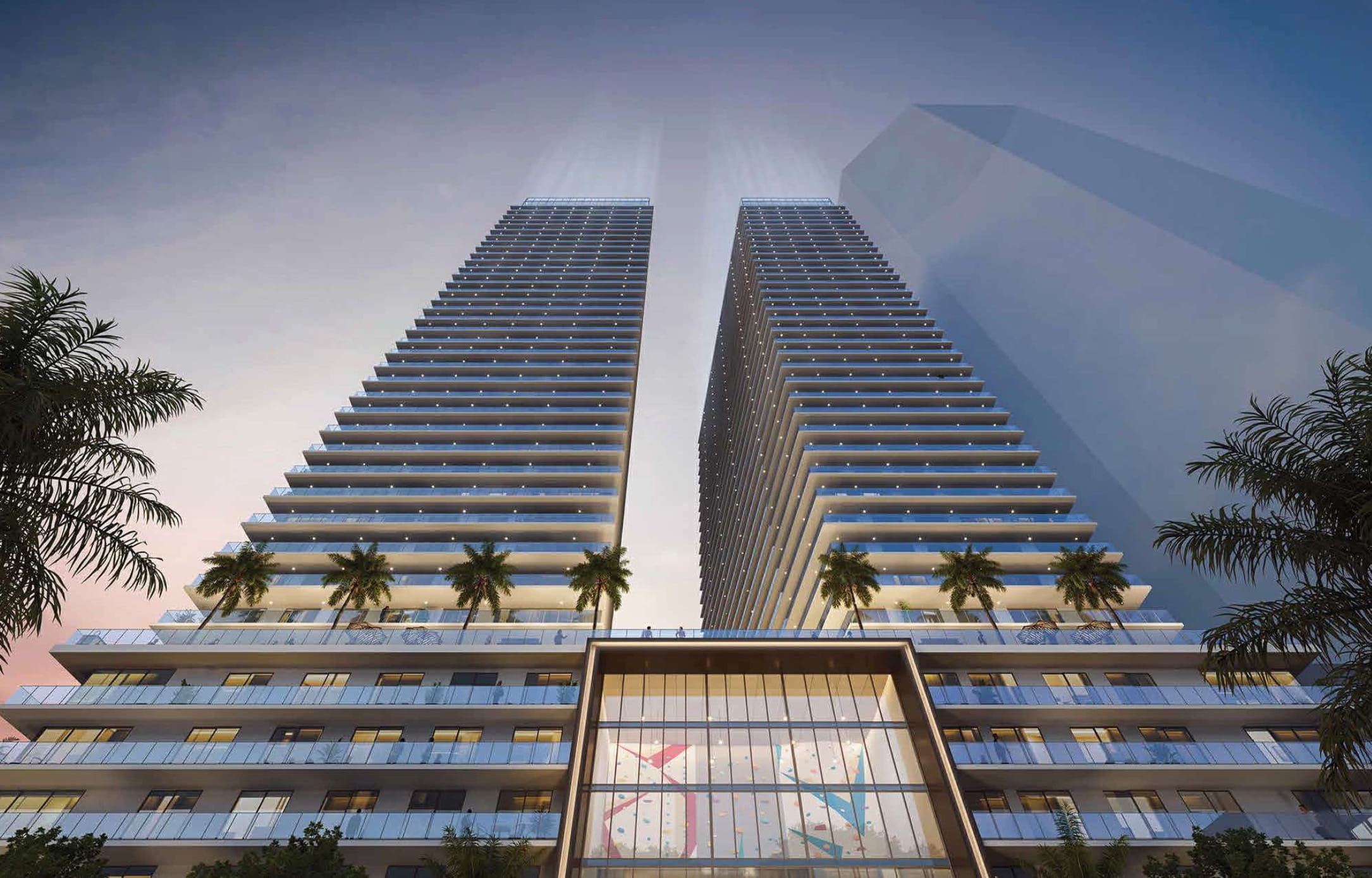
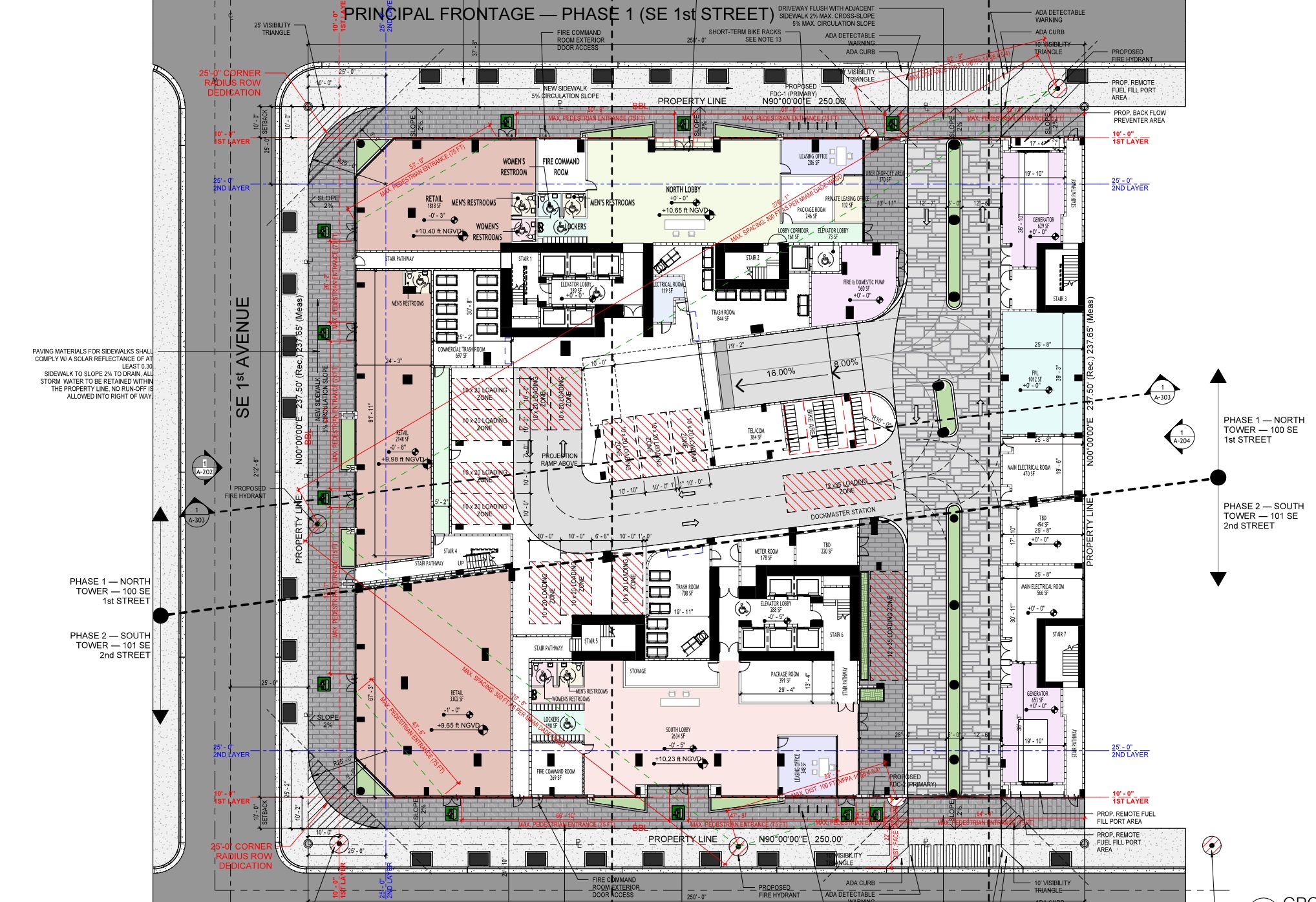
The amenity package is broad. It includes a pickleball court, multiple pools, game rooms, co-working areas, gyms, lounges, a golf room and a movie room, among other spaces, most of them on level 9. At street level, the project adds expanded sidewalks, greenery, open space and 7,832 square feet of retail.
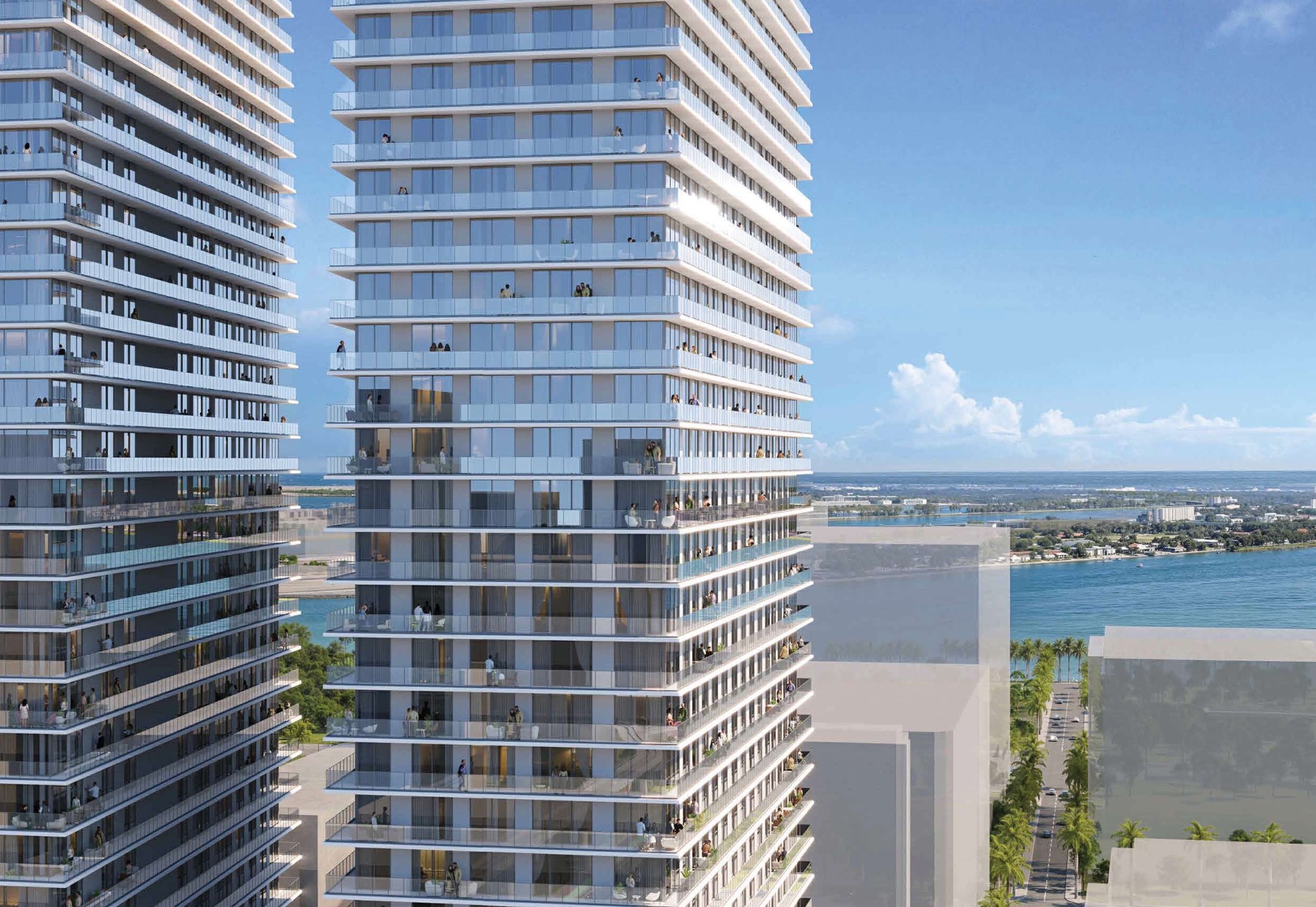
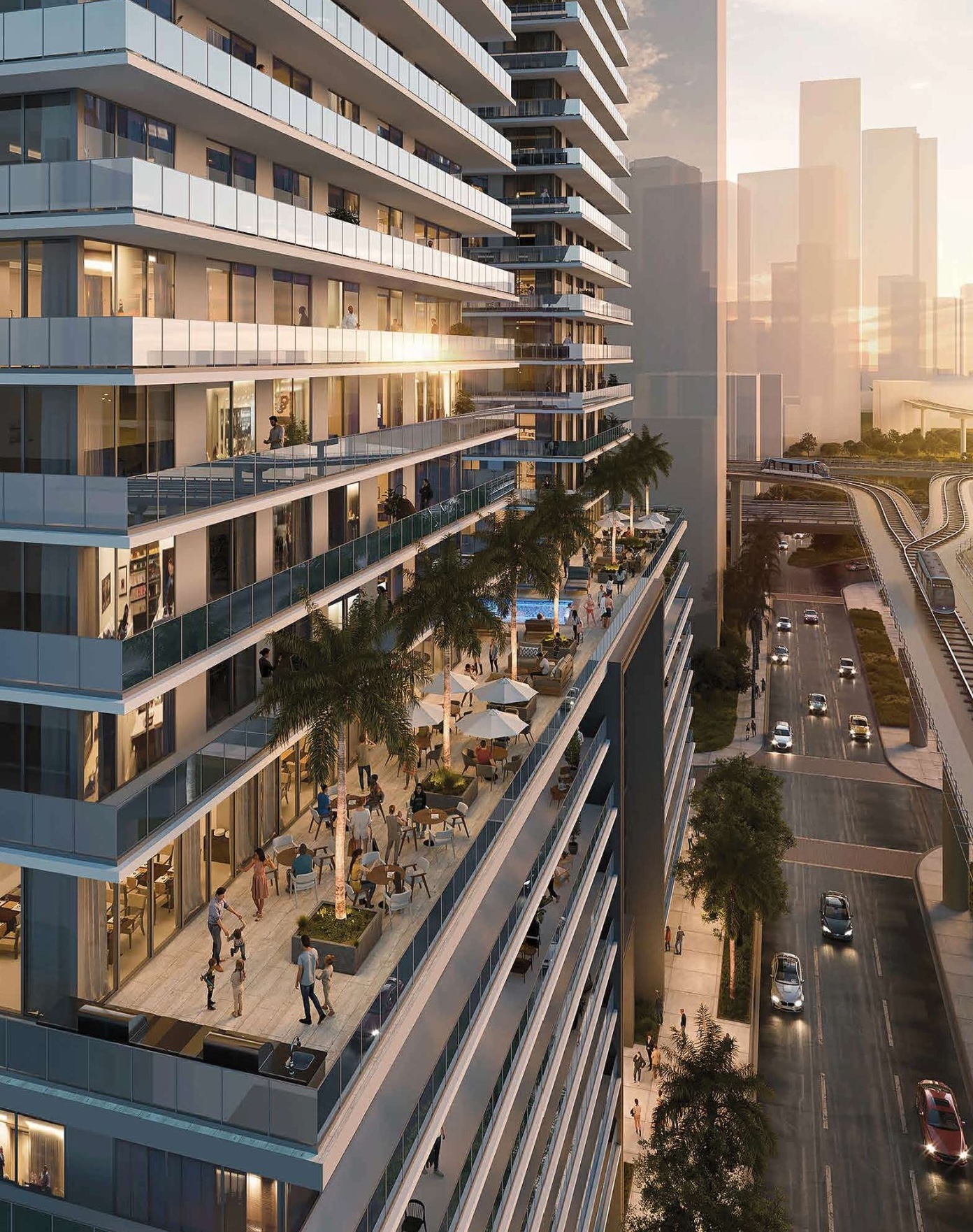
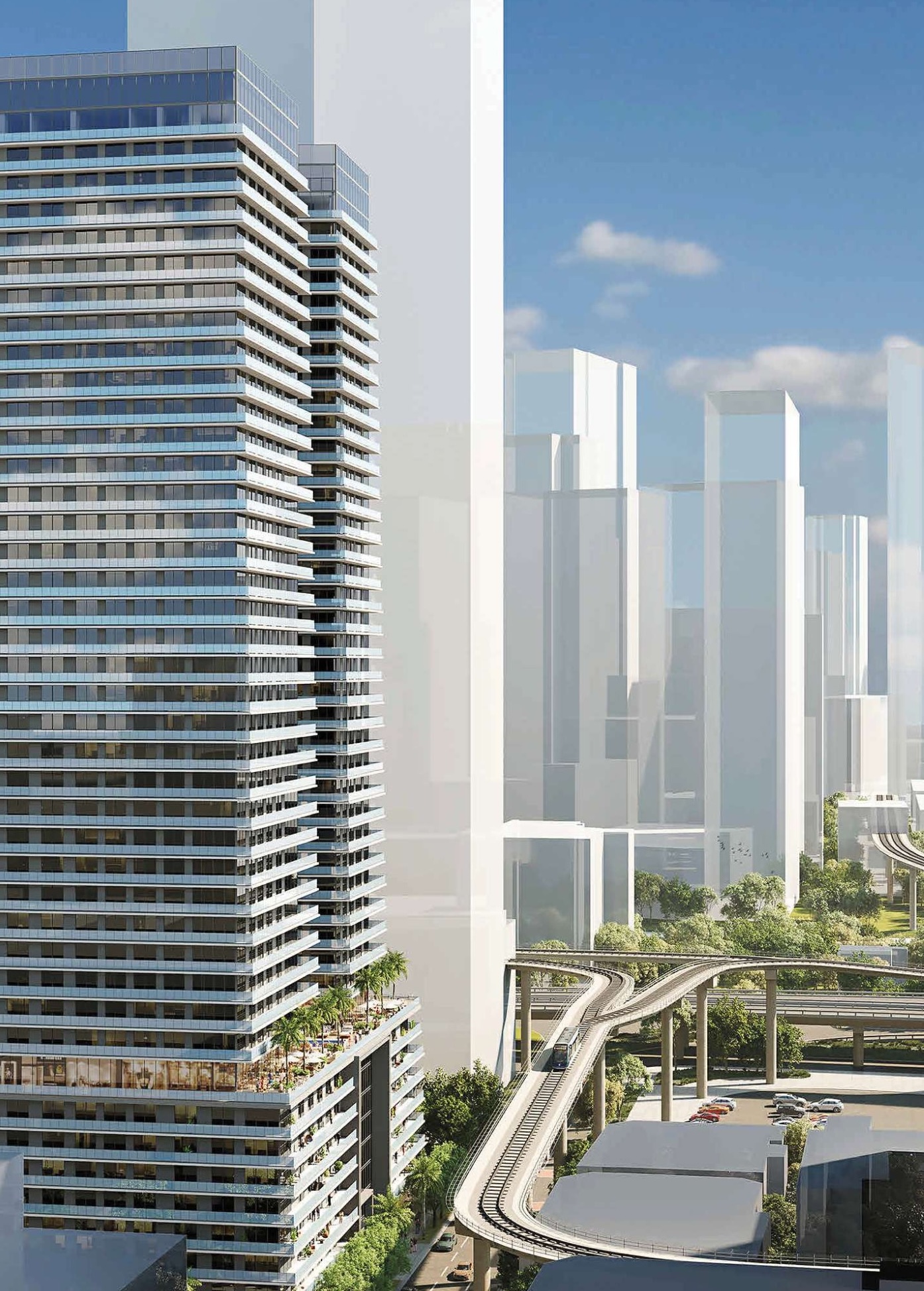
Parking is limited. Above the ground floor, the project includes 287 spaces, which exceeds the amount the city requires, since the requirement for this site is zero. The podium also holds 1,347 bicycle spaces. According to the project’s attorney, the numbers is a deliberate choice, with active street frontages and entries facing the public realm making the buildings pedestrian-oriented. The attorney points to the site’s proximity to Metromover service and the bicycle parking as giving residents “practical alternatives to automobile travel.”
The northern tower would rise in the first phase and the southern tower in the second. The podium would be wrapped on three sides by residential units, and the towers would feature floor-to-ceiling windows, glass balconies and white stucco, along with other materials common to contemporary Miami towers. The tallest point would reach 436 feet.
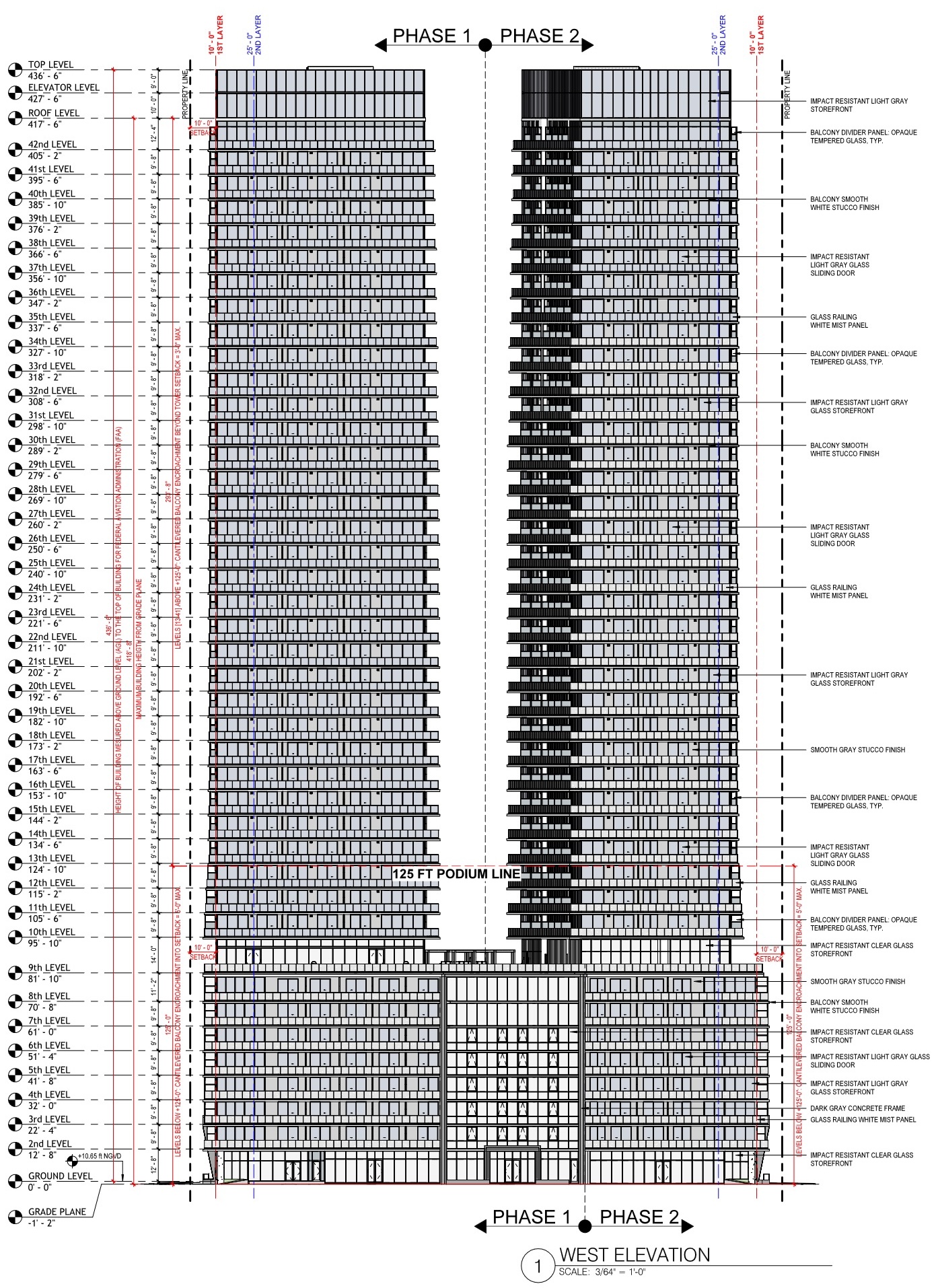
The approvals path is shorter than the project’s size might suggest. The Urban Development Review Board, which is largely advisory, does not need to sign off, and the plans have been filed for administrative review meaning lengthy public hearings are not required. Namdar Group is known for moving quickly. In Jersey City, the developer has six high-rises either under construction or proposed, with six more already completed, a portfolio that did not exist a decade ago.