56-Story Tower Proposed at 115 NE 2nd Street Would Be Fort Lauderdale’s Tallest
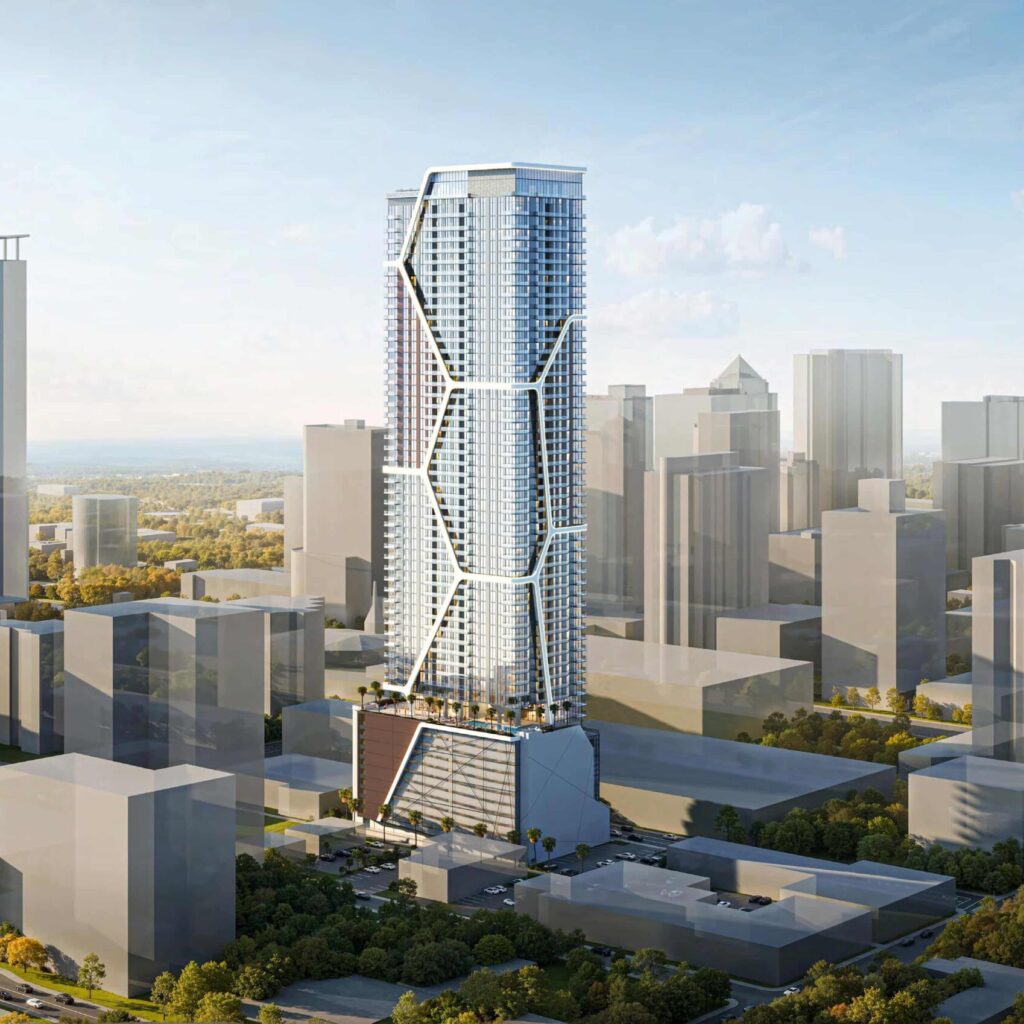
Not long ago, a highrise proposal at 315 NE 3rd Street made headlines as the tallest building ever proposed in Fort Lauderdale, a 608-foot statement about where the skyline was headed. That title has now been lost. A new filing for 115 NE 2nd Street calls for a 56-story residential tower that would rise well past it, and past everything else currently under construction or in the pipeline. The proposal comes from NE 2nd Holdings LLC (Arosa Developers), a developer reportedly based in New York City, and it would add another purely residential high-rise to the city’s growing wave of multifamily towers. The plans call for 696 multifamily units in a modern design by Fort Lauderdale-based FSMY Architects, and the project is set to go before the city’s Development Review Committee (DRC) soon. As with any filing at this stage, much remains preliminary, but the ambition is unmistakable: a tower of this scale would set the bar higher for the city’s tallest. The Site’s History The tower would rise on a three-parcel assemblage at 115 NE 2nd Street in Flagler Village, where NE 2nd Holdings is currently in contract to buy all three properties from their separate owners. The site has attracted big ambitions before. In 2022, a proposal led by Fifield Properties was put forward for the same location, which makes this the second major attempt to redevelop it. Whether Fifield is still involved, or whether this new effort belongs entirely to a different team, remains unclear. The scale of the proposal is clearest next to what’s already rising. Andare Residences, currently under construction and expected to top out at 542 feet, would be dwarfed by this tower, which would stand more than 100 feet taller. It would also surpass the aforementioned 608-foot proposal at 315 NE 3rd Street, which held the title of tallest proposed building in the city for only a few months before this filing took it. What’s Planned The 696 residences cover the full range of layouts, from studios to three-bedroom units and everything in between. Every home is planned with its own balcony, floor-to-ceiling windows, ceilings over 10 feet high, and a range of other upscale features. The amenities lean heavily on altitude: a rooftop pool on level 56 would offer the highest views of the city anywhere, while a second pool on level 10 anchors the lower portion of the building. Residents would also have access to outdoor bar space, multiple terraces, and thousands of square feet of indoor amenity space. Those interiors haven’t been named or programmed yet, as plans are still preliminary. At ground level, the plans include 7,400 square feet of commercial space alongside the residential lobby. The sidewalks would be widened and lined with greenery, with additional street-level improvements meant to make the pedestrian experience more inviting. To handle demand from both retail visitors and residents, the project includes 696 parking spaces. FSMY’s elevations show a modern tower with variation in color and material. The podium is a mix of faceted concrete, smooth white stucco, geometric glass designs, faux green walls, and spandrel glass on certain sections gives parts of the base an “active-use” look. Above it, the tower is wrapped in geometric, artistic patterns across the facade, finished in white, grey, and brown stucco.
Fouquet’s Hotel and Residences Miami Edges Toward Groundbreaking as Permits and Plans Stack Up
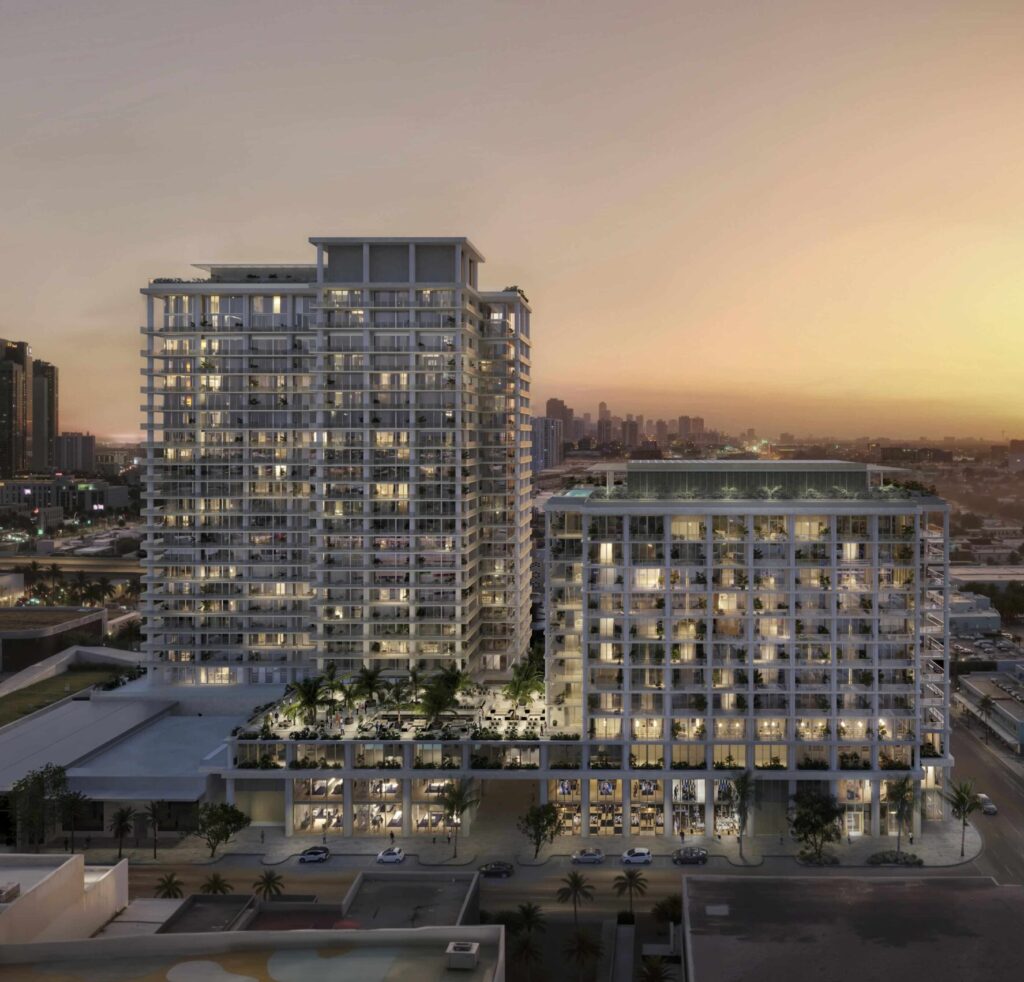
Fouquet’s Hotel and Residences Miami is edging closer to its first shovel in the ground. The development team has filed a string of permits in recent months, setting the stage for demolition and the start of construction within the next few months. The paperwork lands as sales are going well: the project has reportedly pulled in millions in presales, and the developer has just unveiled the first look at its amenity spaces, designed by RDAI, the studio behind Hermès. The site sits at 3995 N Miami Avenue and 39 NE 39th Street, and the team behind it is a crowded one. The project is a joint venture among Constellation Hotels Holding, Raycliff Capital, Miami Design District Associates, and Fort Partners. Miami Design District Associates is itself a partnership of Dacra, L Catterton Real Estate, and Brookfield Properties. The group paid roughly $170 million for the properties in late 2022. The filings cover several fronts. Multiple demolition permits would clear more than a dozen low-rise buildings that currently house leisure, office, and retail uses, among others. Beyond demolition, the developer has also submitted a phased vertical construction permit, a site work permit for foundation prep, and a master construction permit. All three are still waiting on approvals before work can proceed. The permits name Mobius Construction Inc. as general contractor, and they track closely with the UDRB submissions filed earlier this year. Those plans call for 143 units, 85 hotel rooms, and 20 condo-hotel units, plus more than 50,000 square feet of ground-floor retail and 178 parking spaces on a basement level for hotel guests and residents. Condo pricing starts at $1.8 million, and the unit mix runs from one to four bedrooms, topped by penthouses. Residents will have plenty to do without leaving the building. RDAI, a Paris-based firm, has led the design for the complex’s amenity spaces, which covers more than 40,000 square feet. Highlights include a rooftop pool with a bar, a rooftop lounge, a spa with a hammam and cold plunge, a Serenity Lounge with a juice bar, an on-demand salon, a fitness center with a private training studio, a golf simulator, an entertaining suite, an executive lounge, and a playroom, with more to come. The project is targeting completion in 2030. Not every approval is in hand yet, but the pace so far, from announcement to presales to permitting, suggests that date is realistic. When it does arrive, Fouquet’s will be the Design District’s first high-rise of this scale, with towers of 12 and 24 floors, rising 185 and 309 feet respectively.