
Plans for Magic City Innovation District, a $3 billion mixed-use development proposed in Miami’s Little Haiti neighborhood, are gaining new momentum after technology investor Bob Zangrillo outlined an updated vision for the project in a report with Bloomberg this week.
The 17-acre development has been years in the making. Land assembly efforts began during the early 2010s, followed by the unveiling of a master plan to the city in 2019. While the project has largely remained dormant in recent years, newly revealed plans position the district as an AI-focused hub centered around technology, office space, housing, and retail.
The renewed push is being led by Zangrillo, founder, chairman, and chief investment officer of Dragon Global, a Miami-based investment firm focused on artificial intelligence companies targeting markets valued at more than $100 billion. Dragon Global is partnering with Miami-based Plaza Equity Partners to advance the project.
The development’s path has not been without controversy, however. Zangrillo was among several business executives implicated in the college admissions scandal involving the University of Southern California. President Donald Trump later issued pardons to those involved on the final day of his first term in 2021. Separately, the project has faced sustained opposition from some residents and community groups concerned about displacement and gentrification in Little Haiti.
In response to those concerns, the development team committed $31 million toward the creation of the Little Haiti Revitalization Trust, an initiative intended to support affordable housing and local economic development.
The project is supported by an approved Special Area Plan, or SAP, which allows up to 7.8 million square feet of development across the site. Plans call for approximately 2,630 residential units, 2.2 million square feet of office space, 520,970 square feet of retail, 432 hotel rooms, and roughly 6,000 parking spaces.
Construction is planned to occur in phases. The first phase will be led by Sixty Uptown, a 25-story residential tower containing 349 apartments and more than 30,000 square feet of resident amenities, including a rooftop pool, fitness facilities, and other shared spaces.

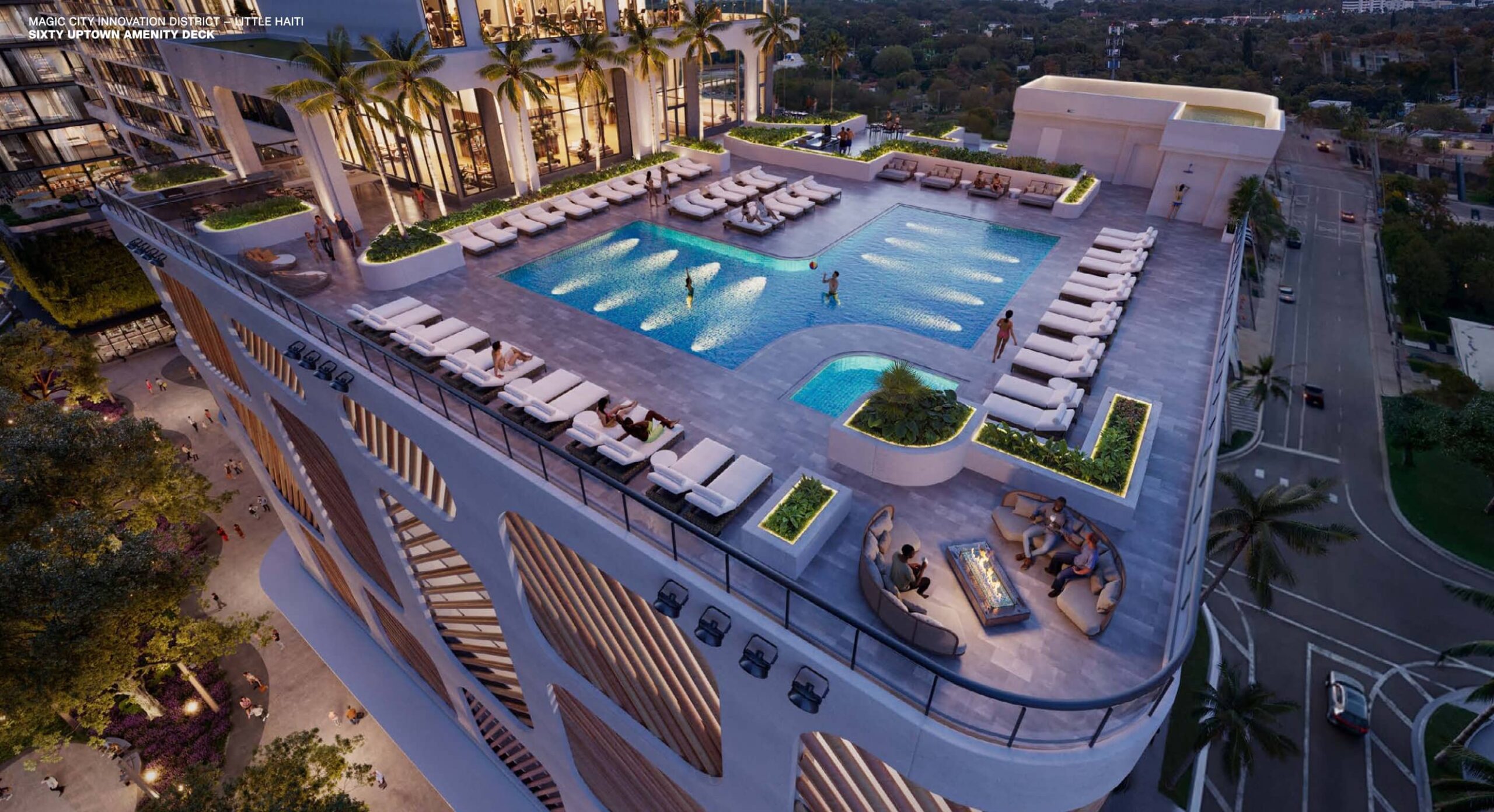
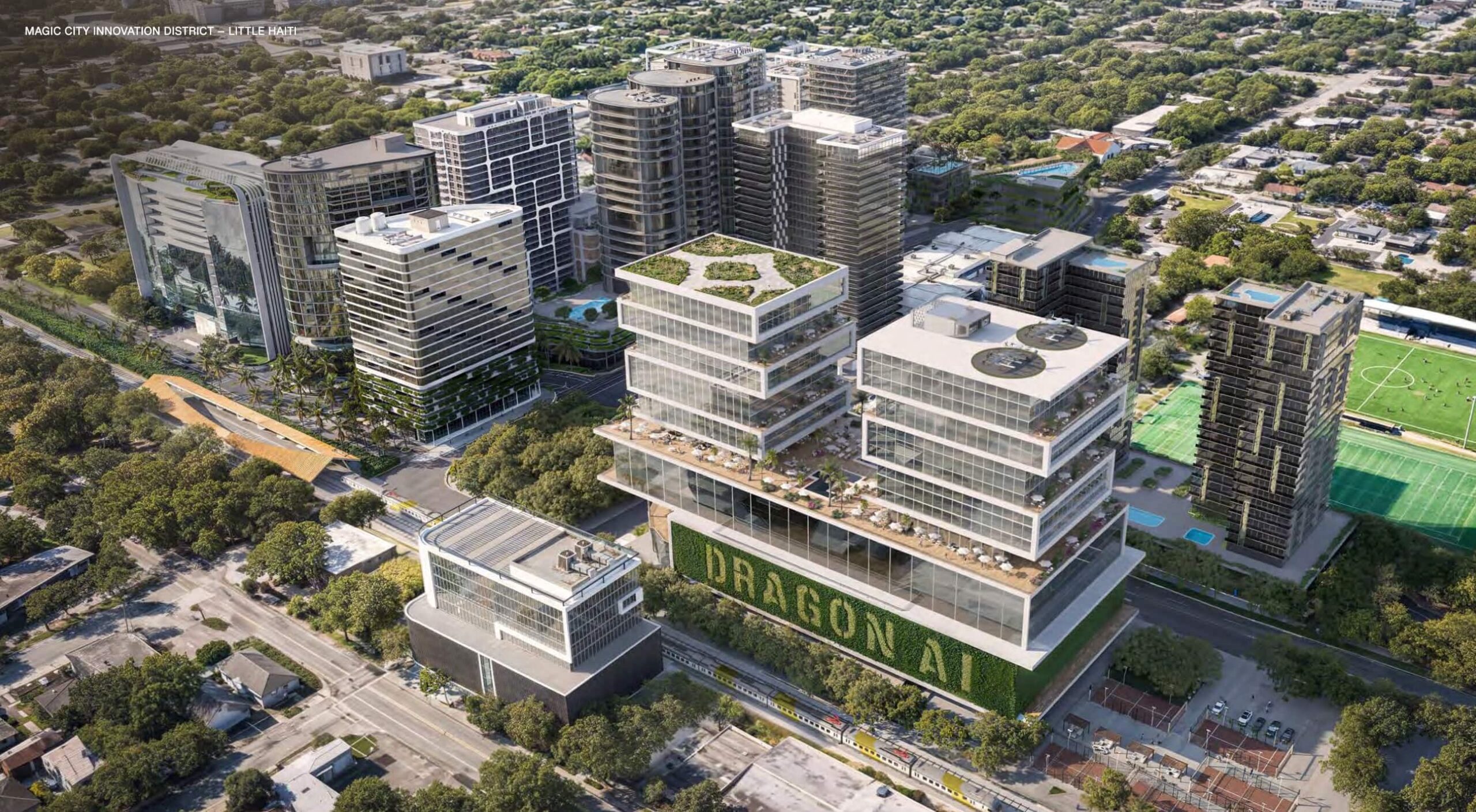
Also included in the initial phase is a Class A office campus anchored by Dragon AI. Plans call for approximately 873,000 square feet of office space, 80,000 square feet dedicated to health and wellness uses, and 70,000 square feet of retail.

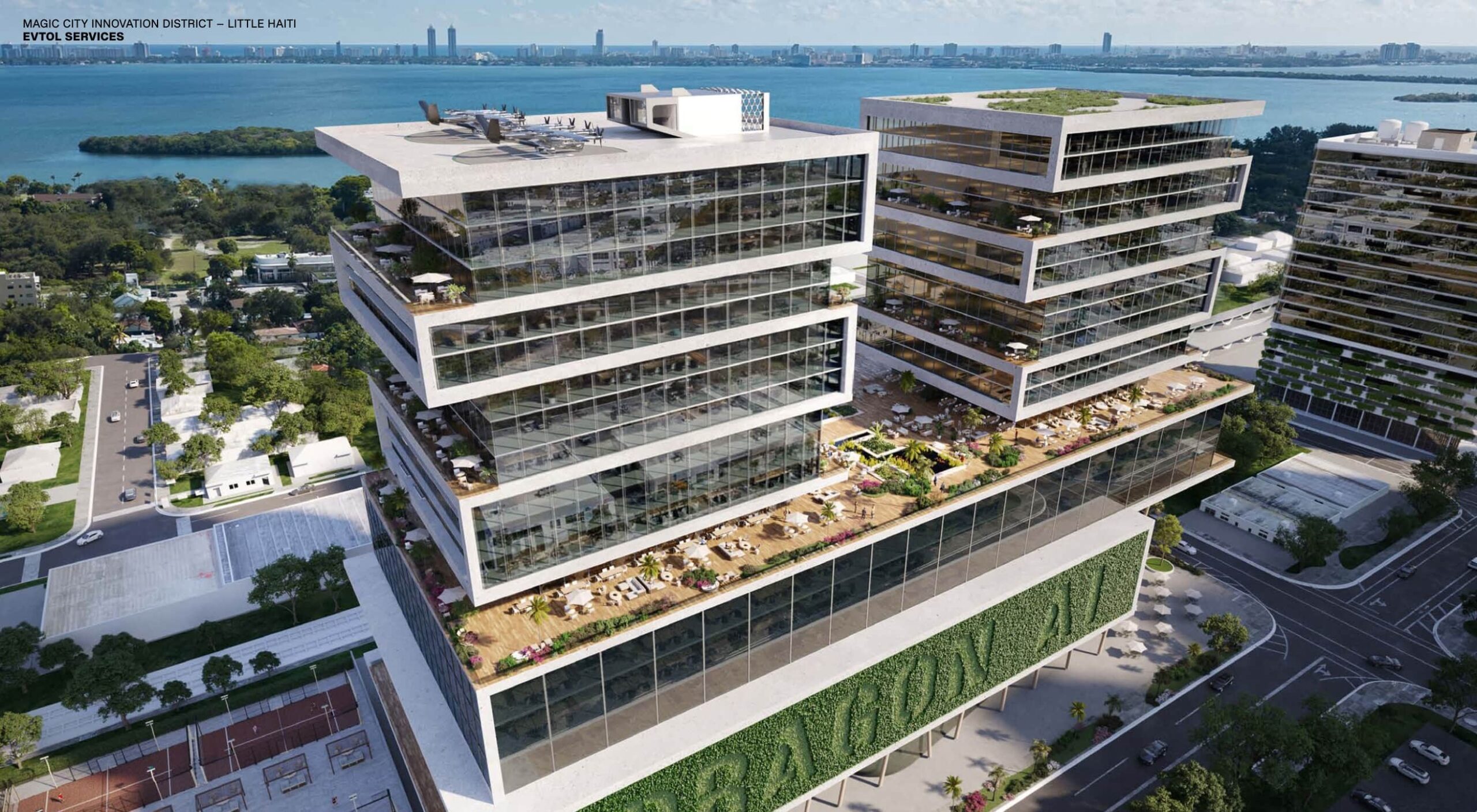
Future phases will introduce some of the district’s most ambitious components, including the DuPont Registry Tower. The 12-story building is planned to contain approximately 370,000 square feet of office space, ground-floor retail, a 20,000-square-foot rooftop venue, a members-only private car club, and roughly 94,000 square feet dedicated to vehicle storage and display.

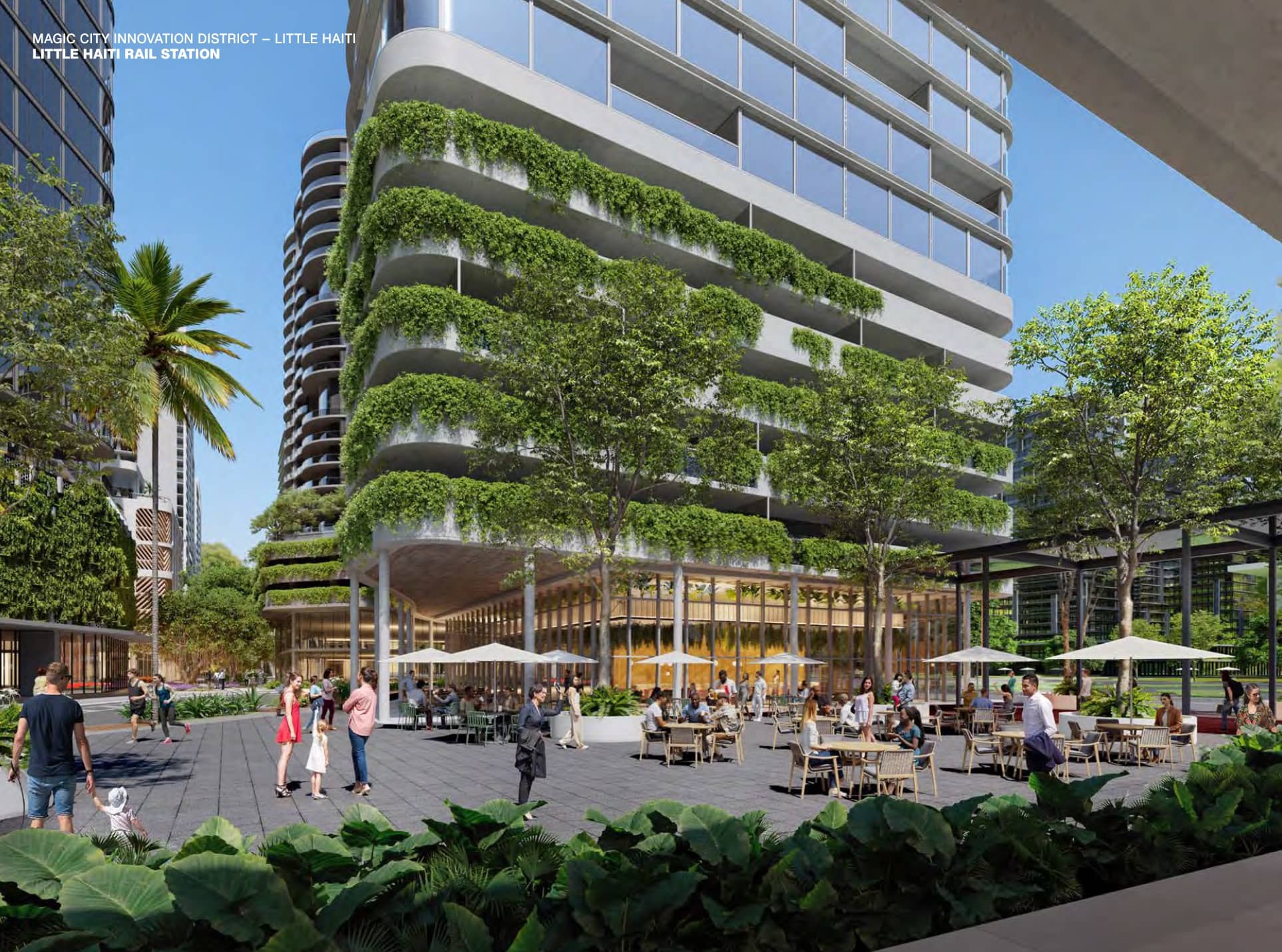
At the heart of the district will be a 2.5-acre public promenade winding through existing century-old oak trees. The space is envisioned as the project’s central gathering area, surrounded by retail storefronts, public art installations, restaurants, and pedestrian-oriented public spaces.
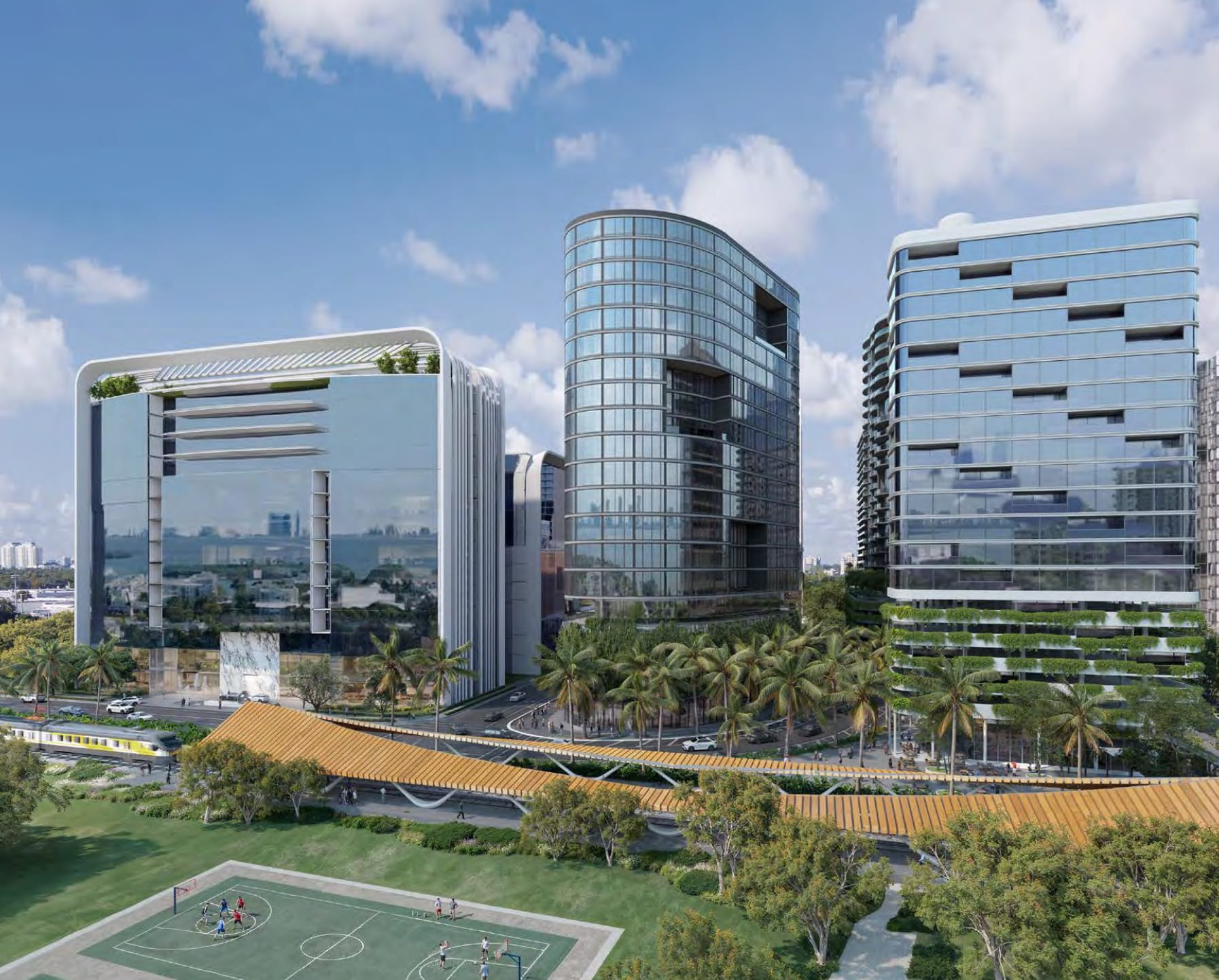
The development also stands to benefit from future transportation investments. Miami-Dade County’s proposed Northeast Corridor rail project may include a planned station nearby, while the development team has floated the possibility of incorporating rooftop eVTOL air taxi facilities as an additional transportation option.
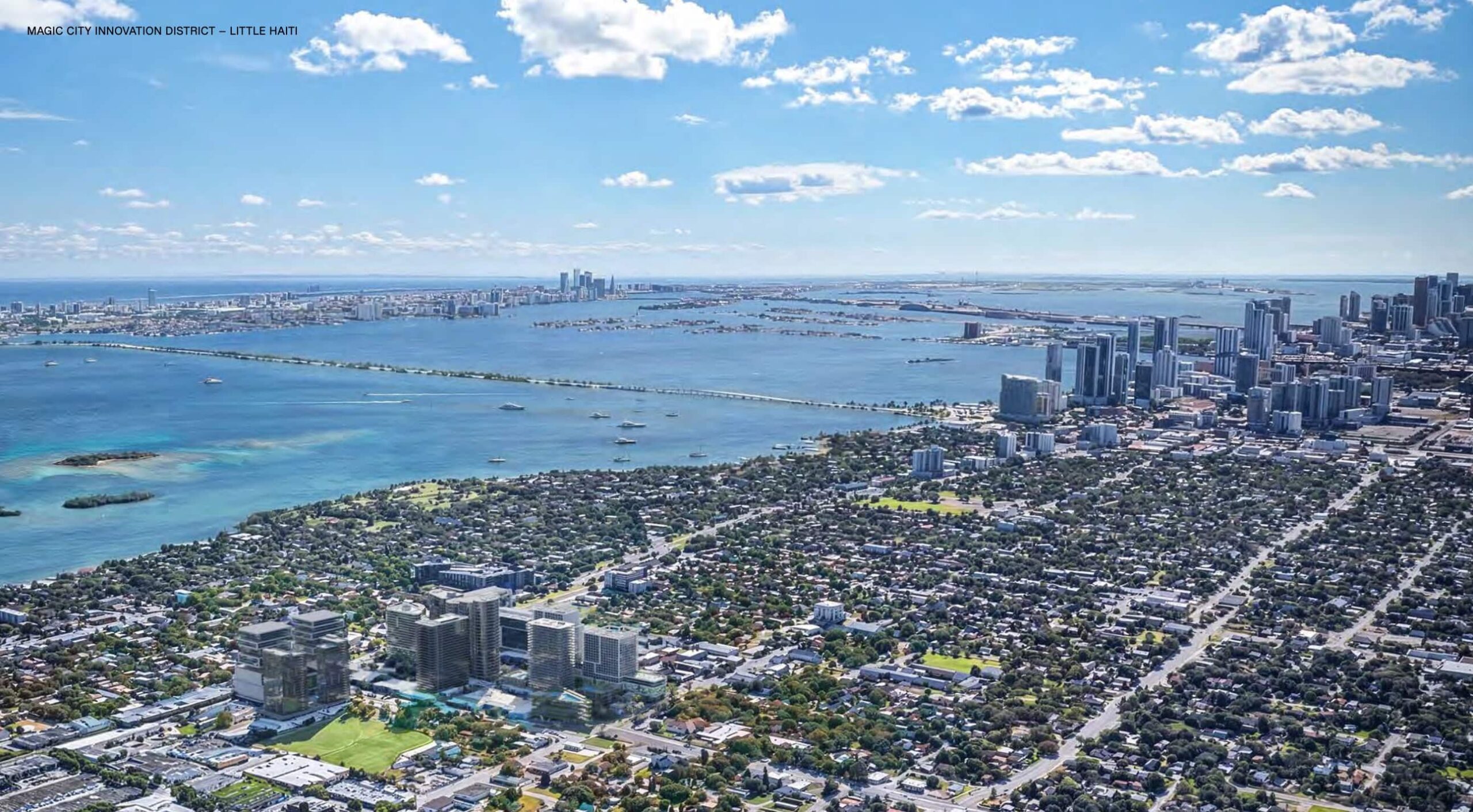
If fully realized, the Magic City Innovation District would further extend the city’s rapidly growing skyline northward. It would also join a growing pipeline of major projects reshaping the area’s future skyline, including Swerdlow Group’s proposed Little River affordable housing development.