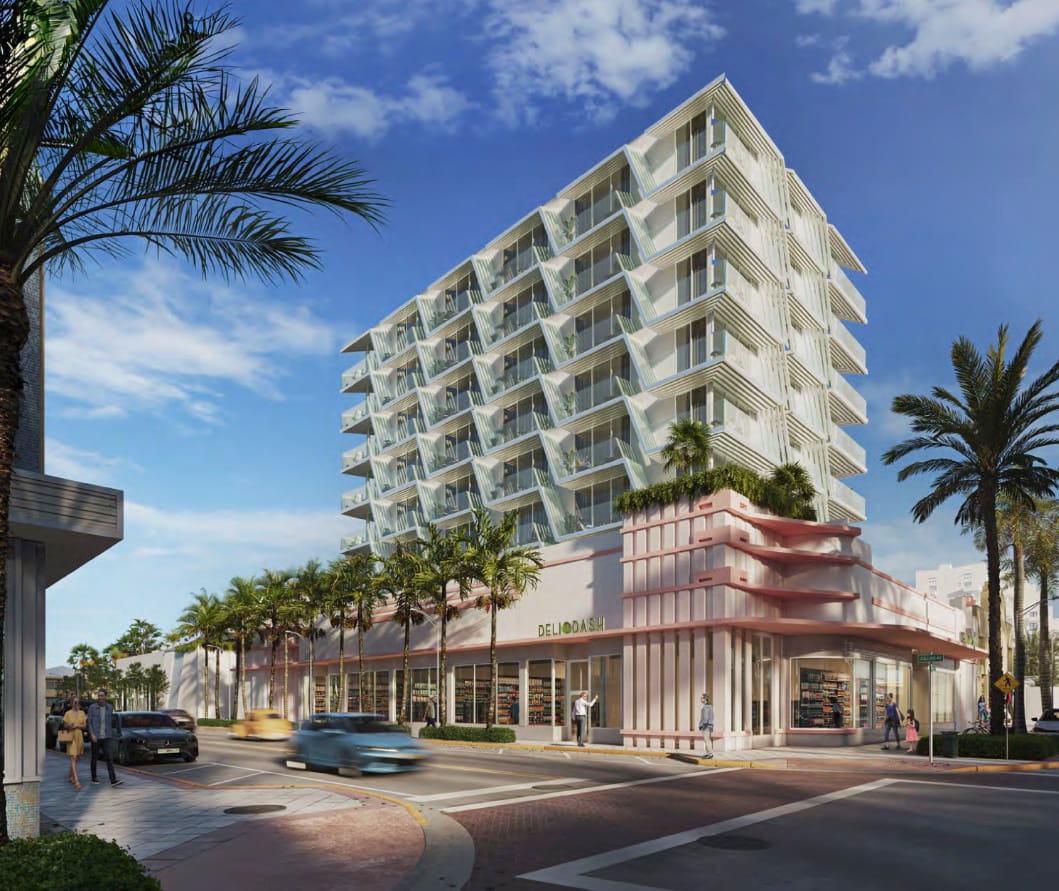
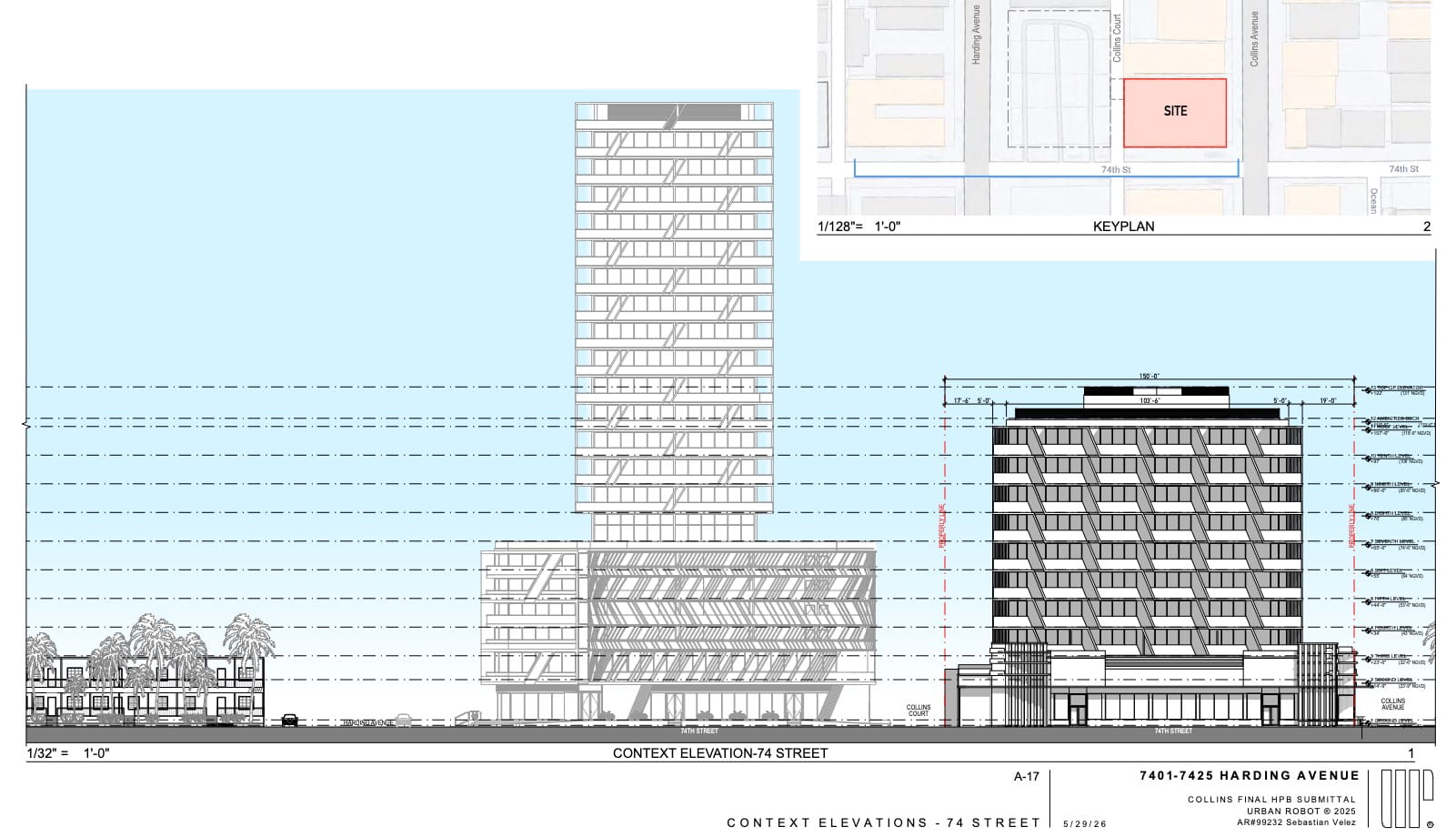
The Live Local Act is once again reshaping Miami Beach’s skyline, with the owners of a historic property at 7410 Collins Avenue securing approval for an 11-story high-rise. The approval places the project among a small handful of successes: just four developments have won approval under the act in the city, out of more than fourteen submitted, most of them high-rises.
7410 Collins Avenue is leaning on the state’s landmark housing law to unlock both greater density and additional height than existing zoning would normally allow, flexibility that has translated into a 50-unit building spanning a mix of income levels. It’s a dramatic jump from what zoning alone would permit, but this kind of Live Local Act-driven change is quickly becoming standard practice for new proposals in the city, much to the frustration of anti-high-rise advocates.
Nowhere is that shift more visible than at this site. The project is rising on the footprint of a one-story commercial building constructed in 1950 as a supermarket and now home to a CVS. The road to this approval didn’t start this year, either. Developers originally submitted plans for a five-story structure on the property and won approval from city boards, including Miami Beach’s Historic Preservation Board.
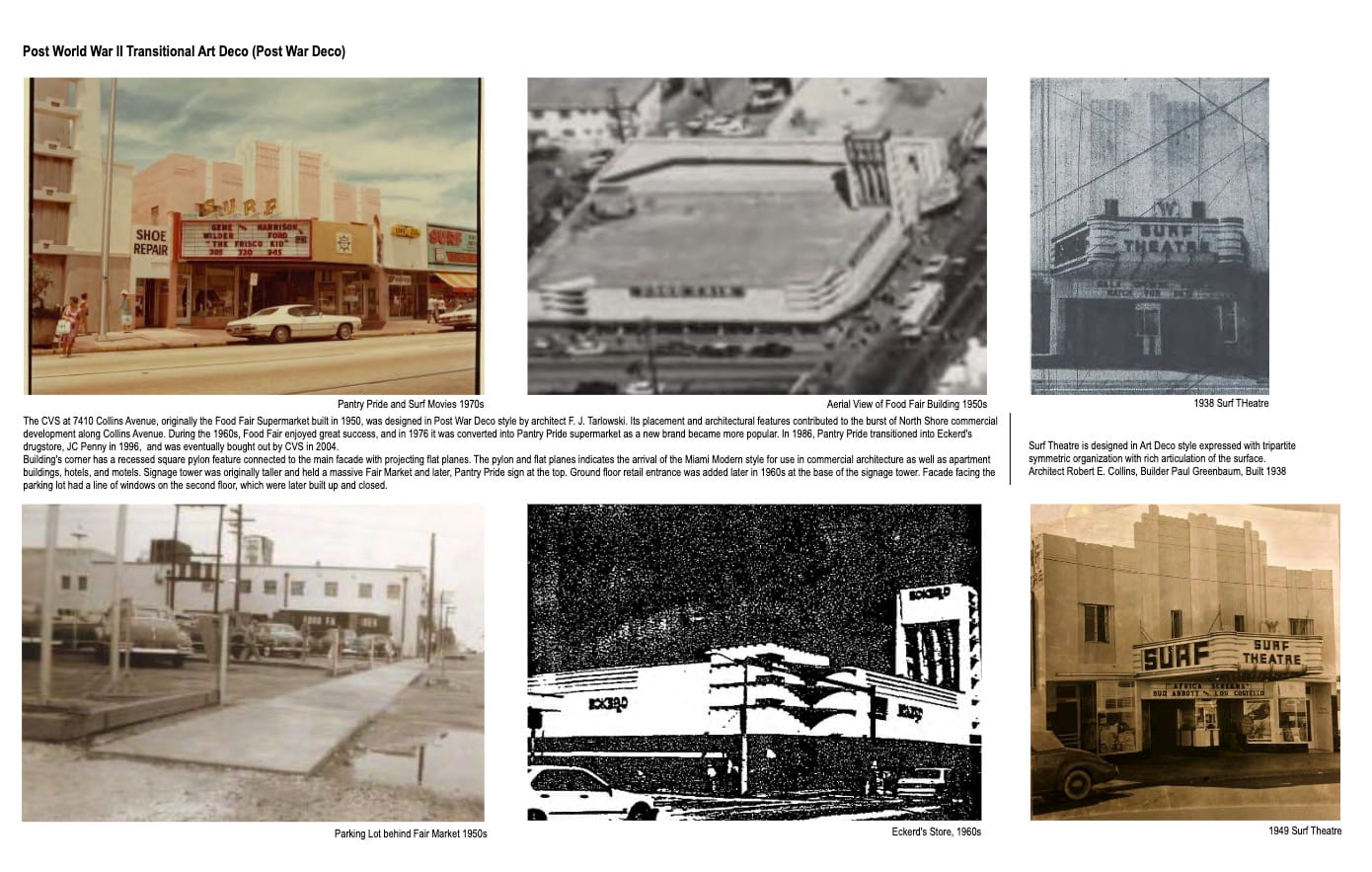
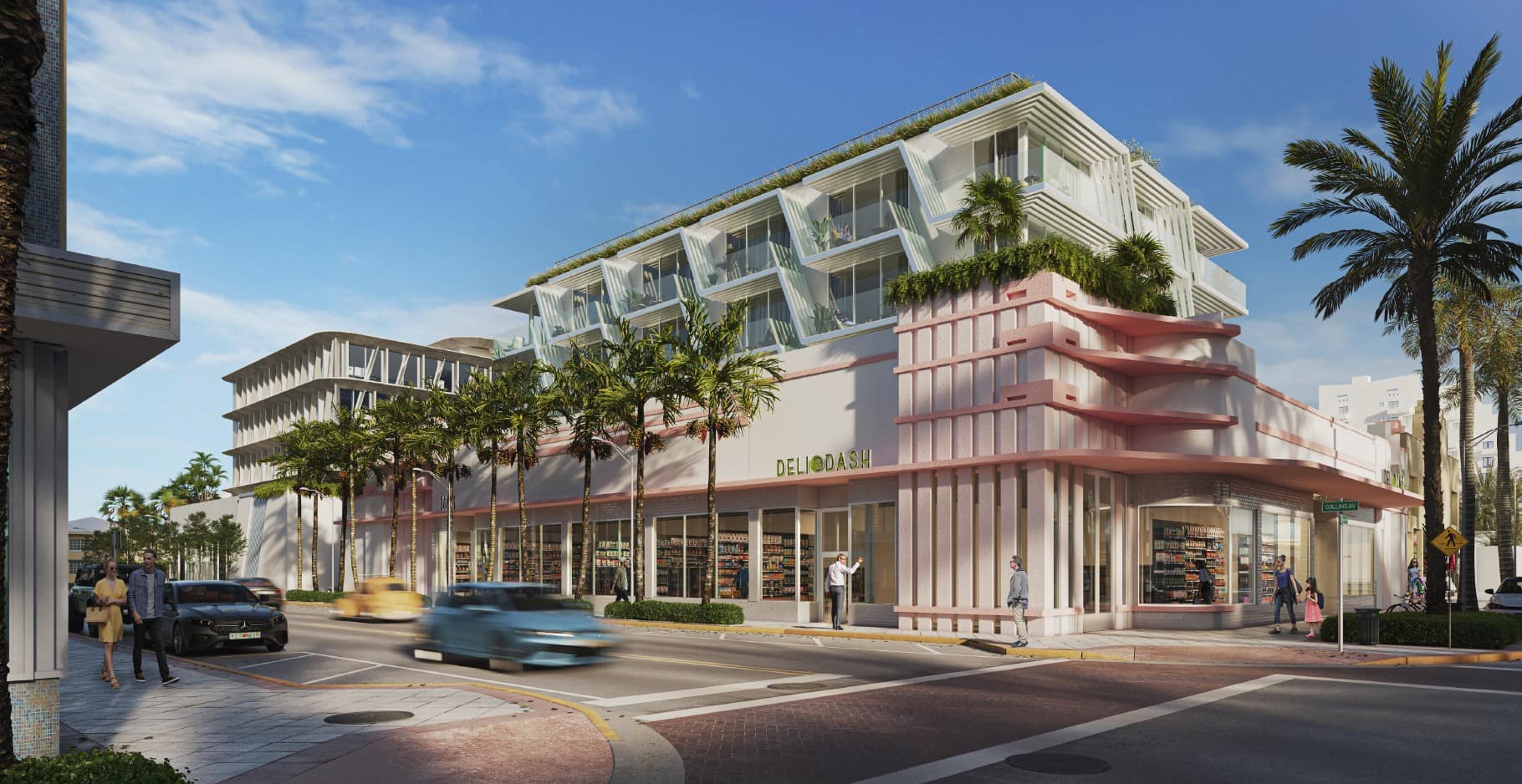
That earlier proposal called for 18 luxury units, 8,379 square feet of ground-floor retail, and 25 parking spaces. But as the Live Local Act gained traction across the city, a five-story building began to look like a missed opportunity. The developer went back with a new proposal, more than doubling both the density and height of the original plan.
Inside the Proposal
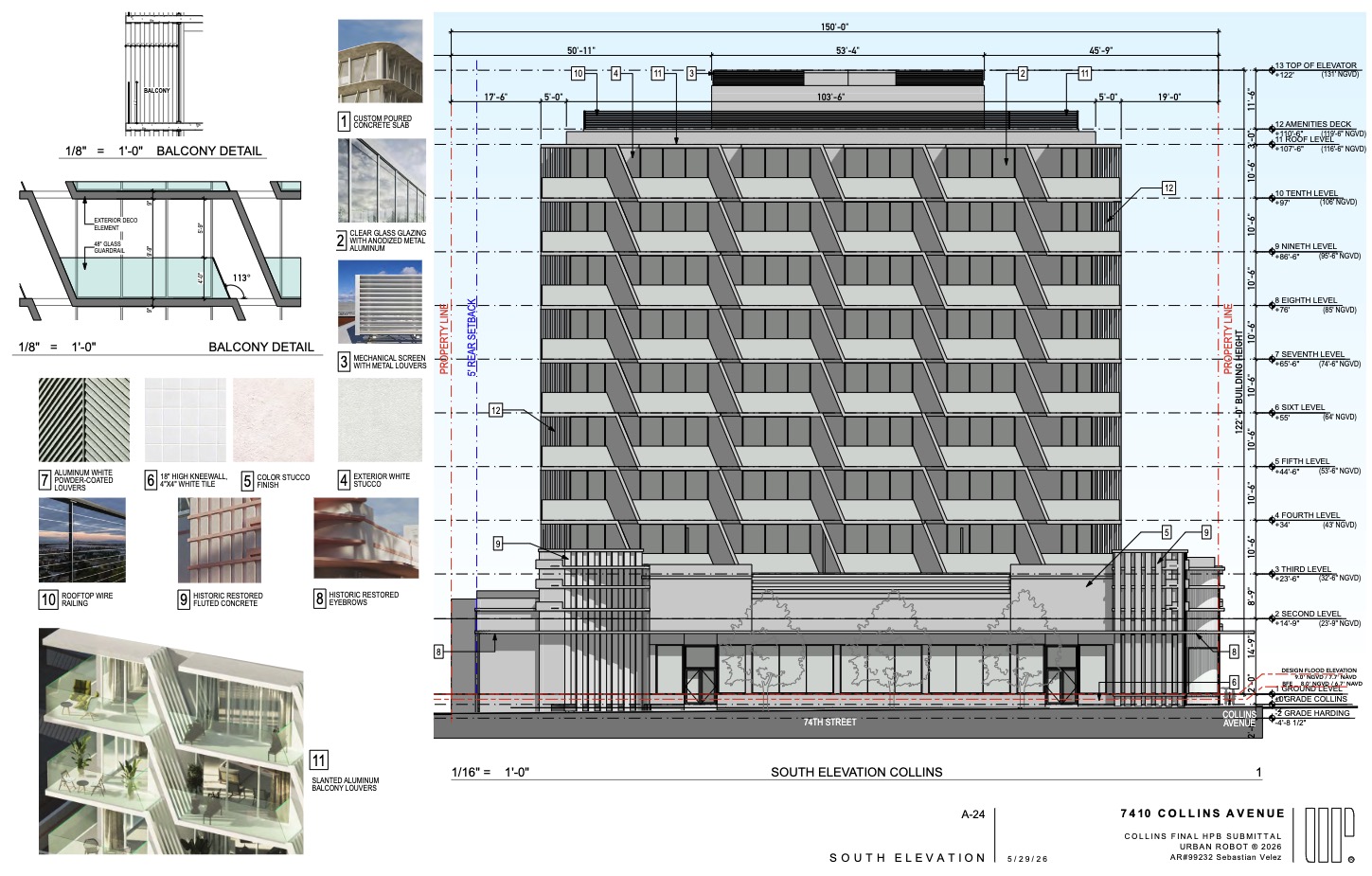
Approved in July, the development’s 50 units will split between 30 market-rate units and 20 workforce housing units priced at or below 120 percent of the area median income. That workforce housing component is a direct requirement of the Live Local Act, which grants zoning enhancements in exchange for setting aside at least 40 percent of units at or below that income threshold.
Units will range from 664 to 900 square feet, each with its own balcony, and residents will have access to two stairwells and two elevators. On the 11th floor, the building will feature a rooftop pool alongside 876 square feet of additional amenity space, outdoor seating, and landscaping. Because the lot is tightly constrained, the project will include just 25 parking spaces on the second level. Additional parking will be available on-street and at a nearby parcel serving as overflow capacity during periods of higher demand.
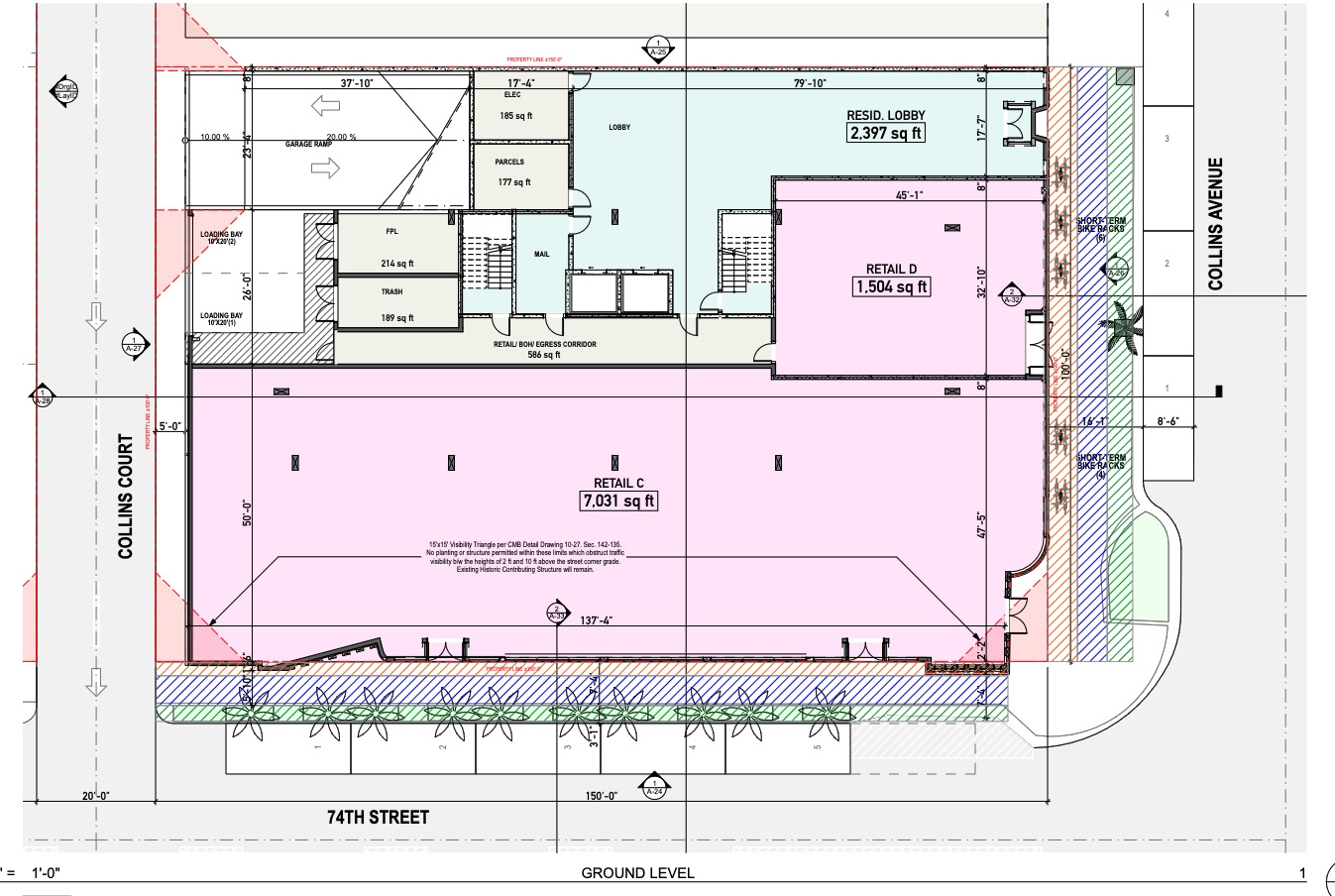
Designed by Urban Robot, the building will feature a bold, colorful palette spanning pink, light teal, and white tones, wrapped in stucco, concrete, floor-to-ceiling windows, and glass balconies. The ground floor will house 8,535 square feet of retail space and a 2,397-square-foot lobby, along with bike racks and a renovation of the historic facade, including repainting and both interior and exterior updates to the original structure.
Moving Ahead
7410 Collins Avenue is the latest example of the Live Local Act’s core trade-off in action: greater density and height in exchange for zoning flexibility. But the law has also drawn significant pushback from cities across South Florida, largely because it allows qualifying projects to bypass public board review and move through the approval process administratively. That lack of public input has fueled a sharp and often heated divide between developers and residents.
Critics also argue that the affordability promised under the law is often overstated. While Live Local Act projects are required to meet certain rent limits, those limits can still allow for substantial costs. According to rent limits published by Bilzin Sumberg, studio units under the law can be priced as high as $2,862 a month, a figure that’s arguably far from affordable by most standards.
Whether those limits move the needle in the short term remains an open question. But pro-housing advocates maintain that increased supply, over time, tends to ease pricing pressure rather than worsen it.
1 Comment
This development is Completely out of character for the immediate surrounding area. 25 parking spaces is ridiculous as there are already extremely limited on street parking and the next closest lot on 72nd Street will not be available for some two years if then.