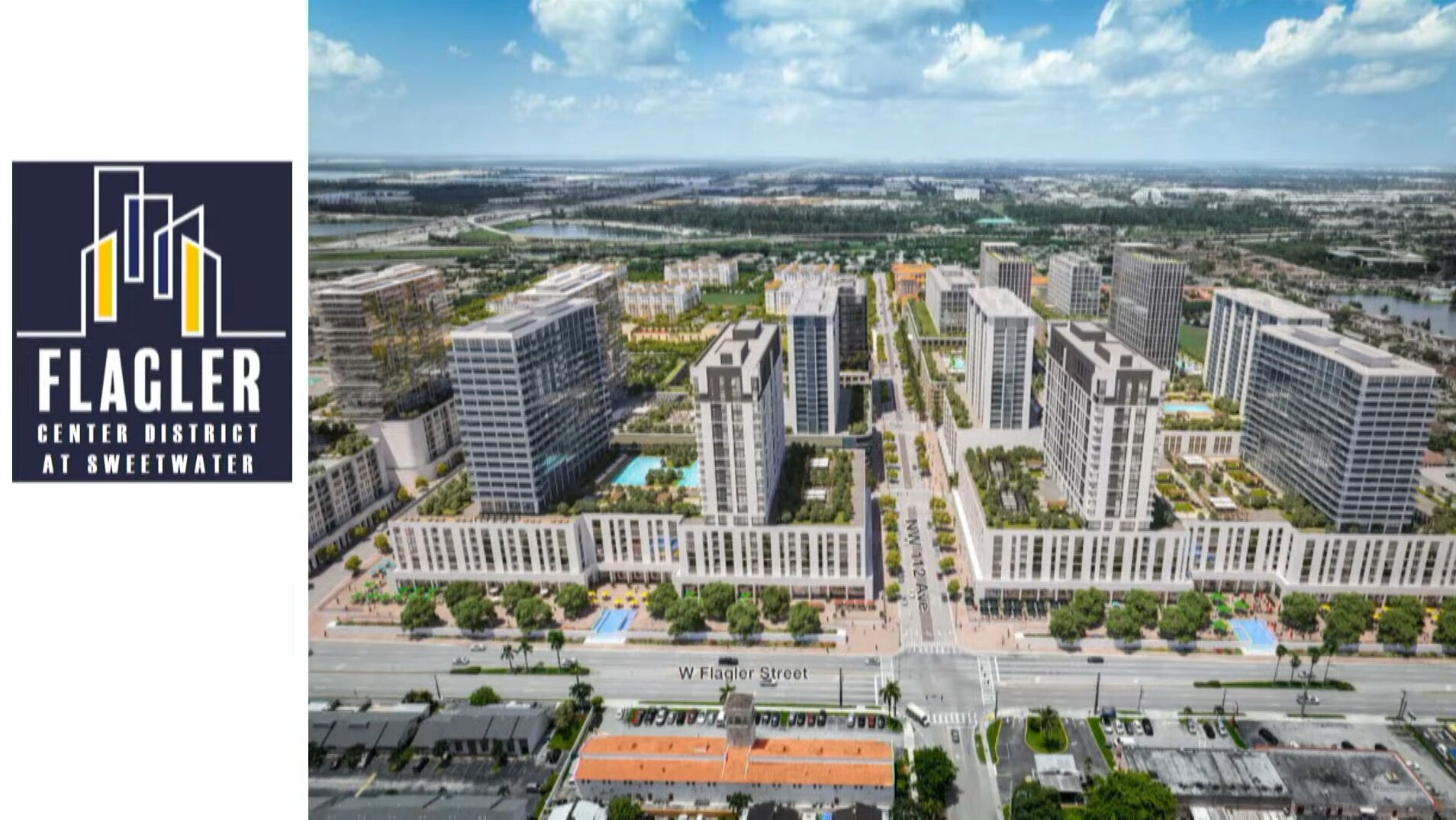
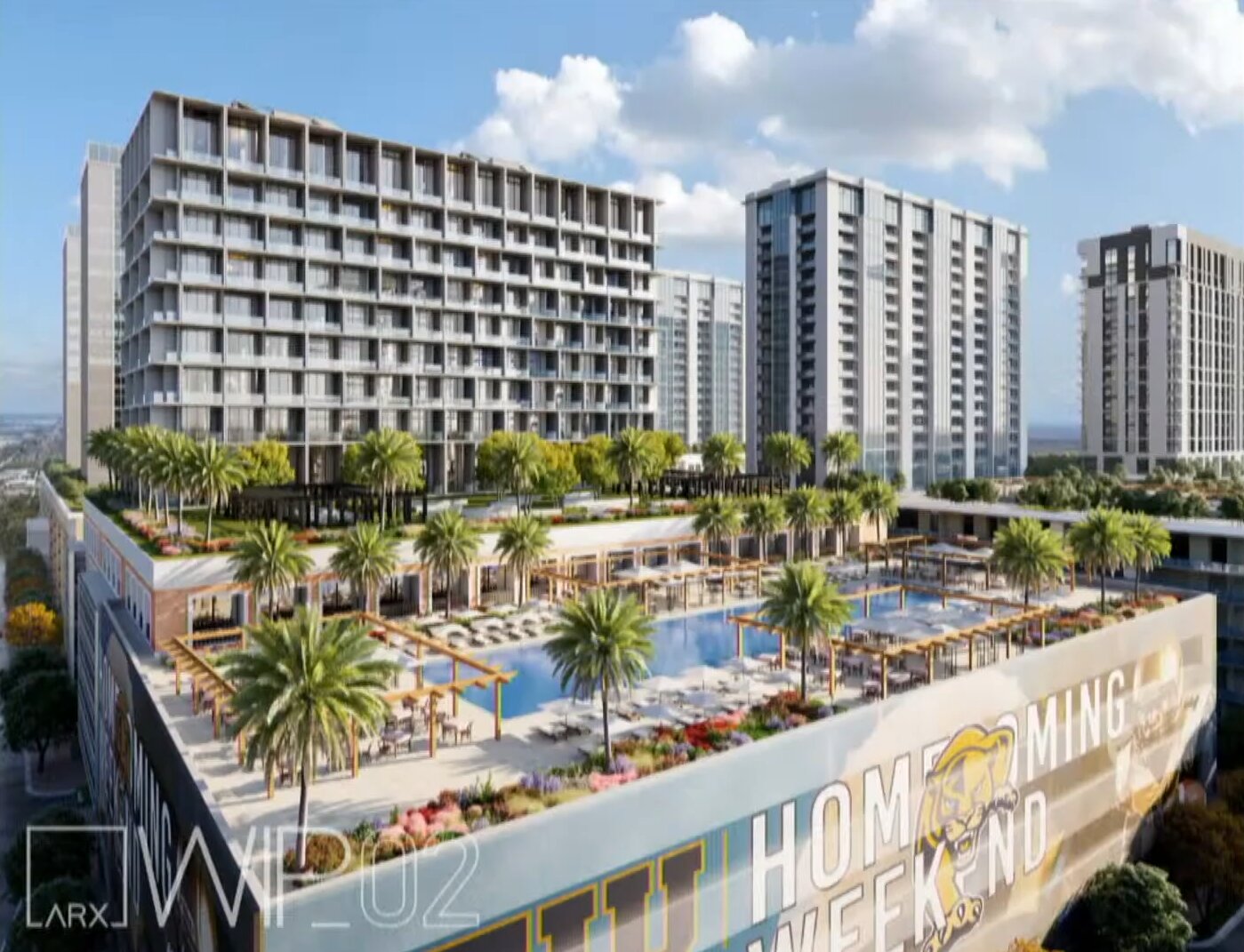
Plans to redevelop the former Li’l Abner Mobile Home Park are beginning to solidify, marking a key moment for one of the largest redevelopment sites in western Miami-Dade. The more than 90-acre property, once home to thousands of residents and now cleared, is set to transform into a dense mixed-use neighborhood known as the Flagler Center District. Plans call for residential towers, retail, medical space, community amenities, and more.
Led by CREI Holdings, plans submitted to Sweetwater outline a walkable, mixed-income district poised to become the city’s largest development to date. The project has already cleared several early procedural milestones, including an initial commission reading and key land-use approvals, though additional reviews remain before the multi-phased development can begin with its first phase.
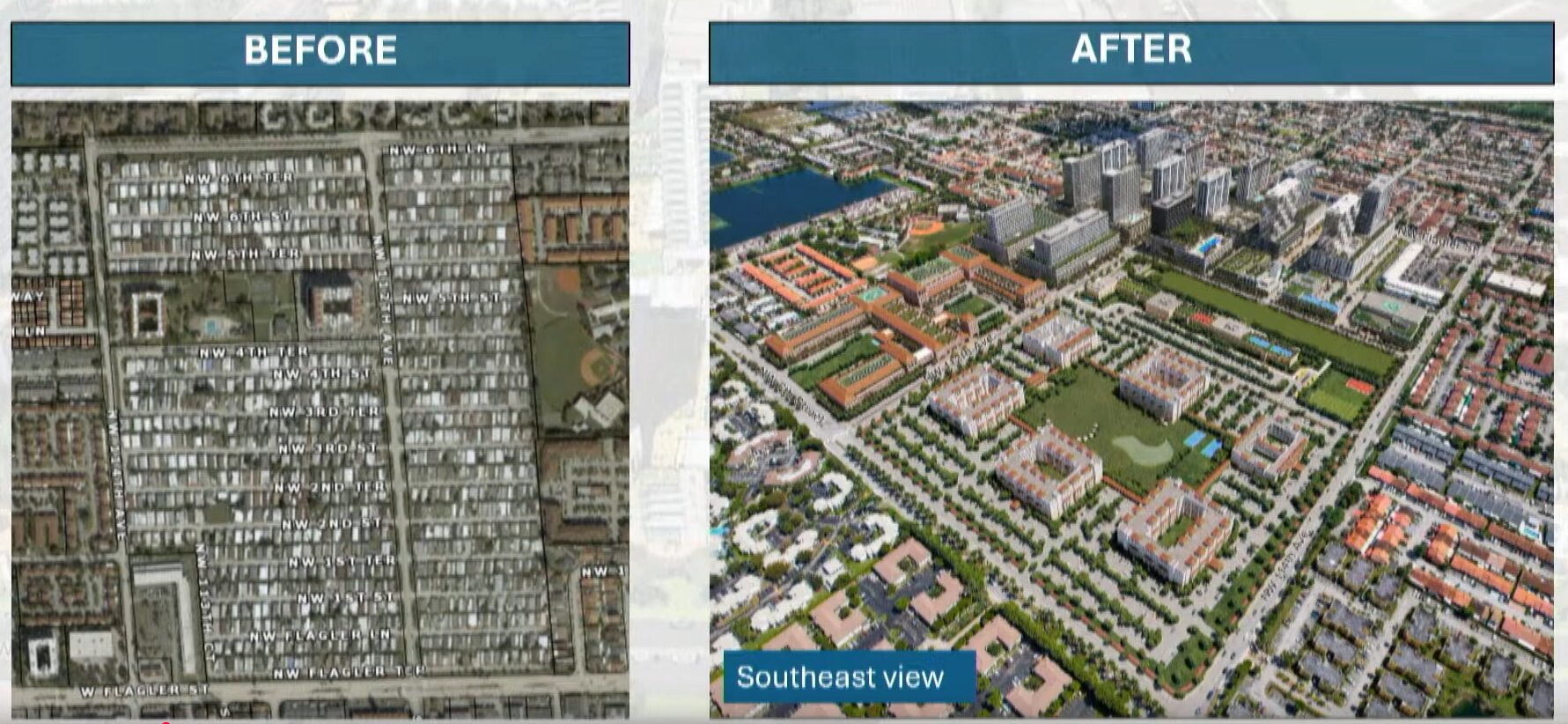
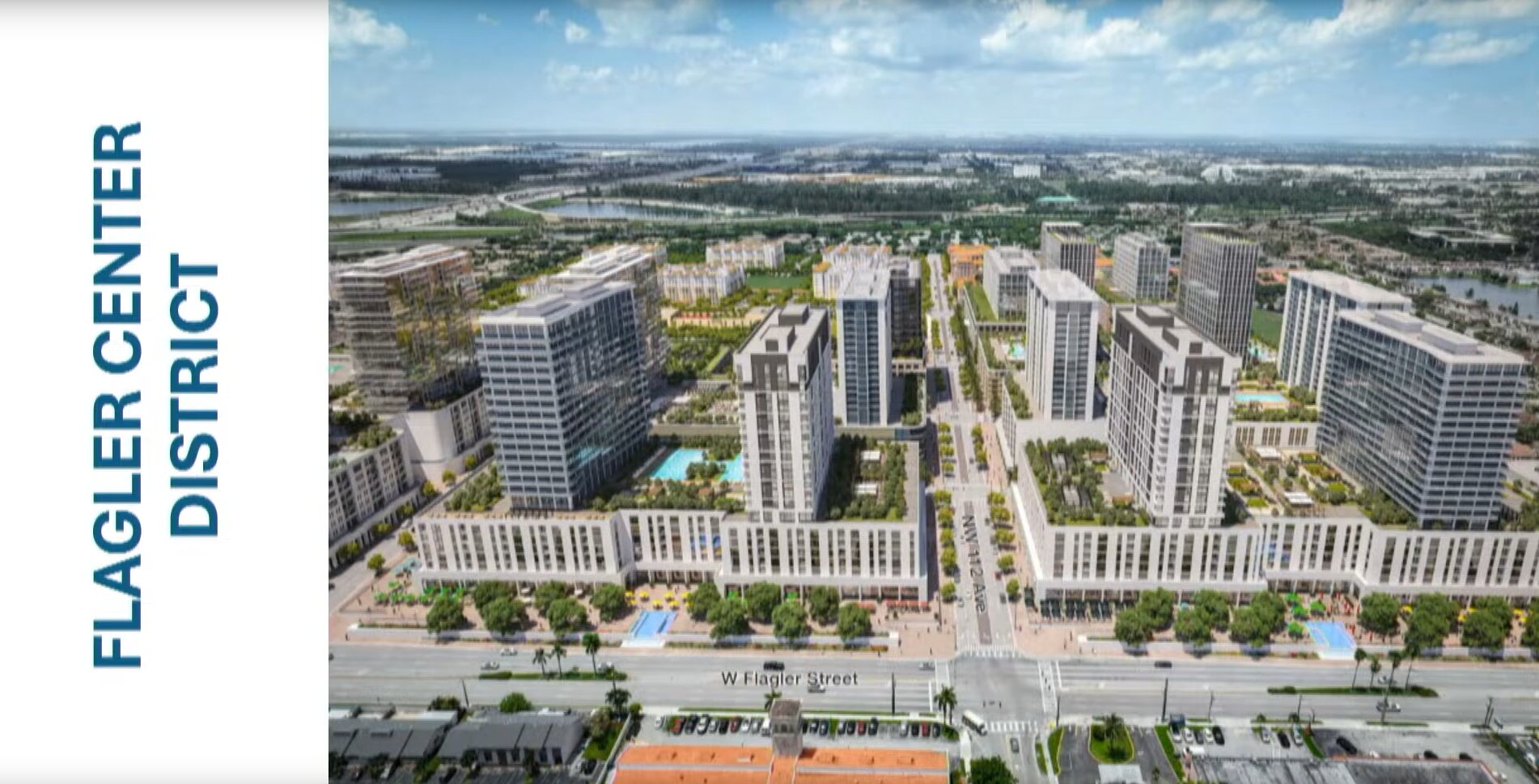
With an estimated build-out cost of roughly $4.5 billion, early site plans illustrate the sheer scale and range envisioned for the community. Housing will dominate the site, with approximately 6,000 residential units proposed. Overall density is planned to be capped at about 105 units per gross acre, a figure that means potentially larger unit formats in portions of the project. The development team has also committed to delivering at least 1,000 units designated for affordable or workforce housing, with space for senior citizens.
Beyond the residential component, the proposal calls for a minimum of 100,000 SF of non-residential space, though conceptual plans far exceed that limit. Potential uses include a hospital, with backup scenarios that could pivot to medical office space (or other uses) should a hospital operator not materialize. Additional program elements under consideration include hotel space, a new school, self-storage, and a significant retail presence expected to span hundreds of individual storefronts.
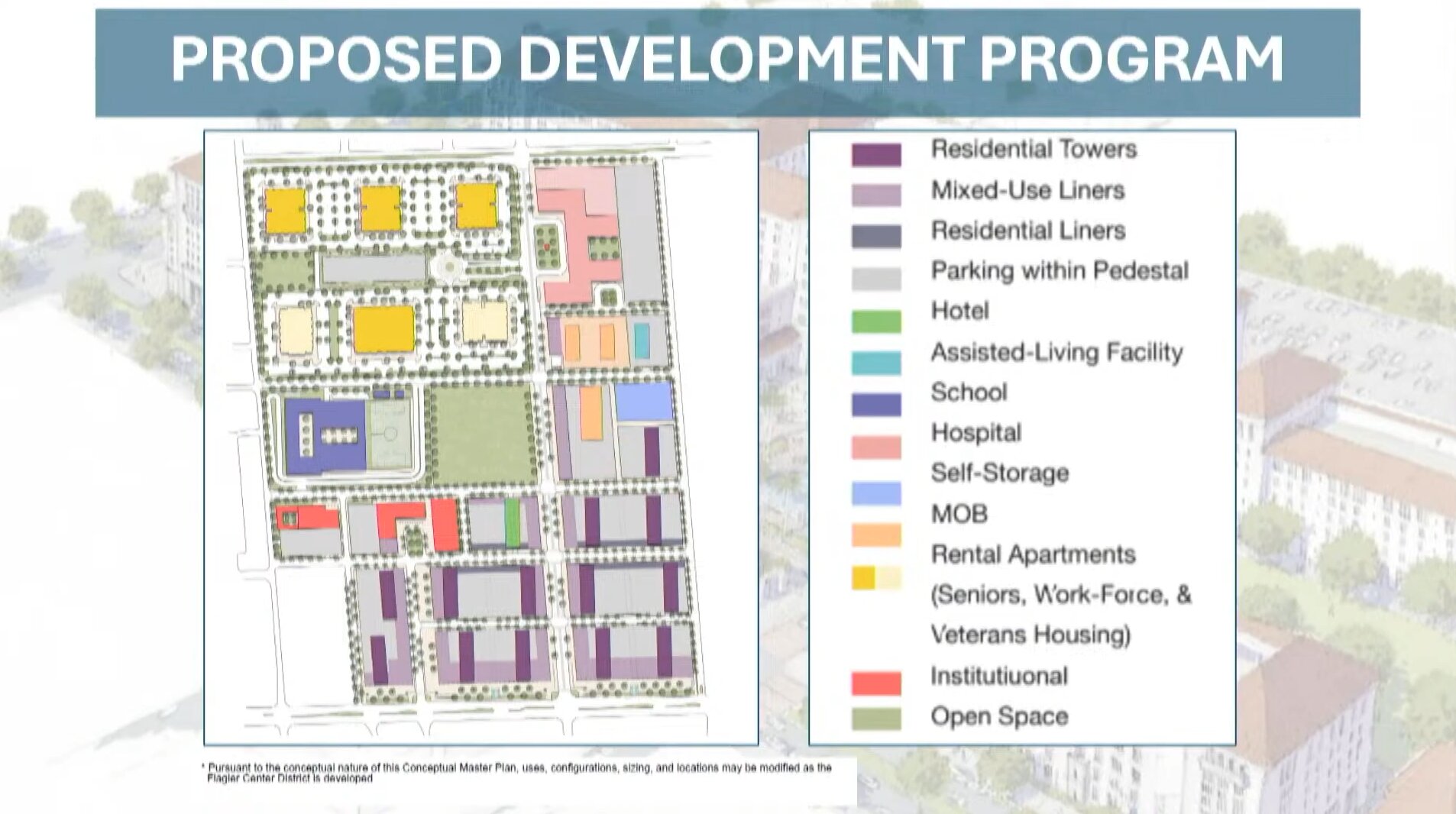
Open space will also play a role in shaping the district’s public realm. According to the applicant, more than four acres are planned for parks and community gathering areas, fit with seating, shading, and more.
As with any large master-planned project at this stage, architectural details remain in motion. Building heights have not been finalized, though preliminary plans suggest some towers could rise beyond 30 stories. Final heights will ultimately be influenced not only by local zoning but also by Federal Aviation Administration constraints tied to the site’s closeness to Miami International Airport, which could limit certain heights.
On the first meeting, held on February 9th, Sweetwater commissioners approved several foundational steps that establish the framework for the project. The most significant was the creation of a new Comprehensive Plan land-use category called the Flagler Center District, which will guide how the site is planned, including how much density can be built and how the neighborhood will function overall.
Officials also supported a request to update the city’s Future Land Use Map. The property, previously designated for mobile home and medium-density residential uses, would be re-designated under the new Flagler Center District category to allow the broader mixed-use vision.
In tandem, the developer, CREI Holdings, is seeking zoning changes across roughly 104 acres to establish the specific development rules for the site, such as building heights, parking standards, and open-space requirements. While the former mobile home park itself spans about 95 acres, the larger boundary reflects additional land, including a nearby affordable housing property that will be incorporated into the master plan.
Finally, commissioners advanced a rezoning that would replace the site’s existing designations, Trailer Park District, Interim Use, and High-Density Multifamily, with the new Flagler Center District zoning, aligning the property’s regulations with the long-term redevelopment plan.
At a second meeting held on February 13, commissioners unanimously approved the first reading of an ordinance authorizing a master development agreement for the project. The agreement outlines plans for both on-site and off-site improvements, including infrastructure upgrades and roadway enhancements tied to the development.
A master development agreement serves as a legally binding contract between the municipality and the developer, establishing timelines, performance standards, and other rules to ensure long-term consistency as the development proceeds.
Controversy and Fears of Gentrification
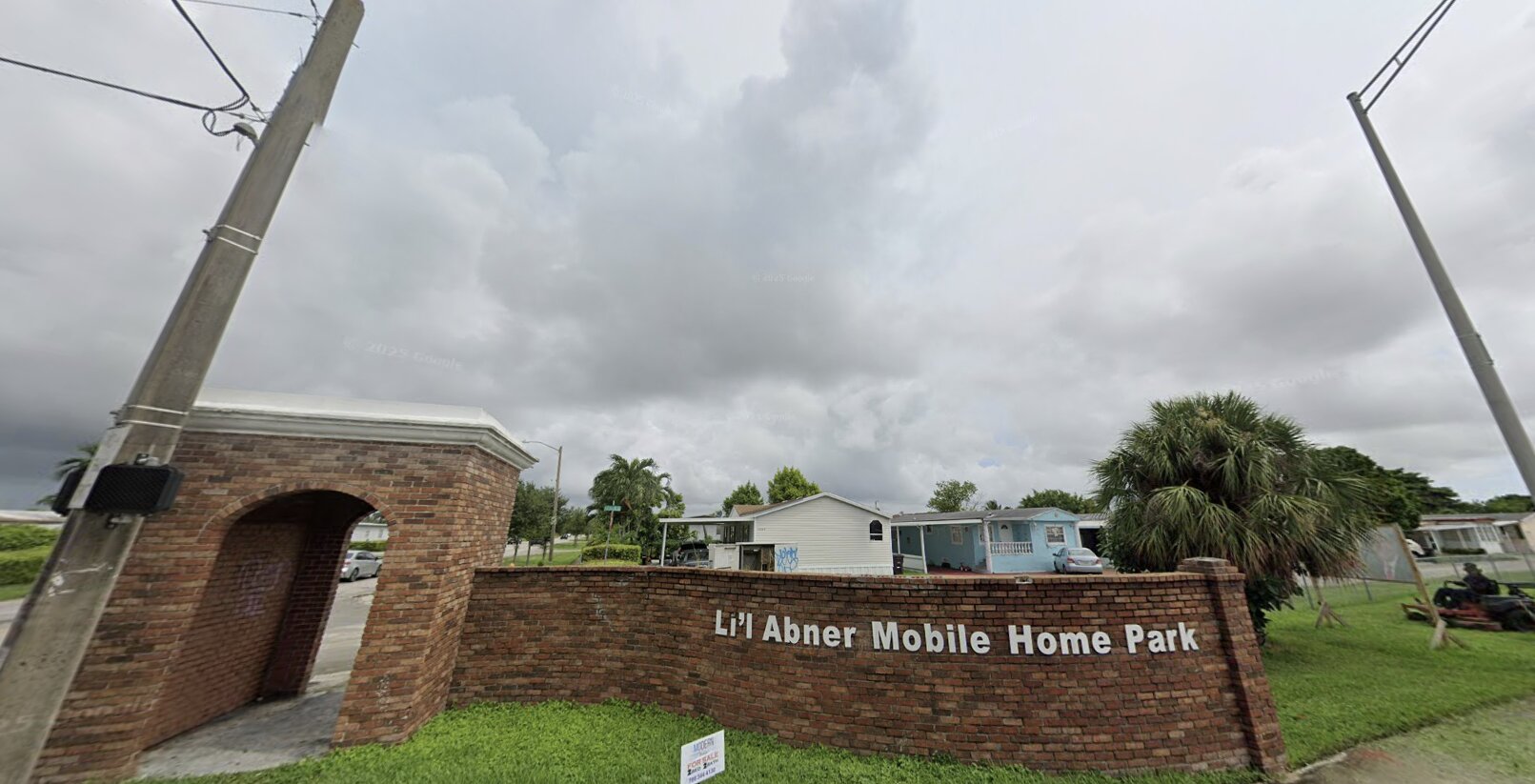
As redevelopment opportunities grow scarcer across South Florida, aging mobile home parks have increasingly become targets for large-scale communities. These properties almost always occupy large tracts of land at relatively low densities, making them attractive from a planning and financial standpoint. The former Li’l Abner Mobile Home Park was no exception. Spanning roughly 94.5 acres near Florida International University, the site was the target of redevelopment talks for some time.
The path to redevelopment, however, has been marked by significant controversy. Residents were notified that they would need to vacate within six months, with relocation payments of about $14,000 offered to those who left early. A plethora of residents argued the compensation fell well below the value of their homes, especially for households that had invested heavily in renovations. Because mobile home residents often own their structures but lease the land, their power to influence redevelopment is limited, a problem that intensified tensions as plans moved forward.
Reporting from WLRN South Florida detailed additional disputes during the site’s transition period, including allegations that demolition activity began shortly after notices were issued and before all necessary permits were secured. The property owner was also cited in connection with demolition practices involving trailers that contained asbestos, raising environmental and public health concerns at the time.
Supporters of the project argue that the redevelopment represents a long-term investment in Sweetwater’s growth. The proposed district would dramatically increase density, replacing a community of roughly 900 households, estimated at 2,000 to 3,000 residents, with about 6,000 new housing units that could accommodate approximately 12,000 people. Proponents say the plan would enhance walkability, expand the local tax base, and introduce services not currently available in the area.
City leaders have emphasized both the scale of the opportunity and the need for oversight as plans progress. Mayor Jose Pepe Diaz has described the redevelopment as one of the most consequential projects in the city’s history while stressing the importance of transparency and community engagement throughout the process.