Stock Development Files Plans for Tampa’s Tallest Skyscraper at 601 N Ashley Drive
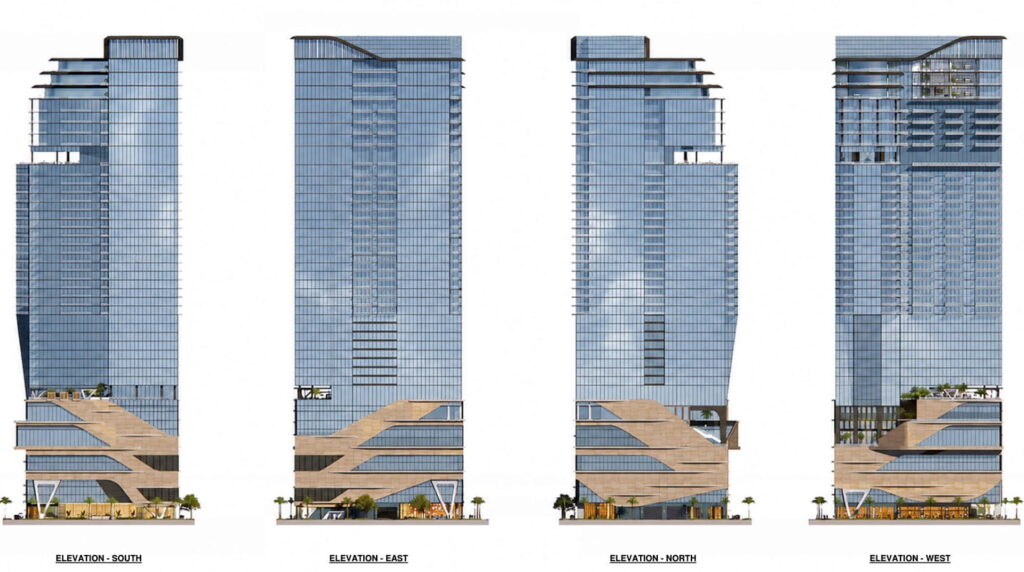
An ambitious proposal that would redefine Tampa’s skyline was unveiled today, as Florida-based Stock Development revealed plans for what would become the city’s tallest skyscraper. Rising 631 feet above downtown, the 48-story tower would eclipse Tampa’s current tallest building by a wide margin while transforming a site that has long been viewed as one of the city’s most significant redevelopment opportunities. The proposal comes just months after the demolition of the historic GTE Financial Building, a landmark completed in 1925 that occupied the property for a century. Located at 601 N Ashley Drive, the approximately one-acre site has undergone years of planning before reaching this stage. TLR Group assembled the property in 2021 and spent several years advancing its own vision for a high-rise development before Stock Development acquired the site in 2025 for $40 million, marking one of the largest property transactions in Tampa’s history. With demolition now complete, the developer has unveiled a project that would introduce more than 1 million square feet of residential and hospitality space to the downtown core. Plans submitted to Tampa’s Design District Review Board call for a mixed-use tower containing 220 condominium residences and 240 hotel rooms, alongside a variety of ground-floor hospitality uses. While the hotel operator has yet to be announced, the plans point toward a luxury brand, with accommodations ranging from king rooms and double-queen rooms to several suite configurations. The residential component would include two-bedroom, three-bedroom, four-bedroom, and penthouse residences, although both the hotel and condominium layouts are expected to evolve as the project advances through the approval process. The tower has been designed to function as two distinct uses within a single structure. Hotel guests would have access to a resort-style pool deck, spa, meeting rooms, ballrooms, restaurants, outdoor terraces, and a grand lobby, while residents would enjoy a separate array of amenities, including their own pool deck, a dog park, golf simulator, and additional recreational spaces. Rather than activating the ground floor with retail, Stock Development has instead prioritized expansive lobby spaces, amenity areas, and dedicated drop-off zones for both residents and hotel guests. Even without storefronts, the project proposes several improvements to the public realm. Plans include significantly wider sidewalks surrounding the property, along with a modernized bus stop on North Tampa Street. Beneath the tower, a 400-space parking podium would accommodate residents and hotel guests, exceeding the amount of parking currently required under city regulations. Architectural elevations prepared by Ziegler Cooper Architecture depict a modern 48-story tower organized into three distinct sections. Parking would occupy the lower levels, hotel rooms would fill the middle floors, and luxury residences would crown the upper portion of the building. At 631 feet tall, the structure would become Tampa’s tallest building by a considerable margin. The architectural elevations showcase floor-to-ceiling glass wrapping nearly the entire tower. The parking podium would be screened behind spandrel glass to minimize its visual presence, while stone accents and other contemporary materials would add depth and contrast to the facade. Although the proposal remains in the early stages of the city’s review process, several important milestones have already been reached. Earlier this year, the developer secured FAA approval for a structure reaching 635 feet, with the FAA determining that it would pose no hazard to navigable airspace. A separate application for a 687-foot tower crane remains under review, and construction timelines included in that filing indicate crane operations between July 1, 2030, and January 1, 2031, meaning groundbreaking may not occur until sometime in 2029. For now, activity on the site remains limited to demolition. Aside from the permit issued to remove the former GTE Financial Building, no vertical construction permits have yet been filed with the city, meaning the project must still navigate Tampa’s review process before work can begin.
New Interior Renderings Offer First Look at the Rays’ $2.3 Billion Stadium Planned for Tampa
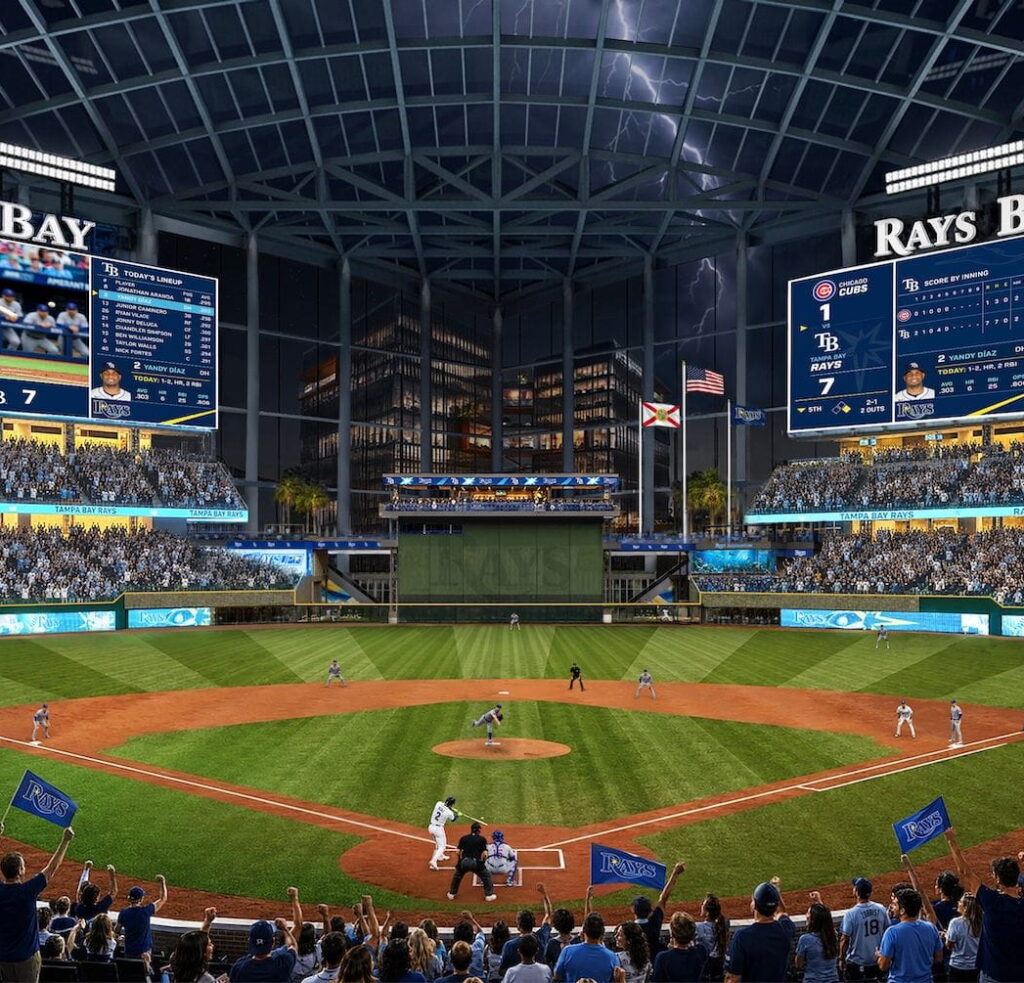
The Tampa Bay Rays have unveiled the first interior renderings of their proposed new ballpark, offering the clearest look yet at a stadium designed to blend modern technology, fan-focused amenities, and elements inspired by both Tropicana Field and Tampa’s broader cultural identity. The renderings were revealed during the fifth inning of the Rays’ 3-0 victory over the New York Yankees on a Rays.TV broadcast, showcasing five renderings for the proposed stadium. The defining feature throughout the designs is the stadium’s fixed dome, which is intended to create an indoor environment while maintaining a connection to the outdoors. Expected to seat approximately 30,000 spectators, the climate-controlled stadium will feature a partially transparent roof constructed with ETFE, a lightweight and highly transparent material commonly used in modern stadium and architectural projects. The design will allow natural light to enter the building while protecting fans and players from Florida’s heat and unpredictable weather. The goal behind the roof design is to create an experience that feels more open-air while still providing the benefits of an enclosed facility. Beyond the dome, renderings highlight several fan-focused features, including two large digital video displays, premium seating positioned closer to the field, a center-field bar overlooking the playing surface, and expanded gathering areas throughout the ballpark. One of the most recognizable features carried over from Tropicana Field will also receive a major upgrade: the Rays’ popular ray tank. At the main plaza entrance, fans will be greeted by views toward center field, landscaped open space, and a larger aquarium feature designed to showcase rays in a more prominent setting. The stadium will also incorporate elements celebrating Tampa’s history and identity, including the use of Ybor City-inspired red brick throughout portions of the design. In a statement, Rays CEO Ken Babby said the updated designs reflect feedback from fans who want a ballpark that balances tradition with modern expectations. “Ballpark design is always in motion, but we felt it was time to pause and share with our fans where we are today and anticipate going in the future,” Babby said. “What we are unveiling today is a response to what Rays fans have told us they want: a comfortable and inviting ballpark that honors the intimate connection between fans and the game, while at the same time incorporating modern amenities and design innovations that they expect and deserve.” According to the Tampa Bay Times, the Rays intend to offer a range of ticket prices to maintain accessibility for fans across different income levels. A Larger Mixed-Use District Beyond Baseball The unveiling comes several months after the Rays introduced their broader vision for the surrounding development, a mixed-use district inspired by projects such as The Battery Atlanta. The proposed redevelopment would transform the Hillsborough Community College Dale Mabry Campus site into a new destination combining sports, entertainment, housing, and commercial uses. Beyond the stadium, plans call for restaurants, retail, office space, a music venue, hotel development, residential buildings, and new educational facilities for Hillsborough Community College as part of a potential campus redevelopment. At full buildout, the stadium and surrounding district are projected to generate approximately $55.5 billion in economic impact over 35 years, create nearly 11,900 permanent jobs, and attract more than 10 million annual visitors to the area. The development would add another major destination to a region already anchored by high-volume attractions such as Raymond James Stadium and International Plaza and Bay Street. Funding and Approval Process Remain Ahead Despite the unveiling of new designs, the project still faces significant hurdles before construction can begin. The Rays must secure political approval to redevelop the publicly owned site and continue negotiations surrounding nearly $1 billion in proposed public contributions, primarily from Hillsborough County. Under the current framework, the team would fund more than half of the stadium/district costs while also covering potential construction overruns. In May, Tampa and Hillsborough County officials agreed to continue negotiations by approving a non-binding memorandum of understanding with the team. Final agreements, financing terms, and approvals have yet to be finalized. The Rays have stated their goal is to open the new stadium in time for the 2029 baseball season.
Proposed Live Nation Venue Faces Pushback Over Grand Oak in Ybor’s GasWorx District
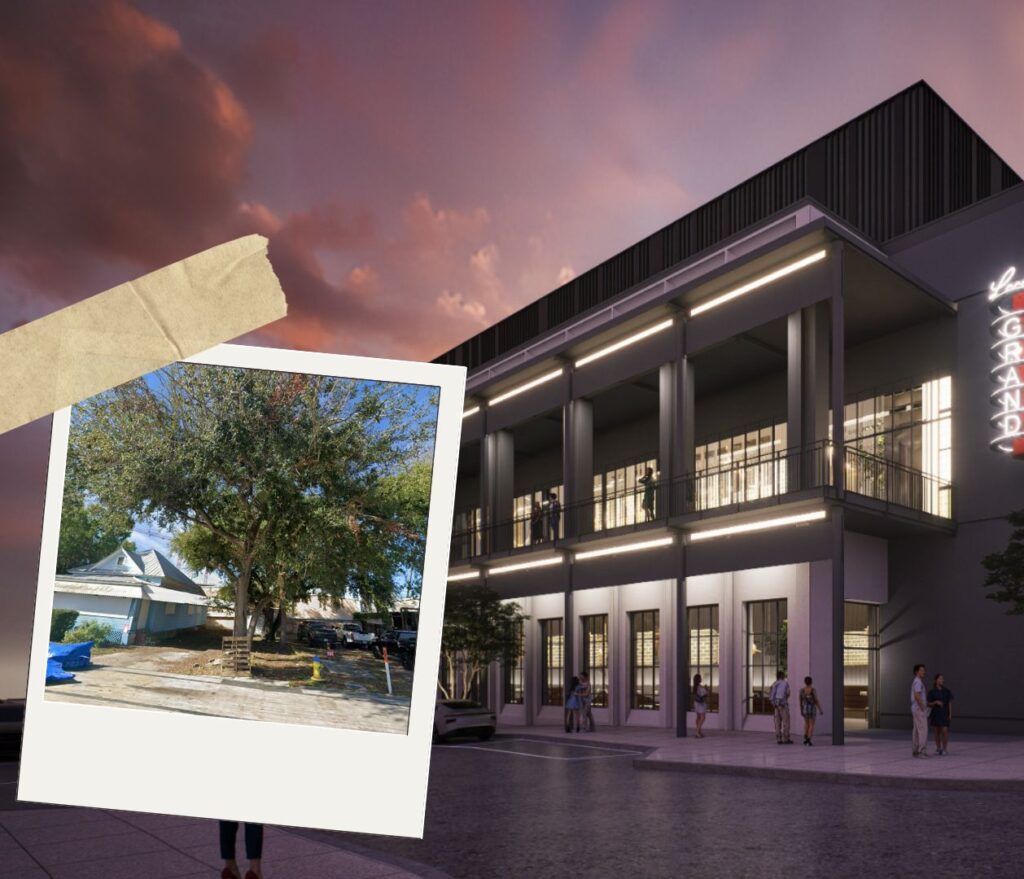
A planned Live Nation-backed music venue in Ybor City’s GasWorx district has encountered its first hurdle, as a dispute over the removal of a grand oak tree delayed approvals for the project this week. Led by Kettler and Darryl Shaw, the proposed venue is planned for 1419 E 4th Avenue and 1402 N 15th Street within the rapidly rising GasWorx neighborhood, where construction activity has accelerated in recent months. The project would replace a warehouse, a single-family home, and several trees currently occupying the site. At the center of the dispute is a grand oak slated for removal. This week, the Barrio Latino Commission reviewed both the proposed venue and a related variance seeking permission to remove the protected tree. According to the applicant, the development team has exhausted all reasonable preservation and redesign options, citing physical site constraints and Ybor City’s zero-foot setback requirements. “The test is not whether a theoretical design can be drawn,” the applicant stated in project materials. “The issue is whether preserving Tree #398 still allows a code-compliant, functional venue within the approved PD/A urban form.” Commissioners, however, challenged that assessment, saying the applicant had not sufficiently demonstrated that preservation alternatives had been fully explored. The discussion means the possibility of additional redesign work, expanded justification for tree removal, or potential code variances. These can include height increases to offset seating losses associated with preserving the oak, beyond the 65 feet allowed. The venue, first proposed last month, is planned as a roughly 4,300-seat entertainment destination operated by national concert promoter Live Nation. According to a press release, the development is projected to generate approximately $80 million in economic impact and create more than 400 jobs. Plans call for a three-story building featuring balconies, lobby space, seating areas, ticket windows, and other venue components. The design incorporates brick facades, metal balconies inspired by Ybor City’s architectural character, exposed lighting elements, and additional details intended to reflect the neighborhood’s historic identity. “Our goal is to create a venue that carries that legacy forward by adding a new destination for residents, visitors, and artists,” said James Nozar, Kettler’s president of development. “It will bring a distinct atmosphere to the neighborhood and give people another reason to experience Ybor and stay longer.” Despite the delay surrounding the tree variance, other aspects of the project have continued moving forward. The Barrio Latino Commission has already approved demolition plans for a warehouse on the site, while a single-family home located on the property is set to be relocated. A follow-up meeting on the proposal is scheduled for July 28.
Tampa Approves $35 Million for Ybor Harbor Infrastructure Upgrades Ahead of Groundbreaking
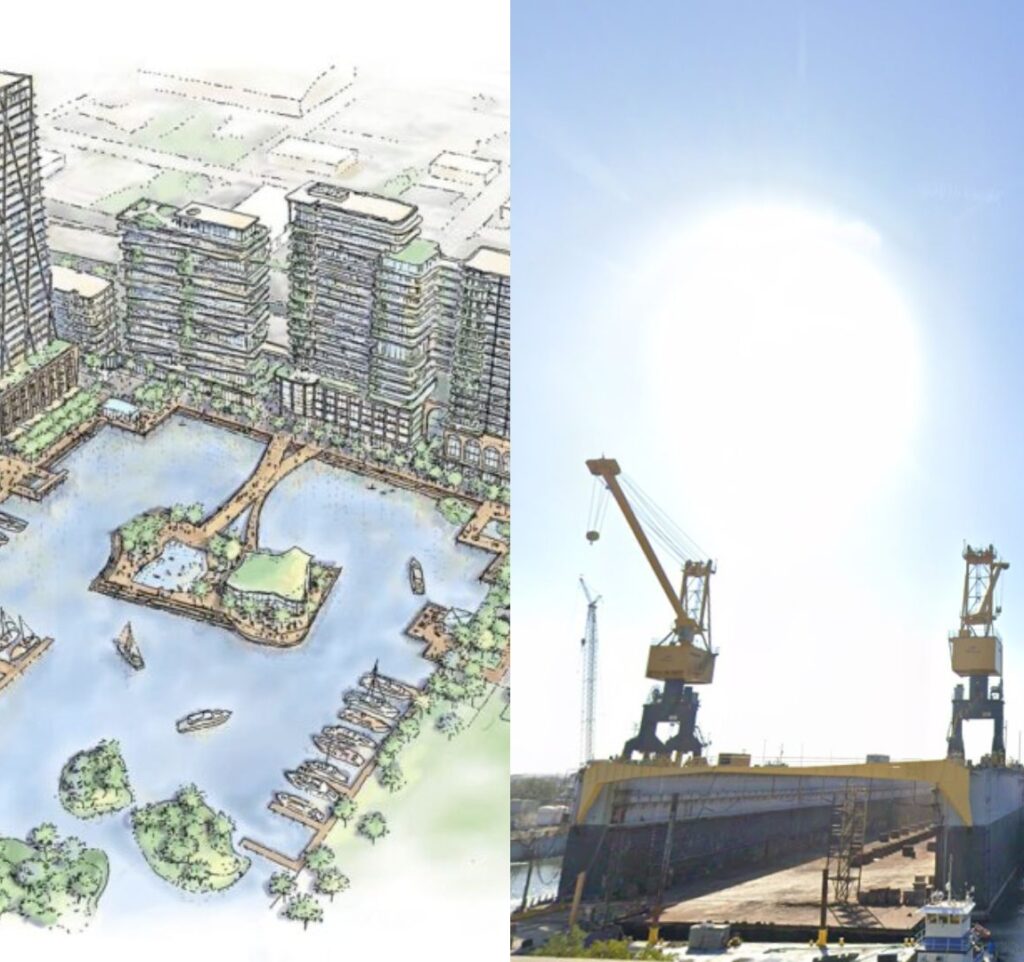
Key financing has now been secured for infrastructure upgrades tied to Ybor Harbor, a massive mixed-use development planned to replace an aging shipyard in Tampa’s Channelside district. On May 14, the Tampa City Council unanimously approved $35 million in funding for the improvements, marking another major milestone for the long-anticipated waterfront project led by local developer Darryl Shaw. The project represents Shaw’s next large-scale redevelopment effort in the urban core. Just north of the site, Shaw is already leading construction on Gasworx, a similarly ambitious mixed-use development transforming former industrial land into a dense, walkable district. The approved funding will cover only a portion of the infrastructure work ultimately required at Ybor Harbor. Total infrastructure costs are currently expected to exceed $200 million. Shaw’s team initially requested $50 million from the CRA, though staff later recommended reducing that figure to $35 million, which ultimately became the amount approved by City Council. Funding will be distributed incrementally, with $7 million allocated annually between 2029 and 2033. The financing will come through the CRA, which is intended to address blight and support redevelopment within the surrounding district. Planned improvements include upgrades to sewer and water infrastructure, sidewalks, seawalls, and other public facilities needed to support the project’s large-scale buildout. According to Tampa Monitor, the infrastructure package also includes approximately 1,100 linear feet of new public waterfront access and roughly 2,500 feet of overall outdoor public space integrated throughout the site plan. Momentum around the project accelerated last summer after plans were unveiled for a new 15,000-seat soccer stadium anchored by Tampa Bay Sun FC, the metro’s professional women’s soccer team. In addition to hosting matches, the stadium is expected to function as an entertainment venue capable of accommodating concerts, festivals, sporting events, and other large gatherings. At full buildout, Ybor Harbor is planned to include approximately 800 hotel rooms, 150,000 square feet of street-level retail space, 500,000 square feet of office space, and 4,750 residential units. Plans also call for 10% of rental units to carry rent restrictions. According to Avi Friedman Shaw, vice president of development at Darryl Shaw’s firm, the current annual tax revenue generated by the 32-acre site totals roughly $400,000 today, though projections estimate that figure could eventually exceed $47 million annually once the development is fully built out. While finalized plans for individual blocks have not yet been submitted to the city, the broader master development is continuing to advance toward construction. Groundbreaking is currently targeted for next year.
Harbour Island’s Rejected Hotel Is Coming Back at Twice the Height. This Time, Tampa Has Little Say.
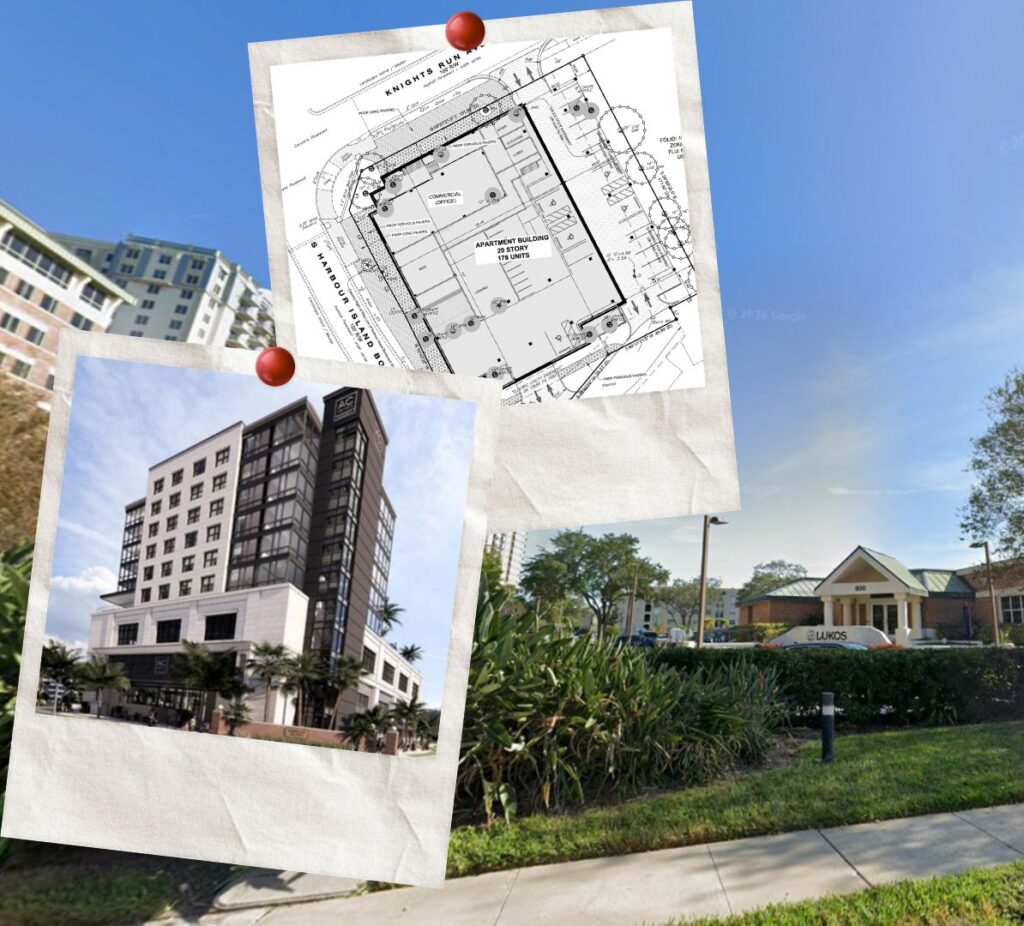
A rejected hotel project on Harbour Island is coming back, and at twice the height the city once turned down. This time, however, the Tampa City Council has little say in the matter. Liberty Group, a locally-based developer, has submitted plans for a 20-story mixed-income residential building at 800 South Harbour Island Boulevard. The shift from the original hotel concept is no accident: the project is being submitted under Florida’s Live Local Act, which mandates residential-majority developments. Underlying it all is a legal battle that could ultimately reach the Florida Supreme Court. A Law That Changes the Rules The Live Local Act, signed into law in 2023 and amended multiple times since, has emerged as one of the most important pieces of housing legislation in Florida’s recent history. The law allows developments on land designated as commercial, industrial, or mixed-use to bypass traditional zoning hurdles; and for this property, designated as PD or Planned Development, it applies. Under the Act, qualifying developers are entitled to build at the highest height permitted within one mile of their site, access the highest density allowed in the municipality, receive added floor area ratio, and benefit from parking reductions. Most importantly, projects receive administrative approval, meaning they can move forward without going before the public boards that killed the original hotel proposal. The result is a 20-story development with the possibility of zero community input. From Hotel to High-Rise Liberty Group’s history on Harbour Island has been a long one. The developer first proposed a 15-story hotel, then trimmed it to 12 stories, then to 10, each time attempting to address the concerns of a community that remained opposed. Twice in 2022, the Tampa City Council sided with residents, rejecting the developer’s rezoning and land-use requests. It’s a pattern the council has repeated elsewhere, with the most recent denial being Magnolia Court Hotel, a boutique hotel proposal in Bayshore. With those avenues exhausted, Liberty Group pivoted. By resubmitting under the Live Local Act as a residential project, the developer has effectively bypassed the council entirely, provided nothing in the project triggers a formal review. The question that now hangs over Tampa’s development community is a vital one: if a project is denied, can a developer return with something bigger and bypass the process that stopped them the first time? It is a precedent that could reshape how the city council weighs any future denial, knowing that rejection may not be the final word: just an invitation for something larger. A Legal Battle With Statewide Stakes The litigation behind this project has already upset the boundaries of local government in ways that extend well beyond Harbour Island. After the City Council’s second denial, Liberty Group sued, arguing the council had ignored its own rules in favor of political pressure. In 2024, a Hillsborough County circuit court judge dismissed the case, but not on the merits. Instead, the judge ruled that the Tampa City Council, as a legislative branch of government, lacked the legal authority to conduct the quasi-judicial hearings it has used to decide zoning and land-use matters for decades. Florida’s 2nd District Court of Appeal, however, found that the circuit court had erred, reversed the decision, and affirmed that the City Council does hold quasi-judicial authority over zoning decisions. The case has since been sent back to the circuit court for review. Liberty Group’s attorney has since indicated the matter will likely be taken to the Florida Supreme Court, where its resolution could set a precedent. What Gets Built Should the project proceed as planned, the 20-story tower is expected to reach 200 feet. The Live Local Act would technically allow the tower to rise as tall as the highest building within one mile. With 100 North Tampa, the tallest building in the city at 579 feet and sitting within that radius, the ceiling is notably higher than what is currently proposed. The development will contain 178 units ranging from one to two bedrooms. 40% of those units will be held at workforce housing rates for a minimum of 30 years, priced to remain affordable for residents earning up to 120% of the Area Median Income. Under 2025 Live Local rent limits for Hillsborough County, that translates to a maximum of $2,346 per month for a one-bedroom unit and $2,817 for a two-bedroom. The ground floor will house 17,140 square feet of office space, topped by a multi-story parking structure containing 320 spaces. No official renderings have been released, though the building is expected to feature balconies, floor-to-ceiling windows, and other design elements common to Florida high-rises. The project is currently awaiting administrative approval.
Ora Hotel and Residences Nears Groundbreaking in Tampa; Crane and Foundation Permits Filed
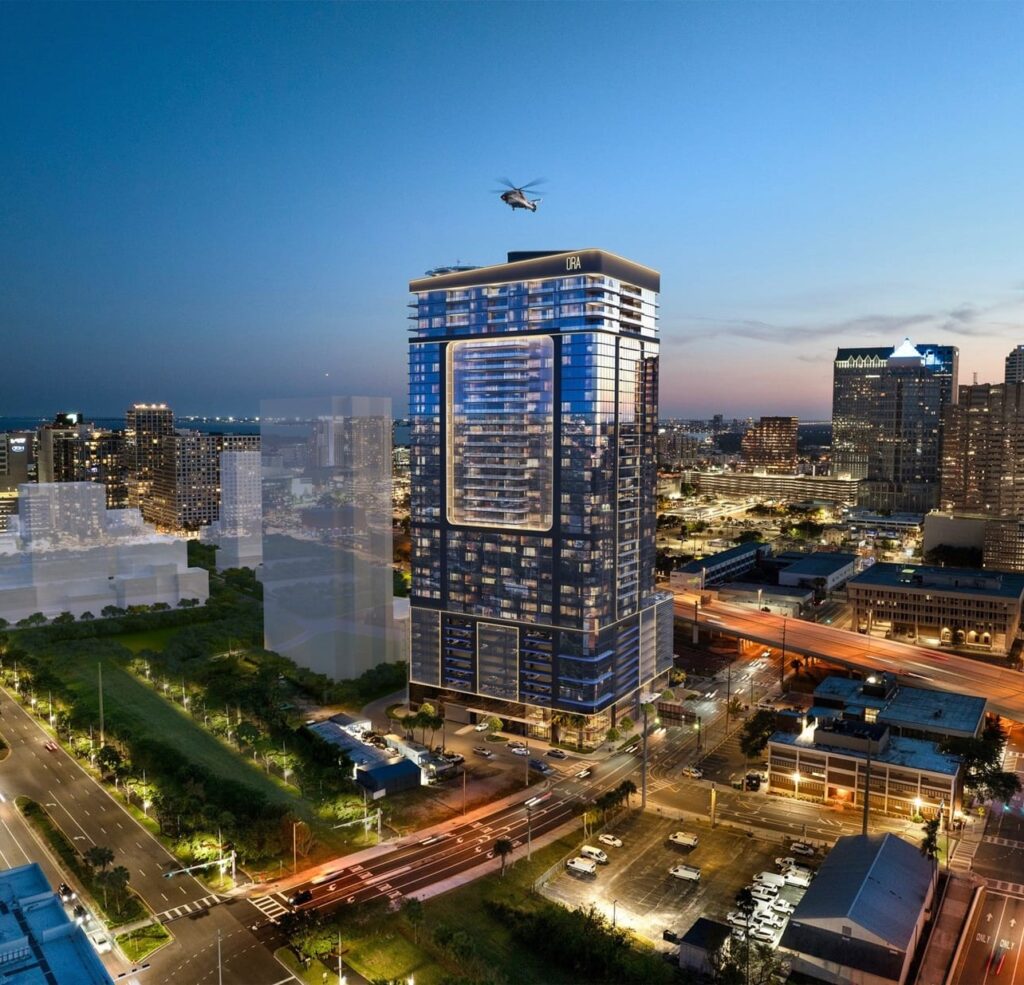
Construction is nearing for Ora Hotel and Residences in Tampa, as the city’s first condo-hotel project without short-term rental restrictions begins to show clear signs of forward momentum. Led by a joint venture between Arc Development and Prosper Group, the development team has recently filed multiple applications with the FAA for tower cranes, adding to a growing list of indicators that groundbreaking is approaching. The project, planned for a three-parcel assemblage just north of Water Street Tampa, has been in the works for several years. Earlier this year, the developers secured full control of the block fronting East Jackson Street and North Brush Street in a $22.5 million acquisition, setting the stage for construction to progress. Since then, activity behind the scenes has accelerated, with strong presales, multiple permit filings, and now crane applications all pointing toward a near-term start. Three crane permits were submitted to the FAA. One application covers a 250-foot crawling mobile crane, expected to be used for deep foundation work. That permit outlines a work window from August 1 through July 2027, meaning foundation activity could stretch close to a full year. If the current schedule holds, demolition would likely begin ahead of that, with a summer groundbreaking target. Two additional filings call for tower cranes rising significantly higher, at 532 feet and 508 feet. Those are slated for installation beginning March 1, 2027, and remaining in place until late 2029: a clear timeline for vertical construction. While all three applications are still under FAA review, approval is expected. Beyond the crane permits, the development team has also submitted a range of construction-related applications in recent months. These include a foundation permit under general contractor Kast Construction, along with utility permits, and more. According to recent filings from just a few months ago, Ora Hotel and Residences is set to deliver 658 condo-hotel units, all of which will allow short-term rentals without restriction. The project will also include 12 traditional hotel rooms, 16,000 square feet of ground-floor retail space geared toward food and beverage uses, and 550 parking spaces. Designed by Adache Group Architects, the tower is planned to rise 40 stories, reaching a height of about 465 feet. Once complete, it is expected to become the tallest building east of Tampa’s urban core, standing out prominently along the skyline: at least until future phases of Water Street Tampa begin to fill in the surrounding area. Although a groundbreaking was initially targeted for March of this year, that timeline has since slipped, with the developer now aiming for a summer start. Given the steady stream of positive indicators, that revised schedule appears increasingly likely.
Bromley Companies Files Plans for a 23-Story Residential Tower in Midtown Tampa
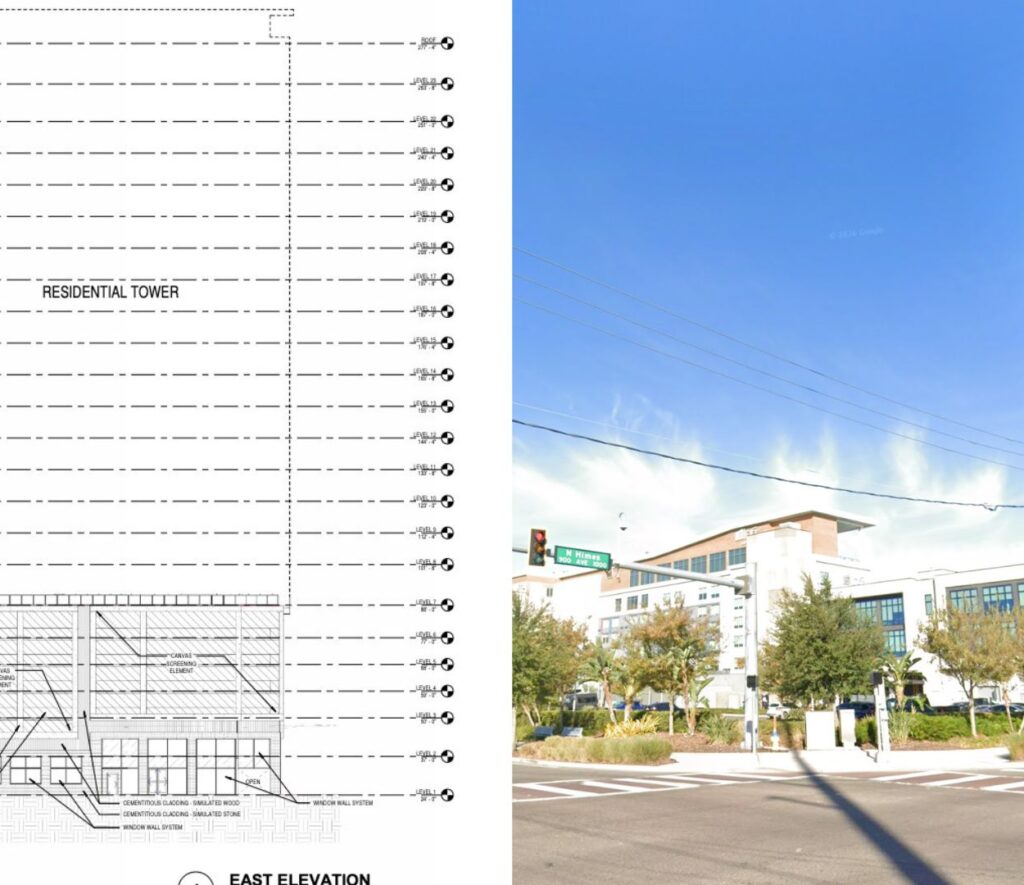
In Tampa’s Westshore district, the final undeveloped parcel within Midtown Tampa may soon give way to a new residential high-rise, marking the last major addition to a mixed-use neighborhood that has steadily taken shape since 2019. Plans were recently submitted for a 23-story tower on a 1.39-acre site at 3615 West Cypress Street, a parcel that is being used primarily for surface parking. The site sits within the broader 19-acre Midtown Tampa development, where zoning approvals for a project of this scale have already been secured, situating the project for a relatively smooth path through the city’s review process. The application comes from Bromley Companies, which has played a central role in shaping Midtown Tampa, including the recent completion of an 18-story office building that now serves as the headquarters for TECO. While Bromley is listed as the property owner, the development lists the developer as B-W MTS, LLC, an entity associated with MTS Securities. According to preliminary plans, the project, referred to as Midtown South Tower, will deliver 339 residential units. The unit mix includes 15 efficiency apartments, 296 one- and two-bedroom units, and 28 larger residences with three or more bedrooms. Full details on amenities have not yet been released, though the scale of the building suggests a comprehensive residential offering. In addition to housing, the tower will incorporate 10,481 square feet of retail or co-working space on levels one and two, activating the street level along Bromley Grand Avenue within the development. In contrast, the project’s parking structure will be oriented toward West Cypress Street, where portions of the garage will remain visible. The development includes 546 parking spaces, slightly below the 553 spaces required under code. However, the developer notes that Midtown Tampa as a whole maintains a surplus of parking capacity, which could be used to offset any shortfall at the site if necessary. Early elevations by Rule Joy Trammell + Rubio Architecture indicate the tower will rise 253 feet to the roofline and roughly 270 feet at its highest architectural point. Design details remain limited, although the parking podium appears more articulated. Plans show a mix of windows, artistic canvas screening elements intended to cover the structure’s podium, and sections of exposed garage. With rezoning already in place, the proposal is now moving through the city’s approval process, where it is expected to advance as the final piece of a development that has come to define Tampa’s evolving Westshore skyline.
Construction Advances on Hub Tampa Fowler & The Mark Tampa, Set to Add 2,000 Beds Near USF
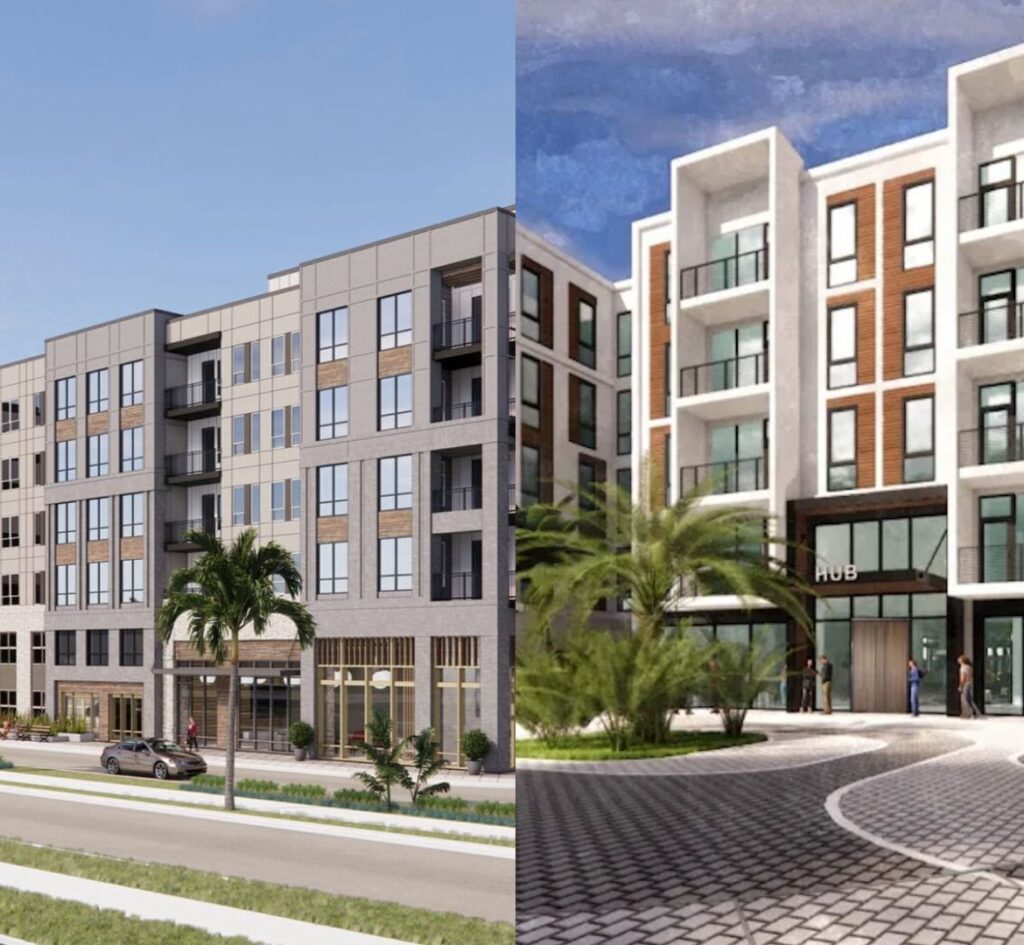
Student housing development is accelerating near the University of South Florida, where two large-scale projects are now rising within close proximity of one another. Hub Tampa Fowler and The Mark Tampa are both under construction just steps apart, and together are expected to deliver roughly 2,000 beds to the area between 2027 and 2028. Hub Tampa Fowler, developed by Core Spaces and Harrison Street, is further along and targeting an early 2027 completion, while The Mark Tampa by Landmark Properties, is projected to follow with a delivery in late 2027 or 2028. The surge in development comes as demand for off-campus housing continues to grow. The University of South Florida has seen rising enrollment in recent years, including a historic incoming class in fall 2025, which increased by 14%. As housing supply tightens, private student housing developments are stepping in to help accommodate the expanding student population. Hub Tampa Fowler Now topped out, Hub Tampa Fowler has entered its exterior buildout phase, with window installation and facade work actively progressing. Portions of the building are already clad in the project’s signature white paneling with wood-toned accents, a design language carried over from the developer’s earlier Hub Tampa project nearby. Installation of balconies is also underway, with structural supports in place; the balconies are expected to feature wood supports paired with metal railings. Juneau Construction is serving as the project’s general contractor. While the residential structure rises five stories, the development also includes a separately constructed seven-story precast concrete parking garage. This construction method is typical for large housing projects due to its cost efficiency and speed of assembly. The garage will provide 758 parking spaces, supplemented by an additional 66 surface spaces located to the west of the site, bringing the total to 824 spaces: well above the 715 spaces required under county code. Located at 12301 Club Dr, Hub Tampa Fowler is being developed by a Chicago-based joint venture between Core Spaces and Harrison Street. According to recent filings with Hillsborough County, the project will include 396 units configured for approximately 1,250 beds. Unit types will range from efficiencies and one-bedroom layouts to larger two-, three-, four-, and five-bedroom configurations. Residents will have access to a range of amenities, including a ground-floor fitness center, a resort-style pool with adjacent lounge areas, and a central courtyard, among other shared spaces. Elevations prepared by Northworks indicate the building will rise to approximately 60 FT to the roofline, or about 72 FT when measured to the top of the parking structure. While the height is consistent with other nearby student housing developments, the project’s overall scale is notable. The development spans approximately 702,361 SF, composed of roughly 450,000 SF of interior space and over 250,000 SF dedicated to the open-air parking structure. The Mark Tampa The Mark Tampa, developed by Landmark Properties, is now in the vertical construction phase, with significant progress visible across the site. Crews are actively assembling the project’s precast concrete parking structure, which will ultimately accommodate 522 structured parking spaces. An additional 123 surface spaces are planned around the perimeter, bringing the total parking count to 645. The building’s vertical cores are rising along the eastern portion of the site, with concrete structural columns for the lower residential levels taking shape. Work is progressing upward as the second level begins to take shape. The building will feature a traditional 5-over-1 construction method, with the first floor being concrete and the subsequent floors constructed with wood. The project team includes Landmark Construction, an affiliate of the developer,serving as general contractor, alongside Bohler Engineering and Dwell Design Studios as the architect. Project materials and leasing information have also begun to surface online, highlighting an extensive amenity package. Planned features include a resort-style pool deck, clubhouse, sports simulator, sauna, multiple courtyards, a fitness center, and dedicated study and computer lab spaces. At full buildout, The Mark Tampa will deliver 215 units configured for 807 beds, with a mix of studio through five-bedroom layouts. Residences are expected to include in-unit laundry, laminate flooring, quartz countertops, high ceilings, and private balconies in select units. In addition to residential space, plans call for approximately 988 SF of ground-floor retail, along with a large lobby and shared common areas. The six-story structure will rise to approximately 79 FT at its highest point, with a facade composed of expansive glazing and a mix of blue, cream, and brown facade materials.
Construction Advances at Three Major Development Sites in Downtown Tampa
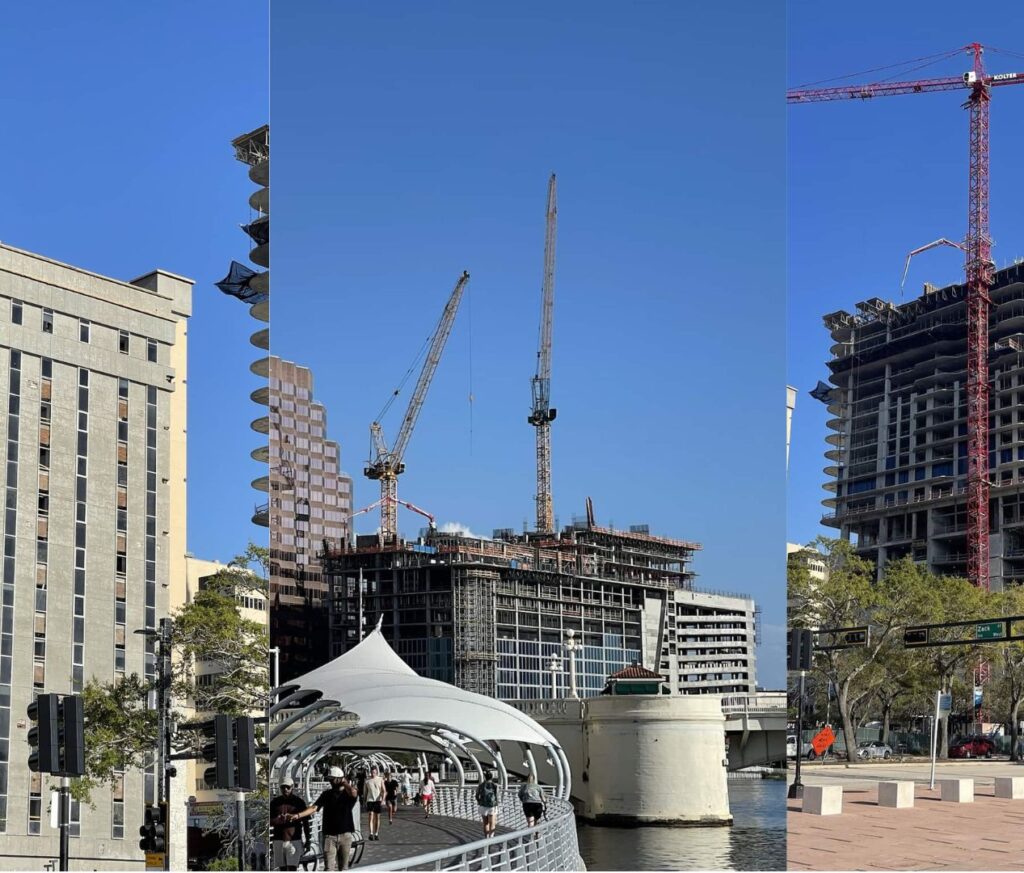
Downtown Tampa is experiencing one of the most significant development waves in its modern history. The skyline is currently dotted with a high concentration of cranes for high-rise projects, an intensity of construction not seen since the late-2000s cycle. Among the most prominent projects reshaping the urban core are One Tampa, Pendry Residences Tampa, and a future tower planned by Stock Development. Together, the announced developments are expected to add roughly 425 condominium units and 220 hotel rooms to downtown, not including details from Stock Development’s still-unreleased project. These three towers occupy closely aligned sites along North Ashley Drive near the Hillsborough River. Pendry Residences Tampa is rising at 111 South Ashley Drive, while One Tampa is under construction at 507 North Ashley Drive. Just north of both sites, Stock Development controls 601 North Ashley Drive, where demolition is currently underway following the company’s $40 million acquisition of the property. The site was previously owned by TLR Group, which had proposed a roughly 540 FT tower that went through several design iterations before ultimately being shelved. As Tampa’s skyline continues to evolve, new photos highlight the rapid progress of several major projects now reshaping the downtown core. One Tampa According to photos taken by Floridian Development, One Tampa has reached its 24th floor, with the structure rising at a pace of roughly one new floor per week. The pace has accelerated since the project’s foundation and the large parking podium, spanning approximately 10 floors, were completed. Window installation is now underway on the lower residential floors, while exterior treatments for the podium will be installed at a later stage of construction. One Tampa’s podium will feature a distinctive mesh screening incorporating artistic patterns designed to provide both visual interest and ventilation for the parking levels. The podium will also incorporate a reconstructed historic facade as part of an agreement with the City of Tampa. The original structure at 520 North Tampa Street was built in the 1920s and later demolished to make way for the tower. As part of the development agreement, Kolter Urban committed to reconstructing an interpretive version of the building’s facade along N Tampa St and E Twiggs St. Work on that reconstruction is currently underway. The portion of the podium where the historic facade will appear is currently covered with a concrete backing, which will later be clad with brick detailing and window elements designed to replicate the appearance of the original building. One Tampa is set to include 225 residential units, along with 464 parking spaces and 5,000 SF of ground-floor retail. The tower will ultimately rise 44 stories, reaching a height of about 494 FT. The project is being developed by Kolter Urban, Adache Group Architects is serving as the architect, and Moss Construction is the general contractor. Pendry Residences Tampa Pendry Residences Tampa has recently begun vertical construction on its first residential floors following completion of the tower’s 11-story podium and two amenity levels on floors 12 and 13. Crews are now working on the 14th and 15th floors, marking the start of the residential portion of the building. Similar to One Tampa, construction has accelerated after an extensive foundation phase, which included some of the deepest piles installed in Florida, and the completion of a podium spanning the full length of the site. With that work finished, the tower is now rising at a pace of roughly one floor per week. Pendry Residences Tampa is taking shape as a prominent tower along the Hillsborough River, with a footprint that will make it the widest skyscraper in the city. The waterfront hotel portion of the podium, anchored by the Pendry brand and planned to include 220 hotel rooms, is currently being enclosed in glass. Meanwhile, the garage section of the podium is slated to be finished with vertical metal louvers. This design reflects a modification by the developer: earlier plans incorporated greenery between the louvers, but the revised design removes that element in favor of a simpler black-and-white finish. Pendry Residences Tampa will introduce 200 luxury condos, 220 hotel rooms, and approximately 5,000 SF of retail space to the heart of Tampa. The 38-story, 444-FT-tall development will also feature a podium with 656 parking spaces. Arquitectonica is serving as the project’s architect, while Two Roads Development is the developer and Coastal Construction Group is acting as the site’s general contractor. 601 North Ashley While full development plans have not yet been announced for 601 North Ashley Drive, Stock Development is continuing demolition work on the existing structure occupying the site. The property was previously home to the 12-story GTE Tower. The office building has origins dating back to the 1920s but was later heavily modified, including the addition of a stucco exterior that concealed much of the original brick facade. The building most recently housed a branch of GTE Financial, which has since vacated the premises. Demolition crews are now stripping away the building’s modern exterior, leaving behind a gray structural shell where sections of the original brick occasionally emerge beneath the removed cladding. Windows are also being removed throughout the structure. Much of the facade along the west, south, and north sides has already been cleared, while the eastern elevation remains partially covered by scaffolding as work continues. According to permitting records, demolition is being carried out by D.H. Griffin Wrecking Company and includes the removal of the existing structure, basement, and foundation. Reporting from roughly two months ago indicated that Stock Development may consider utilizing development plans previously submitted by the TLR Group under its former ownership of the site. Those earlier plans called for a 540 FT tower containing approximately 600 residential units, along with 68,000 SF of office space and 12,000 SF of retail. The proposal also included a large parking podium featuring circular cutouts and capacity for up to 985 vehicles.
Foundation Permits Filed for Channelside’s Largest Hotel at 111 N. Meridian Avenue
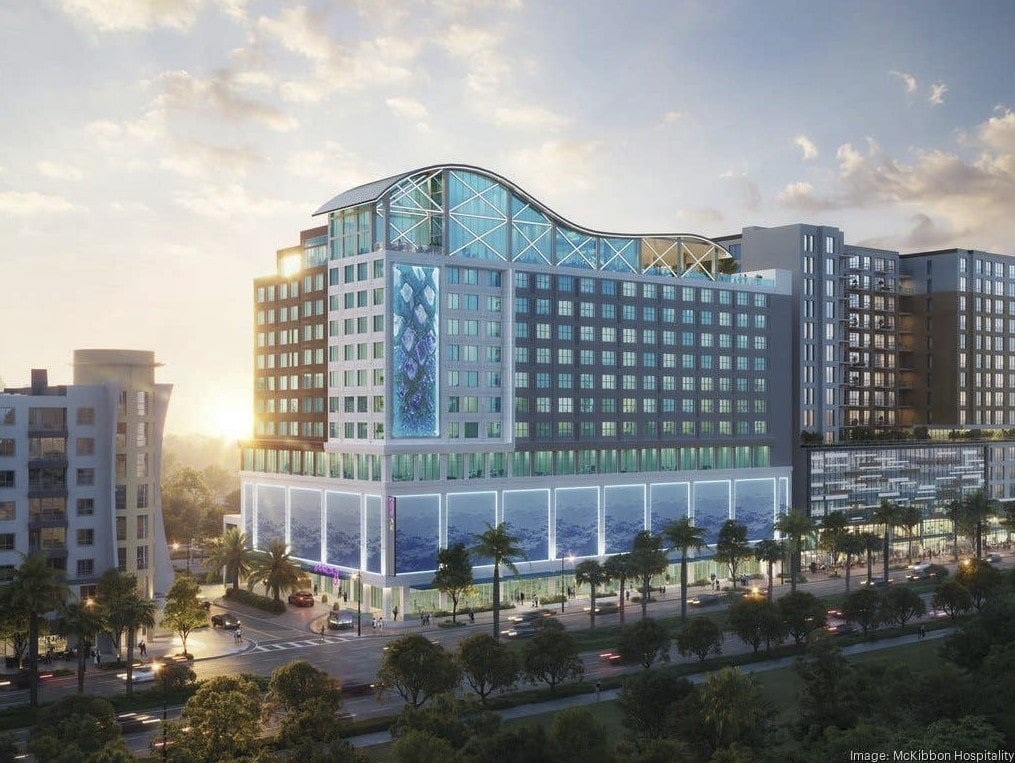
Channelside’s largest hotel project is moving closer to construction in Tampa, following the recent submission of foundation permits to the city. Led by McKibbon Hospitality, the development is planned as a dual-flag hotel featuring both AC Hotel and Moxy, brands operated under the Marriott International umbrella. Planned for 111 N. Meridian Avenue, the 13-story hotel would add a modern presence to the Channelside district. Designed by Atlanta-based LPB & Associates, the project has advanced quickly, with the recent permitting activity marking the latest step in a months-long process that included rezoning approval from Tampa City Council just a few months ago. McKibbon Hospitality acquired the 0.74-acre site for approximately $9.3 million in early 2025. The property was previously slated for a self-storage facility by UDR, though those plans were abandoned after only the residential component of the masterplan was completed. Once delivered, the hotel will become the second in the immediate area, following the opening of a nearby dual-flag hotel at N. Meridian Avenue and Kennedy Boulevard in 2019. The site is currently cleared following earlier site preparation and demolition work completed under the property’s previous developer, UDR. The newly submitted permit is limited in scope, covering drilled piers and concrete footings for the tower’s foundation, with designs helped by recent surveying and geotechnical work. Given the scale of the project, measuring roughly 280,000 Gross SF, the development is subject to additional structural and safety reviews to meet code requirements. A construction contractor has not yet been identified yet. However, multiple firms are listed on the application, including Bohler, which is serving as the project’s civil engineer. Plans filed with the city indicate the hotel will include 310 guest rooms, When first reported by the Tampa Bay Business Journal, the room count was broken down into 175 rooms under the AC Hotel brand and 135 rooms under Moxy, a configuration that appears unchanged in the latest filings. Parking plans have also evolved since early reporting. Initial concepts called for just 57 spaces, but updated civil plans now show a significantly increased parking program. The project is currently proposed to include 202 parking spaces, a figure more realistic considering the size of the parking podium and the number of hotel rooms listed previously. At street level, the hotel will include an AC Lounge, a retail space, and a main reception area. Overall, the project is planned to deliver approximately 25,000 SF of commercial space, consisting of roughly 14,000 SF of retail and 11,000 SF dedicated to restaurant uses, according to the latest plans. A designated drop-off area for valet and parking will be located along East Washington Street. The hotel will feature a facade composed of light and dark blue tones, accented by white and gray finishes across stucco surfaces and impact-resistant glass. A distinctive crown, defined by a sloped roofline, will cap the structure. According to the developer, the building is expected to rise approximately 179 FT to its tallest point. The foundation permit is still pending approval and represents the only construction permit applied for the site thus far. McKibbon Hospitality had previously targeted a February 1, 2026 groundbreaking; however, with the permit submitted on January 26, meeting that timeline appears unlikely unless the event is ceremonial. However, a 2026 start for vertical construction remains very much on the table and continues to look probable.