Partnership Proposes 6-Story Multifamily Building in South Miami at 6230 SW 69th Street
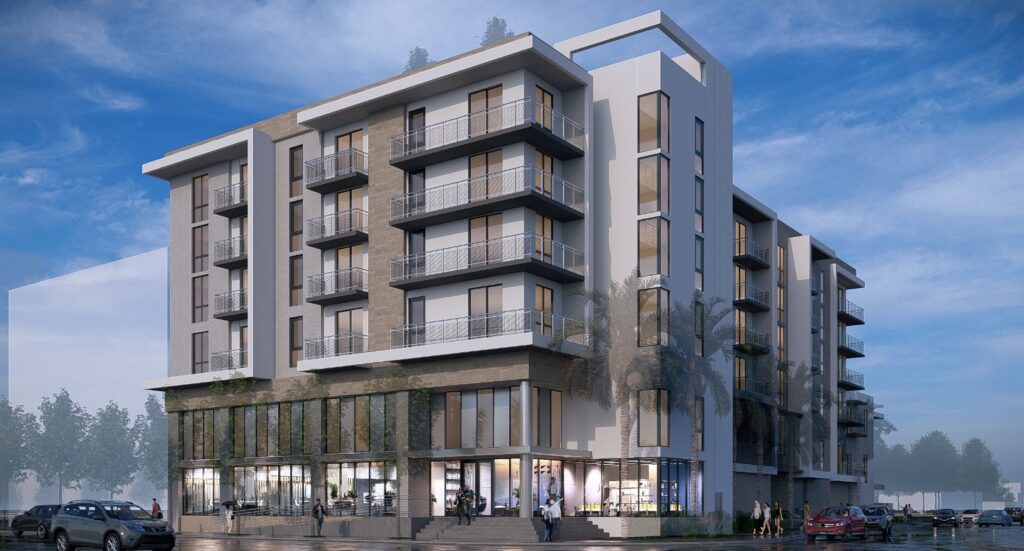
A South Florida–based development team has submitted plans to the City of South Miami for a new multifamily project. Led by The Estate Companies in partnership with MAS AJP, the proposal calls for a multi-story residential building designed by Caymares Martin Architecture. The project is scheduled for review by the South Miami’s Design Review Board on January 6th, and would deliver 75 residential units on an assemblage spanning nearly one acre. The site is located at 6230 SW 69th Street, in proximity to Downtown South Miami and nearby single-family neighborhoods. The assemblage is comprised of four parcels, with two owned by SOUTH MIAMI RE PARTNERS LLC and two by 6201 SREI 99 LLC: entities associated with The Estate Companies and MAS AJP respectively. All four properties were acquired for a combined $3.5 million in early 2023, with two of the parcels subsequently transferred to The Estate Companies as part of the development partnership. According to plans submitted to the city, the development will include 7 studio units of 500 SF, 14 one-bedroom units ranging from 600 to 650 SF, 28 one-bedroom plus den units between 700 and 750 SF, and 26 two-bedroom units spanning 800 to 850 SF. Residents will have access to a variety of amenities, including a swimming pool, a rooftop deck, an 890 SF amenity room on the third floor, and a spacious ground-floor lobby. Parking for the development will total 128 spaces, including 4 on-street spots. Unusual for a Florida project, one floor of the parking will be located underground. The parking podium, spanning from the ground floor to the second level, will be largely hidden by the building’s units. With 128 spaces, the development provides a parking ratio exceeding 1:1 for residents. Caymares Martin Architects, a frequent collaborator with The Estate Companies, is leading the design for this project. The building will showcase a modern aesthetic, featuring gray and white color tones accented by ceramic wall tiles that mimic the appearance of wood. According to submitted elevations, the development will rise 82 FT from the sidewalk to its tallest point, measuring six stories. While an official name hasn’t been announced, The Estate Companies often uses the “Soleste” brand for their multifamily projects, meaning this development will likely be coined ‘Soleste South Miami’. Developers have quickly turned their attention to South Miami, an area that has traditionally been overshadowed by higher-density development hubs like Coral Gables and Miami. Just a few days ago, AvalonBay Communities proposed Avalon South Miami II, a 16-story residential tower in the heart of the city. AvalonBay isn’t the only developer active in the area, plans were also submitted last year for a full redevelopment of Sunset Place, which would include towers set to become the tallest South Miami has ever seen.
Related Group Resubmits FAA Permits for 444 Brickell, The First Signs of Life in Years
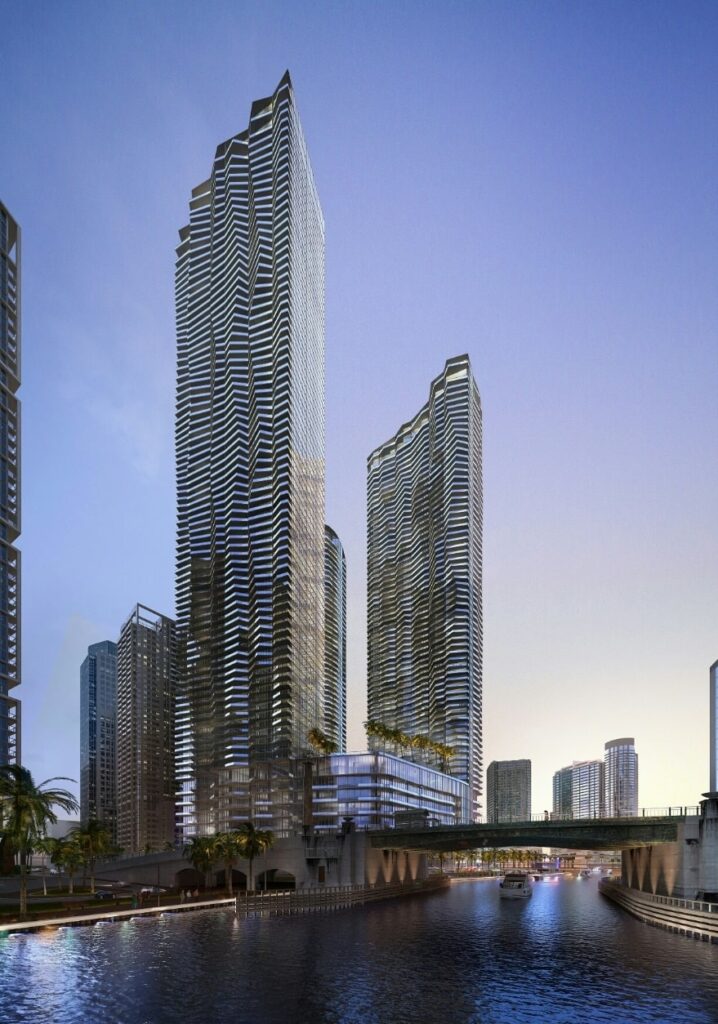
Signs of life have recently emerged for Related Group’s long-delayed third and final tower at One Brickell. New filings with the Federal Aviation Administration showcase refiled height permits for an 897 FT tower at 444 Brickell Avenue, the clearest indication in years that the developer is preparing itself to advance the final phase of the three-tower master plan along the Miami River, after years of uncertainty tied to archaeological discoveries. The 444 Brickell site has remained dormant amid prolonged archaeological review and preservation debates, following the discovery of expansive Tequesta artifacts and human remains during excavation of the adjacent parcels (where Baccarat Residences and Viceroy Brickell are now under construction). The FAA application was submitted after the permits filed in 2022 expired, which means the tower’s height remains unchanged at 897 FT above ground (901 FT above mean sea level). These updates are largely procedural, as the 444 Brickell site has been designated an Archaeologically Significant site to ensure the protection of historic artifacts and human remains uncovered during previous excavations. The designation does not prevent Related from moving forward with construction, since the developer holds vested development rights granted before the discovery of Tequesta artifacts and human remains. However, any major changes to the project beyond the current plans (such as changes in height/design) would require a resubmission, which could trigger additional review, public debate, and extra costs: outcomes Related would likely want to avoid. The designation does, however, require Related to carefully manage all archaeological materials, including their excavation, documentation, storage, and potential public display. Miami’s Historic & Environmental Preservation Board has the right to review and provide recommendations on how these artifacts are handled. In other news, Related told the Miami Herald in late 2024 that the existing office tower at 444 Brickell, which currently stores archaeological artifacts in certain rooms, is not expected to be demolished until at least 2028. The developer has indicated that portions of the artifacts will be incorporated into the project’s design, following the approach used in the Riverwalk for the towers already under construction. These spaces include planned homages to the Tequesta Tribe, such as exhibition areas. While updated plans have not been publicly released, a 2015 Miami River Commission submission (one of the last public files available) indicates that Tower 3 was planned to contain 420 units, designed by Arquitectonica, and intended to rise 80 floors.
Mill Creek Residential’s Modera Aventura South Development Enters Vertical Construction in Ojus
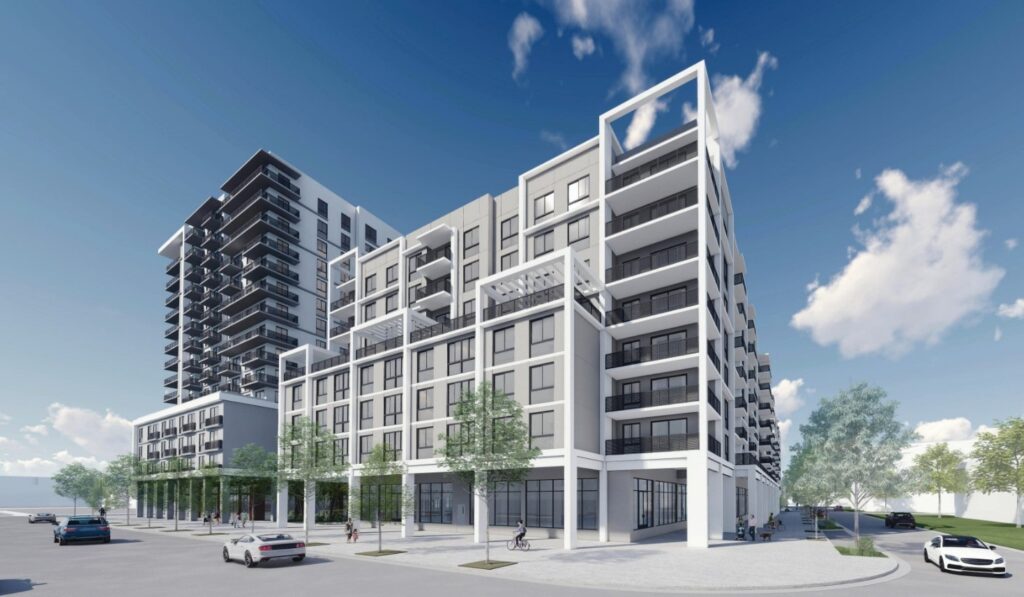
Mill Creek Residential has recently entered the vertical construction phase of Modera Aventura South, a nine-story high-rise planned in northern Miami-Dade. The project, which is the second phase of the Modera Aventura development, is rising at 2681 NE 191 Street in Ojus near Aventura. The milestone follows the recent completion and preleasing of Modera Aventura North, and marks the next step in a multi-phase residential buildout reshaping the corridor. Rising nearly half the height of its sister development, Modera Aventura South will top out at 9 stories compared with 15 for Modera Aventura North, and is expected to welcome its first residents in fall 2027. The project, which broke ground earlier this summer, will deliver 251 units, complementing the 420 homes completed in the first phase. According to a LinkedIn post by Mill Creek superintendent Louie Forte, Modera Aventura South poured its first foundation just three weeks ago, totaling more than 400 cubic yards of concrete. Construction has since advanced to the structure, with first-floor columns beginning to rise about a week ago. Mill Creek Residential is overseeing construction in-house, serving as both the developer and general contractor for the project. Modera Aventura South, once complete, will feature a range of units from one-bedroom to three-bedroom floorplans, with sizes spanning ranging from about 700 to nearly 1,400 SF. The development will provide residents with a large array of amenities, including a swimming pool with lounge areas, a sky terrace, a clubhouse, a spacious lobby, a fitness center, co-working spaces, and additional shared amenities. The development will also include 2,572 SF of retail space at the corner of Harriet Tubman Highway and NE 191st Street. Residents and retail patrons will have access to a total of 444 parking spaces, slightly fewer than the 600 spaces provided in Phase One. This total includes 438 garage spaces and 6 on-street spaces, ensuring at least one space per unit. When Floridian Development first touched on Modera Aventura South, the project had been reduced from the originally envisioned 15 stories to 8. Since that time, however, the developer has increased the building’s height to nine stories by introducing an additional floor toward the east side of the structure. Designed by Corwil Architects, the development will feature a contemporary architectural palette dominated by white and gray tones, assisted by abundant greenery, metal balconies, large windows, and a mix of stucco and concrete finishes. According to building elevations released earlier this year, which reflect the final plans submitted to Miami-Dade County, the structure will rise approximately 107 FT. Development activity in Ojus has reached an all-time high. Located just steps from a Brightline station and within close proximity to Aventura Mall, the area has seen a surge of new office, mixed-use, and residential proposals in recent years. Most recently, The Housing Trust Group (in partnership with AM Affordable Housing) completed construction on Oasis at Aventura, a 95-unit affordable apartment community located in Ojus.
Dulce Vida Advances Toward Groundbreaking Following Key $35 Million Financing Secured
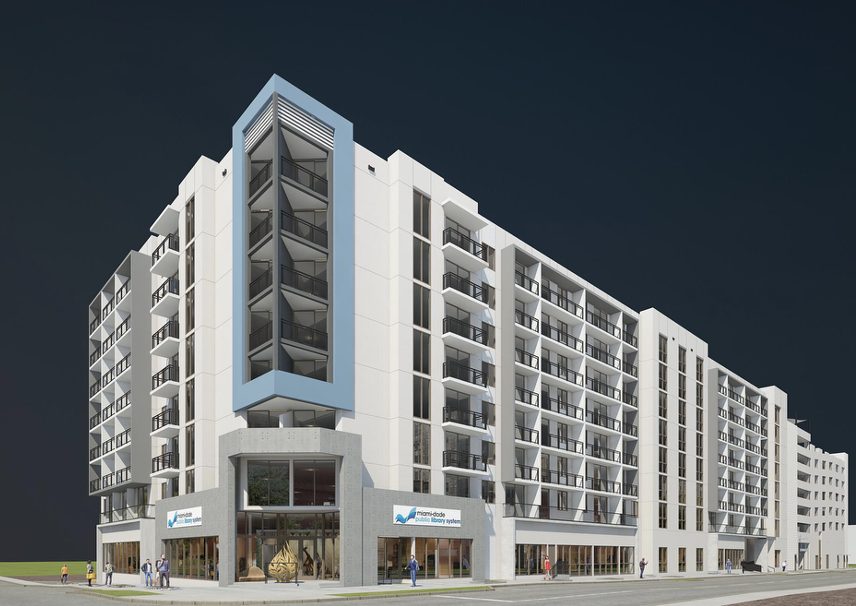
One of Allapattah’s first Live Local Act developments is preparing to move toward groundbreaking as Coral Rock Development advances plans for Dulce Vida, a mixed-income residential project enabled by the state’s sweeping pro-density legislation. The proposal, which received approval from Miami’s Urban Development Review Board in early 2024, is targeting a construction start in early 2026. Groundbreaking is supported by $35 million in financing just granted by Citibank, alongside an additional $15 million secured through the City of Miami’s Forever Affordable Housing Bond program, structured as a 30-year loan. Planned for 1785 NW 35th Street, Dulce Vida will rise on a Miami-Dade County-owned site currently occupied by a one-story public library and surface parking. The redevelopment will replace the existing facility with a new library integrated into the project, while significantly increasing density along a rapidly developing stretch of Allapattah. Set to deliver 227 residential units, Dulce Vida will feature a mix of studio, one-bedroom, and two-bedroom residences. The project is structured as a mixed-income development, serving both low-income households and those qualifying for workforce housing. Under the proposed income distribution, 40% of units will be reserved for households earning up to 60% of Area Median Income (AMI), 35% for households earning up to 100% of AMI, and the remaining 25% for households earning up to 120% of AMI. Residents in the building will have access to multiple amenities, including barbeque areas, a dog park, kids playground, and more, all on the ground floor. According to the project’s UDRB submission from last year, the replacement public library planned at the corner of NW 18th Avenue and NW 35th Street will span 8,494 SF. The development will also include 372 structured parking spaces, in addition to 15 on-street spaces for a total of 387 parking spaces, providing adequate capacity to serve both library patrons and residents. Dulce Vida will rise 8 stories, reaching 80 FT in height. The building’s facade, designed by Behar Font, will combine stucco, concrete parapets, metal balconies, and impact-resistant windows, with a color palette featuring shades of gray and blue. The project has also drawn public support from city leadership. Speaking to CityBiz, which reported on the project’s financing, District 1 Commissioner Miguel Angel Gabela described Dulce Vida as a positive step for the neighborhood. “Dulce Vida is a great addition to Allapattah and District 1 where the city teams up with the developer to continue the redevelopment of the area while providing needed affordable housing, public parking and a new public library,” Gabela said.
West Palm Beach’s Planning Board Unanimously Approves Related Ross’s Shorecrest Condominium Project
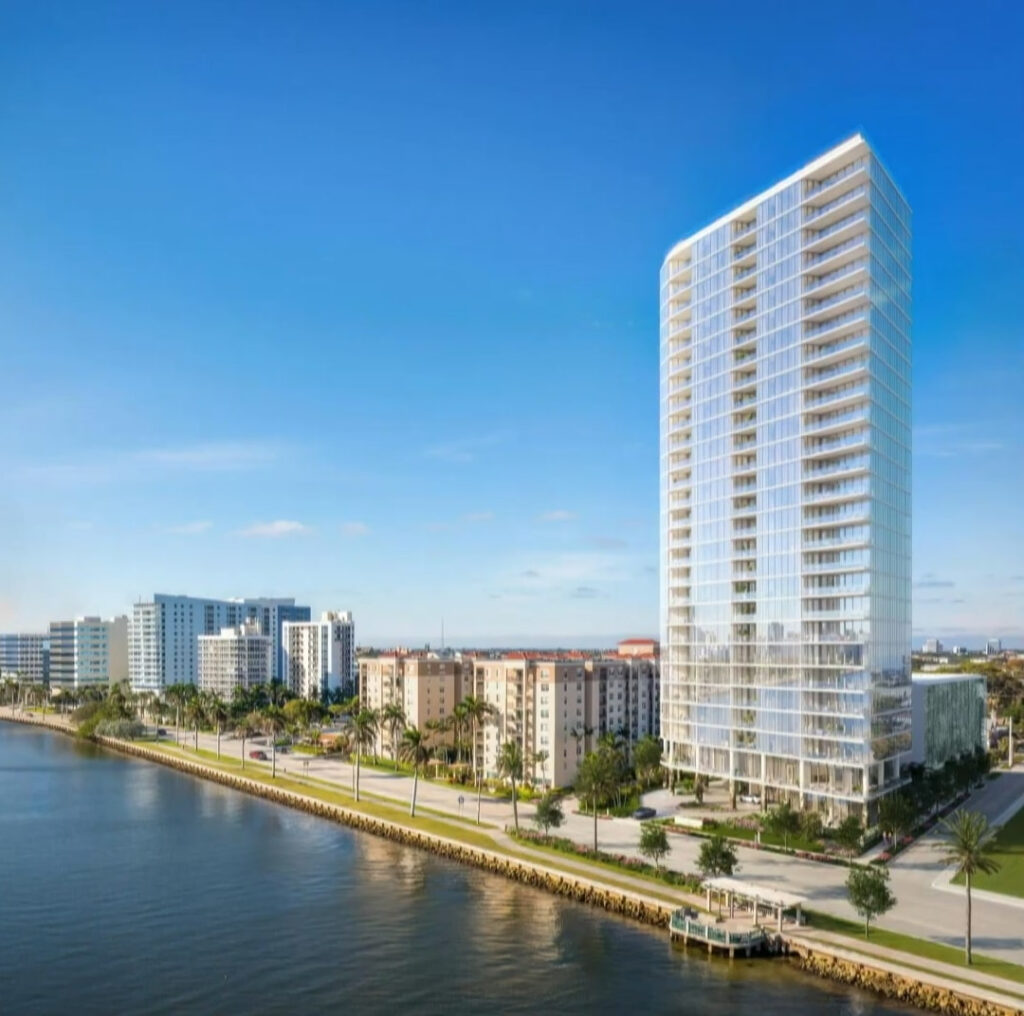
Related Ross’s multifamily pipeline in West Palm Beach is set to expand after the city’s Planning Board unanimously approved plans for Shorecrest, a 27-story residential tower along North Flagler Drive. Designed by Roger Ferris + Partners with interiors by Rottet Studio, the approval represents an early milestone for the project, which must still advance through additional regulatory reviews such as the City Commission. Planned for 1901 North Flagler Drive, the tower will replace the current site occupied by Temple Israel. Under the approved plans, the synagogue has chosen to relocate rather than occupy ground-floor space previously planned within the building. Slated for a transaction valued at around $30 million, the almost 2-acre site will soon be demolished to make way for 100 units. The current 100-unit configuration reflects the latest evolution of the Shorecrest project, which has previously ranged from 140 to 199 units. Units are planned as condominiums rather than apartments, with spacious layouts. While the developer has not provided a full breakdown of unit typologies, the project website currently showcases floorplans featuring two- and three-bedroom residences. Residents will have access to a multitude of amenities including a gym, golf simulator, bar and lounge, game lounge, a yoga room, pool, and much more. Despite only having 100 residents, the tower will feature a 5-story podium complete with 204 parking spaces, ensuring an adequate number of spaces per unit. The tower will not include ground-floor retail space, with the base of the building instead dedicated to a large residential drop-off area, large lobby, widened sidewalks, enhanced landscaping, and a publicly accessible park at the rear of the property. Landscape architecture will be handled by DS Boca, a renowned Boca Raton-based firm. The tower’s proposed height of 306 FT (27 stories) exceeds what is typically permitted under West Palm Beach zoning code. To reach that height, the project is utilizing 195 FT of bonus incentive height, secured through a combination of public benefits, including improvements to Currie Park, LEED Gold certification, payments toward mobility infrastructure, and the inclusion of the previously referenced public space (public park). The tower’s facade will be dominated by glass, offering residents expansive, panoramic views of the waterfront from wraparound balconies. The podium, set to be 5 stories and 71 FT tall, will be wrapped in a mesh facade featuring green and white graphic graphics, tying into the surrounding landscaping. The approved plans include requests for six variances, addressing landscape buffer width, maximum building length, building setback requirements, minimum greenery standards, maximum driveway width, and the separation of access points. Among the most important requests is a reduction in required landscaping, with the project proposing 27 trees compared to the 73 mandated under city code. Ahead of the project’s approval, city planning staff recommended approval with conditions tied to the requested variances. The development team also conducted public outreach with local communities, including the Palm Beach Chamber of Commerce, the Old Northwood District, and representatives of the neighboring Flagler Pointe building. As part of the vote, both the variances and the site plan was approved. These approvals are subject to staff conditions, with compliance among staff expected as the project moves forward.
Andare Residences by Pininfarina Continues Towards Targeted 2027 Completion Date
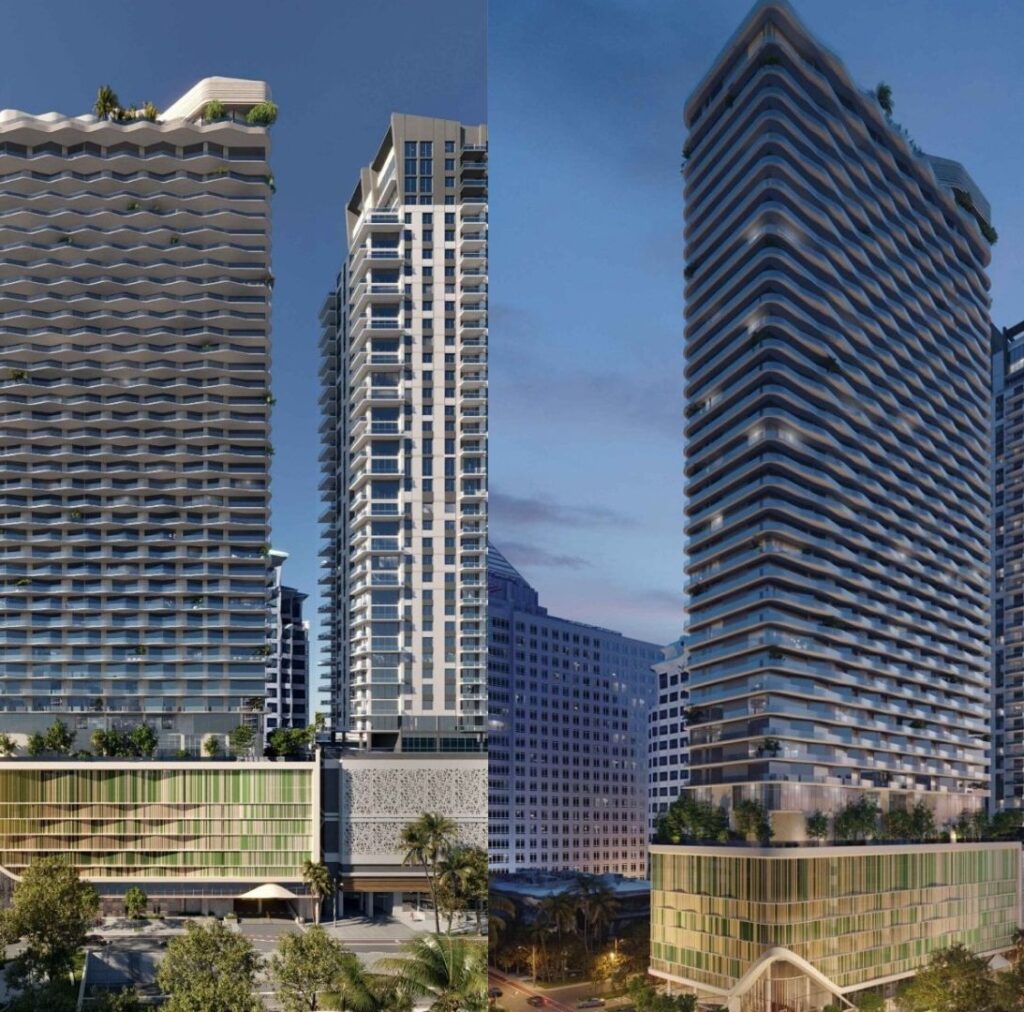
Fort Lauderdale’s newest high-rise, Andare Residences by Pininfarina, is seeing increased construction activity as the development targets a 2027 completion. After breaking ground in mid-May, developer Related Group has submitted new permit applications for tower cranes, alongside a wave of additional construction-related filings. The tower is planned for 521 East Las Olas Boulevard, and will become the third Related Group high-rise within a 1,000 FT radius across just three parcels, joining Veneto and Icon Las Olas. Recent construction documents obtained through a public records request by Floridian Development indicate the project will deliver 192 ultra-luxury residential units. The increased construction activity comes after Related Group secured a construction loan of about $231 million from Apollo Global Management. At the time of the groundbreaking, the developer stated that roughly half of the residences had already been pre-sold. According to tower crane filings dated December 3rd and December 10th, the project is planned to utilize two cranes on site. The filings note that the submissions are refilings made in response to an FAA Aeronautical Determination Decision letter. Each crane is expected to reach a maximum height of 688 FT, with work scheduled between October 28th, 2025, and January 15th, 2027. While timelines attached to FAA applications are subject to change and aren’t definitive, the October 28th start date suggests that crane installation may already have occurred on site. In addition to FAA approvals, the developer (together with general contractor Beauchamp Construction) has submitted a range of construction permits to the City of Fort Lauderdale. These include applications for structural work, utilities, right-of-way permits, foundation work, and other approvals. Importantly, the filings also cover the demolition of the on-site sales center previously built by Related Group, which must be removed to make way for the tower’s construction. While previous reports about the tower, set to become Fort Lauderdale’s tallest, relied on an outdated Design Review Committee submission from Related Group, Floridian Development has obtained updated documents showing the building will reach 542 FT across 45 floors. In addition to the 192 planned residential units, the project will include 280 parking spaces, 3,205 SF of restaurant space, and extensive amenity programs. The interior residences are being designed by Pininfarina, while the exterior design is managed by Cohen Freedman Encinosa, serving as the architect of record.
Camaco Development Submits Revised Plans for One on One Condo Project to Fort Lauderdale Planning Board
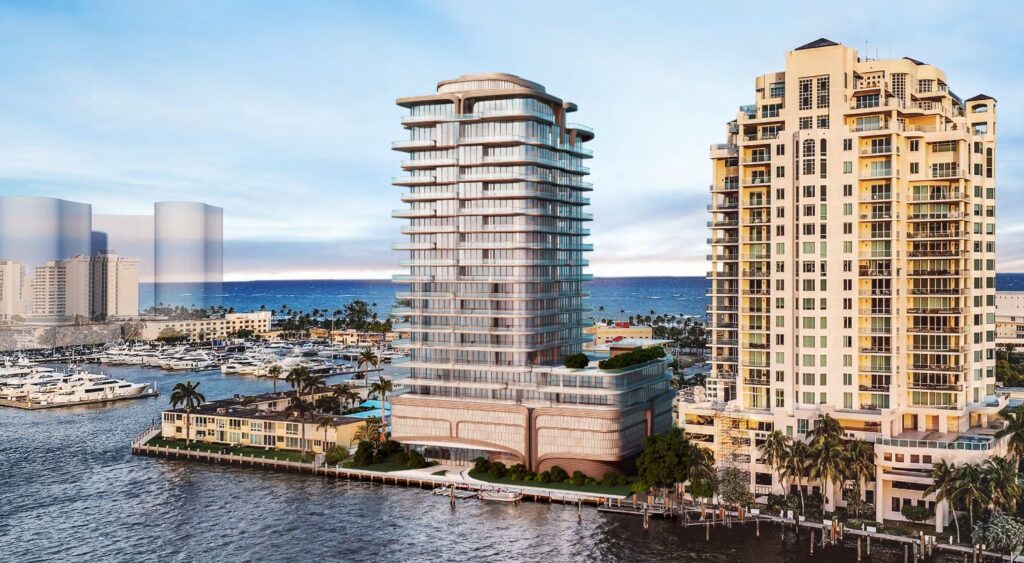
After multiple rounds of revisions with Fort Lauderdale’s regulatory boards, One on One Harbor Beach Inc., an affiliate of Camaco Development, has submitted a revised proposal for a condominium project on Fort Lauderdale Beach. Branded as One on One, also referred to as Harbor Drive Residences, the latest plan increases both the building’s scale and unit count compared to earlier versions. The proposal now calls for a 21-story tower containing 36 residential units. Planned for 3043 and 3049 Harbor Drive, the development is being designed by New York based Kora Architects in partnership with Adache Group Architects. Plans for the development first surfaced in early 2023, when Camaco Development proposed a slender, 17-unit residential building on a single parcel at 3034 Harbor Drive. Since that initial submission, the developer returned to Fort Lauderdale’s Development Review Committee with an expanded proposal that incorporates both 3043 and 3049 Harbor Drive. Property records show that 3043 Harbor Drive was purchased for approximately $2.6 million in 2021, while Camaco is currently under contract to acquire the adjacent property. Following review by the Development Review Committee, the project has progressed to the Fort Lauderdale Planning and Zoning Board, where updated exterior and interior designs are under consideration as part of the latest application. Although the project had been scheduled for review at the Planning and Zoning Board meeting on December 17th, 2025, at 6:00 p.m., the applicant requested a deferral. As a result, the proposal is now set to be reviewed at the Board’s January 21st, 2026, meeting. Plans submitted to Fort Lauderdale planners outline a residential tower comprised of two-, three-, four-, and five-bedroom units. The residences are designed with generous floor areas, with penthouse units approaching 9,000 SF and smaller units measuring around 1,800 SF. A full floor of resident amenities is proposed on level 7, featuring a fitness center, a pool and spa, a private pool bar, a social club, wellness facilities, a game room, and additional spaces. Because the earlier tower proposal was notably slender, floor plates were designed to accommodate a single full-floor residence. Under the revised plans, while unit sizes remain similarly large, each floor will contain at least two residences. The two highest levels of the tower are planned to include two penthouse units per floor. In addition, while the aforementioned submission to the Development Review Committee proposed 112 parking spaces, the latest revision reduces that total to 93. To optimize the smaller podium, 19 compact spaces are included. The architect has also designed the podium’s facade with a textured, modern screening featuring smooth stucco finishes and brown-painted aluminum cladding. At ground level, the proposal includes upgrades to both the pedestrian realm and on-site landscaping, with plans calling for a five-foot-wide sidewalk accompanied by landscaped areas (replacing the current condition of no sidewalks). The ground floor layout also incorporates a designated residential drop-off area, mechanical spaces, and a generously sized lobby. According to elevations, the building will reach a height of 259 FT to the top of the mechanical screen. Units will offer views of both Downtown Fort Lauderdale and Fort Lauderdale Beach, with expansive balconies and an all-glass facade enhancing views. While the South Florida Business Journal previously reported the tower at 22 floors based on earlier submissions, the updated elevations showcase a 21-story structure. According to the developer’s website, the project is set for completion in 2028. While it’s unclear whether that timeline has been revised, it would be somewhat consistent with plan approvals in 2026 followed by the permitting and the construction process.
One of West Brickell’s Densest Residential Towers Planned at 250 SW 7th Street
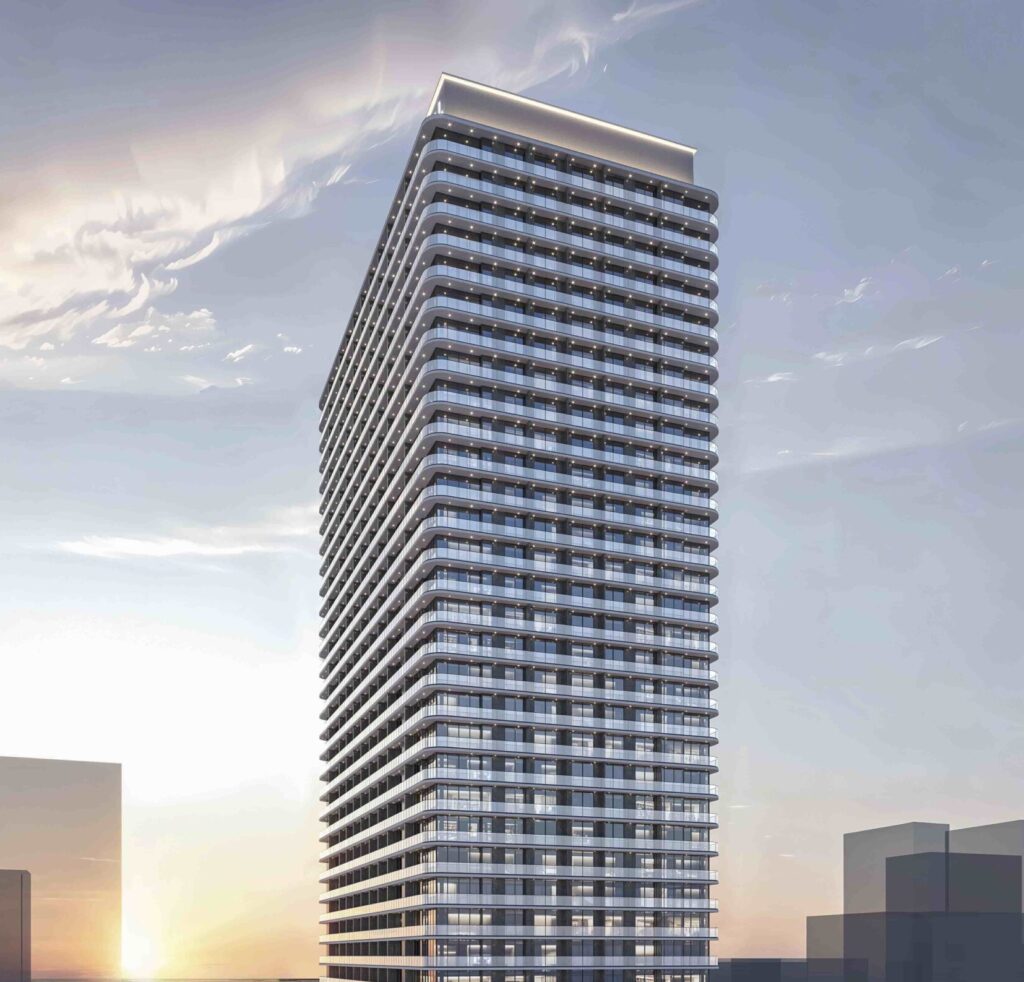
Plans have been submitted to Miami’s Urban Development Review Board for a high-rise on one of West Brickell’s last undeveloped parcels. Located at 250 SW 7th Street, the proposal would redevelop the one-acre site into one of the highest-density residential towers in the city. Led by Rockville Hospitality and designed by Miami-based Behar Font & Partners, the project would mark one of the first Live Local Act developments in West Brickell or Brickell for that matter. Rockville acquired the two parcels comprising the site for a combined $15.5 million in early 2015. The current 42-story proposal represents the latest phase of a multi-year development process that began with a 24-story concept, later to 29 stories, and has now advanced to its tallest iteration. Plans submitted earlier this week, and scheduled for review by the UDRB on December 17th, showcase a tower containing 1,030 residential units. A density of this scale is only feasible under the Live Local Act, which permits any project within the City of Miami boundaries to utilize the maximum allowable residential density. In Miami, that limit is a staggering 1,000 dwelling units per acre, enabling 1,030 units on this site and any site in the city. The developer plans to approach the maximum allowable density on the one acre site by utilizing compact floorplans, with units ranging from microunits (ranging between 275 and 400 SF) to studios, one-bedroom, and two-bedroom residences. Because microunits fall below the minimum unit-size requirements under the zoning code, the developer is seeking a warrant to permit 599 microunits. Microunits are only available within transit-oriented areas, where high-capacity transit can support smaller units. However, developments pushing the boundary on density are becoming increasingly prevalent under the Live Local Act, with Floridian Development recently reporting on a similar high-rise proposal in Overtown employing the same strategy. Because the Live Local Act requires qualifying developments to dedicate at least 40% of space to residential uses, the project is designed to be 78.8% residential. In addition, 40% of the units (or 405 residences) will be designated as affordable housing priced at 120% of the Area Median Income, on par with regulations set by the Live Local Act. On level 9, residents will have access to a full floor of amenities, including lounges, a gym, a yoga room, a movie room, a game room, a club room, a swimming pool, and more. The tower’s parking podium will provide 269 spaces, 260 of which are reserved for residents and 9 for retail patrons. Given the 1,030 units on-site, the development will also include 1,017 bike racks for residents in lieu of additional parking. This reduction in parking is permitted only because the project is located within a transit-oriented area, which allows projects to waive standard parking requirements. All parking will be screened from public view, with residential units masking the podium. The ground floor of the development will include widened sidewalks with greenery (significantly improving the current pedestrian realm) along with a residential lobby, a retail space fronting SW 7th Street, and a drop-off area. The retail component will total 2,980 SF. Rising 42 floors, or 436 FT, the development’s height is enabled under the Live Local Act, which permits increased building heights within one mile of qualifying commercial or industrial parcels. A nearby site zoned for 48 stories by right supports this height, though the developer has chosen to utilize only 42 floors. As the developer awaits a decision from the Urban Development Review Board, it’s important to note that UDRB approval is not final, ultimate approval rests with other regulatory bodies. If approved, the project is ready to proceed with permitting, as the site has already been fully cleared.
Near-Supertall 955-Foot Tower Proposed for 130 Biscayne Boulevard, Designed by Foster + Partners

Plans for a nearly 1,000-foot tower has just been revealed along Biscayne Boulevard, setting the stage for one of Miami’s tallest tower proposals in recent years. Located at 130 Biscayne Boulevard, 146 Biscayne Boulevard, and 141 NE 3rd Ave, the property is being redeveloped into a mixed-use destination by New York City-based RFR Realty, which owns all three properties. The developer intends to demolish all three mid-rises on-site for condos, retail, and hotel uses. Designed by world-renowned Foster + Partners in collaboration with Miami-based Revuelta Architecture, the tower marks another major entry by Foster + Partners into Miami’s skyline. Developments like 130 Biscayne have been made increasingly common by relaxed zoning and generous height limits, which have turned Downtown Miami and Brickell into Miami’s new hot spot for tall construction. Should it move forward, 130 Biscayne Boulevard would join the skyline near the Waldorf Astoria, now under construction. Spanning 1,667,604 SF and rising 87 stories, the tower is organized into multiple program areas across its height. Starting from the crown and extending down to level 31, the tower will contain 414 condominium residences, including one-, two-, and three-bedroom typologies as well as penthouse units. These units, fit with terraces, will have access to panoramic views of the Miami skyline and Biscayne Bay. Multiple amenity floors are also integrated throughout, with levels 31, 32, and 85 dedicated to resident amenities. The 85th floor will feature a sky-level pool, along with a spa, bar, meditation room, and other wellness spaces. Below the residential levels, the tower will house 144 hotel rooms. Levels 19 through 30 will offer a mix of suites, master suites, and traditional guest rooms. Like the condominium residents, hotel guests will enjoy access to abundant amenities, including a 140-seat fine-dining restaurant, a sky bar, a lounge, landscaped gardens, a pool, and more. The lower portion of the tower will accommodate 495 parking spaces, 1,895 SF of ground-floor commercial space, and two basement levels for retail, hotel, and residential storage. The ground floor will also feature a residential drop-off area and a spacious residential lobby. While Foster + Partners has not yet released word on the project’s design, the tower is envisioned with a clean rectangular form, a largely covered parking podium, and a uniform facade. Rising 955 FT, the structure will be topped with a glass crown. Although the height is just shy of the internationally recognized 300 M (984 FT) supertall threshold, it will surpass the soon-to-be second-tallest building in Miami, Cipriani Residences. Despite the property being located within the City of Miami, the developer is seeking approval through Miami-Dade County. The plans are pursuant to regulations under the Metromover Subzone, which grants properties near Metromover stations to access faster approvals, higher density, and other development incentives. Plans submitted to Miami-Dade last week are still under review. If the property is approved as part of the Metromover Subzone, the developer will proceed with an Administrative Site Plan Review (ASPR), a process in which county staff reviews the project rather than proceeding through lengthy public hearings. Floridian Development is breaking this story and will continue following the project closely, delivering updates on approvals, design, and construction as they happen.
Miami-Dade Set to Move Forward on 905-Unit Annie Coleman 15 Redevelopment in Brownsville
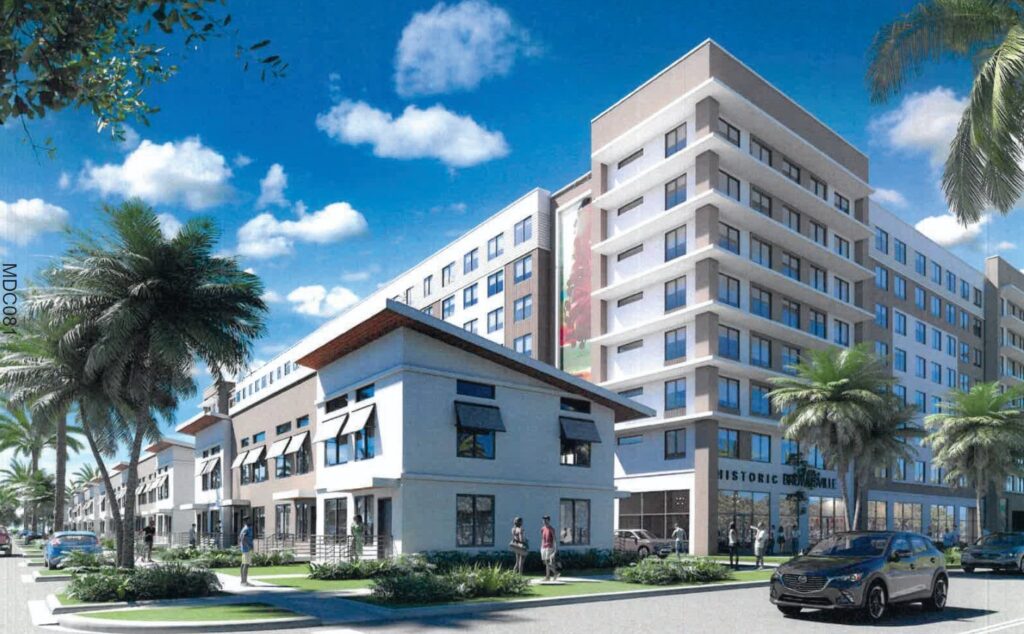
Miami-Dade is preparing to take a major step toward reshaping Brownsville’s affordable housing supply as plans advance for the redevelopment of Annie Coleman 15. The three-parcel site, which has slowly grown outdated, is slated for a full rebuild spearheaded by Miami-based Integra Solutions. The proposal calls for a 905-unit mixed-income community, including 144 public housing units to replace those previously demolished. The redevelopment effort, which began after the County issued a Work Order Proposal Request in July 2023, ultimately drew only one respondent, Integra, making the firm as the sole developer for the project. Now moving through the approval pipeline, the plan hinges on a vote scheduled for January 21, 2026, which would officially grant development rights and allow the project to move into the next phase. Located across three parcels at 5575 NW 27th Avenue, 2501 NW 58th Street, and 2200 NW 57th Street, the redevelopment will be built in multiple phases. Phase One focuses on 2501 NW 58th Street, which will be combined with an adjacent lot separately acquired by Integra Solutions. The merged site creates enough area to deliver 303 units, allowing all 144 displaced residents to return at the earliest date possible. The first phase includes 88 one-bedroom, 70 two-bedroom, 123 three-bedroom, and 22 four-bedroom townhome units, offering a range of typologies for families of different sizes and income levels. Ground-floor plans call for 4,750 SF of retail space, while parking will be accommodated in an off-street garage with 359 spaces. Phases two and three, situated at 5575 NW 27th Avenue and 2200 NW 57th Street, will deliver 332 and 270 units respectively. Layouts will span from one-bedroom, two-bedroom, three-bedroom, and townhome options. Integra Solutions has indicated that up to 20 townhomes may be offered for purchase on a fair-opportunity basis across the two phases. Combined, the developments will provide 548 parking spaces to accommodate residents, although a Metrorail station is close-by. Across all phases, the 905-unit community will include 182 units at 30% of area median income (AMI), 270 at 60% AMI, 272 at 80% AMI, and 181 at 120% AMI. The buildings will range in height, rising 10, 8, 6, 5, or 2 floors depending on the location. The redevelopment will offer a range of community amenities, including a study room with computer access, a fitness center, laundry facilities, an on-site police workstation, a playground, and a youth art center. Integra Solutions has also committed to hiring Section 3 residents for construction jobs, along with providing permanent employment opportunities for local residents. Miami-Dade County intends to enter into a 99-year ground lease with Integra Solutions as part of the redevelopment agreement. The lease calls for an upfront payment of $9,050,000, followed by recurring payments over the lease. Between the ground lease revenue, developer fees, annual rent, and the County’s share of cash flow, the agreement is projected to generate around $386 million for Miami-Dade over the life of Integra’s lease. As Miami-Dade amps the overhaul of aging affordable housing through the RAD program, Integra has emerged as a key player. Earlier this year, Floridian Development covered the firm’s plans for Annie Coleman 14 (not to be confused with Annie Coleman 15) where Integra Investments is preparing to transform nearly an entire block. The proposal introduces a mid-rise community that will also rehouse existing tenants while adding new mixed-income units.