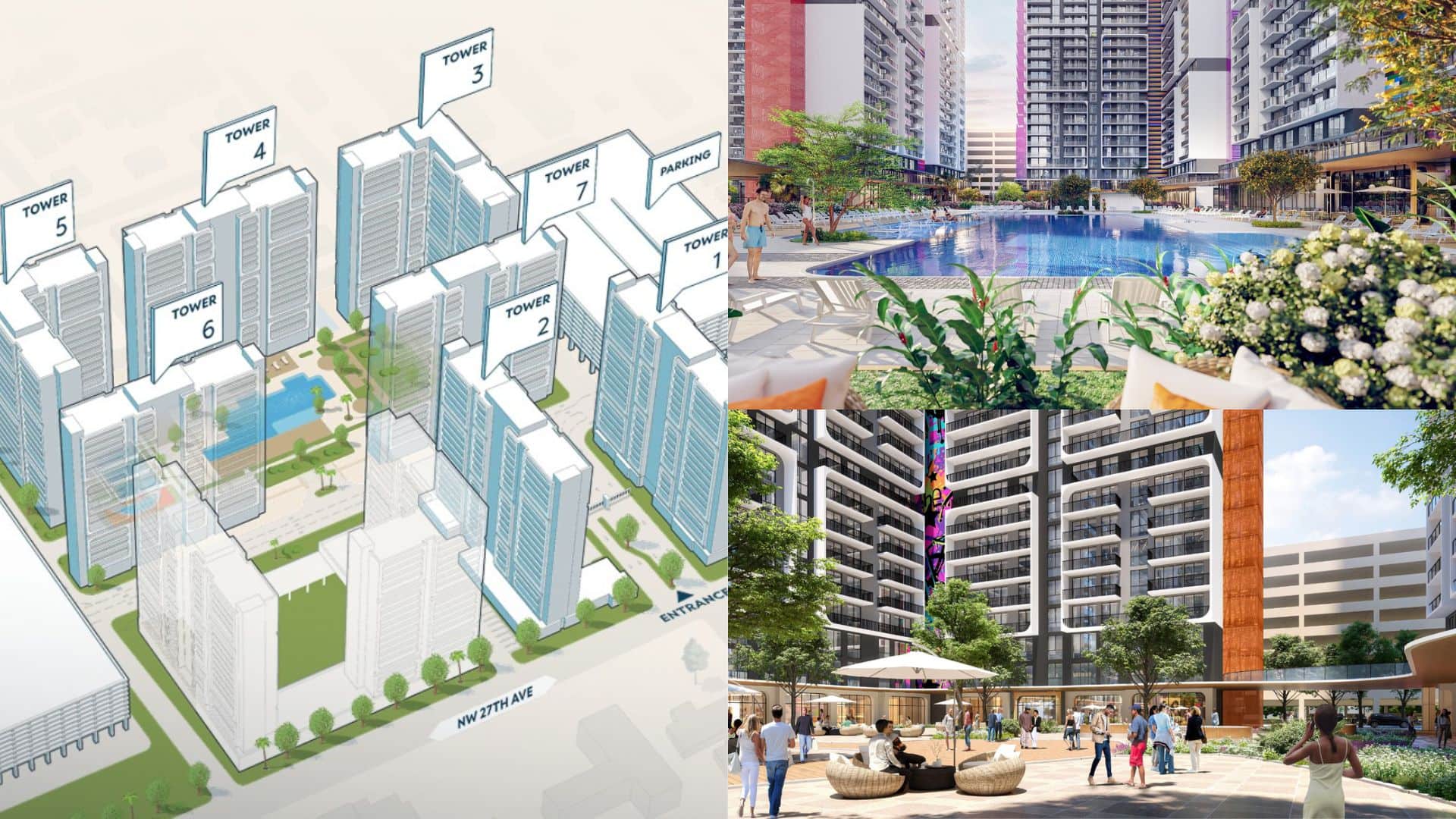
Plans are advancing for what could become the largest housing development proposed under Florida’s Live Local Act. The project, known as HueHub, is moving forward as demolition begins on the aging buildings currently occupying the site. Clearing the existing structures marks a key step toward making way for the planned $880 million mixed-use development, which aims to significantly expand the area’s housing supply with an entirely workforce-focused residential community.
The development is being led by Pablo Castro through his firm HollandPark EcoreResidences LLC. Once completed, the project is expected to include 4,032 residential units spread across seven 35-story towers, along with retail space, medical offices, and extensive residential amenities. Designed by Arquitectonica, HueHub will encompass roughly 2 million SF of residential space, with a groundbreaking targeted later this year.
The project site, located at 8400 NW 25th Avenue, was acquired by Castro in 2023 for $29.3 million. The roughly 12-acre property currently contains 141 apartments built between 1950 and 1960. According to the development team, demolition is expected to take two to three months, after which the site will be prepared for vertical construction. If financing and permitting timelines hold, the project could begin construction later this year, marking a major step forward for one of the most ambitious housing initiatives currently planned in Miami-Dade.
Proposed in early 2024, the HueHub marked a shift in projects under Florida’s Live Local Act, demonstrating the law’s potential for large-scale developments rather than the smaller projects initially associated with it. This development is an early adopter of the act, which has been amended several times since its passage in 2023. Under the Live Local, municipalities must administratively approve (no public hearing required) qualifying multifamily or mixed-use residential developments on land zoned for commercial, industrial, or mixed-use purposes.
If at least 40% of the units are designated as workforce housing affordable to households earning up to 120% of the area median income (AMI) for a minimum of 30 years, developers are granted significant regulatory preemptions. These include the ability to build at the highest residential density allowed anywhere in the jurisdiction and at the maximum building height permitted within one mile of the site, along with other incentives such as tax exemptions and certain parking reductions.
The Plans
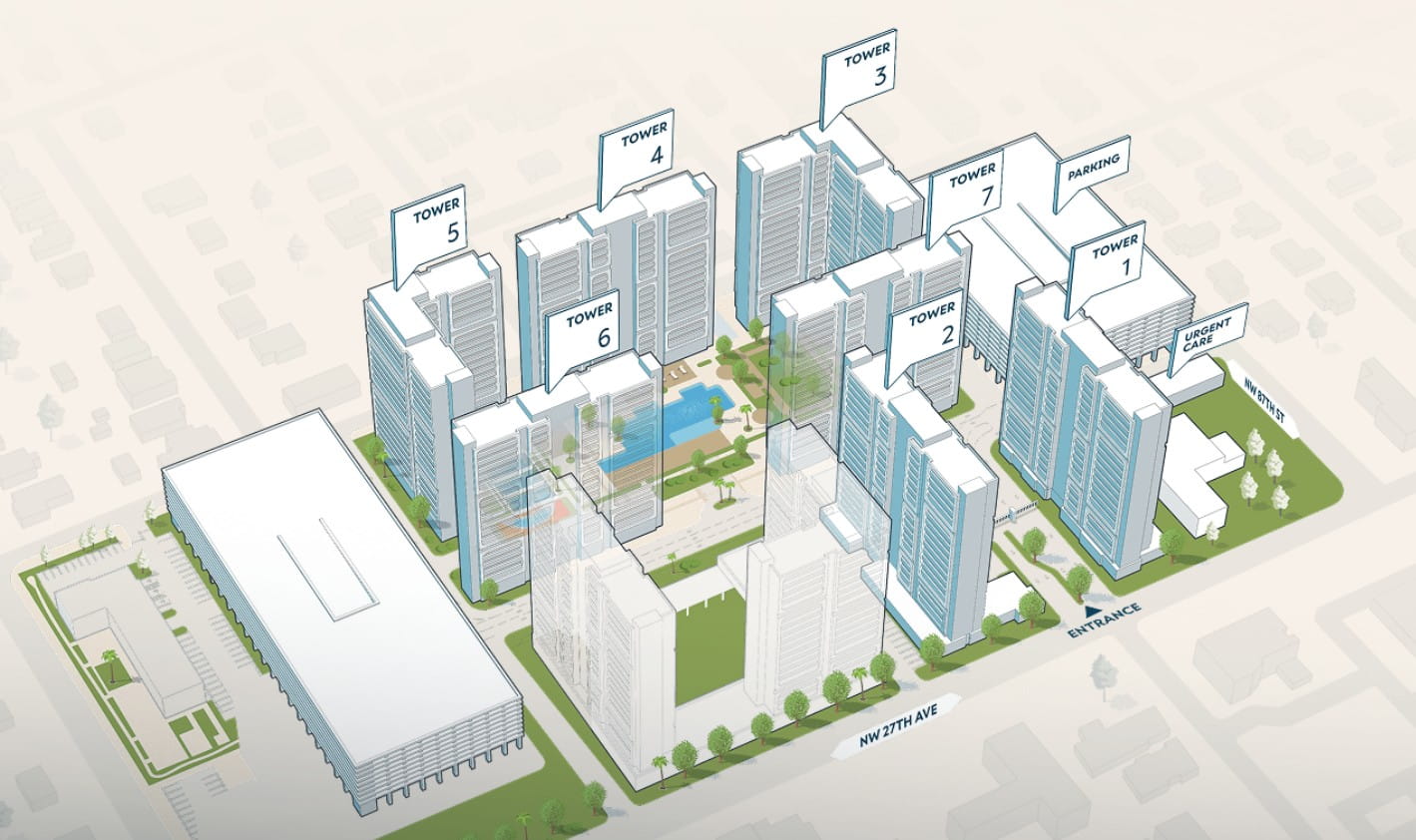
According to final plans submitted to the county earlier this year, the development’s 4,032 residential units will consist of studio, one-bedroom, and two-bedroom layouts. Studio apartments will begin at approximately $1,302 per month and measure around 300 SF. One-bedroom units, averaging about 420 SF, are expected to start at roughly $1,598 per month, while two-bedroom residences of about 640 SF will start near $1,903 per month. These rent limits put the entire development well within workforce housing income limits.
Housing will primarily be geared toward essential workers, with 3,000 units reserved for police officers, firefighters, county employees, hospitality workers, teachers, healthcare professionals, and other critical members of the workforce.
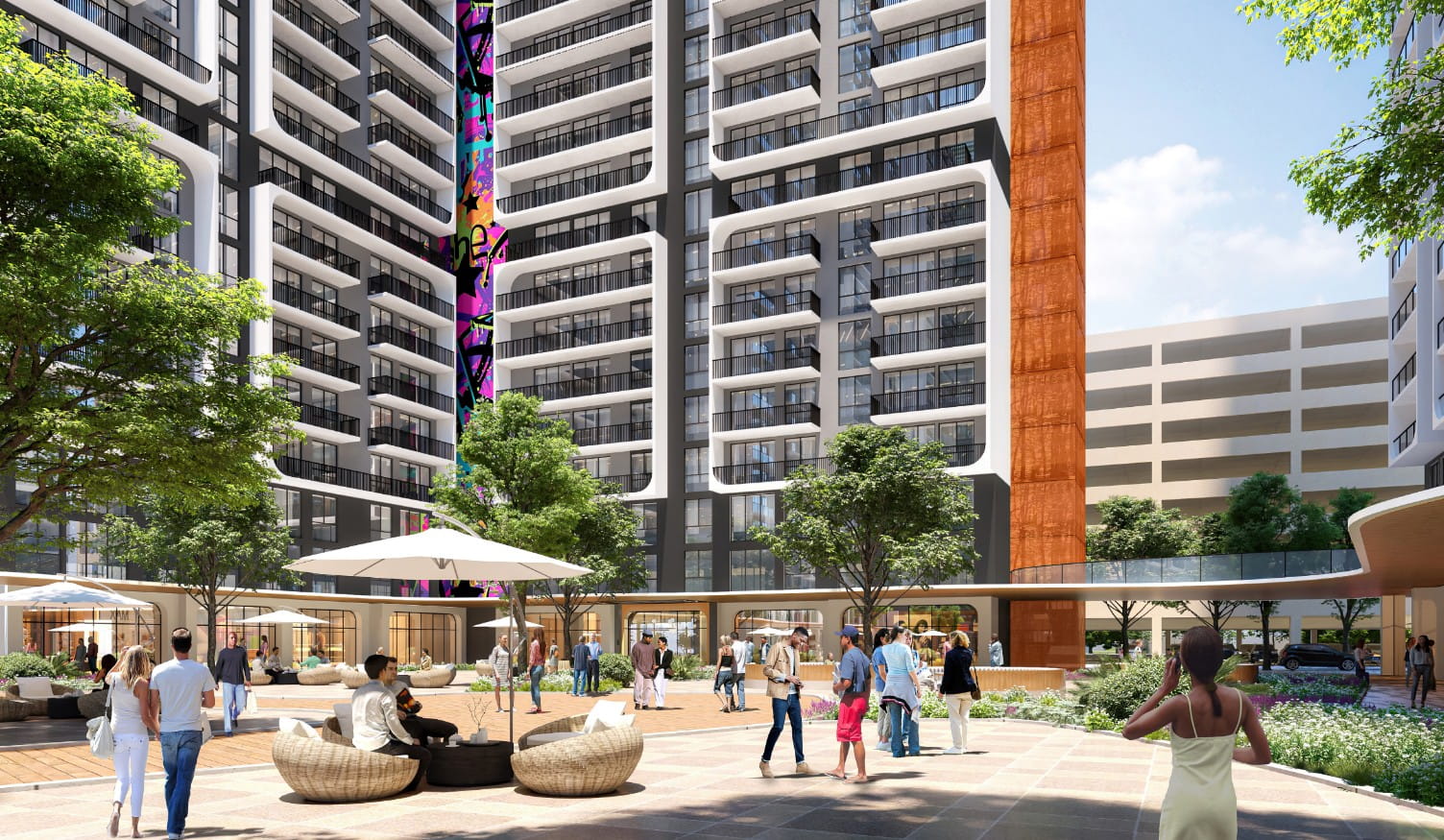
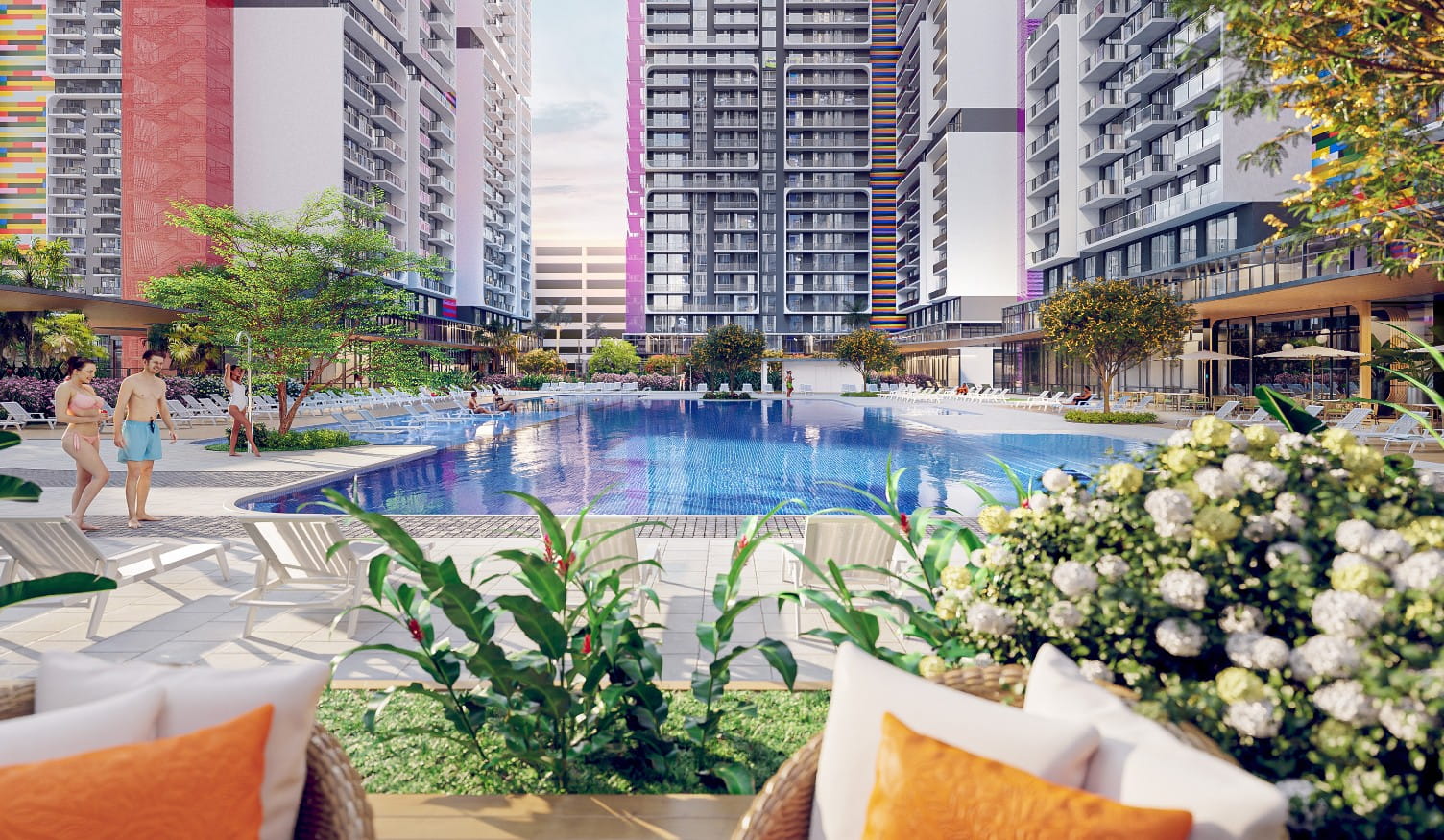
Future residents will have access to a wide range of amenities designed to support both work and recreation. Planned features include podcasting studios, co-working spaces, coffee bars, outdoor lounges, social gathering areas, a juice bar, pool and sundeck, pickleball court, dog park, fitness center, art gallery, and additional shared spaces throughout the development.
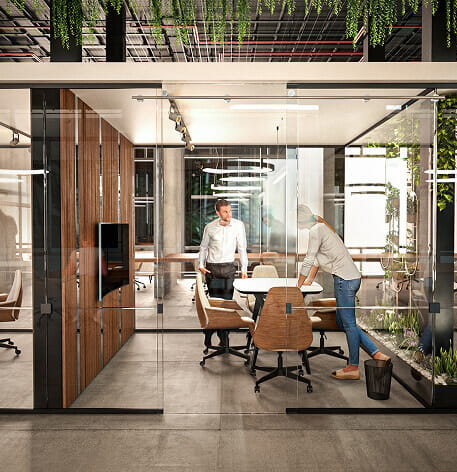


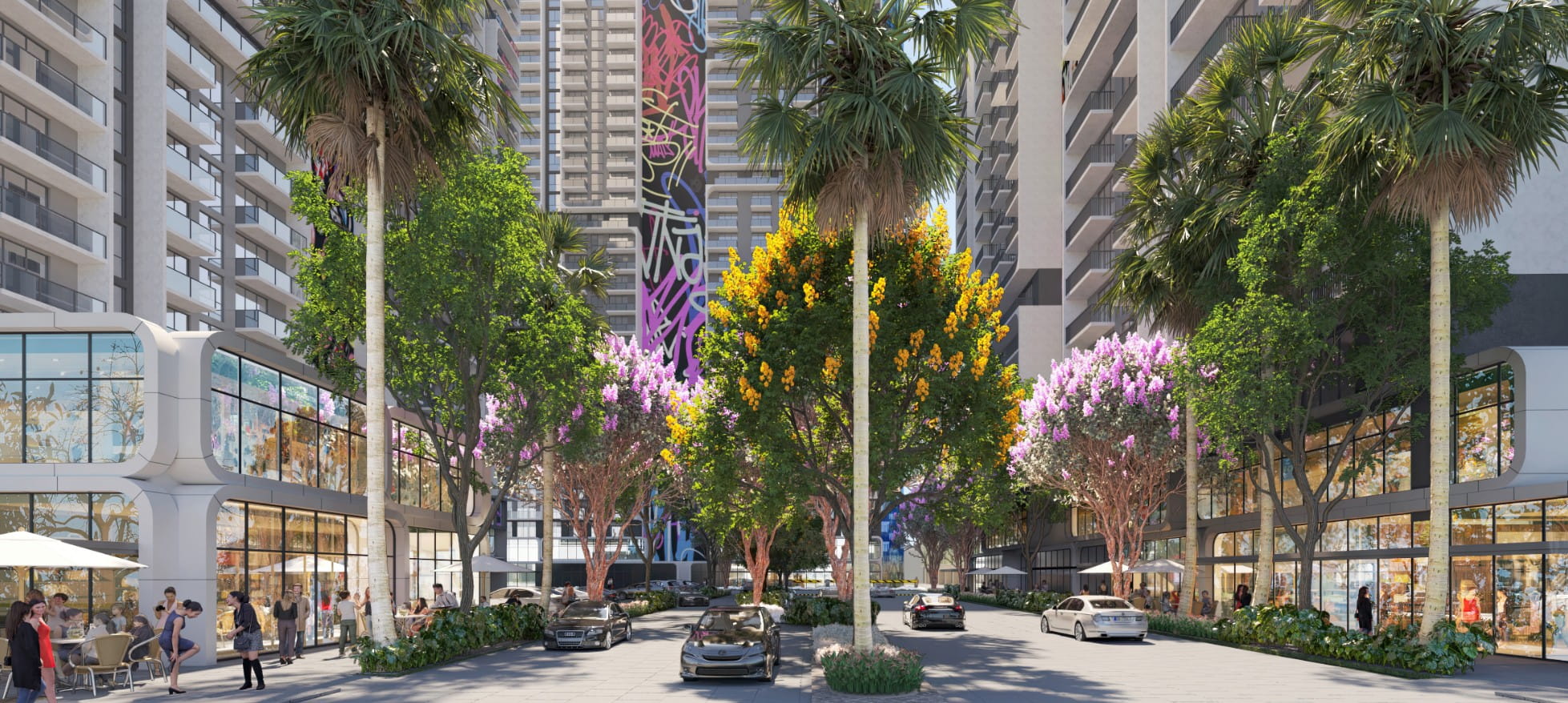
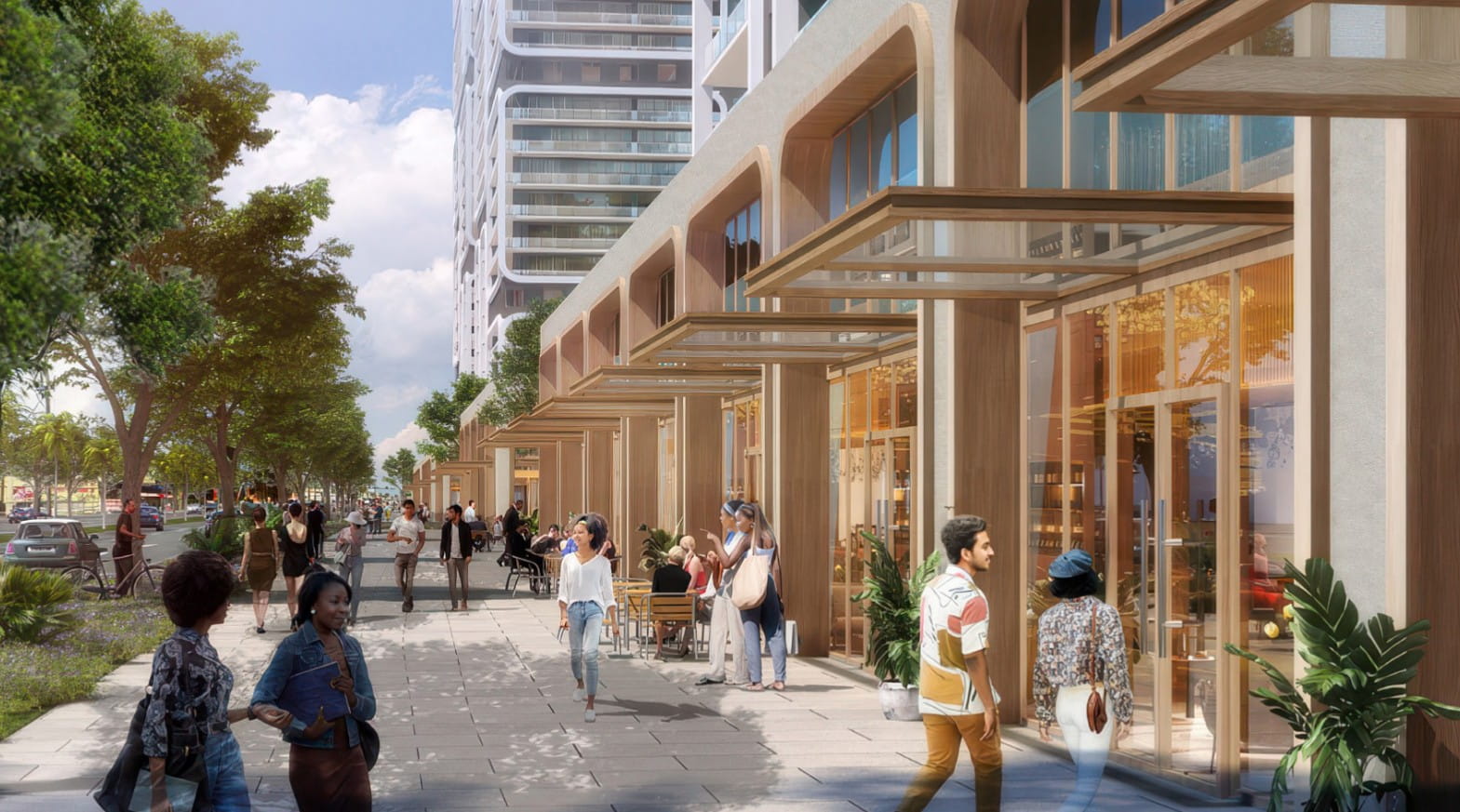
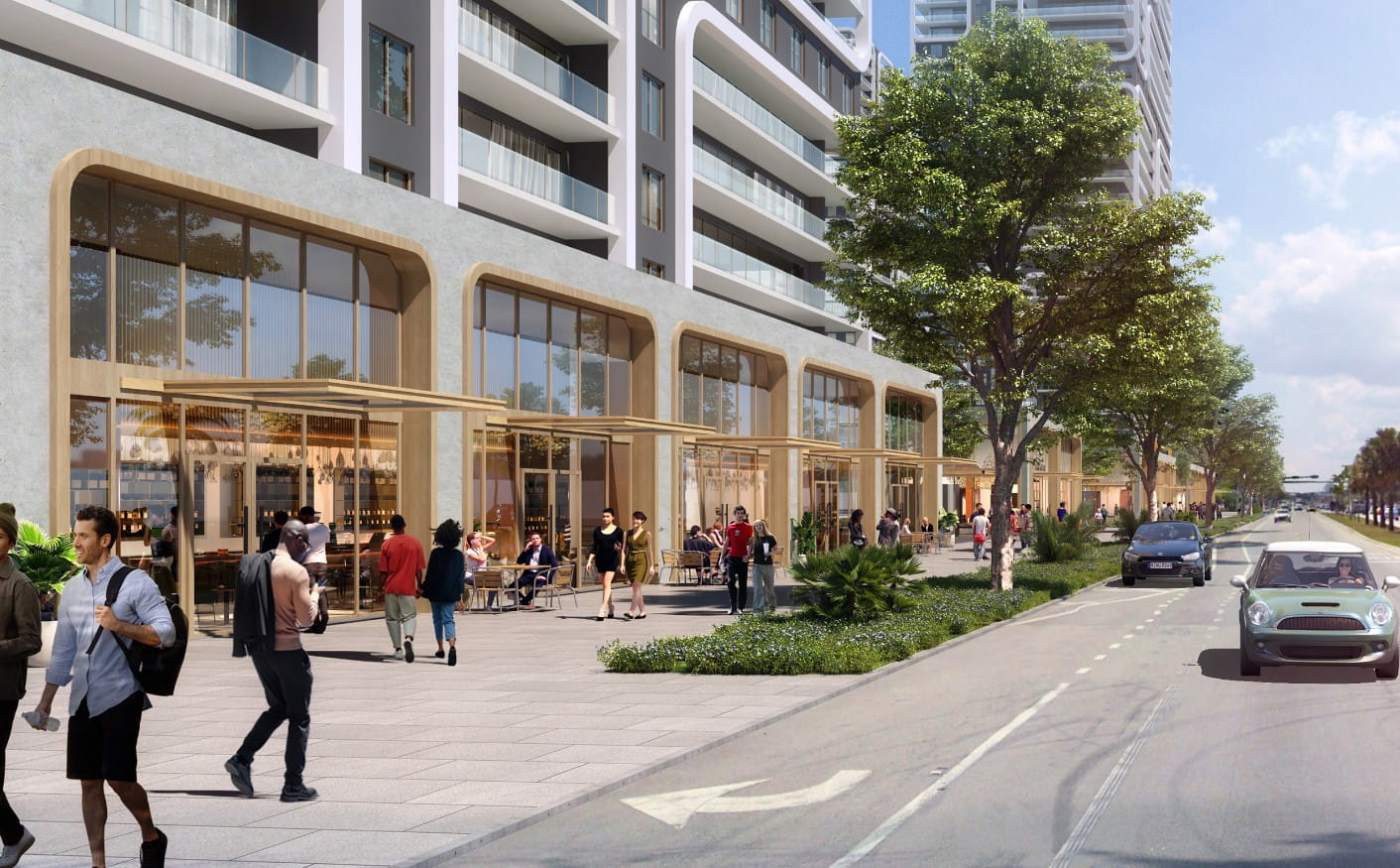
The project will feature 36,220 SF of ground-floor retail, including storefronts along NW 27th Ave and on-site amenities such as a juice bar and coffee bar. Two floors of medical office space, each spanning 5,740 SF, will bring the total retail and office space to roughly 47,700 SF. Medical space may be expanded if there’s increased demand.
In addition to commercial uses, the project will include a police station and two community centers. The design also emphasizes pedestrian-friendly streetscapes, with widened sidewalks and added greenery surrounding the entire site. To support these uses, the project will include 5,037 parking spaces and 322 bicycle spaces.
Design and Cost-Cutting Measures
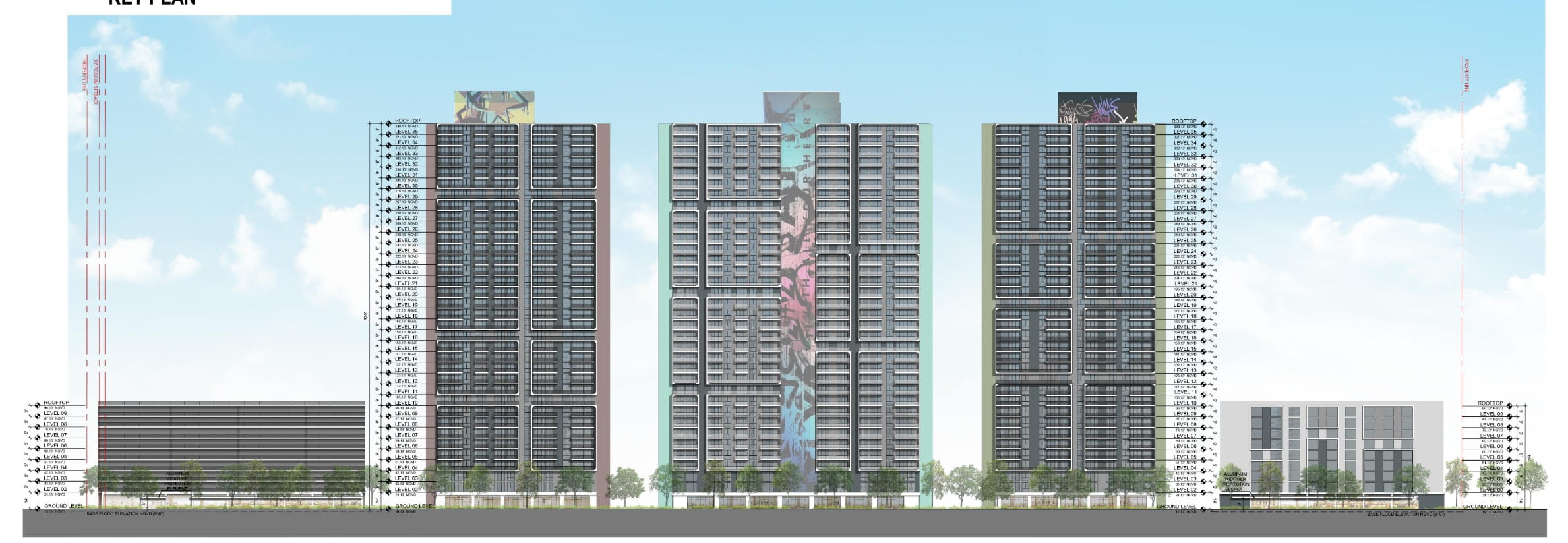
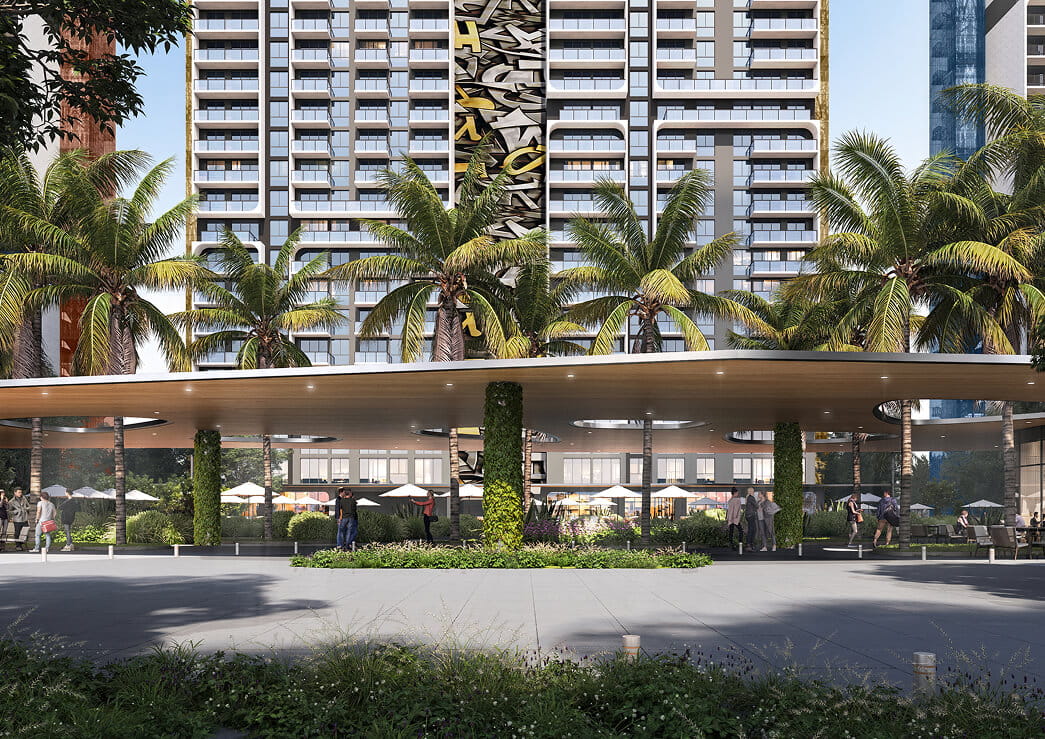
The seven towers will each rise 320 FT, with an additional elevator overrun of roughly 30 FT, bringing the total height of each tower to around 350 FT: well above any existing structures in the surrounding area. The Arquitectonica-led design incorporates metal balconies, floor-to-ceiling windows, and colorful murals adorning each building, drawing inspiration from graffiti art.
The towers will not feature podium bases; instead, parking will be accommodated within on-site garages, a significant cost-cutting measure. The buildings will also utilize tunnel-form construction, a cost-efficient method that employs reusable steel molds to rapidly cast concrete walls and slabs. This approach allows for faster construction timelines but often results in repetitive floorplates, contributing to the towers’ monotonous design.
Each unit will also include prefabricated modular kitchens and bathrooms to further streamline construction. Hallways between units will be naturally ventilated rather than air-conditioned, an approach commonly used in parts of Europe that the development plans to adopt. Many of these decisions prioritize cost efficiency over architectural variation.
Construction and Future Plans
Once demolition on the property concludes, a formal groundbreaking is expected to follow within the coming months. Construction of the initial seven towers is planned to begin simultaneously rather than in phases, as staging the buildings piece-by-piece would slow overall delivery and potentially increase construction costs.
However, the seven towers will not mark the full extent of HueHub. Plans also call for four additional high-rise buildings in a later phase. Three are expected to rise to 35 floors, matching the height of the initial towers, while a fourth will rise to a shorter height.
The expansion phase will also include a school designed to accommodate up to 1,000 students, centered around a courtyard playground. In addition, a shelter is planned for the southern portion of the site.
3 Comments
Developers always win. The project in Souht Miami done by Jorge Perez also build in an opportunity zone rentals are high and not affordable by essencial workers.
Wow this is massive
If Pablo Castro, The HueHub is already being sued over how he is trying to cheat his own partner on this project, how will he treat the people of Miami-Dade? Today the promise is $1,300 rent… tomorrow it will be $3,000? Miami-Dade County and it’s residents deserve better.